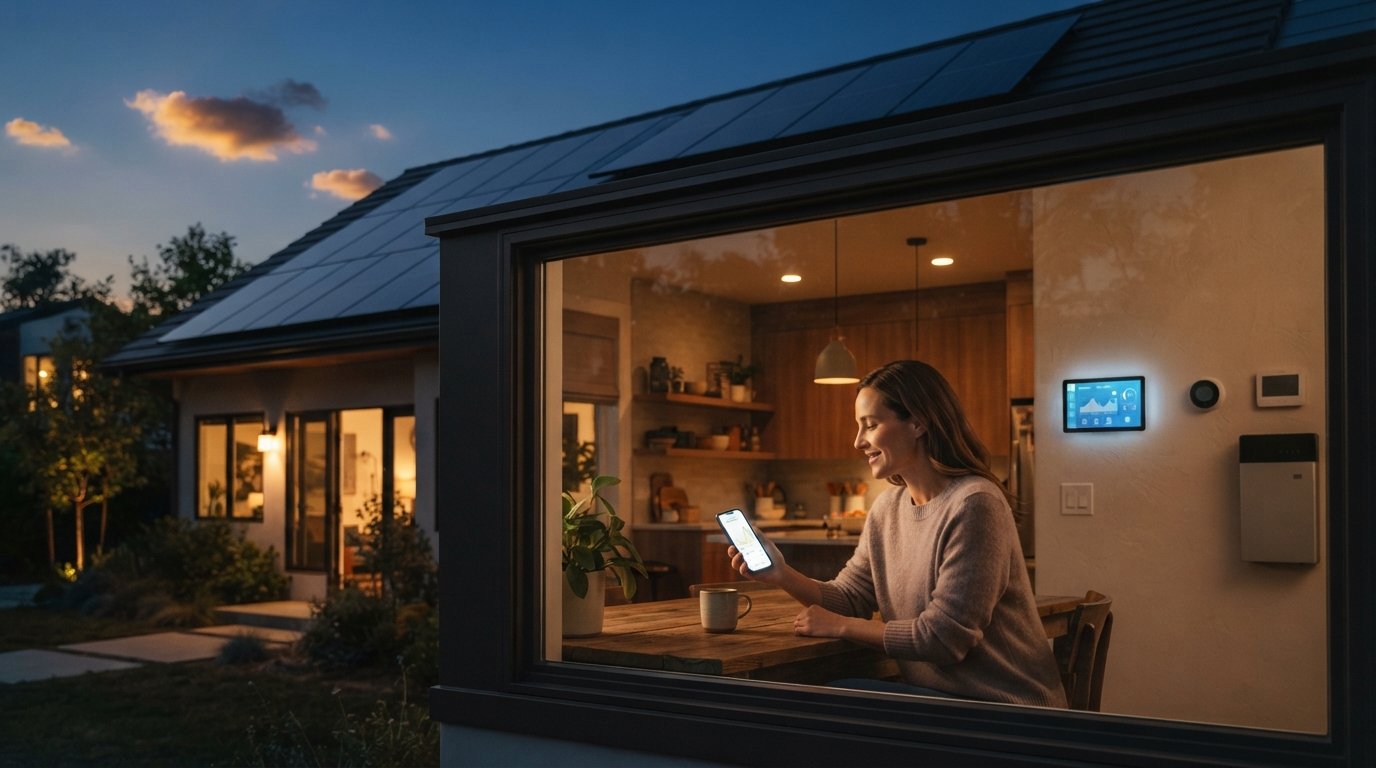
AI Energy Management: Cut Bills and Maximize Solar Savings
Discover how AI energy management cuts bills, boosts solar savings, and future-proofs your home. Start saving smarter today.

By Dylan Harris
Learn more about Solar Panel Installation and Repair for guides, costs, and what to expect.
Compare Solar Panel Installation and Repair Pros Near You

Enter your ZIP code to compare top-rated local professionals and request free quotes.
Your electricity bill arrives, and it feels like a gamble every month. You adjust the thermostat, unplug devices, and try to be mindful, but the numbers keep climbing. Meanwhile, your solar panels are generating power, yet you are not sure if you are truly capturing every possible kilowatt-hour of savings. This is where AI energy management changes everything. It is not just about tracking usage; it is about intelligently orchestrating your home's energy flow to minimize waste, reduce costs, and get the most from your solar investment. In this article, we will explore how AI energy management works, why it matters for homeowners and businesses, and how you can leverage it to transform your energy profile.
What Is AI Energy Management?
AI energy management refers to the use of artificial intelligence, specifically machine learning and predictive analytics, to monitor, control, and optimize energy consumption. Unlike traditional smart thermostats or programmable timers that follow fixed schedules, AI systems learn from your behavior, weather patterns, utility rates, and solar production data. They then make real-time decisions to shift energy usage to the most cost-effective times, reduce peak demand, and improve overall efficiency.
For solar homeowners, this means your system can automatically decide when to use solar power directly, when to charge a battery, and when to sell excess electricity back to the grid. The goal is simple: use energy when it is cheapest and cleanest, and avoid using it when it is expensive and dirty. This is not a futuristic concept; it is available today through smart inverters, energy management systems, and even utility-backed programs.
Why AI Energy Management Matters Now
Energy costs are volatile, and grid infrastructure is aging. As more renewable energy sources like solar and wind come online, the grid faces challenges in balancing supply and demand. AI energy management helps smooth out these fluctuations on a household level, which in turn supports grid stability. For you, the benefits are direct: lower bills, increased self-consumption of solar energy, and a faster return on your solar investment.
The timing is also critical because of net metering policy changes. Many states are moving away from retail-rate net metering, meaning you get paid less for the solar energy you export to the grid. This shift makes it more profitable to use your own solar power rather than sending it out. AI energy management maximizes self-consumption by automatically aligning your energy use with your solar production, especially if you have a battery storage system. If you are curious about how this applies to your specific situation, our guide on AI energy management and solar savings provides a deep dive into the numbers.
How AI Energy Management Works
At its core, AI energy management involves a few key steps that happen automatically in the background:
- Data collection: Sensors, smart meters, and connected devices gather real-time data on energy production, consumption, and grid conditions.
- Pattern recognition: The AI identifies trends, such as when you use the most electricity, how weather affects your solar output, and which appliances are energy hogs.
- Forecasting: Using historical data and external inputs like weather forecasts, the AI predicts your future energy needs and solar generation for the next hours or days.
- Optimization: The system creates a strategy to minimize cost, such as pre-cooling your home before peak rates kick in, or charging your EV during a solar surplus.
- Control: It executes the strategy by automatically adjusting smart thermostats, battery inverters, pool pumps, and other connected devices.
This continuous loop ensures your home operates at peak efficiency without requiring manual input. You set your preferences once, and the AI handles the rest. The result is a seamless experience that often goes unnoticed, but your bank account will feel the difference.
The Role of Battery Storage
Battery storage is the perfect partner for AI energy management. Without a battery, your solar system only produces power during daylight hours, which may not align with your peak usage in the evening. With a battery, the AI can store excess solar energy during the day and discharge it when rates spike, or even during a grid outage. This not only increases your independence but also stabilizes your costs.
For example, consider a homeowner in California with time-of-use rates. During peak hours (4 PM to 9 PM), electricity costs significantly more. The AI will charge the battery during the day when solar production is high, then run the house on battery power during peak hours. This avoids drawing expensive grid electricity and eliminates the need to sell solar energy at a low export rate. Over a year, these savings can amount to hundreds or even thousands of dollars.
Key Benefits of AI Energy Management
Adopting AI energy management is not just about cutting bills; it is about gaining control over your energy future. Here are the primary benefits homeowners and businesses experience:
- Reduced electricity bills: By shifting usage to off-peak times and maximizing solar self-consumption, you lower your monthly costs.
- Increased solar ROI: You get more value from every solar panel by using the energy you generate rather than selling it cheaply.
- Enhanced grid stability: Your home becomes a flexible resource, helping prevent blackouts and reducing strain on the grid.
- Lower carbon footprint: You use more clean energy and less fossil fuel power, which is better for the environment.
- Peace of mind: You gain real-time visibility into your energy use and can set alerts for anomalies, like a failing appliance.
These benefits compound over time. As utility rates continue to rise, the savings from AI energy management become even more pronounced. For a deeper look at how AI can specifically cut waste, our article on AI energy optimization offers practical insights you can apply immediately.
Real-World Applications for Homeowners
AI energy management is not just for tech enthusiasts; it is becoming a standard feature in modern smart homes. Here are a few ways you can use it today:
- Smart thermostats with AI: Devices like the Google Nest or Ecobee learn your schedule and adjust heating and cooling to optimize comfort and efficiency. They can also respond to real-time electricity prices.
- EV charging optimization: If you own an electric vehicle, AI can delay charging until solar production is high or rates are low, saving you money without sacrificing convenience.
- Pool pump scheduling: Pool pumps are energy-intensive. AI can run them during solar peak hours, ensuring you use your own clean power.
- Whole-home energy management systems: Companies like Span and Schneider Electric offer panels that integrate with solar and battery systems, giving you granular control and AI-driven insights.
These tools are becoming more affordable and user-friendly, making it easier than ever to take advantage of AI energy management. If you are considering upgrading your solar system or adding a battery, it is wise to choose components that are AI-compatible, as this will future-proof your investment.
AI Energy Management for Businesses
Businesses have even more to gain from AI energy management due to their larger energy footprint. Commercial buildings often have complex HVAC systems, lighting, and equipment that run continuously. AI can optimize these systems to reduce waste and lower operational costs. For example, a retail store can use AI to adjust lighting and ventilation based on occupancy and time of day, while a manufacturing facility can schedule high-energy processes when electricity is cheapest.
Moreover, businesses can participate in demand response programs, where they agree to reduce power usage during peak grid events in exchange for financial incentives. AI energy management makes this participation effortless, as the system can automatically shed non-critical loads within seconds. This not only helps the business earn extra revenue but also strengthens the local grid.
How to Get Started with AI Energy Management
Making the switch to AI energy management does not require a complete home renovation. You can start small and scale up. Here is a practical roadmap:
- Conduct an energy audit: Identify your biggest energy consumers and understand your usage patterns. You can do this yourself or hire a professional.
- Install smart devices: Begin with a smart thermostat and smart plugs. These are low-cost and provide immediate insights.
- Upgrade to a smart inverter: If you have solar, ensure your inverter is compatible with smart controls. Many modern inverters come with built-in AI capabilities.
- Add battery storage: If feasible, adding a battery unlocks the full potential of AI energy management by giving you a buffer for shifting usage.
- Use an energy management platform: Consider a platform that aggregates all your devices and provides AI-driven recommendations, like those offered by solar monitoring services.
Each step builds on the previous one, and you can take them at your own pace. The key is to start with data, so you know exactly where your energy dollars are going. If you need help selecting a solar installer or want to compare quotes, SolarEnergy.ai can connect you with vetted professionals in your area.
The Future of AI Energy Management
The trajectory of AI energy management is exciting. We are moving towards a fully integrated smart grid where homes and businesses act as virtual power plants, communicating with each other and the utility to balance supply and demand. AI will play a central role in this transformation, making energy use more efficient, affordable, and sustainable.
In the near future, expect AI to become even more proactive. It will not just react to your habits; it will anticipate your needs based on your calendar, the weather, and even your mood. Your home will pre-cool before you arrive, pre-heat your water for a morning shower, and ensure your EV is charged when you need it, all while minimizing cost and carbon impact.
For solar homeowners, this means your panels are not just a roof addition; they become the centerpiece of an intelligent energy ecosystem. To stay ahead of these trends, it is crucial to choose equipment and services that are AI-ready. Our team at SolarEnergy.ai can help you navigate these choices, from energy surveys to system upgrades.
AI energy management is not a luxury; it is a necessity for anyone looking to maximize their solar investment and reduce their environmental footprint. The technology is mature, the benefits are proven, and the savings are real. Whether you are a homeowner or a business owner, now is the time to embrace AI and take control of your energy future. Start by exploring your options, and remember that every kilowatt you save is a step towards a more sustainable and cost-effective life.