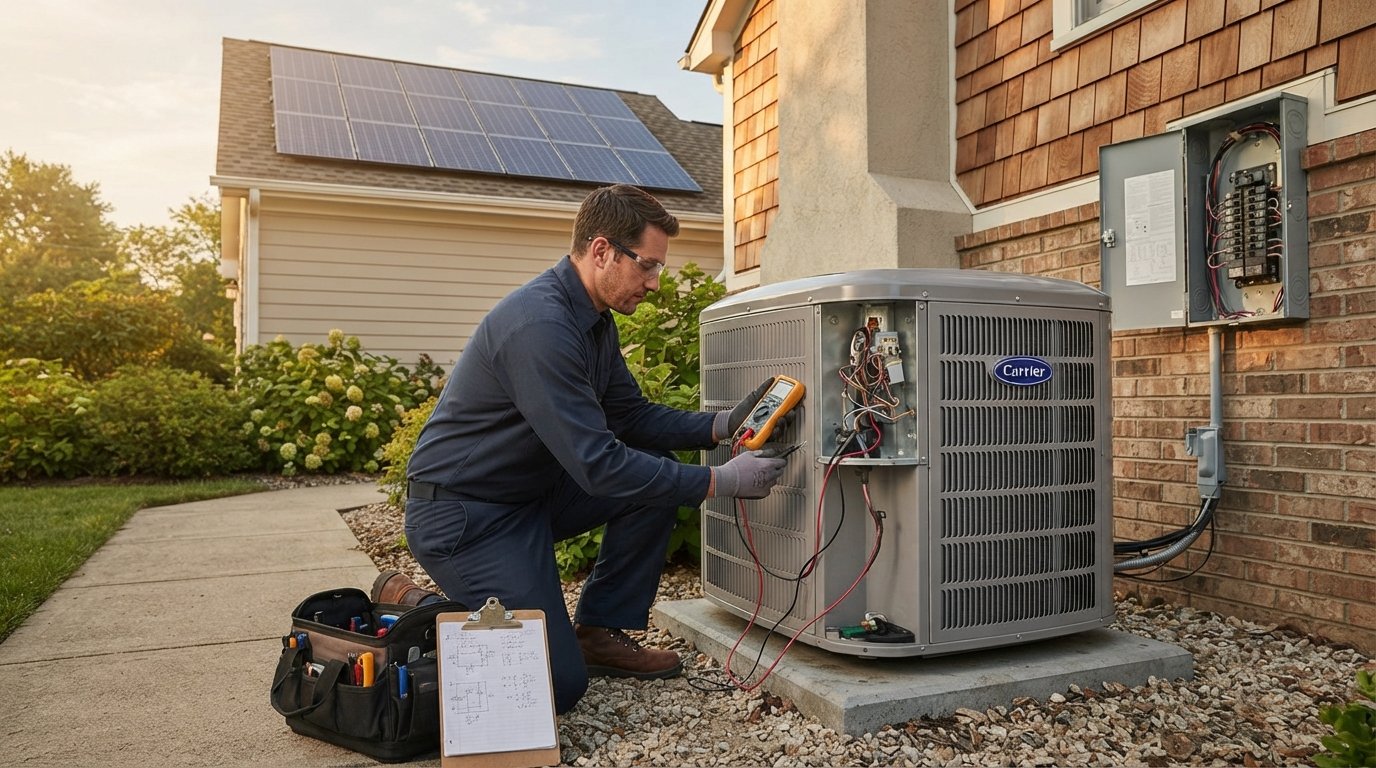
Solar Plus Heat Pump HVAC Sizing and Load Planning
Plan solar plus heat pump HVAC sizing and load planning with confidence. Call (833)-434-4023 to compare quotes from independent local providers.

By Adam Adler
Learn more about Solar Panel Installation and Repair for guides, costs, and what to expect.
Compare Solar Panel Installation and Repair Pros Near You

Enter your ZIP code to compare independent local professionals and request free quotes.
Replacing a gas furnace with an electric heat pump is one of the most effective ways to cut household emissions, but it also reshapes your home's electrical profile in ways that directly affect solar and battery decisions. A heat pump can double or triple winter electricity demand compared with a gas setup, and if you size a solar array around summer air conditioning alone, you may find yourself buying more grid power than expected when temperatures drop. Coordinating solar plus heat pump HVAC sizing and load planning means treating the heating system and the energy system as a single design problem, not two separate purchases.
The stakes are practical: an undersized array leaves you exposed to high winter bills, an undersized battery fails during an outage when the heat pump is running, and a heat pump that relies heavily on backup heat strips can overwhelm a system that looked adequate on paper. This guide walks through the electrical load differences, seasonal production patterns, battery sizing, cold-climate performance, and upgrade sequencing so you can plan a system that works in January as well as July.
How Heat Pump Electrical Load Compares With Gas Furnace and AC Setups
A gas furnace uses electricity for a blower fan, controls, and ignition, typically drawing a few hundred watts during operation. An air conditioner draws a few thousand watts when the compressor runs. A cold-climate heat pump sits in a different category: the outdoor compressor and fan can draw 2,000 to 5,000 watts or more depending on size and speed, and the indoor air handler adds several hundred watts. In heating mode, the same equipment that cools your home in summer becomes a major winter load, which changes the annual energy picture significantly.
The load profile also differs in shape. Air conditioners run hard on the hottest afternoons and cycle off at night. Heat pumps in cold weather often run for longer, steadier periods, especially inverter-driven models that modulate to match demand. That longer duty cycle matters for solar planning because it extends the hours when the heat pump is drawing power, including early morning and evening hours when solar production is low or zero.
Another factor is backup heat. Many heat pump installations include electric resistance strips that activate when outdoor temperatures drop below the heat pump's efficient operating range or when the system needs a fast temperature recovery. A 10 kW strip kit can add more demand than everything else in the house combined. If you are planning solar plus heat pump HVAC sizing and load planning, you need to know how often those strips will run and whether controls can lock them out except in extreme conditions. The table below summarizes the rough electrical demand differences among common setups.
- Gas furnace plus central AC: low winter electrical load (blower only), moderate summer load from the AC compressor.
- Heat pump with efficient cold-climate ratings: moderate to high winter load, similar summer load to an AC, with longer run times in both seasons.
- Heat pump with electric backup strips: potentially very high winter peaks when strips engage, which is the scenario most likely to exceed solar and battery capacity.
- Ductless mini-split heat pumps: lower per-zone demand and more granular control, often easier to match with a modest solar array.
The takeaway is that you cannot simply swap a gas furnace for a heat pump and keep the same energy plan. The heat pump's load profile, especially its winter peaks, should drive the solar and battery sizing conversation from the start.
Sizing Solar Production Around Winter Heating Versus Summer Cooling Peaks
Most solar arrays are sized to offset annual electricity use, but annual totals can hide seasonal mismatches. In many U.S. climates, solar production peaks in spring and early summer, while heat pump heating demand peaks in December and January when production is at its lowest. If you size the array to offset summer cooling, you may still face a winter deficit that the grid must cover, and that deficit can be larger than expected because heat pumps often use more energy for heating than for cooling over a full year.
A better approach is to model monthly production and consumption rather than annual totals. Compare the heat pump's estimated monthly heating energy (in kWh) with the array's estimated monthly production for your location and tilt. In northern climates, this comparison often shows a winter shortfall even when the annual numbers look balanced. In milder climates, winter production may be adequate, and the summer cooling load becomes the sizing driver. The goal is to identify which season sets the ceiling and then decide how much of that peak you want to cover with solar, how much with battery storage, and how much with grid purchases.
Several design choices can improve the winter match. Steeper array tilt favors lower winter sun angles. East-west layouts spread production across more hours, which can align better with morning and evening heat pump run times. Ground-mounted or pole-mounted arrays can be adjusted seasonally. And if your utility offers time-of-use rates, shifting heat pump operation to midday, when production is highest, can reduce evening grid draw. For homeowners comparing equipment options, our guide to a solar plus wind hybrid system for residential backup explains how adding a second generation source can further smooth winter production gaps in some regions.
It also helps to separate the heat pump's annual energy from the rest of the house. Whole-home annual usage divided by 12 is a poor proxy for winter demand. Instead, ask for a room-by-room or manual J load calculation, then use manufacturer performance data at your design outdoor temperature to estimate heating kWh. That number, compared month by month with solar production, gives you a realistic sizing target rather than an annual average that may never occur in practice.
Battery Capacity Needed to Ride Through Outages With Heat Pump Running
Battery sizing for outage backup is a different exercise from battery sizing for bill savings. For bill management, a modest battery can shave evening peaks and store midday solar. For outage resilience with a heat pump, the battery must carry the heat pump's actual running load, plus the rest of the home's critical circuits, for the duration of a typical outage. That duration varies widely by region, from a few hours to several days after a severe storm.
Start with the heat pump's measured or estimated average draw during the heating season, not its nameplate maximum. A cold-climate heat pump might average 1,500 to 3,000 watts while running, with duty cycles that vary by outdoor temperature. Multiply that average draw by the hours you want to cover. A 10 kWh battery might carry a 2 kW average load for roughly four to five hours after accounting for depth of discharge and efficiency losses, which is often not enough for an overnight winter outage. Doubling or tripling capacity extends coverage but adds cost.
Load management makes battery backup more practical. Soft-start controls, inverter-driven compressors, and smart panels that shed nonessential circuits can keep the heat pump running on a smaller battery. Some systems allow the heat pump to run at reduced capacity during outages, trading comfort for duration. If you plan to back up the heat pump, confirm that the battery and inverter can handle the compressor's locked rotor amps at startup, or that the equipment includes soft-start capability. Also decide which circuits are essential: heating, refrigeration, well pump, medical equipment, and a few lights and outlets may be enough, and isolating them preserves battery capacity for the heat pump.
For homeowners who want a broader look at resilience planning, comparing quotes from independent local providers can clarify what battery and inverter combinations are practical for your heat pump model. The sizing conversation should include the heat pump's startup characteristics, the desired outage duration, and whether backup heat strips will be locked out during an outage, since strips can drain a battery in minutes.
Cold-Climate Heat Pump Performance and Backup Heat Strips
Cold-climate heat pumps are rated to deliver meaningful capacity at low outdoor temperatures, often down to 5 degrees Fahrenheit or lower, but their capacity and efficiency decline as it gets colder. Manufacturers publish capacity tables showing output at various outdoor temperatures. At the design temperature for your area, the heat pump may produce less heat than the house needs, and the difference is made up by backup resistance strips. The frequency and duration of strip operation is the single biggest variable in winter electrical load.
Good design reduces strip reliance. Proper sizing using a manual J load calculation, careful duct design, and air sealing and insulation improvements all lower the heating load so the heat pump can carry it without strips. Controls also matter: modern thermostats can lock out strips above a set outdoor temperature or limit their use to defrost cycles and emergency recovery. Ask the installing contractor how the system is configured and whether strip lockout is available.
For solar and battery planning, estimate strip usage under typical winter conditions, not just design-day extremes. A system that uses strips only a few hours per year has a very different energy profile from one that leans on them regularly. If strips are likely to run often, the solar array and battery may need to be larger, or you may decide to prioritize envelope improvements before or alongside the heat pump upgrade. In either case, the heat pump's cold-weather performance data should be part of the solar sizing model, not an afterthought.
Sequencing Upgrades: HVAC First or Solar First
Homeowners often ask whether to replace the HVAC system first or install solar first. The better answer is usually to plan both together, even if the installations happen months apart. The heat pump choice determines the electrical load, and the load determines the solar and battery size. Installing solar before choosing the heat pump risks sizing the array for the old equipment. Installing the heat pump first gives you measured or well-estimated load data, but it can leave you paying high electricity bills in the interim if the solar is delayed.
A practical sequence looks like this:
- Assess the building envelope first. Air sealing, insulation, and window improvements reduce the load and may allow a smaller heat pump and smaller solar array.
- Choose the heat pump and get a manual J load calculation. Confirm cold-climate performance at your design temperature and ask about strip lockout and soft-start features.
- Model monthly solar production against the new heat pump load. Decide how much winter deficit you are willing to cover with the grid and how much battery storage you want for outages.
- Compare quotes from independent local providers for both HVAC and solar. Coordinating the two projects can reduce duplicate electrical work and ensure the panel and service can handle the new loads.
- Install in the order that matches your budget and incentives, but keep the design integrated. Many homeowners do envelope work first, then HVAC, then solar and battery, with the solar sized to the planned heat pump load.
If you need help finding providers for the HVAC side of the project, services like 180Remodel connect homeowners with independent local providers for HVAC, solar, and related home improvements, which can simplify coordinating schedules and scopes. Whoever you work with, insist that the solar and heat pump designs reference the same load calculation and the same assumptions about backup heat.
Solar plus heat pump HVAC sizing and load planning rewards homeowners who treat the projects as one system. Start with the envelope and a real load calculation, size solar around the season that sets the peak, size the battery around the outage duration you actually want, and confirm how the heat pump will behave in cold weather before you commit. Done in that order, the combination delivers lower bills, better resilience, and fewer surprises when the first cold snap arrives.