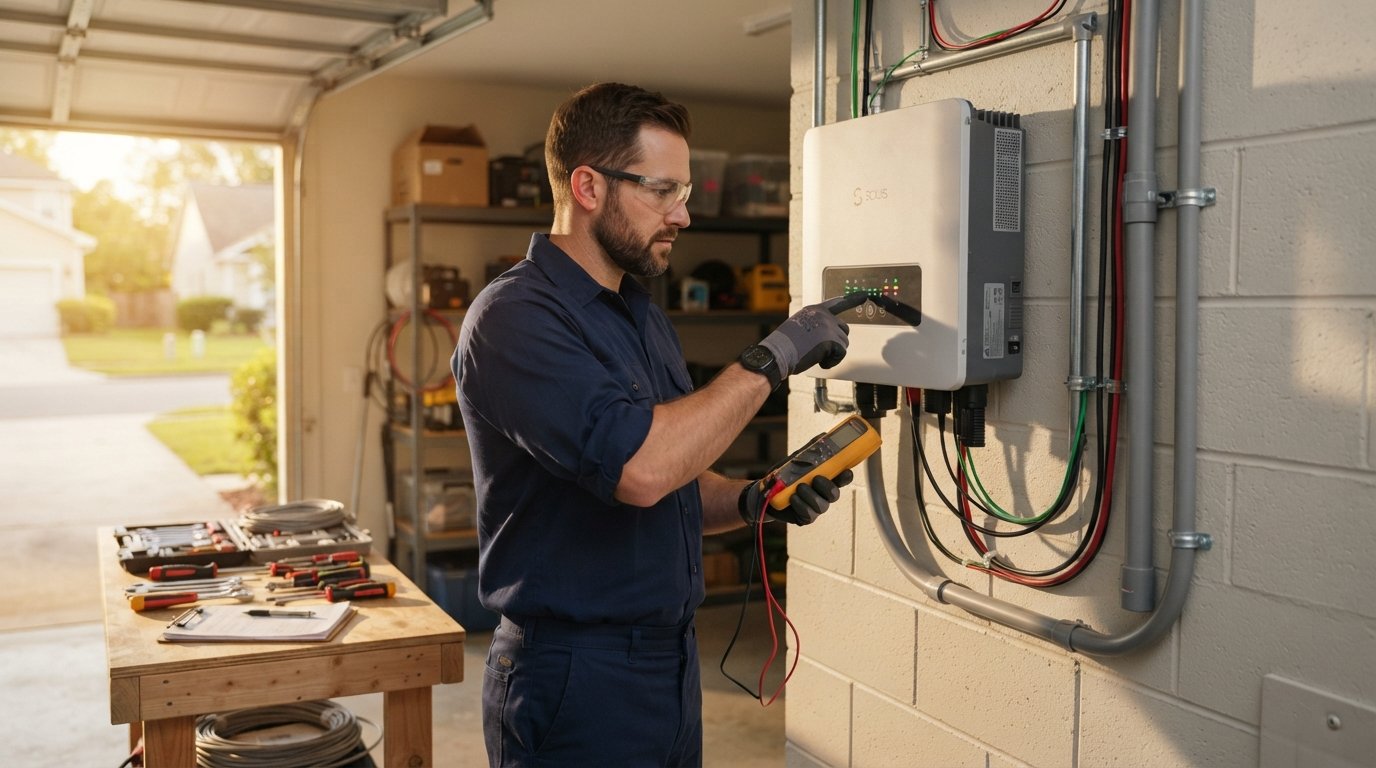
Solar Inverter Failure Signs and Replacement Planning
Spot solar inverter failure signs early and plan replacement with confidence. Call (833)-434-4023 for expert guidance on upgrades and quotes.

By Adam Adler
Learn more about Solar Panel Installation and Repair for guides, costs, and what to expect.
Compare Solar Panel Installation and Repair Pros Near You

Enter your ZIP code to compare independent local professionals and request free quotes.
The inverter is the hardest-working component in your solar energy system, converting direct current from your panels into usable alternating current for your home. When it starts to fail, you may not notice at first, but the warning signs are there: blinking error codes, unexplained shutdowns, or a slow drop in energy production. Recognizing these solar inverter failure signs early gives you time to plan a replacement on your terms, rather than scrambling when the system goes dark. This guide walks you through the signals of an aging inverter, the math behind repair versus replace, warranty steps, and smart upgrade paths for 2026.
Early Warning Signs Your Solar Inverter Is Failing
Inverters rarely fail overnight. They degrade gradually, and the first clues often appear as small annoyances that are easy to dismiss. One common sign is frequent error codes on the inverter display or monitoring app. Codes like "ground fault," "grid fault," or "over temperature" may appear intermittently at first, then become more persistent. These codes are the inverter's way of telling you something is wrong internally, whether it is a sensor issue, a loose connection, or a failing power board. Ignoring them only accelerates the decline.
Another early indicator is derating, where the inverter intentionally reduces its power output to protect itself from overheating or voltage issues. You might notice that on hot, sunny days your system produces noticeably less energy than it did in previous years, even though the panels are clean and the weather is ideal. Derating is often a sign that the inverter's cooling system is clogged, fans are failing, or internal components are wearing out. If derating becomes frequent, the inverter is struggling to maintain safe operating temperatures, and replacement should be on your radar.
Unexplained shutdowns are perhaps the most frustrating sign. The inverter may trip offline for no apparent reason, then restart hours later. These shutdowns can be caused by grid voltage fluctuations, but if they happen repeatedly and your utility confirms stable voltage, the inverter's internal protection circuits may be failing. Frequent shutdowns not only reduce energy production but also stress the inverter further, shortening its remaining life. Keeping a log of these events helps you and a service provider diagnose the problem accurately.
Error Codes, Derating, and Shutdown Patterns That Signal Aging
As inverters age, their error patterns become more telling. A single error code that appears once and never returns is usually harmless, but recurring codes that cluster around specific conditions (high heat, high voltage, or morning startup) point to component degradation. For example, a "DC isolation fault" that appears on humid mornings suggests moisture intrusion or insulation breakdown in the wiring or the inverter itself. A "grid overvoltage" error that occurs only when your neighbor's solar system is producing at peak may indicate a failing grid-tie circuit.
Derating patterns also evolve. Early on, derating may happen only on the hottest days. Over time, it may occur at lower temperatures, or the inverter may cap output at a lower percentage even in mild weather. If your monitoring data shows a downward trend in peak AC output over several months, the inverter is likely on its way out. Similarly, shutdown patterns that once happened monthly may become weekly or daily. These trends are your best evidence when deciding whether to repair or replace.
In our detailed guide on solar inverter failure warning signs, we cover seven specific indicators and quick fixes to try before replacement. That resource is a useful companion to this article, especially if you are still in the diagnostic phase and want to rule out simple issues like loose wiring or firmware glitches.
Lifespan Reality: Inverters vs. Panels
Solar panels typically come with 25-year performance warranties and can last even longer, but inverters have a much shorter expected life. Most string inverters last 10 to 15 years, while microinverters often last 15 to 20 years. The disparity is due to the inverter's complex electronics, which are exposed to heat, voltage spikes, and constant cycling. Understanding this mismatch is critical for replacement planning because you will likely replace your inverter at least once during the life of your panel system.
Several factors influence inverter lifespan. Installation location matters: an inverter mounted in direct sun or in a poorly ventilated garage will run hotter and fail sooner. Quality of the unit and proper sizing also play a role. An undersized inverter that runs at full capacity most of the day will wear out faster than one with a comfortable margin. Grid stability in your area can also affect longevity; frequent voltage surges stress inverter components.
When planning for replacement, consider the total cost of ownership. A replacement inverter may cost between $1,000 and $3,000 for the unit alone, plus labor. If your panels are still under warranty and producing well, replacing the inverter is almost always worthwhile. However, if your panels are also nearing the end of their life, you might consider a full system upgrade. The math is straightforward: compare the cost of a new inverter against the cost of a complete new system, factoring in any available incentives and the expected remaining life of your panels.
Repair or Replace: String Inverters and Microinverters
Deciding whether to repair or replace depends on the type of inverter and the nature of the failure. For string inverters, common failures include blown capacitors, failed cooling fans, and damaged power boards. Some of these can be repaired at the component level, but repairs are often expensive and may not be covered by warranty. If your string inverter is more than 8 years old and requires a major repair, replacement is usually the better financial choice. A new inverter will come with a fresh warranty and improved efficiency.
Microinverters present a different scenario. Because they are mounted under each panel, replacing a single microinverter involves removing the panel to access the unit. If one microinverter fails, you might replace just that unit, but if multiple units are failing, it may signal a systemic issue such as a bad batch or overheating. In that case, replacing the entire microinverter array may be more cost-effective than piecemeal repairs. Microinverter warranties often run 20 to 25 years, so check whether the failed units are still covered before paying for repairs.
To make a rational decision, gather the following information:
- Age of the inverter and remaining warranty coverage
- Estimated cost of repair versus new unit
- Efficiency of current inverter compared to modern models
- Labor costs for removal and installation
- Potential incentives for upgrading to a hybrid inverter
With these facts, you can calculate the payback period for replacement. Often, a new inverter pays for itself in a few years through higher reliability and better monitoring, especially if you choose a model with smart-grid features.
Warranty Claims and Labor Coverage Gaps
Most solar inverters come with a standard 5- to 12-year warranty, and some manufacturers offer extended coverage up to 25 years. However, warranties typically cover the equipment only, not the labor to diagnose, remove, and reinstall the inverter. Labor can add several hundred dollars to the cost of a replacement, and some warranties require you to use an authorized service provider, which may limit your choices. Before you file a claim, read the fine print to understand what is covered and what is not.
The claims process usually starts with contacting the manufacturer or the installer who originally installed your system. You will need proof of purchase, installation date, and serial numbers. The manufacturer may require diagnostic tests or error logs from your monitoring system. If the claim is approved, they will ship a replacement unit, but you may be responsible for installation costs. Some manufacturers offer labor allowances, but these are often capped and may not cover the full expense.
To avoid surprises, keep detailed records of all maintenance and monitoring data. If your inverter fails within the warranty period, having a log of error codes and performance trends strengthens your claim. Also, check whether your homeowner's insurance covers inverter failure due to power surges or lightning; some policies do, but many exclude it. In case you need to hire a professional for replacement, you can use resources like ContractorHomeQuotes to find and compare local contractors, ensuring you get transparent pricing for the labor portion.
Planning an Upgrade to Hybrid or Smart-Grid-Ready Inverters
If your inverter is failing, it is an opportunity to upgrade to a more capable model. Hybrid inverters combine solar inversion with battery storage management, allowing you to add batteries later without replacing the inverter again. Smart-grid-ready inverters can communicate with the utility and your home energy management system, enabling features like time-of-use optimization and demand response. These upgrades can increase your energy independence and potentially save money on your electricity bill.
When planning an upgrade, consider your future energy goals. If you anticipate adding a battery or an electric vehicle, a hybrid inverter is a wise choice. If you want to participate in virtual power plants or demand response programs, choose a smart-grid-ready model. Also, check for available incentives: some utilities offer rebates for upgrading to grid-friendly inverters. Be sure to verify program details with your utility, as offerings change.
Installation of a new inverter is a job for a qualified solar professional. The complexity of modern inverters, especially hybrid models, requires expertise in electrical wiring, code compliance, and system commissioning. SolarEnergy.ai can connect you with independent local providers who can assess your system and recommend the right inverter for your needs. Getting multiple quotes helps you compare equipment options and labor costs, so you can make an informed decision.
Replacement Planning Timeline and Budgeting
Once you recognize the signs of inverter failure, create a replacement plan. Ideally, you should start planning 6 to 12 months before the inverter completely fails. This gives you time to research models, obtain quotes, and schedule installation during a convenient time. If your inverter fails suddenly, you may need to act faster, but having a plan in place reduces stress and helps you avoid hasty decisions.
Budgeting for replacement involves more than the inverter cost. Include labor, permits (if required), and any system modifications needed for a new inverter. If you are upgrading to a hybrid inverter, factor in the cost of future batteries. Also, consider the lost energy production during downtime; a failed inverter means no solar savings until it is replaced. Some installers offer temporary inverters or expedited service, so ask about options.
Finally, think about ongoing maintenance. A new inverter will last longer if it is installed in a shaded, well-ventilated location and monitored regularly. Set up alerts on your monitoring app for error codes and performance drops, so you can address issues early. With proper care, your replacement inverter can serve you reliably for 15 years or more.
Solar inverter failure is not a matter of if, but when. By understanding the warning signs and planning ahead, you can turn a potential disruption into an opportunity to upgrade your system and enhance your energy independence. Take action at the first sign of trouble, and consult with independent local providers to ensure a smooth replacement process.