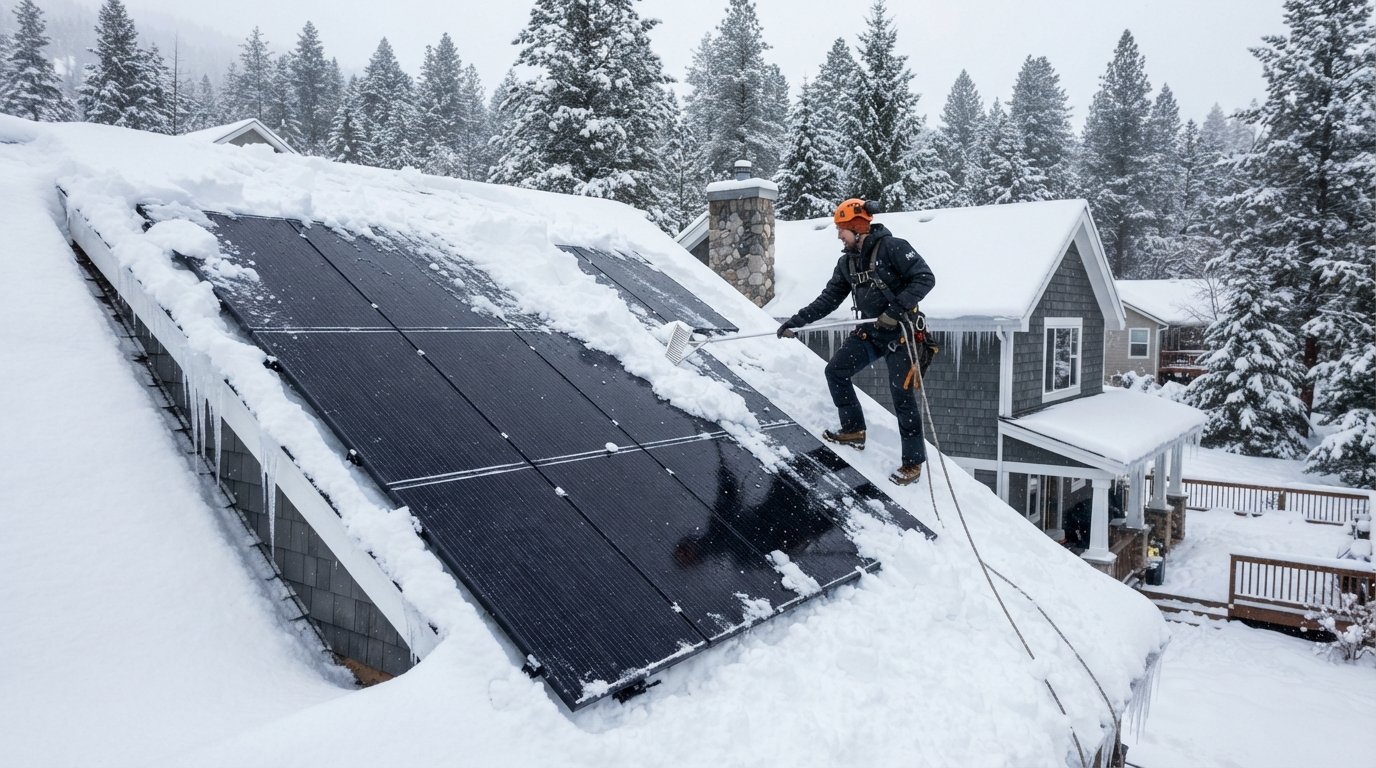
Solar Panel Performance in Heavy Snow Load Climates
Solar panel performance in heavy snow load climates depends on tilt, shedding, and safety. Call (833)-434-4023 for expert guidance on snow-ready systems.

By Victor Walsh
Learn more about Solar Panel Installation and Repair for guides, costs, and what to expect.
Compare Solar Panel Installation and Repair Pros Near You

Enter your ZIP code to compare top-rated local professionals and request free quotes.
Heavy snowfall does not render a solar array useless, but it does change how you plan, engineer, and operate a system. Homeowners in snowy regions often assume that winter production losses erase the financial case for solar. In practice, the story is more nuanced: snow reduces output for short periods, while cold temperatures actually improve panel efficiency. The key is understanding how snow interacts with tilt angle, module surface, roof structure, and maintenance practices. This guide breaks down the engineering, production modeling, and safety considerations so you can make an informed decision about solar in a heavy snow load climate.
How Snow Sheds from Solar Panels: Tilt Angle and Surface Matter
Snow shedding is the first line of defense against winter production losses. The angle of your roof and the texture of your module glass determine how quickly snow slides off. Steeply tilted arrays (40 degrees or more) shed snow far more readily than shallow ones (under 20 degrees). In snowy climates, installers often recommend tilt angles that match or exceed your latitude to encourage natural shedding. However, many residential roofs have fixed pitches that cannot be changed, so the module surface itself becomes the next variable.
Most modern solar panels use tempered glass with a smooth, hydrophobic coating. This surface allows snow to slide off once a thin layer of meltwater forms at the glass interface. Snow does not slide off immediately after a storm; it typically needs a bit of sunshine to warm the glass and create that lubricating layer. Dark-colored frames and backsheets also absorb heat, accelerating the process. Panels with anti-reflective coatings can slightly delay shedding because they hold a microscopic texture, but the difference is usually minor. Bifacial modules, which have a transparent backsheet, may stay slightly cooler and shed more slowly in some conditions, though the effect is small.
In regions with heavy, wet snow, shedding can be slower than with light, dry powder. Wet snow clings to glass and can form ice dams at the lower edge of the array. Proper flashing and snow guards on the roof above the array help prevent large sheets of snow from sliding onto the panels all at once, which can damage frames or create a safety hazard. Installers experienced with snow load climates will design the mounting system with these forces in mind.
Snow Load Engineering and Roof Structural Considerations
Snow load is not just a production issue; it is a structural one. Roofs in snowy regions are designed to support a certain snow load, typically measured in pounds per square foot (psf). Adding solar panels increases the dead load on the roof, and the panels themselves can accumulate snow. Most residential roofs can handle the additional weight of a solar array, but an engineering review is essential, especially for older homes or those with complex rooflines.
A qualified installer will calculate the total load: the weight of the panels, mounting hardware, and the maximum expected snow accumulation. They will also consider how snow slides and where it drifts. For example, snow tends to accumulate in valleys and behind parapets, so panel placement should avoid those areas when possible. In some cases, structural reinforcement may be needed, particularly if the roof already has multiple layers of shingles or is near the end of its service life.
Mounting systems for snow load climates often use heavier rails and more frequent attachment points. Standoffs and flashing must be sealed properly to prevent ice dams from forcing water under the roof. Some installers use snow guards above the array to break up large sheets of snow, reducing the risk of sudden avalanches that can damage gutters or injure people below. If you are planning a solar installation in a heavy snow load climate, ask your installer for the structural calculations and confirm that the mounting system is rated for your local snow load requirements.
Realistic Winter Production Losses vs. Annual Savings
It is true that snow reduces solar production, but the annual impact is often smaller than homeowners expect. In a heavy snow load climate, winter months (December through February) typically account for a small fraction of total annual solar yield. For example, a system in upstate New York might produce 10 to 15 percent of its annual output in winter, while summer months produce three to four times as much. Even if snow covers the panels for a week or two, the lost production is a small slice of the yearly total.
Modeling tools like PVWatts or the SolarEnergy.ai solar savings calculator can estimate winter losses based on your location, tilt, and orientation. These tools use historical weather data, including snowfall and cloud cover, to project monthly production. A common rule of thumb is that snow reduces winter output by 10 to 30 percent in moderately snowy areas, and up to 50 percent in areas with persistent snow cover. However, these losses are already baked into the annual production estimate, so the payback period and return on investment calculations remain valid.
The financial case for solar in snowy climates is strengthened by net metering and time-of-use rates. In many states, excess summer production credits can offset winter consumption, smoothing out the seasonal mismatch. Some utilities also offer snow-related rebates or incentives for panel clearing, though these are rare. The bottom line: snow does not erase savings, but it does require realistic expectations and, in some cases, a slightly larger system to compensate for winter losses.
Snow Removal Safety, Tools, and When to Leave Panels Alone
Snow removal from solar panels is a topic that generates a lot of debate. The short answer is: do not climb on your roof to clear snow. The risk of falls, electrical shock, and panel damage far outweighs the production gains. Most manufacturers recommend letting snow melt naturally. The panels are designed to handle snow loads, and the glass is tough enough to withstand the weight of typical accumulation.
If you must remove snow, use a soft-bristled roof rake with an extension pole from the ground. Never use a metal shovel, a pressure washer, or any tool that could scratch the glass. Work from the ground and avoid standing under the array while snow is sliding off. For ground-mounted systems, you can gently clear snow with a soft brush, but again, avoid sharp tools.
There are situations where professional snow removal makes sense: after an unusually heavy storm that exceeds the design load, or if ice dams are forming and threatening the roof. In those cases, call a professional. Do not attempt to chip ice off the panels; you can crack the glass or damage the frame. If your panels are covered in snow for an extended period, it is a sign that your tilt angle may be too shallow, and you might consider adjusting the mounting system in a future upgrade.
Safety first: always turn off the inverter before any work near the panels, and never touch the wiring. If you are unsure, contact a solar professional. SolarEnergy.ai connects homeowners with vetted solar pros who can handle snow removal safely and assess whether your system needs adjustments for snow load.
Why Cold Temperatures Can Boost Efficiency Even as Snow Reduces Output
Solar panels actually perform better in cold weather. The efficiency of a photovoltaic module is rated at 25 degrees Celsius (77 degrees Fahrenheit). As temperature rises above that, voltage drops and output decreases. In cold, sunny weather, panels can operate at higher voltage and produce more power per unit of sunlight. This is why a clear, cold winter day can yield impressive production, sometimes even exceeding summer output for a few hours.
The caveat is that snow cover blocks sunlight, so the cold-weather boost only applies when panels are clear. Once snow slides off, the cold temperatures help the panels operate efficiently. In snowy climates, this effect partially offsets winter losses. For example, a system in Colorado might see production spikes on cold, clear days after a snowfall, even if the previous day was a total loss. Over a season, the cold-temperature gain can recover a portion of the snow-related losses.
To maximize winter performance, ensure your panels are installed at an optimal tilt for your latitude and that they are not shaded by snow piles or icicles. Keep the area around the array clear of snow drifts that could cast shadows. If you have a ground-mounted system, you can clear snow from the ground around the panels to improve reflected light (albedo), which can boost production slightly on bifacial modules.
Designing and Maintaining a Snow-Ready Solar System
If you live in a heavy snow load climate, your installation strategy should differ from a mild-weather design. Start with a site assessment that includes snow load calculations and a review of your roof's structural capacity. Choose a tilt angle that encourages shedding, and consider a mounting system with extra clearance above the roof to prevent snow accumulation behind the panels. Microinverters or power optimizers can help mitigate partial shading from snow, as they allow each panel to operate independently.
Regular maintenance is also important. Before winter, inspect the panels for loose frames or damaged seals. Clear gutters and downspouts to prevent ice dams. After a major snowstorm, check for snow buildup on the roof, especially in valleys. If you notice ice dams forming, call a professional. For homeowners who want a hands-off approach, a solar monitoring system can alert you to production drops, which may indicate snow cover or a fault.
When choosing an installer, look for experience with snow load climates. Ask for references from local customers and confirm that the company follows local building codes for snow loads. SolarEnergy.ai's network of solar pros includes installers who specialize in snowy regions. If you are also planning other home upgrades, such as a roof replacement or window installation, you can find trusted contractors through USremodel to ensure your home is ready for solar.
For a deeper dive into system sizing and panel options, see our guide on how to maximize energy with a 200 watt solar panel, which covers small-scale and off-grid applications that can be useful in snowy cabins.
In summary, solar panel performance in heavy snow load climates is a balance of engineering, weather, and maintenance. Snow will reduce output temporarily, but cold temperatures and smart design can keep annual savings on track. By understanding shedding behavior, structural requirements, and safe removal practices, you can enjoy the benefits of solar even in the snowiest regions.
Learn more about Solar Panel Installation and Repair for guides, costs, and what to expect.
Compare Solar Panel Installation and Repair Pros Near You
Enter your ZIP code to compare top-rated local professionals and request free quotes.