Solar Panel Performance in Coastal Salt Air Environments
Salt air can cut solar output and corrode components. Protect your coastal solar investment with the right gear and maintenance. Call (833)-434-4023.

By Mason Carter
Learn more about Solar Panel Cleaning for guides, costs, and what to expect.
Compare Solar Panel Cleaning Pros Near You

Enter your ZIP code to compare top-rated local professionals and request free quotes.
Coastal homeowners often wonder if the ocean breeze that makes their property so desirable could also undermine their solar investment. The answer is nuanced: salt air and humidity do pose real challenges, but with the right equipment and practices, solar panels can thrive even in these demanding environments. Understanding how salt-laden air interacts with solar components is the first step toward protecting your system and maximizing its output for decades.
How Salt Air and Humidity Affect Solar Panel Components
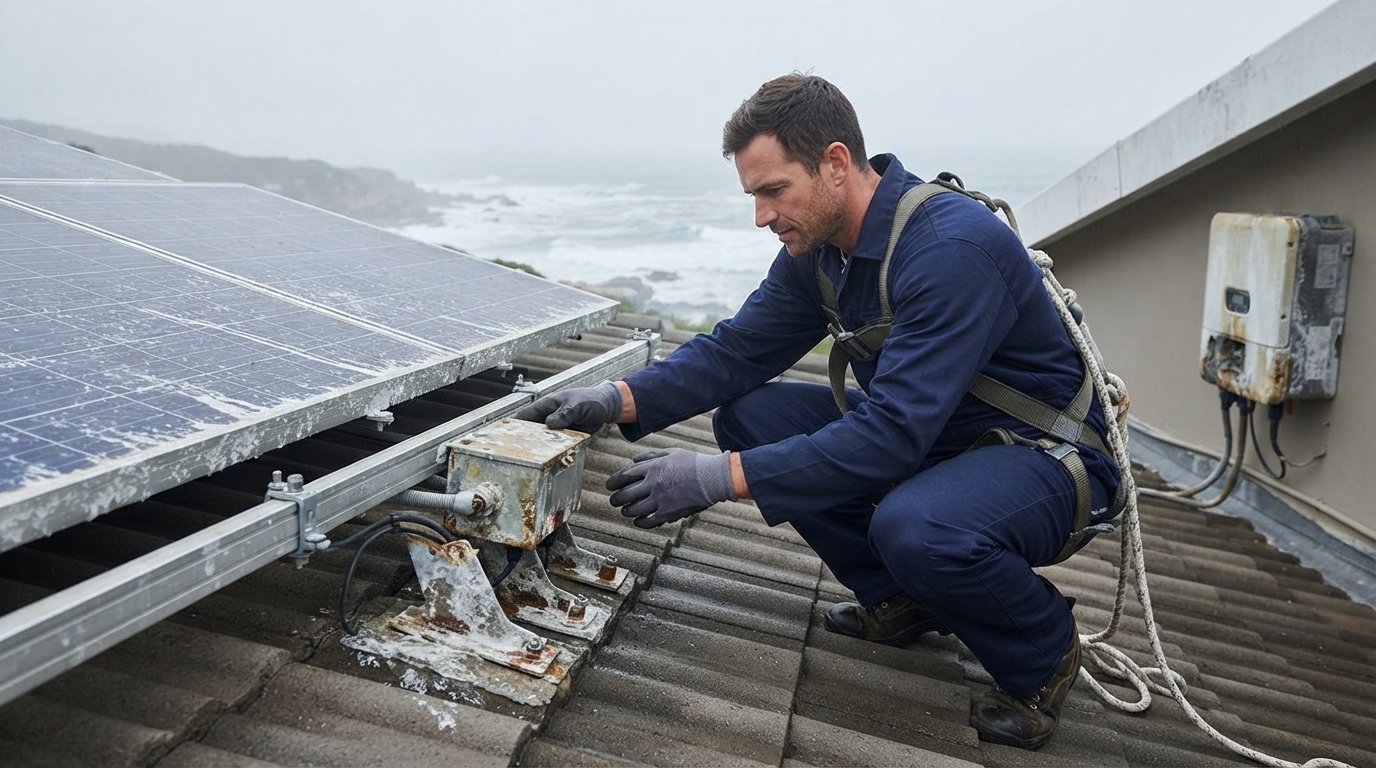
Salt air is corrosive, and when combined with high humidity, it accelerates the degradation of many materials. Solar panels themselves are sealed, but the racking, wiring, connectors, and junction boxes are all exposed. Over time, salt deposits can cause rust on steel components, corrode aluminum frames, and degrade polymer seals. Connectors, in particular, are vulnerable: if moisture and salt penetrate a connection point, resistance increases, leading to power loss and potential safety hazards. Humidity exacerbates the issue by keeping surfaces wet longer, promoting electrochemical corrosion.
Inverters, often installed outdoors or in garages, are also at risk. Salt fog can enter cooling vents and coat circuit boards, leading to short circuits or premature failure. Even the glass surface of the panels can accumulate salt residue, which, if left unchecked, can reduce light transmission and lower energy production. The key is to recognize that while the panels themselves are robust, the balance of system components requires careful selection and maintenance.
Corrosion Risks: Racking, Connectors, and Junction Boxes
Not all mounting hardware is created equal. Standard galvanized steel or untreated aluminum can corrode quickly in coastal zones. Manufacturers offer marine-grade aluminum or stainless steel (grade 316) racking specifically for saltwater proximity. These materials resist pitting and crevice corrosion far better than their inland counterparts. Similarly, connectors should be rated for harsh environments; look for IP68-rated MC4 connectors with gold-plated contacts or those specifically tested for salt spray. Junction boxes on the panels themselves must be sealed and resistant to UV and salt fog.
Wiring should be run in conduits with sealed fittings to prevent salt air from contacting the conductors. Any exposed metal, such as mounting bolts, should be stainless steel. It is also wise to apply anti-corrosion gel to connections and perform regular inspections. A proactive approach to corrosion prevention will extend the life of your system and maintain safety.
Module and Inverter Ratings Suited to Coastal Installations
When selecting solar panels for coastal areas, look for modules that have passed salt mist corrosion testing, such as IEC 61701. This standard certifies that the panel can withstand exposure to salt fog without significant degradation. Many major manufacturers offer panels with this certification, often indicated in the datasheet. Additionally, panels with anodized aluminum frames and high-quality encapsulants are better equipped to resist moisture ingress.
Inverters should have a NEMA 4X rating or higher, which means they are protected against windblown dust and water, including salt spray. Some manufacturers offer coastal-specific models with conformal-coated circuit boards for extra protection. If your inverter is installed outdoors, consider a shade structure or a sealed enclosure to shield it from direct salt spray. Battery storage systems, if used, should also be rated for the environment or installed indoors.
Cleaning Frequency and Salt Residue Buildup on Glass
Salt residue on solar glass is a common issue in coastal areas. Unlike dust, salt crystals can bond to the glass and are not easily washed away by rain. Over time, this buildup can reduce panel efficiency by 5% to 15% or more. Regular cleaning is essential, but the frequency depends on proximity to the ocean and local weather patterns. Generally, coastal homeowners should aim to clean their panels every 3 to 6 months, or more often if they notice visible salt film.
Use a soft brush and a mild detergent solution (never abrasive cleaners) to gently remove salt deposits. Rinse with clean water, preferably deionized, to avoid leaving new mineral spots. It is best to clean early in the morning or late in the day when panels are cool to prevent thermal shock. Avoid using a pressure washer, which can damage seals and coatings. If you are unsure about cleaning, many solar professionals offer maintenance services that include inspection and cleaning tailored to coastal conditions.
Warranty Language That Addresses Coastal Exposure
Not all solar warranties are written with coastal environments in mind. Some manufacturers exclude damage from salt air or require specific installation practices to maintain coverage. Before purchasing, review the warranty terms carefully. Look for explicit coverage for corrosion or salt mist degradation, or at least assurance that the warranty remains valid when the system is installed per coastal guidelines. Panel warranties typically last 25 years, but the fine print matters.
Workmanship warranties from the installer should also cover corrosion-related issues. Ask potential installers about their experience with coastal installations and whether they use marine-grade hardware by default. A reputable installer will be transparent about warranty limitations and can recommend products with strong coastal track records. At NewSolarQuotes, homeowners can compare quotes from installers who specialize in coastal solar and understand the unique challenges.
Expected Performance Differences Versus Inland Installations
Solar panels in coastal areas can perform slightly differently than those inland. On the positive side, coastal regions often benefit from cooler temperatures, which can improve panel efficiency. Solar panels lose efficiency as they heat up, so the ocean breeze can actually boost output on hot days. However, the negative impact of salt accumulation and potential corrosion can offset these gains if maintenance is neglected.
Studies suggest that well-maintained coastal systems can achieve 95% or more of the output of similar inland systems. Without regular cleaning, that number can drop significantly. Inverters may also operate less efficiently if they are corroded or overheated due to blocked vents. Overall, with proper equipment selection and a consistent maintenance routine, coastal homeowners can expect performance that rivals inland installations.
Best Practices for Coastal Solar Installations
To ensure your coastal solar system performs at its best, follow these best practices:
- Choose certified equipment: Select panels with IEC 61701 certification and inverters with NEMA 4X rating.
- Use marine-grade hardware: Specify stainless steel or marine-grade aluminum for racking and mounting.
- Seal all connections: Apply anti-corrosion gel and use sealed conduits and junction boxes.
- Schedule regular cleaning: Clean panels every 3-6 months to remove salt residue.
- Conduct annual inspections: Have a professional inspect for corrosion and tighten connections as needed.
These steps will help mitigate the risks and keep your system operating efficiently. Additionally, consider incorporating AI renewable energy solutions to monitor performance and detect issues early. AI-driven analytics can alert you to drops in output that might indicate salt buildup or corrosion, allowing for timely intervention.
Finally, when planning your installation, work with professionals who understand coastal conditions. They can design a system that accounts for wind-driven salt spray, choose the right materials, and advise on maintenance schedules. With the right approach, solar panels can be a reliable and long-lasting investment even in the most demanding coastal environments.
By staying informed and proactive, coastal homeowners can enjoy the benefits of clean energy without sacrificing performance. Whether you are just starting your solar journey or looking to optimize an existing system, the key is to respect the environment and choose solutions built to withstand it.