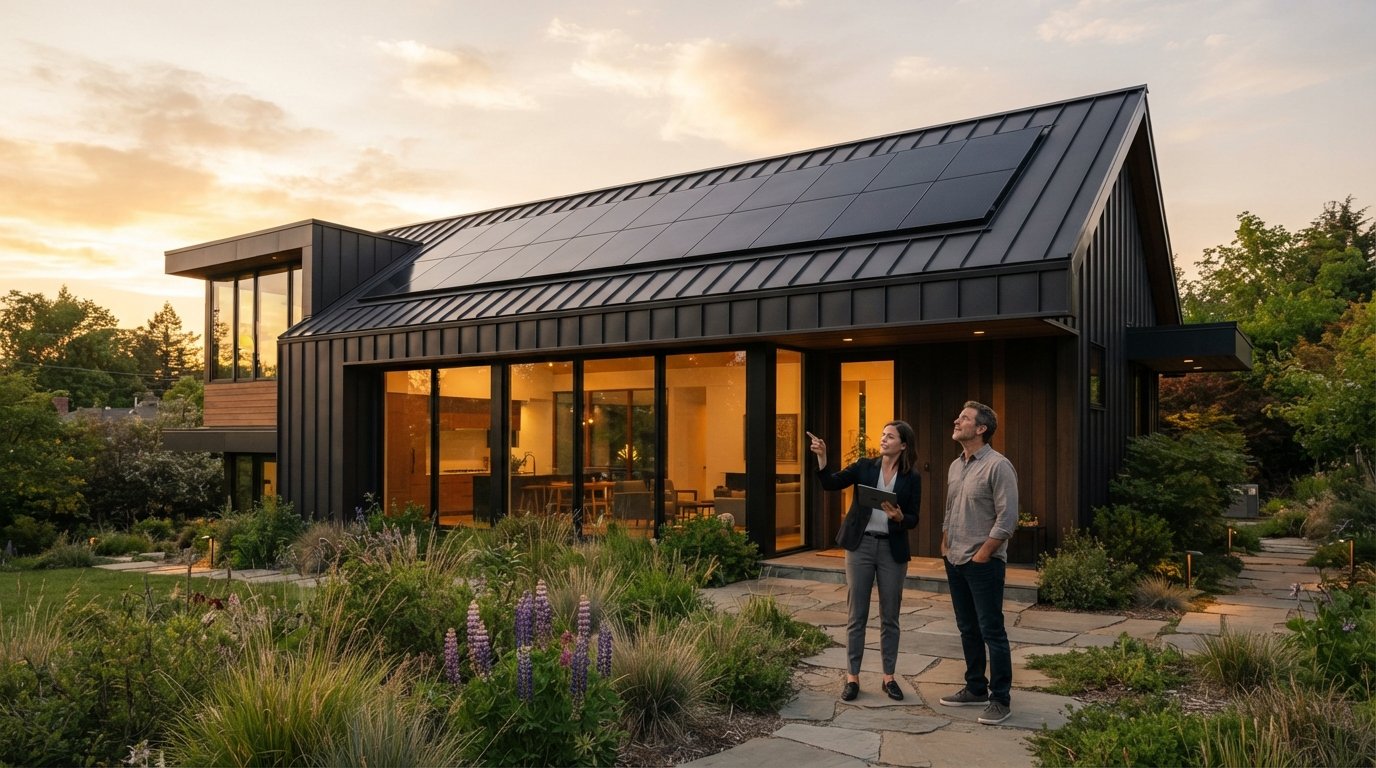
Architectural Solar Panel Integration in Modern Home Design
Architectural solar panel integration modern home design blends clean aesthetics with energy efficiency. Call (833)-434-4023 for expert guidance.

By Wendy Young
Learn more about Solar Panel Installation and Repair for guides, costs, and what to expect.
Compare Solar Panel Installation and Repair Pros Near You

Enter your ZIP code to compare top-rated local professionals and request free quotes.
Solar panels have long been viewed as a functional afterthought, bolted onto rooftops with little regard for aesthetics. But as modern home design evolves, architects and homeowners are rethinking this approach, treating solar technology as an integral part of the building envelope rather than an add-on. Architectural solar panel integration is transforming how homes look, perform, and appeal to buyers, proving that clean energy and curb appeal can coexist beautifully.
In this guide, we explore the strategies, products, and design considerations that make architectural solar integration work in modern homes. Whether you are planning a new build or retrofitting an existing property, the insights here will help you make informed decisions that balance energy production with visual harmony.
Why Architectural Integration Matters in Modern Home Design
Modern architecture emphasizes clean lines, minimalism, and seamless indoor-outdoor connections. Traditional racked solar panels, with their visible mounting hardware and gaps between modules, can disrupt these design goals. Architectural integration solves this by embedding solar components into the roof, facade, or shading structures, creating a cohesive look that feels intentional rather than improvised.
Beyond aesthetics, integrated solar can enhance a home's resale value. Buyers increasingly prioritize energy efficiency and sustainability, and a thoughtfully designed solar system signals quality and forward-thinking construction. According to industry surveys, homes with visible, well-integrated solar arrays often command higher prices and sell faster than comparable homes without solar.
Moreover, integration can improve performance. Flush-mounted systems reduce wind uplift and debris accumulation, while building-integrated photovoltaics (BIPV) can replace conventional roofing materials, potentially lowering material costs. The key is to approach solar as a design element from the outset, not a last-minute addition.
Roof-Integrated and Flush-Mount Options vs. Traditional Racked Panels
When it comes to architectural solar integration, the roof is the most common canvas. Three main approaches dominate: traditional racked panels, flush-mount systems, and roof-integrated solutions.
Traditional racked panels are the most familiar. They sit on metal rails above the roof surface, allowing airflow that can slightly improve efficiency in hot climates. However, the visible gap and hardware can detract from a clean roofline. For modern homes with low-slope or flat roofs, racked panels may appear particularly obtrusive.
Flush-mount systems reduce the gap between panels and roofing, creating a sleeker profile. They are easier to install on existing roofs and cost less than full integration. While still visible, they minimize the "erector set" look and can blend better with dark roofing materials.
Roof-integrated solar takes integration further by replacing or becoming the roofing surface itself. Products like solar shingles or tiles interlock with conventional shingles, offering a uniform appearance. These systems are ideal for new construction or major reroofs, where the incremental cost can be absorbed into the overall project. They also protect the roof from weather and can qualify for the same tax credits as traditional panels.
Each option has trade-offs in cost, performance, and aesthetics. For homeowners prioritizing visual appeal, flush-mount or integrated systems are worth the investment. Those on a tighter budget may opt for racked panels with strategic placement on less visible roof planes.
Design Details: All-Black Panels, Frameless Modules, and Hidden Conduit
The devil is in the details when it comes to architectural solar integration. Even with flush mounting, visible frames, silver busbars, and exposed wiring can undermine the clean look. Fortunately, manufacturers now offer products designed for aesthetic discretion.
All-black panels feature black backsheets, black frames, and black busbars, creating a monolithic appearance that disappears against dark roofing. They are particularly effective on modern homes with charcoal or slate-colored roofs.
Frameless modules eliminate the aluminum frame entirely, allowing panels to sit nearly flush with the roof surface. This reduces visual clutter and creates a seamless expanse of glass. Frameless panels are also lighter and can be more resistant to wind uplift, though they may require specialized mounting.
Hidden conduit and wiring are critical for a polished look. Installers can route cables through the attic or behind fascia boards, using junction boxes that blend with the exterior. Careful planning during the design phase ensures that conduit runs are minimized and concealed.
These details may add 10-20% to the system cost, but for design-conscious homeowners, the payoff in curb appeal and resale value is often worth it. When evaluating quotes, ask installers about their approach to concealment and whether they have experience with premium aesthetic components.
Balancing Aesthetics and Energy Capture: Panel Layout Strategies
A beautiful solar array is useless if it does not produce enough energy. Architectural integration requires balancing visual goals with optimal orientation and tilt. Fortunately, modern design tools and solar modeling software allow for precise planning.
The first step is to assess the home's solar access. South-facing roofs are ideal in the northern hemisphere, but east and west orientations can also work with modern inverters and panel technology. For complex rooflines, microinverters or power optimizers can mitigate shading and allow more flexible layouts.
When laying out panels, consider symmetry and alignment with architectural features. Panels should align with roof edges, dormers, and windows to create a sense of order. Avoid awkward gaps or partial panels at the edges; instead, group panels in clean rectangles or follow the roofline contours.
In some cases, it may be worth sacrificing a small amount of energy production for a more pleasing layout. For example, omitting panels on a prominent street-facing roof plane and maximizing production on a less visible side can preserve curb appeal while still meeting energy goals. A skilled solar designer can model various scenarios and quantify the trade-offs.
For homeowners interested in maximizing savings through advanced modeling, consider reading why AI improves solar accuracy for bigger home savings. This resource explains how artificial intelligence can optimize panel placement and predict performance with greater precision, helping you make data-driven decisions that balance aesthetics and output.
Working with Designers and Installers on a Solar-Ready Exterior Plan
Achieving seamless architectural solar integration requires collaboration between architects, builders, and solar installers from the earliest design stages. Too often, solar is an afterthought, leading to compromises in both appearance and performance.
Start by assembling a team that includes a solar consultant or installer during the schematic design phase. They can advise on roof orientation, structural considerations, and conduit pathways before walls are framed. For new construction, this is the ideal time to specify solar-ready features such as reinforced roof framing, pre-installed conduit, and a designated inverter location.
Architects should also consider the solar array as a design element. On modern homes, a visible array can be a feature if thoughtfully composed. For example, panels can be framed by standing seam metal roofing or integrated into a pergola or carport. The goal is to make solar look intentional, not hidden.
When selecting an installer, ask about their experience with architectural integration and their willingness to coordinate with your design team. Request references from projects with similar aesthetic goals. A good installer will understand that a clean installation is as important as a high-performing one.
For homeowners seeking vetted solar professionals, NewSolarQuotes offers an independent educational resource and a network of pre-screened installers across the United States. Their platform can help you compare quotes and find contractors who specialize in aesthetically sensitive installations.
Property Value and Buyer Perception: The ROI of Aesthetic Solar
Investing in architectural solar integration can pay off at resale. A study by the Lawrence Berkeley National Laboratory found that homes with solar sell for a premium of $15,000 on average, and that premium increases for systems that are integrated into the roof rather than rack-mounted. Appraisers are also becoming more adept at valuing solar, particularly when it is a seamless part of the home's design.
Buyers perceive integrated solar as a sign of quality and thoughtful construction. It suggests that the home was designed with efficiency in mind, potentially leading to lower utility bills and a smaller carbon footprint. In competitive markets, this can be a decisive factor.
To maximize resale value, keep documentation of the solar system, including performance data, warranties, and maintenance records. A well-maintained, aesthetically integrated system is more likely to appraise favorably and attract eco-conscious buyers.
Moreover, integrated solar can contribute to green certification programs like LEED or the National Green Building Standard, which may further enhance property value and marketability.
Key Considerations for Homeowners: A Checklist
Before embarking on an architectural solar project, keep these practical points in mind:
- Assess your roof's condition: If your roof is nearing the end of its life, replace it before installing solar to avoid costly removal later.
- Understand your energy goals: Determine how much of your electricity bill you want to offset and size the system accordingly.
- Check local incentives: Federal tax credits, state rebates, and net metering policies can significantly affect your return on investment. Verify details with official sources.
- Plan for future needs: Consider battery storage or electric vehicle charging, and ensure your system is designed to accommodate future additions.
- Prioritize quality installation: A poorly installed system can leak or underperform. Choose certified installers with a track record of aesthetic integration.
By addressing these factors early, you can avoid common pitfalls and ensure a smooth integration process.
The Future of Architectural Solar in Modern Homes
As technology advances, solar products are becoming more versatile and aesthetically pleasing. Transparent solar windows, solar skins that mimic roofing materials, and even solar paints are in development, promising even greater design freedom. Building-integrated photovoltaics are expected to grow in popularity as costs decline and architects become more familiar with their potential.
For now, the best approach is to work with experienced professionals who can guide you through the available options and help you achieve a balance of form and function. With careful planning, architectural solar panel integration can elevate your modern home's design while delivering long-term energy savings and environmental benefits.
Ready to explore solar for your home? Consider using a solar savings calculator to estimate your potential returns, and connect with local installers who specialize in architectural integration. The investment in both aesthetics and efficiency is one that will pay dividends for years to come.