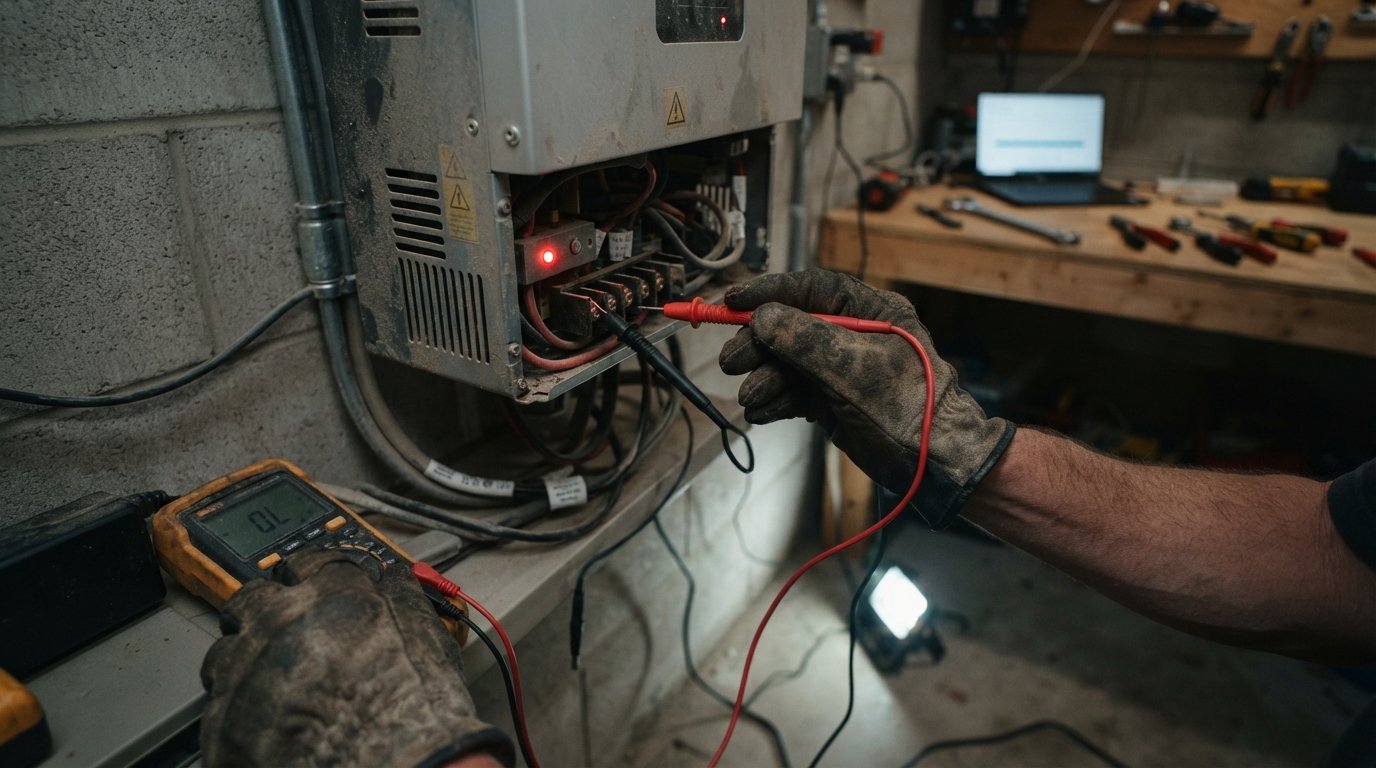
Solar Inverter Failure: 7 Warning Signs and Fixes
Identify common solar inverter failure signs like error codes and low output, then apply the right solutions to restore your system.

By Mason Carter
Learn more about Solar Panel Installation and Repair for guides, costs, and what to expect.
Compare Solar Panel Installation and Repair Pros Near You

Enter your ZIP code to compare top-rated local professionals and request free quotes.
Your solar panels capture the sun, but your inverter is the component that actually makes that energy usable. It converts the direct current (DC) electricity from your panels into alternating current (AC) for your home. When this critical device starts to fail, your entire system suffers, often without you noticing until your electricity bill spikes. Understanding the early warning signs of inverter trouble and knowing which solutions are safe to attempt can save you from costly repairs and extended downtime.
Why Inverter Health Matters for Your Solar Investment
Your inverter is often called the brain of your solar array, and for good reason. It manages power flow, monitors system performance, and ensures safety by shutting down during grid outages. A failing inverter does not just reduce energy production; it can also create safety hazards or damage your expensive solar panels. For most homeowners, the inverter is the most likely component to fail within the first 15 years of a system's life, making it a key focus of any maintenance routine.
Regularly checking your inverter's display and monitoring your energy production through your solar app are simple habits that pay off. If you notice a consistent drop in output, it is time to investigate. In our guide on best solar inverter types for home comparison, we explain how different technologies (like string, micro, and hybrid inverters) display errors and age differently, which helps you understand what is normal for your specific setup.
7 Common Solar Inverter Failure Signs
Inverters rarely fail without giving some indication. The challenge is that these signs can be subtle, or they can be technical alerts that you simply do not recognize. Being proactive means you can address issues before they require a full replacement. Here are the seven most common indicators that your inverter is struggling:
- No Display or Blank Screen: The inverter has no lights or text, indicating a complete power loss or internal failure.
- Persistent Red or Orange Error Light: The status LED is flashing or solid red, signaling a fault condition that requires attention.
- Error Codes on the Screen: Alphanumeric codes like F01, Err, or Grid Fail appear on the display, pointing to specific technical issues.
- Excessive Heat or Fan Noise: The unit feels unusually hot to the touch, or the cooling fan is running loudly or constantly.
- Burning Smell: A distinct odor of burnt plastic or electrical components, which is a serious fire hazard.
- Frequent Tripping of Breakers: Your main breaker or the inverter's dedicated breaker trips repeatedly during normal operation.
- Significant Drop in Energy Output: Your monitoring app shows a sharp decline in production that does not correlate with weather or shading.
While some of these signs are minor, others demand immediate action. A burning smell or a tripping breaker is a safety issue that requires you to turn the system off at the main switch and contact a professional right away. On the other hand, a slight drop in output might simply be due to dirt on your panels or a temporary grid voltage issue.
Diagnosing the Root Cause of the Failure
Once you have identified a warning sign, the next step is to diagnose the problem. Not all faults are created equal. Some are external issues, like grid voltage fluctuations, while others are internal component failures. The first thing to check is your inverter's display screen, as most modern units will show a specific error code. Write this code down, as it is the key information a technician will need to troubleshoot effectively.
External factors are a common culprit. If your utility grid experiences voltage spikes or frequency shifts, your inverter will automatically disconnect for safety. This is called anti-islanding protection. While this is normal, repeated disconnections suggest that your inverter's thresholds are too sensitive for your local grid conditions. Furthermore, extreme heat can cause an inverter to derate (reduce output) to protect its internal components. If your inverter is installed in direct sunlight without proper ventilation, it will overheat and fail prematurely.
Simple Checks You Can Do Yourself
Before calling a technician, there are a few safe diagnostic steps you can take. First, check the DC disconnect switch to ensure it is in the ON position. Then, visually inspect the inverter for any obvious physical damage, like cracks or water ingress. If you have a string inverter, check the breaker on your main electrical panel that feeds the inverter. A tripped breaker is often the simplest explanation for a dead system.
Another easy fix involves the monitoring system. Sometimes the inverter is working fine, but the Wi-Fi or ethernet connection to your home network is down, causing a false reading on your app. Restarting your router and reconnecting the inverter to your network can resolve this. If none of these simple checks solve the issue, the problem is likely internal to the inverter.
Practical Solutions for Inverter Issues
The solution to your inverter problem depends entirely on the diagnosis. For external issues like grid instability, the fix might involve adjusting the inverter's settings (if your model allows it) or installing a more robust inverter that can handle wider voltage ranges. For physical issues like overheating, the solution is often as simple as relocating the unit to a shaded, cooler area or cleaning the ventilation fins.
However, for internal electronic failures, there is rarely a DIY fix. Inverters contain high-voltage capacitors that can hold a lethal charge even after being unplugged. Attempting to open the unit yourself is dangerous and will void your warranty. In this case, the professional solution is either a component repair or a full inverter replacement. If your inverter is under warranty (typically 10 to 12 years for string inverters, 25 years for microinverters), you may be eligible for a free replacement unit, though you will likely still pay for labor.
When facing a replacement, you have an opportunity to upgrade. Newer inverter models are more efficient, have better monitoring capabilities, and are often more resilient to grid disturbances. A professional installer can help you select a unit that matches your panel configuration and energy needs. For those looking to avoid this situation in the future, exploring options like microinverters or power optimizers, which operate at the panel level, can prevent a single point of failure from taking your whole system offline.
When to Call a Professional Installer
While checking breakers and cleaning vents is safe, anything involving wiring, internal components, or persistent error codes requires a licensed electrician. Solar inverters operate at high DC voltages, which are particularly dangerous. A professional will have the training and equipment to safely diagnose the issue and perform repairs. They can also verify that your system meets local electrical codes, which is crucial for insurance and warranty purposes.
Hiring a professional is also cost-effective in the long run. They can perform a comprehensive system check, identifying not just the inverter issue but also potential problems with your wiring or panels. If you are unsure about the condition of your system, a service visit is a worthwhile investment. You can find vetted local specialists through platforms like SolarEnergy.ai, which connects homeowners with qualified installers for repairs and maintenance.
Preventative Maintenance to Extend Inverter Life
The best solution to inverter failure is prevention. Unlike solar panels which are fairly passive, inverters are active electronic devices that generate heat. Keeping them cool and clean is the most effective way to extend their lifespan. Ensure that the area around your inverter is clear of debris, leaves, and boxes. If it is mounted outside, make sure it has adequate clearance on all sides for airflow.
Schedule an annual professional inspection of your entire solar system. A technician can check DC connections for tightness, verify that ventilation is adequate, and test the inverter's output against your panels' expected generation. They can also update the inverter's firmware if available, which can fix known bugs and improve performance. Additionally, consider investing in a monitoring service that sends alerts directly to your phone when your inverter logs an error or when production drops unexpectedly.
Financial Considerations for Inverter Replacement
Replacing a solar inverter is a significant expense, often ranging from $1,000 to $3,000 including installation. However, a failed inverter means your solar panels are producing zero usable energy, which costs you money every day. In many cases, the payback period for a new inverter is short, especially if you were paying high utility rates. Before authorizing a replacement, ask your installer for a detailed quote that breaks down the cost of the unit versus the labor.
You should also review your solar panel warranty. Some manufacturers offer a workmanship warranty that covers parts and labor for a certain number of years. Furthermore, check with your utility company to see if they offer any rebates for upgrading to a more efficient inverter model. While most federal tax credits apply to new solar installations, there are sometimes state-level programs that support inverter upgrades. As with any major home expense, getting multiple quotes from different providers is wise.
Understanding your system's health is part of responsible homeownership. If you are experiencing any of the failure signs mentioned and need to compare costs or find a technician, getting a free estimate can help you budget. You can request no-obligation quotes from vetted professionals through FreeSolarPowerQuotes to ensure you are getting a fair price for the necessary repairs.
Monitoring your inverter is not just about fixing problems; it is about maximizing the return on your solar investment. A well-maintained inverter ensures you are generating the maximum amount of clean energy possible, reducing your reliance on the grid and keeping your electricity bills low. By staying alert to the warning signs and acting quickly, you can avoid extended downtime and keep your home powered by the sun for decades to come.