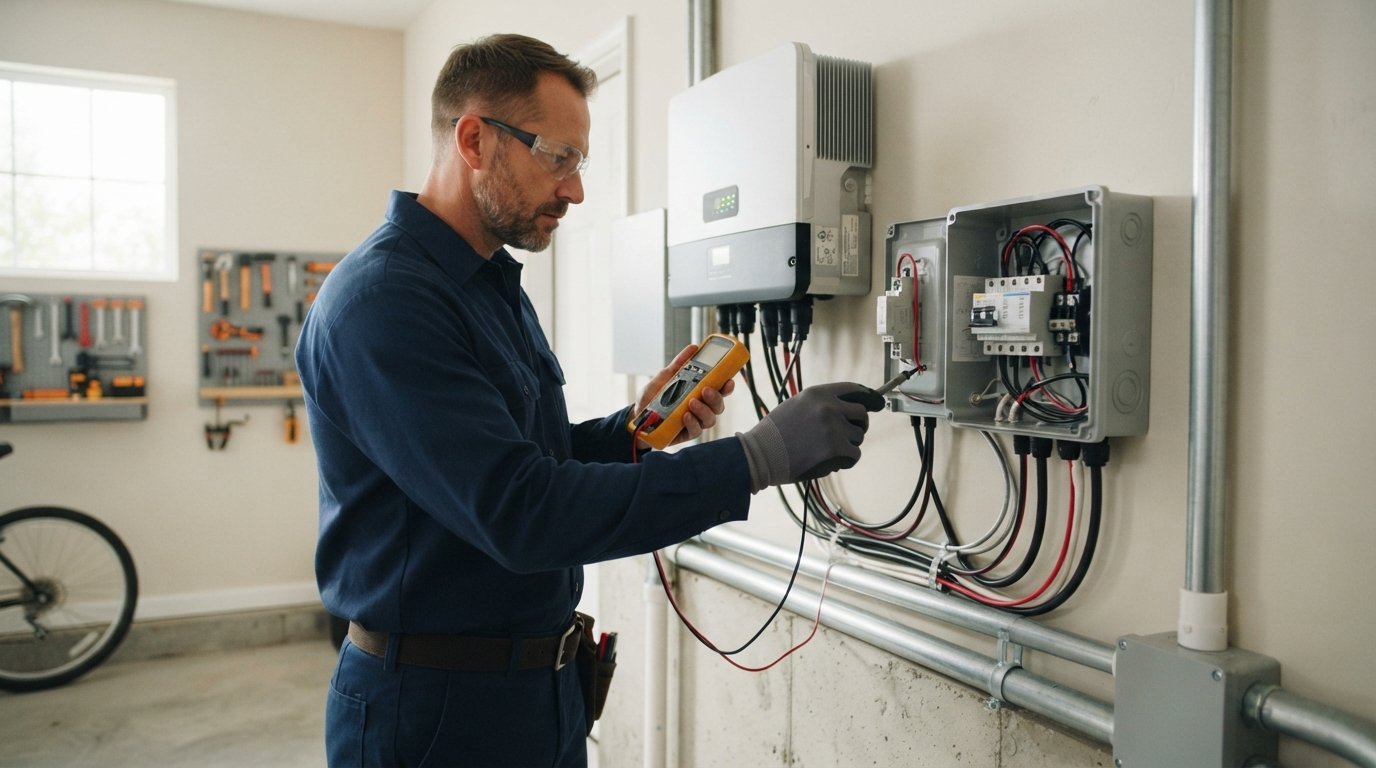
Electrical Security Upgrades for Solar Homes
Protect your solar investment with electrical security system upgrades for solar homes. Call (833)-434-4023 to compare local provider options.

By Dylan Harris
Learn more about Solar Panel Installation and Repair for guides, costs, and what to expect.
Compare Solar Panel Installation and Repair Pros Near You

Enter your ZIP code to compare independent local professionals and request free quotes.
Your solar panels are a long-term investment, but they are only as safe as the electrical system behind them. A single surge, a loose ground connection, or an untracked arc fault can quietly erode performance, damage inverters, and put your home at risk. For homeowners who have already gone solar, or who are planning an installation, upgrading the electrical security system is not an optional extra. It is the layer that protects both your equipment and your family, and it is easier to bundle into a solar visit than most people realize.
Why Electrical Security Matters for Solar Homes
Solar homes have unique electrical characteristics. Direct current (DC) runs from the panels to the inverter, often at high voltage, and alternating current (AC) flows from the inverter into your main panel. That dual architecture creates more points where faults can develop, and it makes proper protection critical. A standard home without solar may never need to think about arc-fault detection on a roof, but a solar home does. The same is true for rapid shutdown equipment, ground-fault protection, and surge suppression on inverter circuits.
Beyond code requirements, there is a practical financial reason to care. Inverters are the most expensive component after the panels themselves, and they are sensitive to voltage spikes. A lightning strike two streets away or a utility switching event can send a surge through your service panel that damages the inverter and other electronics. Upgrading your electrical security system is a form of asset protection. It also gives you visibility. Modern monitoring can alert you to tampering, arc faults, and ground faults before they become failures.
Insurance carriers increasingly ask detailed questions about electrical systems in solar homes. While no upgrade can guarantee a specific outcome, documented improvements in grounding, surge protection, and labeling can support a more informed conversation with your carrier. The goal is to reduce risk and demonstrate that the system is well maintained.
Surge Protection and Grounding Improvements That Shield Inverters
Surge protection is the first line of defense. Many solar installations include a surge protective device (SPD) at the inverter or at the main service panel, but not all do, and older installations often lack adequate coverage. A qualified electrician can evaluate whether you need Type 1, Type 2, or Type 3 SPDs at different points in the system. The right configuration depends on your service entrance, your inverter location, and whether you have battery storage.
Grounding is equally important, and it is frequently misunderstood. Solar arrays on rooftops need proper equipment grounding conductors, and the inverter and mounting system must be bonded correctly. A grounding electrode system that was adequate before solar may be marginal after, especially if the array is on a detached structure or a long wire run. Improvements can include adding ground rods, upgrading bonding jumpers, and verifying that the equipment grounding conductor is sized correctly for the available fault current.
When these upgrades are performed, ask for documentation. A simple record of what was installed, where, and why helps future electricians and can be useful for insurance or resale. The following list outlines the core improvements to discuss with a provider:
- Whole-home surge protective device at the service panel, coordinated with a second device at the inverter.
- Verified equipment grounding and bonding for the array, inverter, and any battery enclosure.
- Ground-fault protection testing and, if needed, replacement of aging protective devices.
- Rapid shutdown equipment inspection to confirm it works as intended for first responders.
These measures work together. A surge device without good grounding is less effective, and grounding without surge protection leaves the inverter exposed to voltage spikes. The best approach is a coordinated review of the entire electrical path, from the roof to the main panel.
Monitoring Alerts for Tampering, Arc Faults, and Ground Faults
Visibility is the difference between a small issue and an expensive repair. Many modern inverters and gateways already collect data on voltage, current, and fault events, but the alerts are often disabled or ignored. A security-focused upgrade configures those alerts so you are notified when something unusual happens. Tampering, for example, might appear as an unexpected drop in production or a sudden change in string current. Arc faults and ground faults generate specific error codes that can be logged and reviewed.
Homeowners should ask for three things from a monitoring setup: real-time or near-real-time alerts, a clear log of fault events, and a simple way to share that log with a service provider. Some systems send push notifications to a phone, while others rely on email or a web dashboard. The key is that someone actually sees the alert and knows what to do next. If you want a broader view of how monitoring fits into a complete protection plan, the guide on electrical security upgrades to shield your solar investment walks through the layers in more detail.
It is also worth discussing nuisance trips. Arc-fault and ground-fault devices can trip for reasons unrelated to a real hazard, such as moisture or aging insulation. A good provider will help you distinguish between a nuisance event and a genuine fault, and will document the difference. That prevents unnecessary service calls and keeps the system reliable.
Running Security Cameras and Sensors on Solar and Battery Backup
Security cameras, motion sensors, and door contacts all need power, and in a solar home it makes sense to run them on solar and battery backup rather than relying solely on the grid. This is especially valuable during outages, when grid-tied security systems may go dark. A battery-backed circuit can keep cameras and sensors operating when the neighborhood loses power, which is often when security matters most.
The electrical work involves more than plugging in a camera. You need a dedicated circuit or a low-voltage power supply, proper conduit and weatherproofing, and coordination with the inverter or battery system so the load is supported during an outage. Some homeowners choose a small critical-loads panel that powers security equipment, communications, and a few lights. Others use Power over Ethernet (PoE) cameras with a battery-backed switch. Either approach requires an electrician who understands both solar and low-voltage systems.
Placement also matters. Cameras should cover the inverter, battery enclosure, and main service panel, not just the front door. If someone tampers with the solar equipment, you want a clear record. Sensors on equipment enclosures can trigger an alert if a door is opened unexpectedly. These are simple additions, but they turn a passive system into an active one.
Panel and Disconnect Labeling That Helps First Responders
Labeling is the least glamorous upgrade and one of the most important. In an emergency, firefighters and utility workers need to know exactly where the solar disconnect is, what it controls, and how to shut the system down safely. The National Electrical Code requires specific labeling for solar installations, including rapid shutdown and disconnect identification, but labels fade, fall off, or are never updated after a system change.
An electrical security upgrade should include a labeling review. That means durable, weather-resistant labels at the main service panel, the inverter, the rapid shutdown device, and any battery enclosure. It also means a simple diagram, often called a directory, that shows which breakers control which circuits. First responders should be able to read it at night, in smoke, or under stress. Reflective or high-contrast labels are a worthwhile investment.
If your system has been modified since installation, such as adding a battery or a subpanel, the labels may no longer be accurate. A fresh review catches those gaps. It is a small cost with a meaningful safety return.
Bundling Security Upgrades With a Solar Installation Visit
The most efficient way to handle these upgrades is to bundle them with a solar installation or maintenance visit. When a provider is already on site for panel cleaning, inverter service, or a new installation, the incremental cost of adding surge protection, grounding improvements, monitoring configuration, and labeling is lower than scheduling a separate electrical visit. It also ensures that the same team reviews the whole system rather than looking at one piece in isolation.
If you are planning a new solar installation, raise the topic during the quote process. Ask specifically about surge protection, grounding, rapid shutdown, and labeling. For existing systems, ask for an electrical security assessment as part of routine maintenance. SolarEnergy.ai connects homeowners with independent local providers who can evaluate these needs and compare options. You can also find providers for related home improvement projects through services such as 180Remodel's free matching service, which helps homeowners connect with independent third-party providers for roofing, electrical work, and other projects.
To structure the conversation, use a simple sequence. First, request an assessment of the existing electrical system, including grounding and surge protection. Second, ask for a written scope that separates safety-critical items from optional improvements. Third, confirm that monitoring alerts will be configured and tested before the provider leaves. Fourth, request updated labeling and a simple system diagram. Finally, schedule any follow-up work, such as battery-backed security circuits, for the same visit if possible.
Costs vary widely by home and system size, so treat any estimate as a starting point and verify details with the provider. The goal is not to add every possible device, but to close the gaps that matter most: surge protection for the inverter, reliable grounding, working fault detection, clear labeling, and monitoring that someone actually watches. When those pieces are in place, your solar investment is better protected, and your home is safer.
Electrical security upgrades for solar homes are a practical, high-value step. They protect equipment, support safety, and give you confidence that the system is performing as intended. Whether you are installing solar for the first time or maintaining an existing array, make these upgrades part of the plan and bundle them whenever a provider is already on site.
Learn more about Solar Panel Installation and Repair for guides, costs, and what to expect.
Compare Solar Panel Installation and Repair Pros Near You
Enter your ZIP code to compare independent local professionals and request free quotes.