Home Energy Audit Findings That Reduce Solar System Size
Home energy audit findings that reduce solar system size can cut array costs and improve payback. Call (833)-434-4023 for expert guidance.

By Isaac Reed
Learn more about Weatherization for guides, costs, and what to expect.
Compare Weatherization Pros Near You

Enter your ZIP code to compare independent local professionals and request free quotes.
When you picture going solar, the conversation usually starts with panels and inverters. But the smartest starting point is often a clipboard, a blower door, and an infrared camera. A home energy audit reveals exactly where your house wastes electricity and fuel, and those findings can meaningfully shrink the solar array you need. Smaller arrays cost less, free up roof space, and can improve your return on investment. This guide walks through the most impactful audit findings, how auditors measure them, and how to sequence efficiency work so your final solar design is right-sized from day one.
Why Audit Findings Matter Before You Size a Solar Array
Solar installers size systems based on historical electricity usage. If your home uses 14,000 kWh per year, a typical proposal might recommend an 11 to 12 kW array. But that usage number includes waste: leaky ducts, incandescent bulbs, an aging pool pump, and attic insulation that lets conditioned air escape. Fix the waste first, and the same comfort level might require only 9,000 to 10,000 kWh per year. That translates to a smaller, cheaper solar system without sacrificing anything you actually value.
This sequencing matters for financing and payback too. Efficiency upgrades often cost less per saved kilowatt-hour than solar panels do, so every dollar spent on air sealing or insulation before solar stretches your overall budget further. The audit gives you data to prioritize those upgrades instead of guessing. It also produces documentation you can share with installers so they size the array against realistic post-upgrade usage rather than inflated historical bills.
Air Sealing and Attic Insulation: The Biggest Load Reducers
Heating and cooling account for roughly half of typical U.S. home energy use. Air leaks around windows, doors, recessed lights, and attic hatches force your HVAC system to work harder, and under-insulated attics let conditioned air escape in winter and heat soak in during summer. An energy audit quantifies these losses with a blower door test, which depressurizes the house and measures how much air leaks out. Auditors often find 30 to 40 percent of conditioned air escaping through gaps that homeowners never see.
After air sealing and attic insulation upgrades, many homes see heating and cooling loads drop by 15 to 30 percent. For a homeowner planning solar, that reduction directly shrinks the array needed to cover remaining usage. It also reduces the battery capacity required if you plan to store power for evening use, since lower loads mean less stored energy consumed overnight. In our guide on home energy management systems with solar and storage, we explain how monitoring these loads helps you optimize system size and battery settings.
Prioritize air sealing before insulation. Sealing first stops air movement, then new insulation performs as intended. Common targets include attic penetrations, rim joists, and gaps around plumbing and wiring. Many utility programs offer incentives for these upgrades, so check with your utility and verify current program details, since offerings change.
Lighting, Appliances, and Pool Pumps: Fast-Payback Upgrades
Auditors often find quick wins in lighting and plug loads. Replacing incandescent and halogen bulbs with LEDs can cut lighting energy by 75 percent or more, and the payback is often under two years. Old refrigerators, freezers, and clothes dryers are other common culprits. A 20-year-old second refrigerator in the garage can consume more electricity than a new primary unit. The audit report will flag these appliances so you can decide whether to replace, remove, or unplug them.
Pool pumps deserve special attention. A single-speed pool pump running six hours a day can use 3,000 to 4,500 kWh per year, which is a large chunk of a solar array's output. Variable-speed pool pumps use 50 to 75 percent less energy for the same filtration. An auditor or pool professional can estimate your pump's annual consumption and recommend a schedule that maintains water quality with less runtime. Replacing a single-speed pump before sizing solar can reduce the array by 2 to 4 kW in some homes.
Here are the upgrades auditors most often recommend for fast payback:
- LED lighting retrofits throughout the home, especially in high-use areas
- Variable-speed pool pumps and optimized filtration schedules
- Smart thermostats and programmable schedules for HVAC
- Replacing or removing secondary refrigerators and old freezers
- ENERGY STAR appliances when replacements are due anyway
Each of these reduces annual kilowatt-hour consumption, and that reduction compounds: a smaller array, a smaller battery, and lower monthly bills even before solar is installed.
How Blower Door and Thermal Imaging Results Guide Priorities
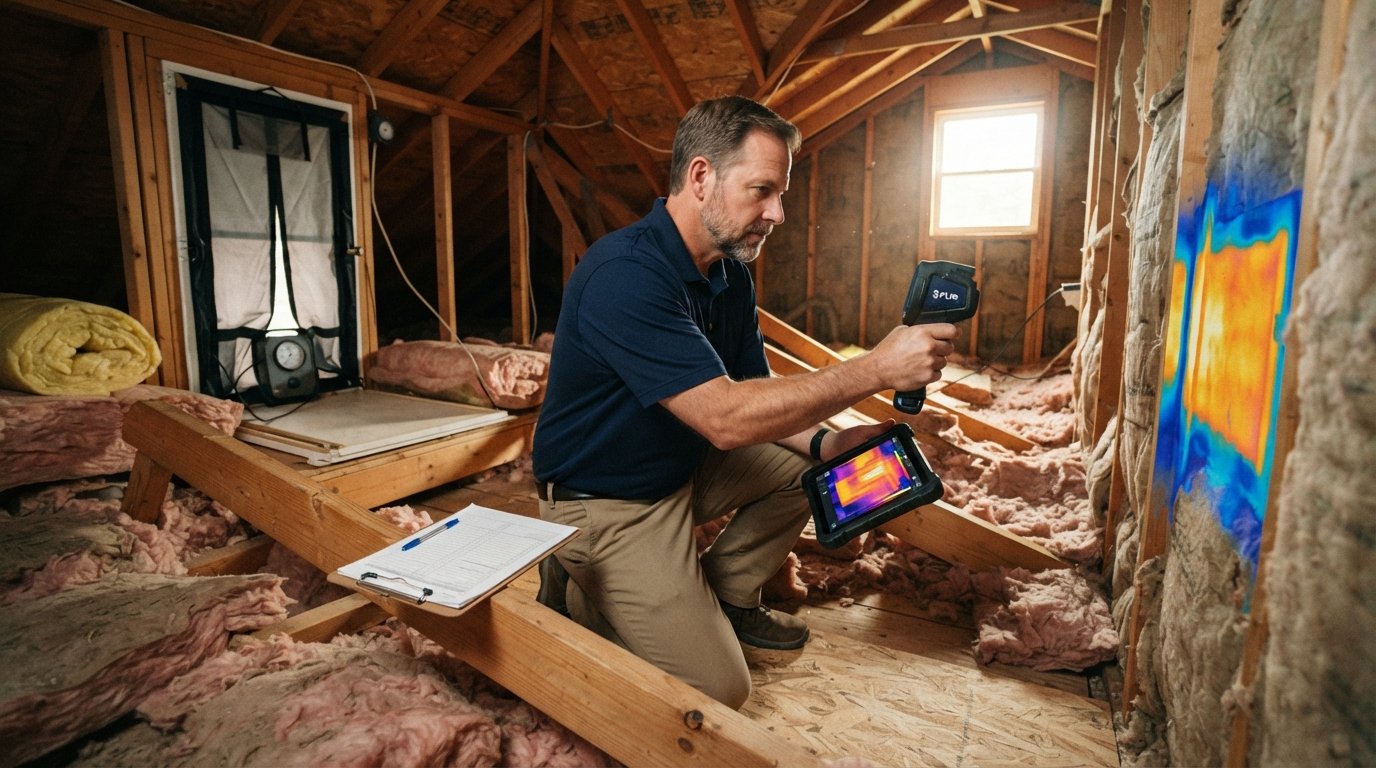
A blower door test measures whole-house air leakage in cubic feet per minute at a standard pressure difference. The auditor combines that number with thermal imaging, which shows temperature differences on walls, ceilings, and floors. Thermal images reveal missing insulation, hidden air leaks, and moisture problems that a visual inspection would miss. Together, these tools turn a vague sense of draftiness into a ranked list of problems with estimated costs and savings.
Ask the auditor to translate findings into priorities. A good report will separate urgent items (major air leaks, safety issues) from moderate items (insulation upgrades) and lower-priority items (minor leaks). It should also estimate annual energy savings for each measure so you can compare against installation cost. Use those estimates to decide which upgrades to complete before finalizing solar design. If a measure saves 1,500 kWh per year and costs $1,200, that payback often beats adding 1.5 kW of solar capacity.
Sequencing Efficiency Work Before Finalizing Solar Sizing
The order of operations matters. Complete the audit, implement the highest-impact efficiency measures, then collect several months of post-upgrade usage data before locking in solar design. This prevents the common mistake of sizing an array to cover waste that no longer exists. Installers can work from your post-upgrade bills or from the audit's projected savings, but real data is better.
A practical sequence looks like this:
- Schedule a professional home energy audit, including blower door and thermal imaging.
- Implement air sealing and attic insulation first, since they reduce both heating and cooling loads.
- Replace high-consumption lighting, appliances, and pool pumps with efficient models.
- Monitor usage for two to three months to confirm savings and establish a new baseline.
- Share the audit report and updated usage with solar installers when requesting quotes.
This approach also helps when comparing quotes from independent local providers. If you request quotes from providers in our network, give each the same post-upgrade usage data so proposals are comparable. A provider who understands your efficiency upgrades will size the array and battery more accurately, which reduces the risk of overspending. For homeowners tackling broader renovations alongside efficiency work, services like USremodel can connect you with independent local providers for remodeling and repair projects, though always confirm scope and pricing directly with each provider.
Right-Sizing Panels and Battery With Audit Data
Array size is only half the equation. Battery capacity should also reflect post-upgrade loads. If air sealing and insulation cut your evening and overnight consumption, you may need a smaller battery to cover critical loads during outages or to shift solar production to peak-rate hours. Audit data helps you identify which circuits matter most and how much energy they actually use.
Use the audit report to build a load profile: heating and cooling, water heating, refrigeration, lighting, and plug loads. Then decide what you want the battery to backup and for how long. A smaller, right-sized battery often costs less and performs better than an oversized unit that rarely discharges fully. The same logic applies to the array: a smaller array paired with efficiency upgrades can meet your needs while leaving room on the roof for future expansion if your household grows.
Finally, revisit your solar design after the first year. Usage patterns change with seasons, new appliances, and family needs. Monitoring tools can show whether your array is producing more or less than expected, and whether further efficiency work would pay off. The goal is a system that matches your actual life, not a worst-case estimate from before you fixed the waste.
Start with the audit, fix what the data says matters most, and then size solar to your improved home. That sequence delivers a smaller system, a faster payback, and fewer surprises on your utility bill.
Learn more about Weatherization for guides, costs, and what to expect.
Compare Weatherization Pros Near You
Enter your ZIP code to compare independent local professionals and request free quotes.