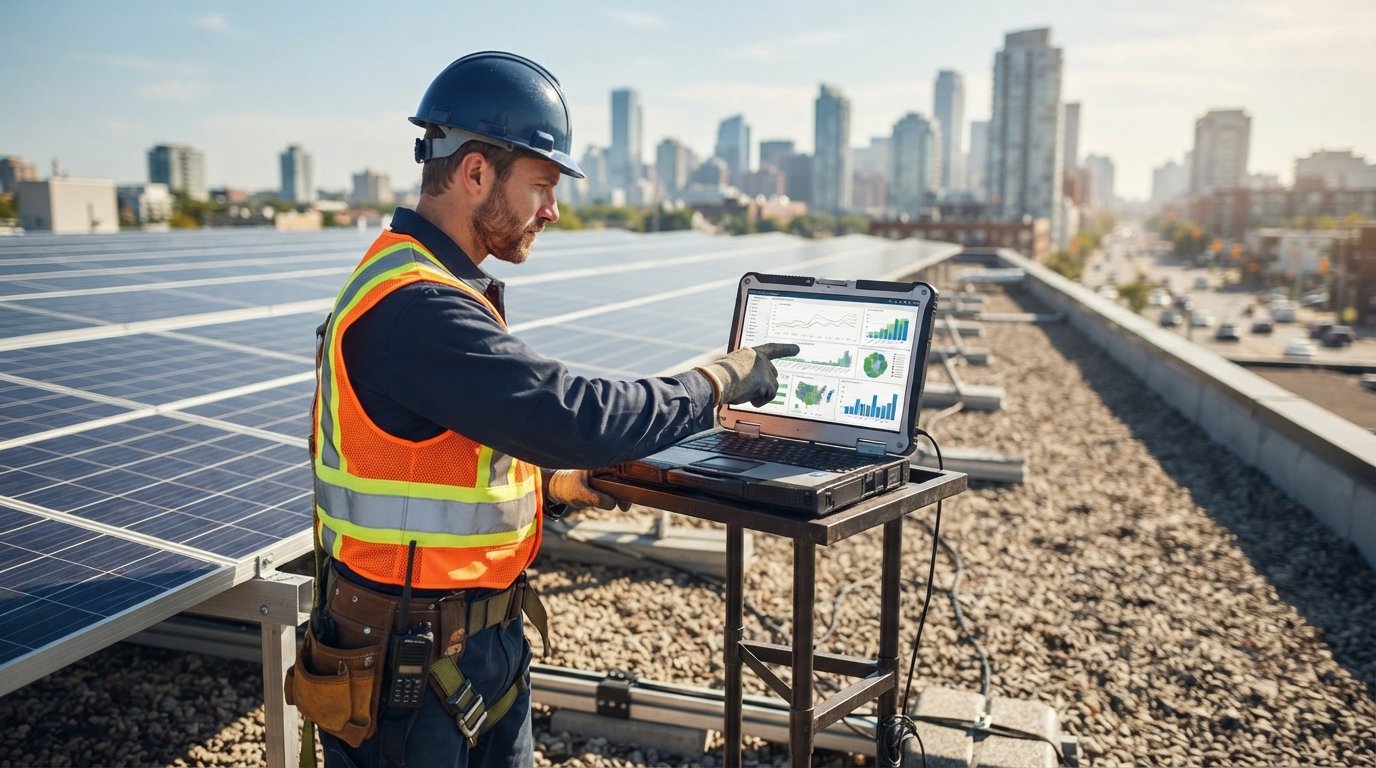
Solar Operations Software: Maximizing Solar ROI
Discover how solar operations software boosts performance, cuts downtime, and slashes your electricity bills.

By Dylan Harris
Learn more about Solar Panel Installation and Repair for guides, costs, and what to expect.
Compare Solar Panel Installation and Repair Pros Near You

Enter your ZIP code to compare top-rated local professionals and request free quotes.
For solar asset owners, the difference between a system that performs and one that underperforms often comes down to how it is managed. Solar operations software has evolved from a simple monitoring tool into a comprehensive platform that can detect inefficiencies, predict failures, and optimize energy production. This technology is no longer just for large utility-scale plants; it is becoming essential for commercial and residential solar owners who want to protect their investment and maximize their return.
When your solar array is producing less than expected, you need to know why quickly. Traditional monitoring might show a drop in output, but modern solar operations software goes further. It can analyze data from each panel, inverter, and string to pinpoint the exact cause, whether it is soiling, shading, or a faulty component. This level of detail transforms how you manage your asset, moving from reactive repairs to proactive maintenance.
What Is Solar Operations Software?
Solar operations software, often referred to as solar asset management or O&M (operations and maintenance) software, is a digital platform designed to monitor, manage, and optimize the performance of solar photovoltaic (PV) systems. It aggregates data from various sensors and inverters, then uses analytics to provide actionable insights. This allows owners, operators, and maintenance teams to oversee their entire solar portfolio from a single dashboard, regardless of system size or location.
The core functions of this software include real-time monitoring, alarm management, performance analytics, and reporting. However, the most advanced platforms now incorporate machine learning and artificial intelligence to offer predictive maintenance and automated recommendations. For a homeowner with a rooftop system, this might mean an alert about a microinverter failure before it significantly impacts your monthly savings. For a business with a large carport array, it could mean optimizing cleaning schedules based on soiling loss calculations.
These tools are designed to address the entire lifecycle of a solar asset, from commissioning and daily operations to long-term performance assessment. By centralizing all operational data, they eliminate the guesswork and provide a clear, data-driven path to maximizing energy yield and financial returns.
Why Your Solar Investment Needs Smart Management
Installing solar panels is a significant financial commitment. You expect a predictable return on investment (ROI) through reduced electricity bills and potential incentive payments. However, without proper oversight, your system may not perform as expected. Performance issues can go unnoticed for weeks or months, leading to substantial energy losses.
Consider this: a single string inverter failure on a residential system can halt production for the entire array. If you are on vacation or not closely watching your monitoring app, you might not notice the outage for days. Over a year, such unplanned downtime can reduce your expected savings by a significant margin. Solar operations software acts as your 24/7 sentinel, immediately flagging any drop in performance and helping you resolve issues fast.
Moreover, smart management is not just about detecting problems; it is about optimizing performance. For example, the software can analyze weather data and adjust consumption patterns or battery charging schedules to maximize the use of your solar energy. This level of optimization is crucial for homeowners and businesses with battery storage, as it directly impacts how much grid power they need to buy.
Key Features of Modern Solar Operations Platforms
Modern solar operations platforms have moved far beyond simple data logging. They are comprehensive tools that integrate with various hardware and software ecosystems. When evaluating a solution, you should look for these key capabilities:
- Real-Time Monitoring and Alerts: Instantaneous data on system performance, with immediate alerts for any anomalies or failures.
- Advanced Analytics and Reporting: In-depth analysis of production data, weather impact, and degradation rates, presented in easy-to-understand reports.
- Predictive Maintenance: AI-driven insights that identify potential component failures before they happen, reducing downtime and repair costs.
- Fleet Management: The ability to manage multiple sites from a single dashboard, which is essential for businesses with multiple properties.
- Integration Capabilities: Seamless connection with inverters, meters, batteries, and other hardware, as well as APIs for exporting data to other business systems.
These features work in concert to give you a complete picture of your solar asset's health. The reporting tools are particularly valuable for proving performance to stakeholders or for claiming performance-based incentives. Furthermore, the integration with battery storage is a critical piece for those looking to achieve true energy independence, as the software can intelligently manage when to store energy and when to discharge it.
By leveraging these tools, you can move from a reactive to a proactive stance, ensuring your system consistently operates at peak efficiency.
How Solar Operations Software Slashes Your Bills
The most direct way solar operations software pays for itself is by reducing your electricity bills. This is achieved through two primary mechanisms: minimizing downtime and maximizing efficiency. When a system is down, you are forced to buy electricity from the grid at retail rates. By catching issues early, the software ensures your system is up and running, producing power when the sun is shining.
Efficiency gains go beyond simple uptime. For example, the software can detect soiling, which is the buildup of dirt and dust on panels. According to studies, soiling can reduce solar output by up to 25% in some regions. Instead of cleaning panels on a fixed schedule, the software can tell you exactly when cleaning is cost-effective based on the energy loss versus the cost of a cleaning service. This data-driven approach ensures you are not spending money on unnecessary maintenance, but you are also not losing money to dirty panels.
Moreover, advanced software can optimize the performance of your entire energy ecosystem. It can connect to your smart home or business energy management system to shift heavy loads (like EV charging or pool pumps) to times when your solar production is highest. This reduces the amount of expensive grid power you consume, further lowering your monthly utility bills. In our guide on AI solar analytics, we explain how these smart systems can help you save even more.
Navigating the Software Landscape: Tools and Options
The market for solar operations software is diverse, with solutions ranging from basic free monitoring apps to enterprise-grade platforms. For a homeowner, the software provided by their inverter manufacturer (like SolarEdge or Enphase) might be sufficient. However, for larger portfolios, a dedicated third-party platform is often necessary to aggregate data from multiple inverter brands and provide more sophisticated analytics.
When choosing a platform, consider the size of your system, your technical expertise, and your budget. Some platforms are designed for installers and O&M professionals who manage many sites, while others are tailored for asset owners who just want a clear view of their system's performance. Key features to compare include user interface, ease of setup, the granularity of data, and the quality of customer support.
It is also important to consider how the software handles alarms. Does it simply send a notification, or does it provide a diagnostic that helps you understand the likely cause? Some platforms include a ticketing system to manage maintenance requests, which is highly valuable for commercial operations. For those interested in the next generation of this technology, the integration of AI is a key trend, as explored in our article on AI solar forecasting.
Implementing Software for Your Solar Asset
Implementing a solar operations software solution is a straightforward process, but it requires some planning to be effective. Here is a simple framework to get started:
- Assess Your Needs: Determine what you want the software to achieve. Is it simple monitoring, or do you need advanced performance analytics and predictive maintenance?
- Check Compatibility: Ensure the software is compatible with your existing hardware, including inverters, meters, and any battery storage systems.
- Data Integration: Set up the integration by connecting the software to your hardware's communication ports or cloud APIs. This may require professional assistance.
- Configure Alerts: Set up alert thresholds so you are notified of significant performance drops or faults, but not every minor fluctuation.
- Review and Act: Regularly review the analytics and reports. Use the insights to schedule maintenance, clean panels, or adjust system settings for optimal performance.
Following this framework will help you quickly gain visibility into your system's health. Many platforms offer a free trial or a freemium version, which is a great way to test the waters before committing. Remember, the goal is not just to collect data, but to translate that data into actions that save you money.
For a comprehensive understanding of how these tools can enhance your energy savings, you might find our resource on unlocking big energy savings particularly helpful. It provides a deeper dive into the financial benefits of data-driven solar management.
Future Trends in Solar Operations and AI
The future of solar operations software is being shaped by artificial intelligence (AI) and machine learning. These technologies are moving beyond simple data analysis to providing predictive and prescriptive insights. For instance, AI can learn the typical performance curve of a specific inverter and detect subtle changes that indicate an impending failure, allowing for replacement before a costly outage occurs.
Another trend is the integration of weather forecasting with solar production data. By predicting cloud cover and storms, the software can adjust battery charging and discharge strategies to maximize the use of solar energy. This is particularly valuable for businesses that rely on solar to reduce demand charges. The software can forecast a cloudy day and ensure the battery is fully charged from the grid at off-peak rates to cover the expected shortfall.
Furthermore, the rise of virtual power plants (VPPs) is creating new opportunities for solar owners. Operations software can enable your system to participate in a VPP, where aggregators can call upon your battery to send power to the grid during peak demand. This provides an additional revenue stream. As these technologies mature, the role of operations software will shift from a monitoring tool to an autonomous energy manager, making your solar investment even more valuable and resilient.
In conclusion, solar operations software is a critical investment for anyone serious about maximizing the return on their solar panels. It provides the visibility, control, and intelligence needed to ensure your system performs optimally for decades, directly translating into lower energy bills and a faster payback period.
Learn more about Solar Panel Installation and Repair for guides, costs, and what to expect.
Compare Solar Panel Installation and Repair Pros Near You
Enter your ZIP code to compare top-rated local professionals and request free quotes.