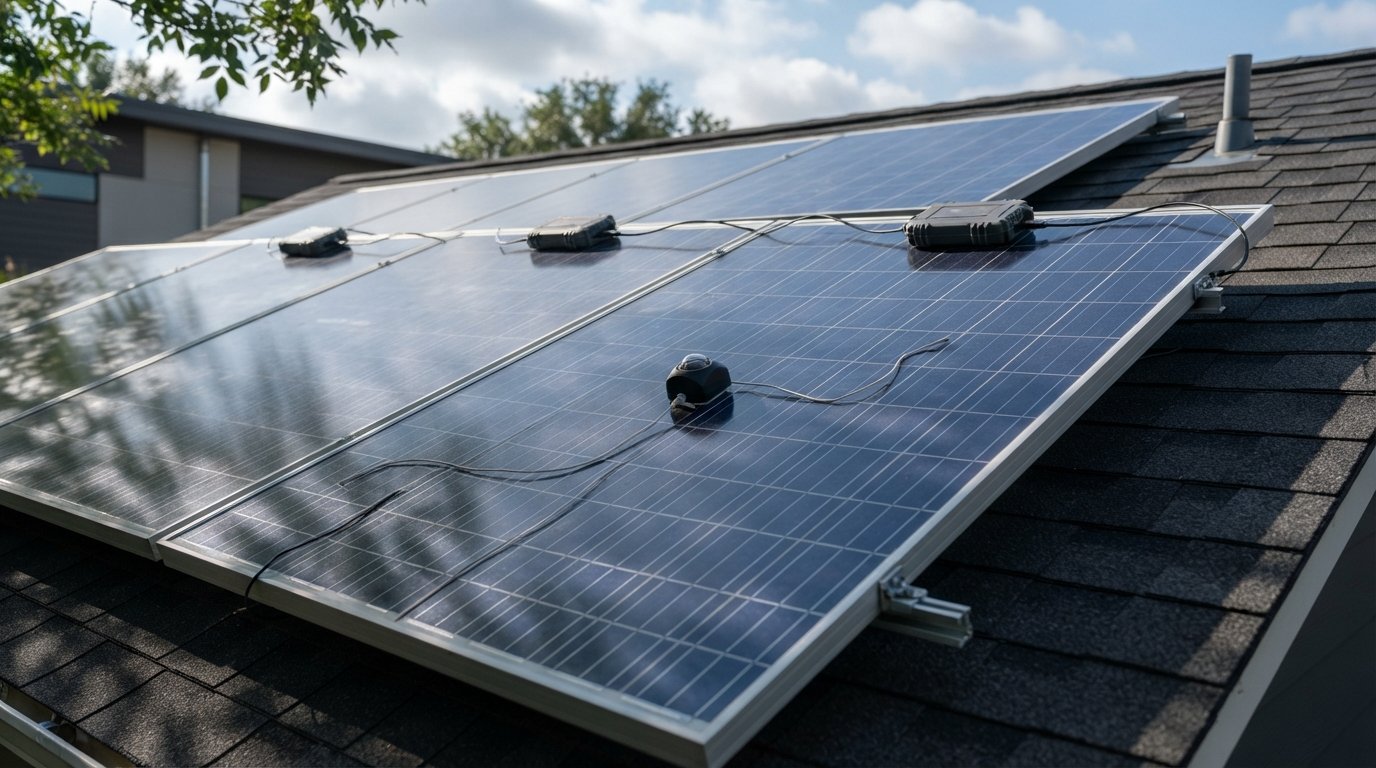
Edge AI Solar Optimization at Panel Level Explained
Edge AI solar optimization at panel level boosts output and cuts bills. Call 8334344023 for expert guidance on smart solar systems.

By Isaac Reed
Learn more about Solar Panel Installation and Repair for guides, costs, and what to expect.
Compare Solar Panel Installation and Repair Pros Near You

Enter your ZIP code to compare top-rated local professionals and request free quotes.
Imagine a solar array where every single panel thinks for itself, adjusting in real time to passing clouds, tree shade, and dust buildup without waiting for a command from a central inverter. That is the promise of edge AI solar optimization at panel level, and it is already reshaping how homeowners and businesses squeeze maximum value from rooftop systems. Instead of treating an array as one monolithic unit, edge computing pushes intelligence down to the module, where decisions happen in milliseconds and no watt is wasted.
The shift matters because traditional solar setups often underperform their nameplate ratings. A single shaded panel can drag down an entire string, and most inverters only see the aggregate output, not the individual problem. Edge AI changes that equation by giving each panel a local brain, a tiny processor that runs machine learning models directly on the hardware. The result is faster response times, better fault detection, and measurably higher energy yields over the life of the system.
What Edge AI Solar Optimization at Panel Level Actually Means
Edge AI refers to running artificial intelligence algorithms on local devices rather than in a distant cloud data center. In the context of solar, that means placing small, low power chips directly on or beside each panel. These chips collect data from sensors, voltage monitors, and irradiance meters, then make split second decisions about power routing, voltage regulation, and performance tuning. Because the processing happens at the edge, there is no latency from sending data to a server and waiting for a response.
Panel level optimization is the practice of managing each module independently instead of managing a whole string as one unit. Module level power electronics, often called MLPE, include microinverters and DC optimizers that already provide some per panel control. Edge AI takes that concept further by adding predictive intelligence. The system does not just react to shade; it anticipates it based on weather patterns, historical data, and real time sensor fusion.
The combination of edge computing and panel level control creates a feedback loop that continuously improves. Each panel learns its own behavior, the behavior of its neighbors, and the environmental conditions that affect output. Over time, the array becomes a self optimizing network rather than a static installation. For homeowners watching their electric bills, that translates directly into more kilowatt hours harvested from the same hardware.
Why Panel Level Intelligence Beats String Level Management
String inverters have dominated residential solar for decades because they are simple and inexpensive. Panels are wired in series, and the inverter converts the combined DC output to AC power for the home. The problem is that series wiring creates a weakest link dynamic. If one panel produces less power due to shade, dirt, or a manufacturing defect, the entire string suffers. Monitoring is also coarse, so pinpointing the underperforming panel requires manual troubleshooting.
Edge AI at the panel level solves these issues by isolating each module. When one panel is shaded, its optimizer adjusts voltage and current so the rest of the array continues at full output. The AI layer adds another benefit: it can distinguish between temporary shade from a passing cloud and persistent shade from a new tree branch. That distinction matters because it determines whether the system should compensate internally or alert the homeowner to trim vegetation.
Data from panel level systems also feeds into broader home energy management. When paired with battery storage and smart appliances, an edge AI array can decide whether to store excess production, send it to the grid, or shift heavy loads like EV charging to peak solar hours. This level of coordination is impossible with a standard string inverter that only sees aggregate production.
How Edge AI Improves Real World Solar Performance
The benefits of edge AI solar optimization at panel level show up in several concrete areas. Homeowners see higher production, faster fault detection, and longer equipment life. Installers see simpler commissioning and fewer truck rolls for diagnostics. Businesses see predictable output that makes ROI calculations more reliable. The table below summarizes the main performance gains.
- Higher energy yield: Panel level optimization recovers 10 to 25 percent of production lost to shade, soiling, and mismatch in typical residential installations.
- Faster fault detection: Edge AI identifies arc faults, ground faults, and degraded panels in seconds, often before the homeowner notices a drop in production.
- Predictive maintenance: Machine learning models flag panels that are drifting out of spec, allowing replacement or cleaning before output suffers.
- Granular monitoring: Every panel reports its own voltage, current, temperature, and irradiance, giving a complete picture of array health.
- Grid services: Panel level control enables precise curtailment and voltage support, which matters as utilities adopt more dynamic rate structures.
These gains compound over time. A system that produces 15 percent more energy each year will pay back its cost faster and deliver greater lifetime savings. For homeowners comparing quotes, the incremental cost of panel level electronics is often justified by the additional production alone, before factoring in reliability and monitoring benefits.
Edge AI also plays a role in safety. Rapid shutdown requirements in the National Electrical Code demand that solar arrays de energize quickly for firefighter safety. Panel level electronics make rapid shutdown inherent to the architecture, and edge AI can verify that every module has actually powered down. That verification is valuable for inspections and insurance documentation.
Key Components of an Edge AI Panel Level System
A complete edge AI solar optimization system includes several hardware and software layers working together. Understanding these components helps homeowners ask the right questions when evaluating proposals. The core elements are the panels themselves, the module level power electronics, the edge processor, the communication network, and the cloud or local dashboard that aggregates data.
Module level power electronics come in two main flavors. Microinverters convert DC to AC at each panel, which means the array operates in parallel and is inherently resilient to shade. DC optimizers perform maximum power point tracking at the panel and send DC power to a central inverter. Both approaches can host edge AI, though microinverters have a natural advantage because they already contain a processor at each module.
The edge processor runs lightweight machine learning models. These models are trained in the cloud on data from thousands of installations, then deployed to the panel where they make decisions locally. This split architecture is important because it keeps costs down while still delivering sophisticated optimization. The panel does not need to run a large neural network; it needs to run a small, efficient model that handles the specific decisions relevant to its location.
Communication is typically handled through power line communication or wireless mesh networking. Power line communication sends data over the same wires that carry power, which reduces wiring complexity. Wireless mesh creates redundant paths so that if one node fails, data still reaches the gateway. In both cases, the goal is reliable telemetry without adding significant cost or installation time.
Installation and Commissioning Considerations
Installing an edge AI panel level system is similar to installing a conventional solar array, but there are important differences. Each panel must be paired with its optimizer or microinverter, and the edge processor must be provisioned with the correct firmware and configuration. Commissioning involves mapping each panel to its physical location on the roof so that monitoring data can be displayed accurately.
Many installers use a mobile app to scan serial numbers and assign panels to positions. The edge AI system then runs a self test to verify communication and baseline performance. This step is critical because it establishes the reference data that the AI will use to detect anomalies later. A poorly commissioned system may still produce power, but it will not deliver the full benefits of panel level intelligence.
Homeowners should ask their installer about monitoring capabilities and data ownership. Some systems provide a homeowner facing app with panel level detail, while others reserve that data for the installer. Clear access to monitoring data is important because it allows homeowners to spot problems early and verify that their system is performing as promised. It also supports warranty claims if a panel or optimizer fails prematurely.
For those who want to understand the financial side before committing, exploring AI solar optimization to slash electric bills provides a useful foundation. That guide explains how intelligent control translates into monthly savings and what to expect from different system configurations. Combining that knowledge with panel level specifics gives a complete picture of the technology.
Edge AI and the Broader Home Energy Ecosystem
Panel level edge AI does not exist in isolation. It is part of a larger trend toward distributed intelligence in home energy management. Smart thermostats, EV chargers, battery storage systems, and even appliances are gaining their own processors and connectivity. When these devices coordinate, the home becomes a microgrid capable of optimizing its own energy use.
Consider a scenario where the solar array is producing more power than the home needs. The edge AI system can signal the battery to charge, the EV charger to ramp up, or the heat pump water heater to run. If the grid is paying a premium for exports, the system can instead send power to the grid. These decisions happen automatically, based on real time prices, weather forecasts, and homeowner preferences.
This level of coordination requires standards for communication between devices. Protocols like OpenADR and IEEE 2030.5 are emerging to support utility demand response and distributed energy resource management. Edge AI at the panel level is a foundational piece because it provides the granular data and control that higher level optimization depends on. Without panel level visibility, the home energy management system is working with incomplete information.
Choosing the Right System for Your Home
Not every home needs the most advanced edge AI system available. The right choice depends on roof complexity, shading patterns, energy goals, and budget. A home with a simple south facing roof and no shade may do fine with a string inverter and basic monitoring. A home with multiple roof planes, mature trees, or a desire for maximum independence will benefit more from panel level intelligence.
When evaluating proposals, homeowners should ask specific questions about the technology. Does the system provide panel level monitoring? Can it detect and respond to shade in real time? What happens if one panel fails? Is the edge AI firmware updatable over the air? These questions separate genuine edge AI systems from marketing claims that simply repackage standard optimizers.
It is also worth checking whether the system supports future upgrades. As battery prices fall and vehicle to home technology matures, the ability to integrate new devices becomes more valuable. An edge AI platform with open APIs and regular firmware updates is more likely to remain compatible with emerging products. That flexibility protects the investment and extends the useful life of the solar array.
Frequently Asked Questions About Edge AI Solar Optimization
Does edge AI work with existing solar panels?
In most cases, edge AI requires module level power electronics, which means adding optimizers or microinverters to each panel. Some retrofit options exist, but they typically involve replacing the inverter and adding hardware at each module. Homeowners considering a retrofit should consult a qualified installer to evaluate compatibility and cost effectiveness.
How much does edge AI add to system cost?
Panel level electronics typically add 10 to 20 percent to the upfront cost of a solar installation. The exact premium depends on the brand, the number of panels, and the complexity of the roof. Over the life of the system, the additional production and reliability often offset that premium, especially in shaded or complex installations.
Is edge AI data secure?
Reputable manufacturers use encrypted communication and secure boot processes to protect edge devices. Homeowners should verify that the system supports firmware updates and follows industry best practices for cybersecurity. Data ownership and privacy policies are also worth reviewing, since panel level monitoring generates detailed information about home energy use.
Can edge AI help with time of use rates?
Yes. Edge AI systems can be programmed to prioritize self consumption during peak rate periods and export during periods when the utility pays more. This capability is especially valuable in markets with dynamic pricing or demand charges. Pairing panel level optimization with battery storage maximizes the benefit.
Looking Ahead: The Future of Panel Level Intelligence
The trajectory of edge AI in solar is toward greater autonomy and integration. Future systems will likely coordinate across neighborhoods, forming virtual power plants that support grid stability while compensating homeowners for their participation. Panel level intelligence is a prerequisite for that future because it provides the granular control and data that grid operators need.
Hardware improvements will also continue. More powerful edge processors will run larger models, enabling better forecasting and anomaly detection. Cheaper sensors will make panel level monitoring standard rather than premium. And as manufacturing scales, the cost premium for edge AI will shrink, making the technology accessible to more homeowners.
For anyone planning a solar installation, the question is no longer whether to consider edge AI, but how much intelligence to build in from the start. Systems designed with panel level optimization are more resilient, more productive, and more adaptable to future energy markets. That makes them a smart choice for homeowners who want to maximize the value of their investment over decades of operation.
To explore financing options, incentives, and installer connections, homeowners can visit NewSolarQuotes for independent educational resources. Combining that research with a clear understanding of edge AI capabilities positions buyers to make confident, well informed decisions about their solar future.
Edge AI solar optimization at panel level represents a meaningful step forward in renewable energy technology. By pushing intelligence to the edge and managing each panel independently, these systems deliver more energy, better reliability, and greater control. As the technology matures and costs decline, panel level intelligence will become the standard for residential and commercial solar alike, helping more people achieve energy independence and reduce their environmental footprint.
Learn more about Solar Panel Installation and Repair for guides, costs, and what to expect.
Compare Solar Panel Installation and Repair Pros Near You
Enter your ZIP code to compare top-rated local professionals and request free quotes.