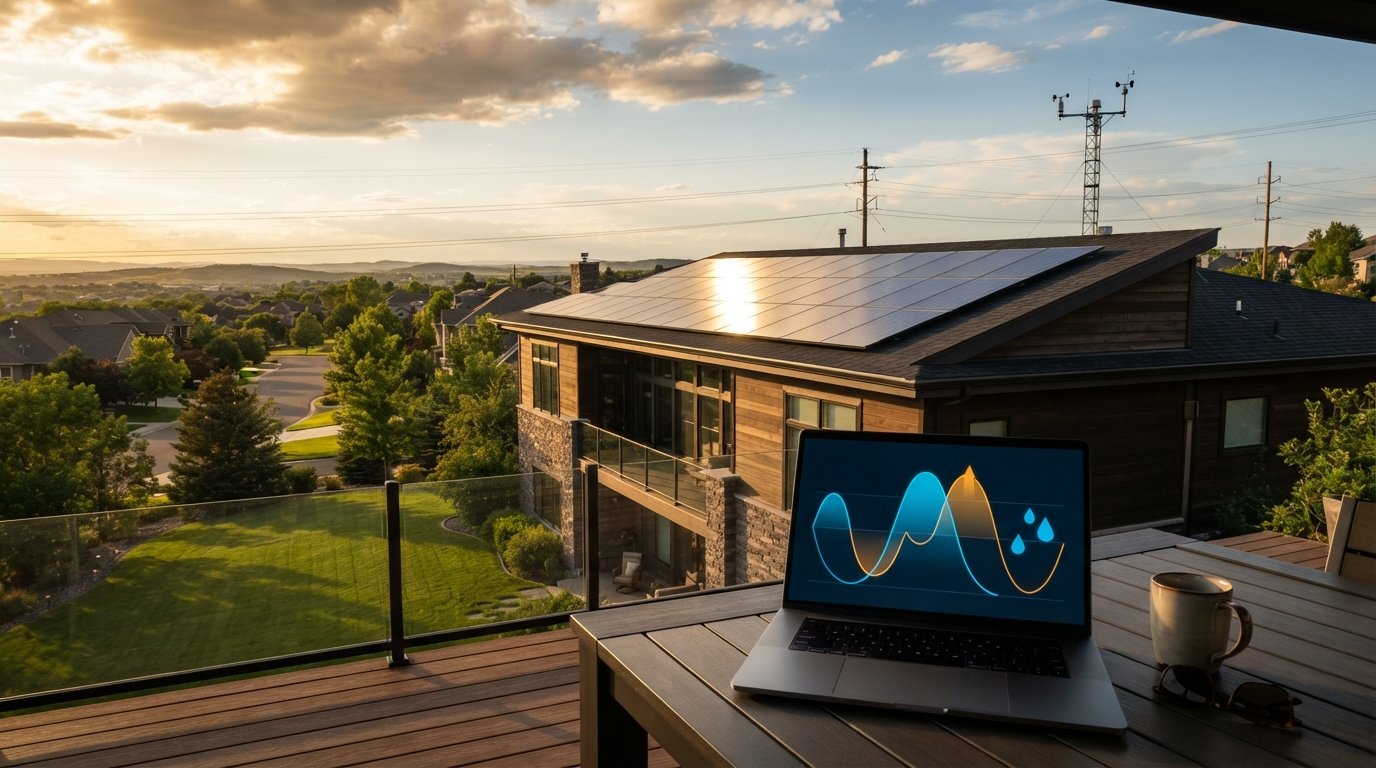
AI Solar Forecasting: Boost Home Energy Savings
AI solar forecasting uses machine learning to predict your panels' output, helping you slash electricity bills and maximize solar savings.

By Ryan Brooks
Learn more about Solar Panel Installation and Repair for guides, costs, and what to expect.
Compare Solar Panel Installation and Repair Pros Near You

Enter your ZIP code to compare top-rated local professionals and request free quotes.
Imagine your home's solar panels working in perfect harmony with the weather, the grid, and your daily habits. This is not science fiction; it is the promise of AI solar forecasting. For homeowners across the United States, this technology is turning the unpredictable nature of sunlight into a predictable, manageable resource. By analyzing vast amounts of data, from satellite imagery to local weather patterns, artificial intelligence can now predict solar energy production with remarkable accuracy. This capability is the key to unlocking the full potential of your solar investment, moving beyond simple panel installation to a truly smart, optimized energy system.
The shift is profound. Traditional solar systems operate reactively, generating power when the sun shines and leaving you dependent on the grid when it does not. AI solar forecasting changes this dynamic. It proactively anticipates energy generation hours or even days in advance, allowing you to make smarter decisions about when to use power, when to store it, and when to sell it back to the grid. This intelligence translates directly into lower electricity bills, increased energy independence, and a more sustainable home. For anyone considering solar or looking to maximize an existing system, understanding this technology is no longer optional; it is essential.
What Is AI Solar Forecasting and How Does It Work?
At its core, AI solar forecasting uses machine learning algorithms to predict the future output of a solar photovoltaic (PV) system. Unlike simple weather forecasts that might say "partly cloudy," these systems provide hyper-local, granular predictions about solar irradiance, temperature, and cloud cover. The process involves collecting and processing data from a variety of sources, creating a highly accurate model of what your panels will produce.
The data inputs are diverse and sophisticated. They include historical weather data, real-time satellite cloud imagery, sky cameras, sensor data from the solar inverter, and even numerical weather prediction models. Machine learning models, such as neural networks and gradient boosting machines, then analyze this data to identify complex patterns and relationships. For example, the system learns how a specific type of cloud passing over your neighborhood at a certain time of day affects your panels' output. This continuous learning process is what makes AI forecasting so superior to traditional, static methods.
The result is a power forecast that is not only about the next hour but also about the next day and week. This foresight is invaluable for managing home battery storage. You can charge your battery when your system is predicted to overproduce and save that energy for the evening when prices are higher. Furthermore, it helps you avoid surprise bills by knowing exactly when you will need to draw from the grid. For a deeper dive into how this integrates with your home, consider our guide on AI solar forecasting for home energy savings.
The Core Benefits for Homeowners
Adopting AI solar forecasting is not just about keeping up with technology; it is about realizing tangible, financial, and practical benefits. The most immediate impact is on your monthly energy costs. By knowing precisely when your system will produce surplus energy, you can shift your heavy electricity usage, such as running the dishwasher or charging your electric vehicle, to those peak production times. This practice, known as load shifting, minimizes the amount of expensive grid electricity you consume.
Beyond daily savings, the technology enhances the return on investment for your entire solar power system. It maximizes the use of your solar energy, reducing your reliance on the grid and increasing your savings over the system's lifetime. Here are the key financial and operational benefits you can expect:
- Reduced electricity bills through optimized self-consumption of solar power.
- Increased efficiency and lifespan of home battery storage by managing charge cycles more intelligently.
- Potential to earn more money through net metering by selling excess power back to the grid at optimal times.
- Protection against rising utility rates and unexpected price spikes.
These benefits go beyond simple economics. They provide peace of mind and a sense of energy independence. By participating in demand response programs offered by some utilities, you can even earn additional incentives for reducing your grid consumption during peak hours, a task that AI forecasting makes seamless. This proactive approach to energy management is a significant upgrade from the passive role of a traditional solar consumer.
AI Solar Forecasting vs. Traditional Methods
To understand the value of AI, it is helpful to compare it to older forecasting methods. Traditional forecasting often relies on numerical weather prediction (NWP) models that offer broad, regional forecasts. While useful, these models lack the fine detail needed for a single rooftop. They struggle with local phenomena like fast-moving clouds or the microclimate created by a nearby hill, leading to significant forecast errors. This often results in a system that is either over- or under-prepared, leaving savings on the table.
AI-based methods, by contrast, learn from the specific performance data of your own solar system. They continuously refine their predictions based on how your panels actually behave in different conditions. This self-correcting nature allows them to achieve much higher accuracy, often with forecast errors reduced by 20-30% compared to traditional methods. This higher accuracy directly translates into more reliable energy management and better financial outcomes.
Another key difference is the timescale of the forecast. Traditional methods often provide only daily or hourly updates. AI systems can provide forecasts every few minutes, or even in real time, adapting instantly to changing conditions. This real-time adaptability is critical for making split-second decisions about battery charging or selling power back to the grid. It is this precision and speed that makes AI an indispensable tool for modern solar energy management.
Integrating AI Forecasting with Battery Storage
The true power of AI solar forecasting becomes evident when paired with a home battery system. Without a battery, your options are limited to using power when it is generated or selling it back to the grid. A battery adds flexibility, but it also adds complexity: when should you charge, and when should you discharge? AI forecasting answers these questions with precision.
The system can predict tomorrow's solar production and your home's expected energy consumption. It then devises a strategy to charge the battery during predicted peak production hours and discharge it during evening peak rate hours. This strategy is constantly updated as the forecast evolves, ensuring you are always using the cheapest energy available. For example, if a cloudy day is predicted, the AI will ensure your battery is fully charged the night before, so you are not drawing from the grid during the day.
This intelligent management is a game-changer for maximizing savings. It minimizes the amount of electricity you purchase from the grid, especially during high-cost peak periods. It also reduces the strain on your battery by avoiding unnecessary deep discharges, potentially extending its lifespan. This integrated approach is what many experts consider the future of home energy, as highlighted in our article on AI solar forecasting explained.
How to Get Started with AI Solar Forecasting
For homeowners with an existing solar system, adopting AI forecasting is often simpler than expected. Many modern solar inverters and monitoring platforms are beginning to include AI-powered forecasting features as part of their software. A simple software update or a subscription to an advanced monitoring service might be all that is needed. If your system is older, you may need to install a separate smart monitoring device that can communicate with your inverter and provide these predictive insights.
If you are planning a new solar installation, the choice is even easier. You can explicitly ask your solar installer for a system that includes AI-powered energy management and forecasting capabilities. The key is to ensure that your chosen components, such as the inverter and battery, are compatible with smart, AI-driven control systems. This is a critical step in future-proofing your investment, ensuring your system can grow with technological advancements.
To make the most of this technology, consider these practical steps:
- Check if your current solar inverter or monitoring app offers AI-based forecasting features.
- If not, research third-party energy management systems that can integrate with your existing solar hardware.
- When purchasing a new system, explicitly request AI forecasting and smart battery integration from your solar provider.
- Review your utility's net metering and time-of-use rates to understand how AI forecasts can be used to maximize your savings.
By taking these steps, you can transform your solar system from a passive asset into an active, intelligent participant in your home's energy ecosystem. The investment in this technology is an investment in long-term savings and sustainability.
The Role of AI in the Future of Home Energy
AI solar forecasting is more than a convenience; it is a cornerstone of the modern smart home and the broader energy grid. As more homes adopt solar and battery storage, the grid is becoming more distributed and complex. AI helps to manage this complexity by enabling individual homes to interact with the grid more intelligently, reducing strain during peak demand and contributing to overall grid stability.
This technology also plays a vital role in the adoption of electric vehicles (EVs). With AI forecasting, your home can coordinate solar production, battery storage, and EV charging. It can delay charging your EV until solar production is at its peak or until electricity prices are lowest, ensuring that your car is powered by the cheapest, cleanest energy available. This holistic approach to home energy management is a major step toward a fully sustainable lifestyle.
Looking ahead, we can expect AI forecasting to become more integrated with national weather services and utility data, providing even more accurate and actionable insights. It is a foundational technology for the next generation of energy management, and its importance will only grow. For a more comprehensive look at maximizing your savings, our guide on maximizing home solar savings with AI offers further details. Embracing this technology now positions you at the forefront of the clean energy revolution.
In conclusion, AI solar forecasting is not just a technical upgrade; it is a fundamental shift in how we interact with our solar energy systems. It empowers homeowners with the knowledge to make smarter energy decisions, save money, and reduce their environmental footprint. As the technology continues to evolve, its integration with home energy management will become the standard, making AI an indispensable partner in the journey toward a sustainable and energy-independent future. The question is no longer if you should adopt AI for your solar system, but when, and those who act now will reap the greatest rewards.
Learn more about Solar Panel Installation and Repair for guides, costs, and what to expect.
Compare Solar Panel Installation and Repair Pros Near You
Enter your ZIP code to compare top-rated local professionals and request free quotes.