What Is Solar AI Software and How It Cuts Energy Costs
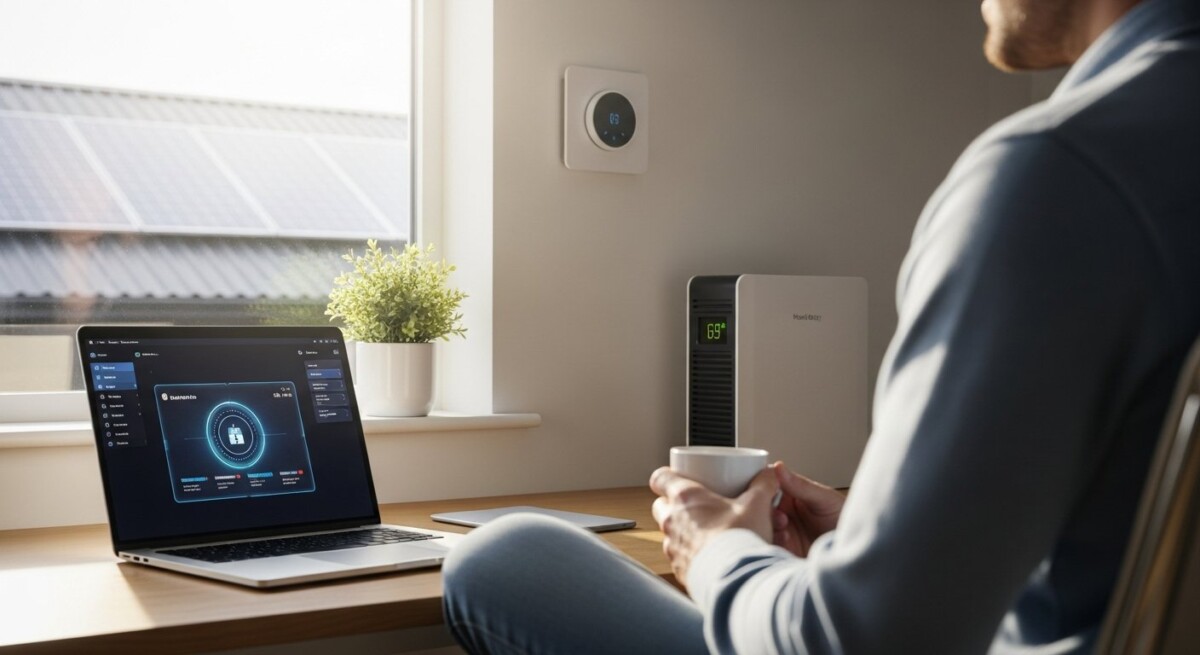
Imagine a system that watches your home’s energy use around the clock, predicts exactly when your solar panels will generate the most power, and automatically shifts your heavy electricity loads to those cheap, sunny hours. That is the promise of solar AI software, a technology that is rapidly transforming how homeowners and businesses manage their solar energy systems.
Solar AI software combines artificial intelligence with your solar panel setup to optimize every kilowatt-hour your system produces. Instead of relying on static settings or manual adjustments, these smart platforms learn your consumption patterns, study local weather forecasts, and communicate with your inverter to make real-time decisions. The result is a solar system that works harder for you, often increasing self-consumption of solar power by 20 to 30 percent and shrinking your grid dependence.
For anyone considering solar panels or looking to get more from an existing installation, understanding this software is becoming essential. It is the difference between a set-it-and-forget-it solar array and a dynamic energy asset that actively saves you money.
Understanding the Core of Solar AI Software
At its simplest level, solar AI software is a layer of intelligent control that sits on top of your solar hardware. It uses machine learning algorithms to process data from multiple sources. These sources include your solar inverter, smart meter, home battery (if you have one), weather APIs, and sometimes even real-time electricity pricing from your utility.
The software’s primary job is to solve a fundamental challenge of solar energy: the sun does not always shine when you need power most. You might generate a surplus at midday when you are at work, then come home to peak evening rates when your panels are producing little. Solar AI software bridges this gap by predicting your energy needs and managing your system accordingly.
One common misconception is that solar AI software only benefits people with battery storage. While batteries do unlock additional optimization opportunities (like storing cheap solar power for expensive evening use), the software can still deliver value without them. It can, for instance, pre-cool your home before the sun sets or schedule your electric vehicle charger to run during peak solar hours.
Key Technologies That Power Solar AI
Solar AI relies on several distinct technologies working together. You do not need to understand all of them to benefit, but knowing the basics helps you ask the right questions when shopping for a system.
- Machine Learning Models: These algorithms analyze historical energy production and consumption data to forecast future patterns. The more data the system has, the more accurate its predictions become. Over weeks and months, the software learns your habits and adjusts automatically.
- Weather Integration: By pulling hyperlocal weather forecasts, the software can anticipate cloudy days or heatwaves. It then adjusts battery charging strategies or pre-cooling schedules days in advance.
- Real-Time Control Interfaces: The software communicates with your inverter, battery, and smart home devices using open protocols like Modbus or SunSpec. This allows it to send commands, such as telling your battery to discharge during a peak-rate period.
- API Connectivity: Many platforms connect to utility APIs to access time-of-use rates, demand charges, or net metering credits. This data helps the software make financially optimal decisions.
- Edge vs. Cloud Processing: Some systems process data locally on a device in your home (edge computing), while others rely on cloud servers. Edge processing offers lower latency, while cloud processing can access more computational power for complex predictions.
These components work in concert to create a system that is far more responsive than traditional solar setups. For example, our guide on AI Solar Analytics Explained: Slash Bills With Smart Energy dives deeper into how these technologies combine to deliver measurable savings.
Practical Benefits for Homeowners and Businesses
The real value of solar AI software lies in its tangible outcomes. It is not an abstract concept; it directly impacts your monthly electricity bill and your experience as a solar owner.
First, consider the financial angle. Utilities are increasingly moving toward time-of-use rate plans, where electricity costs more during peak demand periods (typically late afternoon and evening). Without AI, a standard solar system might export excess power at midday for a low rate and then buy back expensive power at night. Solar AI software flips this dynamic by storing energy in a battery or shifting loads to maximize the value of your own generation. In some cases, homeowners report reducing their grid purchases by 40 to 60 percent.
Second, the software extends the life of your equipment. By smoothing out charge and discharge cycles on your battery, the AI prevents deep discharges and overcharging, which are the primary causes of battery degradation. Similarly, it can manage inverter temperature by adjusting power flow on hot days, reducing stress on electronic components.
Third, there is the convenience factor. Once configured, the software operates autonomously. You do not need to watch the weather or remember to set timers. The system handles all of that in the background, and you can monitor its performance from a smartphone app anytime.
Choosing the Right Solar AI Software Platform
Not all solar AI platforms are created equal. The market includes options from inverter manufacturers, third-party software companies, and full-system providers. Your choice depends on your existing equipment, your technical comfort level, and your specific energy goals.
Start by checking compatibility. Some platforms work exclusively with specific inverter brands like Enphase, SolarEdge, or Tesla. Others are more open and support a wide range of hardware through standard communication protocols. If you are building a system from scratch, you have more freedom. If you are adding AI to an existing installation, compatibility is your first gate.
Next, evaluate the platform’s forecasting accuracy. Look for companies that publish their model performance or offer trial periods. A good platform should demonstrate at least 85 to 90 percent accuracy in its day-ahead production and consumption predictions.
Consider the user interface as well. A powerful algorithm is useless if the dashboard is confusing or lacks actionable insights. The best platforms provide clear visualizations of your energy flow, savings summaries, and alerts for unusual events like a sudden drop in production or a grid outage.
Finally, review the subscription costs. Many platforms charge a monthly or annual fee, typically ranging from 10 to 30 dollars per month. Some premium providers also offer a percentage of the savings they generate. While this creates an aligned incentive, be sure to read the fine print about how savings are calculated.
Integration with Home Automation and Smart Devices
Solar AI software becomes even more powerful when it integrates with your broader smart home ecosystem. Many platforms can connect to smart thermostats, EV chargers, heat pump water heaters, and pool pumps. This allows the AI to manage not just your solar production but also your major energy loads.
For instance, on a sunny afternoon when your panels are producing at maximum capacity, the software might signal your thermostat to lower the temperature a few degrees, effectively storing cool air in your home’s thermal mass. Later, during the expensive evening peak, the thermostat can relax, and your home stays comfortable without drawing from the grid.
Similarly, an AI system can schedule your EV charging to coincide with peak solar production. If a cloudy morning is followed by a sunny afternoon, the software can delay charging until the sun is out. This kind of dynamic scheduling is impossible to manage manually and represents one of the biggest opportunities for savings.
If you are interested in the technical details of how these systems analyze data to make decisions, our article on AI Solar Analytics Explained: Slash Bills With Smart Energy provides a thorough breakdown of the analytics engine that drives these automations.
Future Trends in Solar AI Software
The field of solar AI is evolving rapidly, driven by advances in machine learning and the growing complexity of energy markets. Several trends are worth watching if you are planning a solar investment in the next few years.
One major development is vehicle-to-grid (V2G) integration. As bidirectional EV chargers become more common, solar AI software will manage not only home batteries but also the massive battery pack in your electric car. During peak rate hours, the software could pull energy from your car to power your home, then recharge the car overnight at lower rates.
Another trend is community-level optimization. Instead of managing each home independently, future AI platforms may coordinate energy flows across a neighborhood. If one house has surplus solar generation, the software could route it to a neighbor who needs it, reducing overall grid strain and unlocking new value streams for homeowners.
We are also seeing the rise of predictive maintenance. By analyzing inverter performance data and panel degradation curves, AI can alert you to potential failures weeks or months before they happen. This allows you to schedule repairs proactively, avoiding costly downtime.
Common Questions About Solar AI Software
Many homeowners have similar questions when they first encounter this technology. Addressing these can help clarify whether it is right for your situation.
Is solar AI software worth the cost? For most homeowners with time-of-use rates, battery storage, or an EV, the answer is yes. The typical payback period is 12 to 24 months through increased self-consumption and better rate arbitrage. Without those factors, the value is lower but still positive if you want maximum efficiency from your system.
Do I need a new inverter to use solar AI software? Not necessarily. Many platforms work with existing inverters through add-on devices that communicate with your system. However, some advanced features require a compatible smart inverter. Check with the software provider before purchasing.
Can solar AI software work during a power outage? It depends on whether you have a battery and a backup-ready inverter. If your system is designed for islanding (running independently of the grid), the AI can manage your battery discharge to keep essential loads running longer. Without a battery, your panels shut off during outages for safety reasons.
Does the software require internet access? Most features require an internet connection for weather data, rate updates, and cloud analytics. Some platforms offer limited local operation during internet outages, but full optimization typically needs connectivity.
Solar AI software represents a significant leap forward in how we interact with our energy systems. It transforms solar panels from passive generators into active, intelligent assets that adapt to your life and the changing grid. As utility rates become more complex and renewable energy adoption grows, this technology will likely become a standard feature of any well-designed solar installation. For homeowners ready to move beyond basic solar and truly optimize their energy independence, exploring this software is a logical and rewarding next step.