What Is AI Energy Forecasting and Why It Matters
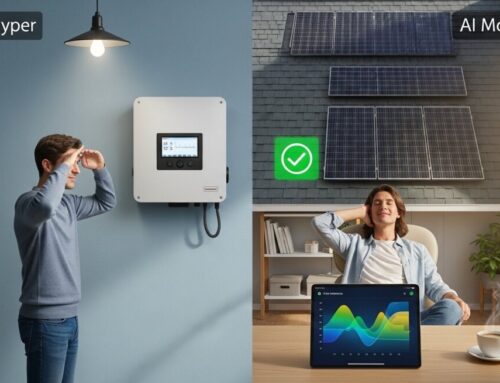
Utility bills have always felt a bit like a guessing game. You use energy, the meter spins, and a bill arrives that often surprises you. For decades, grid operators and large energy buyers relied on basic historical averages and weather predictions to estimate how much electricity would be needed. But those methods miss the complexity of modern energy use. Enter AI energy forecasting. This technology uses machine learning and vast datasets to predict energy consumption and production with startling accuracy. It is changing how homes, businesses, and utilities plan for the future, and it is especially critical for anyone using solar power.
Defining AI Energy Forecasting
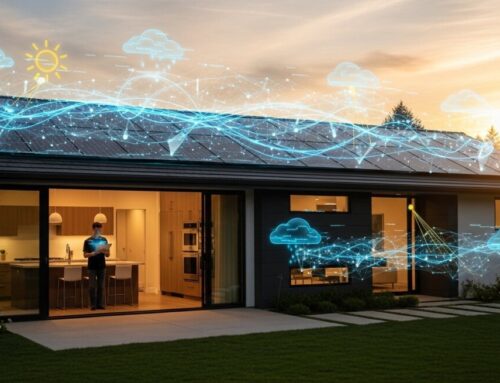
AI energy forecasting is the application of artificial intelligence to predict future energy demand and supply. Instead of using simple linear models or human intuition, AI systems ingest enormous amounts of data. That data includes historical consumption patterns, weather forecasts, real-time grid conditions, time of day, seasonal trends, and even economic indicators. Machine learning algorithms then identify patterns that humans cannot see, creating forecasts that update in real time and improve as more data becomes available.
There are two primary categories in this field. First, load forecasting predicts how much electricity will be consumed. Second, generation forecasting predicts how much electricity will be produced from sources like solar panels and wind turbines. Both are essential for balancing the grid. When you combine AI with renewable energy, the forecasting becomes more complex because solar and wind are variable. Clouds can reduce solar output by 70 percent in minutes. AI helps grid operators and solar system owners anticipate these changes and adjust accordingly.
How AI Energy Forecasting Works
At its core, AI energy forecasting relies on three components: data collection, model training, and real-time prediction. Data collection pulls from smart meters, weather stations, satellite imagery, and grid sensors. Model training uses historical data to teach an algorithm how variables like temperature, humidity, and cloud cover affect energy use and solar production. Once trained, the model can make predictions for the next hour, day, or week.
One popular technique is the use of neural networks, which mimic the way the human brain processes information. These networks can handle nonlinear relationships, such as the way a sudden heatwave drives air conditioning demand. Another method is gradient boosting, which combines many weak prediction models into one strong one. Both approaches outperform traditional statistical methods by a wide margin.
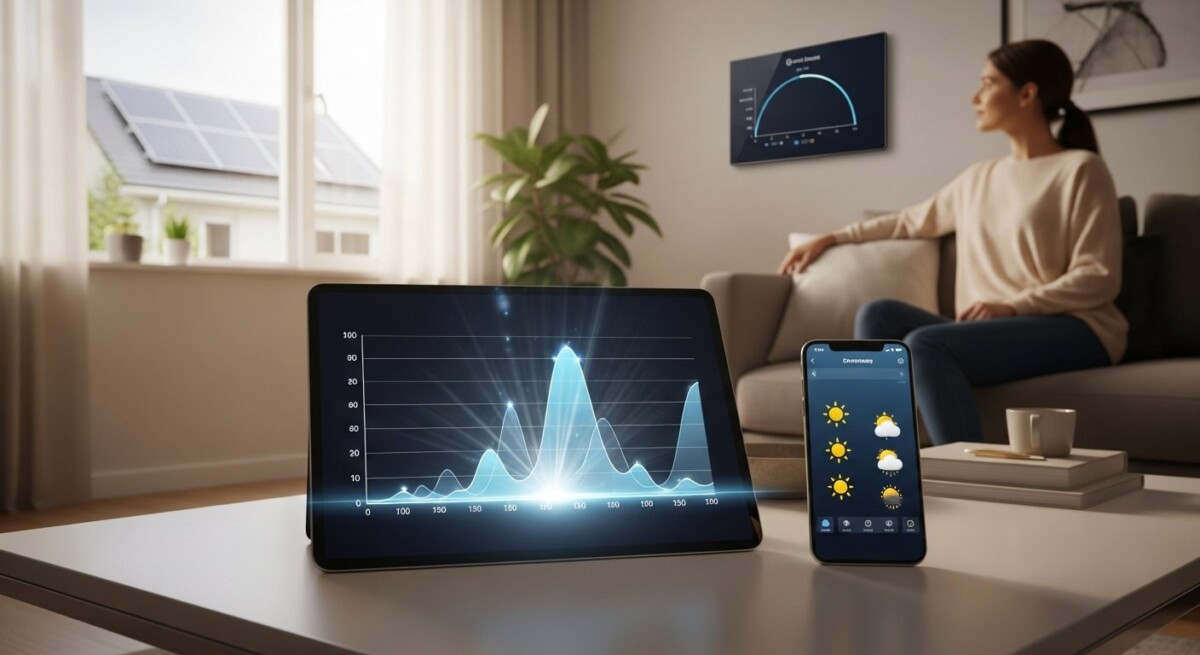
A concrete example illustrates the power of AI forecasting. A solar homeowner in Phoenix might have a 10-kilowatt system. Without AI, they might rely on a simple rule of thumb: the system will produce about 40 kilowatt-hours on a sunny day. But an AI forecast looks at the specific weather pattern for that day, the angle of the sun, the temperature coefficient of the panels, and even the soiling level from recent dust storms. It might predict 38.5 kilowatt-hours, with a confidence interval. That precision allows the homeowner to decide when to run the dishwasher or charge an electric vehicle.
Key Machine Learning Models Used
Several specific algorithms dominate the AI energy forecasting space. Understanding them helps clarify why AI is superior to older methods.
- Long Short-Term Memory (LSTM) networks: These are a type of recurrent neural network designed to remember patterns over long sequences. They are excellent for time-series data like hourly energy consumption.
- Random Forest: An ensemble method that builds many decision trees and averages their results. It is robust against outliers and works well with mixed data types.
- XGBoost: A gradient boosting framework that is fast and highly accurate. It often wins machine learning competitions for structured data.
- Convolutional Neural Networks (CNNs): Normally used for image recognition, CNNs can analyze satellite images to predict cloud cover and solar irradiance.
Each model has strengths. LSTM networks are ideal for the sequential nature of energy use, while XGBoost handles tabular data with many features. Many modern systems use a hybrid approach, combining multiple models for the best accuracy. The result is a forecast that can adapt to changing conditions in near real time.
Why AI Energy Forecasting Is Critical for Solar Power
Solar energy is inherently variable. A solar panel produces power only when the sun shines, and that production can fluctuate wildly with passing clouds. This variability creates challenges for grid stability and for homeowners who want to maximize their return on investment. AI energy forecasting addresses these challenges head on.
For utilities, accurate solar generation forecasts allow them to reduce reliance on fossil fuel peaker plants. Peaker plants are expensive and polluting generators that fire up when demand spikes or renewable output drops. With AI, utilities can schedule these plants less often, saving money and reducing emissions. For homeowners, AI forecasting enables smarter energy management. A system can predict when solar production will peak and automatically shift appliance usage to those hours, maximizing self-consumption and minimizing grid purchases.
In our guide on solar energy forecasting tools that help you save on bills, we explain how these predictions translate into direct financial benefits for homeowners. The same AI that predicts your solar output can also forecast your home’s consumption, allowing you to optimize battery charging and discharging cycles. This is especially valuable for homeowners with time-of-use electricity rates, where the price of power changes throughout the day.
Direct Benefits for Homeowners and Businesses
AI energy forecasting is not just for large utilities. Residential and commercial solar system owners can access these capabilities through modern energy management platforms. The benefits are tangible and measurable.
Lower electricity bills: By knowing exactly when your solar panels will produce the most power, you can schedule high-consumption activities like laundry, pool pumping, and EV charging to coincide with peak production. This reduces the amount of electricity you buy from the grid. Some homeowners see savings of 15 to 25 percent on their total energy costs after implementing AI-driven scheduling.
Better battery management: If you have a home battery, AI forecasting tells you the optimal times to charge and discharge. It can predict a cloudy day and reserve battery capacity for evening use. It can also anticipate a heatwave and pre-cool your home during cheap solar hours, then run on battery during expensive peak hours.
Reduced grid stress: When many homes use AI to flatten their demand curves, the entire grid becomes more stable. This reduces the likelihood of blackouts during extreme weather events. It also allows utilities to integrate more renewable energy without building new fossil fuel plants.
Increased solar ROI: A solar system that is managed with AI can produce up to 10 percent more usable energy than one managed by simple timers. Over the 25-year life of a system, that additional production can amount to thousands of dollars in savings.
For businesses, the stakes are even higher. Commercial buildings often have complex energy loads and demand charges based on peak usage. AI forecasting can shave those peaks, dramatically reducing monthly bills. A warehouse with a large rooftop solar array can use AI to predict production and schedule heavy machinery accordingly.
Real-World Applications and Case Studies
AI energy forecasting is already deployed at scale. Google uses DeepMind AI to reduce the energy used for cooling its data centers by 40 percent. The system predicts the cooling load hours in advance and adjusts equipment settings automatically. That same principle applies to solar-powered buildings.
In California, the Independent System Operator uses AI forecasting to manage one of the world’s largest renewable grids. The system predicts solar and wind output across the state, allowing operators to balance supply and demand with minimal waste. During the famous “duck curve” period, when solar production drops rapidly in the evening, AI helps ramp up other resources smoothly.
For a practical example of how these tools work in a residential setting, check out our detailed analysis of solar energy forecasting tools that boost savings and efficiency. These platforms combine weather data, satellite imagery, and machine learning to give homeowners a minute-by-minute outlook of their solar production. Some tools even integrate with smart home devices to automate energy decisions without any user input.
Challenges and Limitations
Despite its promise, AI energy forecasting is not perfect. The accuracy of a forecast depends heavily on the quality and quantity of data. A home with a single smart meter produces less data than a commercial building with sub-metering on every circuit. Less data can mean less accurate predictions.
Weather prediction itself has limits. Even the best AI cannot perfectly forecast a sudden thunderstorm or an unexpected heatwave. Forecasts are probabilistic, not deterministic. A good AI system communicates this uncertainty, giving a range of possible outcomes rather than a single number.
Another challenge is the computational cost. Training complex neural networks requires significant processing power and energy. However, once a model is trained, running predictions is relatively cheap. Most modern forecasting systems run on cloud servers and update forecasts every 15 to 30 minutes.
Data privacy is also a concern. Smart meters collect detailed information about when you use energy, which can reveal patterns of daily life. Responsible AI forecasting platforms anonymize and encrypt this data, but homeowners should verify the privacy policies of any tool they use.
How to Get Started with AI Energy Forecasting
For homeowners with solar panels, accessing AI forecasting is easier than ever. Many modern solar inverters and energy management systems come with built-in AI. Brands like Enphase, SolarEdge, and Tesla offer software that uses machine learning to optimize energy use. If your system is older, you can add a third-party monitoring platform that provides AI forecasts.
Here is a simple step-by-step process to start using AI energy forecasting in your home:
- Check your current system: Determine if your solar inverter or energy monitor already supports AI forecasting. Look for features like “smart scheduling” or “self-consumption optimization” in the app.
- Upgrade your monitoring: If your system lacks AI capabilities, consider a platform like Sense, Emporia, or the SolarEnergy.ai recommended tools. These devices clamp onto your electrical panel and use AI to disaggregate your energy usage.
- Connect to weather data: Ensure your system integrates with a high-resolution weather feed. The best forecasts use hyperlocal data, not just regional averages.
- Enable automated scheduling: Turn on features that automatically shift appliance usage to solar-rich hours. Most modern electric vehicles and smart thermostats support this integration.
- Monitor and adjust: Review your system’s forecasts and actual production weekly. Over time, the AI will learn your patterns and improve its predictions.
For businesses, the process is similar but may involve a professional energy audit. Many commercial energy service companies now offer AI forecasting as part of their energy management contracts. The upfront cost is often offset by guaranteed savings.
The Future of AI Energy Forecasting
The technology is evolving rapidly. One emerging trend is the use of edge AI, where forecasting happens locally on a smart inverter or home hub rather than in the cloud. This reduces latency and improves privacy. Another trend is the integration of AI forecasting with peer-to-peer energy trading, where homes with solar can sell excess power to neighbors based on predicted generation.
Grid operators are also exploring AI that can forecast not just hours ahead but days and weeks ahead. This long-range forecasting helps with maintenance scheduling, fuel procurement, and renewable energy credit trading. As climate change makes weather patterns more extreme, AI will become even more essential for managing the unpredictability of both demand and supply.
Finally, AI energy forecasting is becoming more accessible to homeowners who do not have solar panels. Utilities are beginning to offer AI-based time-of-use recommendations to all customers. These programs use anonymized data from smart meters to help households shift usage without sacrificing comfort. The end goal is a grid that runs on clean energy, with every kilowatt-hour used exactly when and where it is needed most.
AI energy forecasting is not a futuristic concept. It is already operating in millions of homes and businesses, quietly optimizing energy use and saving money. For anyone with solar panels, it is the single most effective tool for maximizing the value of their investment. As the technology improves and becomes more widespread, the days of surprise utility bills and wasted solar energy will fade away. The grid of the future is intelligent, adaptive, and powered by predictions that get better every single day.