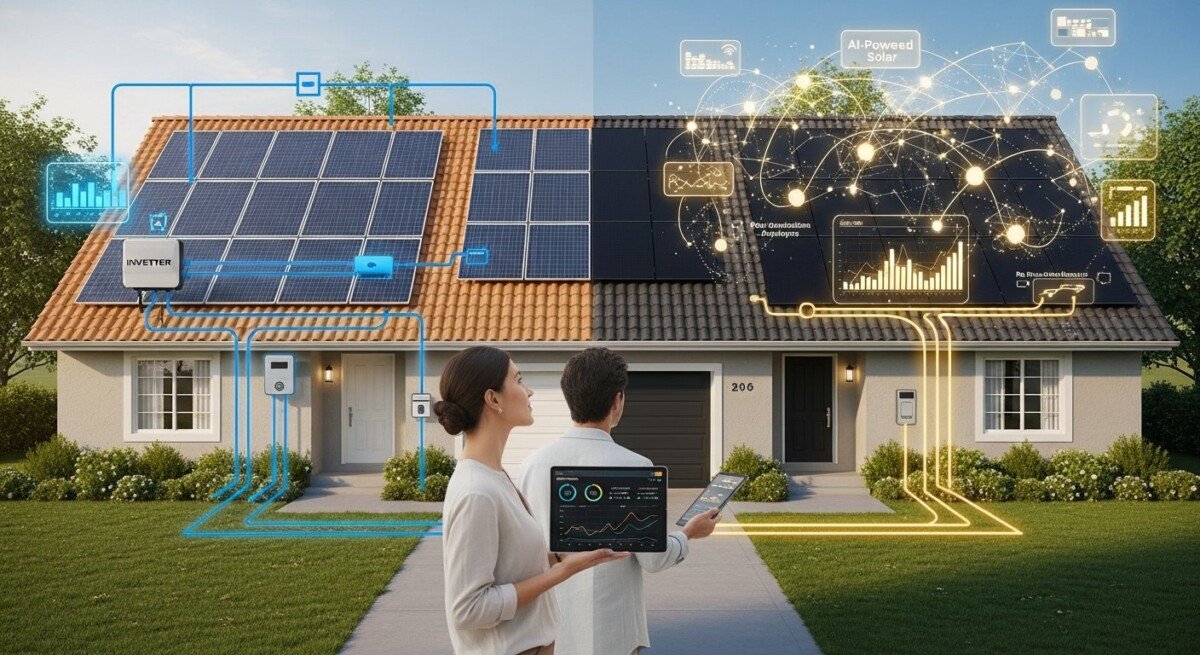
Traditional vs. AI Solar: Which Saves You More on Energy Bills?
Explore the key differences between traditional solar and AI solar systems. Learn which technology can maximize your savings, increase energy independence, and reduce your bills.

By Ethan Contributor
Learn more about Solar Panel Installation and Repair for guides, costs, and what to expect.
Compare Solar Panel Installation and Repair Pros Near You

Enter your ZIP code to compare top-rated local professionals and request free quotes.
Have you noticed your electricity bill creeping higher every month? You’re not alone. As energy costs rise, more homeowners are looking to solar power to take control. The goal is simple: reduce your monthly bills and become less dependent on the unpredictable grid. But now, there’s a new question to consider. Should you choose a traditional solar system, or is the newer AI solar technology the better investment for your home?
Understanding the Difference Between Traditional Solar and AI Solar
Let’s break down the basics. Traditional solar power systems are a fantastic, proven technology. They consist of panels on your roof, an inverter to convert the sun’s energy into usable electricity, and a connection to your home’s electrical system. On a sunny day, they generate clean power, reducing your need to buy electricity from the utility company.
AI solar, or smart solar, takes this foundation and adds a layer of intelligent software. Think of it as giving your solar system a brain. This technology uses artificial intelligence and machine learning to analyze your energy production, your home’s consumption patterns, and even local weather forecasts. It then makes automatic adjustments to maximize efficiency and savings every single day.
The core difference is in optimization. A traditional system operates on a set path, while an AI-driven system learns and adapts. It’s the difference between a standard thermostat and a smart, learning thermostat for your entire home’s energy ecosystem. This intelligent management is why more homeowners are considering it for long-term performance.
Why Solar Energy Is Becoming More Popular
The shift to solar is driven by powerful, practical benefits. First and foremost, it directly counters rising electricity prices. Once your system is installed, a significant portion of your power comes free from the sun, locking in lower energy costs for decades. This protection from rate hikes is a major financial relief.
Beyond the wallet, environmental concerns are a key motivator. Solar power generates clean, renewable energy right at your home, reducing your carbon footprint. You’re contributing to a healthier planet while also gaining a tangible form of energy independence. This combination of long-term savings and environmental stewardship makes solar an increasingly smart home upgrade.
If you are considering solar power for your home, comparing installation quotes can help you understand your options. Request a free solar quote or call to learn more.
Common Questions Homeowners Have About Solar
It’s normal to have questions before making such an important investment. Many homeowners wonder about the upfront cost, which can be substantial. However, with federal tax credits, local rebates, and various financing options, solar is more accessible than ever. The focus shifts from initial price to long-term return on investment.
Other common concerns involve the practicalities. Is my roof suitable? How will the system perform on cloudy days? A qualified installer will conduct a thorough assessment of your roof’s angle, material, and sun exposure. Modern systems, especially AI-enhanced ones, are designed to capture diffused light and perform well in various conditions, not just perfect sunshine.
- How much will a solar system really cost after incentives?
- Is my roof strong enough and does it get enough sun?
- What happens to my solar power when the grid goes down?
- How long will the panels last, and what about maintenance?
- Will solar panels increase my property value?
- How does net metering work with my utility company?
How Solar Panel Installation Works
The installation process is handled by professionals from start to finish. It begins with a detailed consultation and energy assessment. The installer will review your past electricity bills, evaluate your roof, and discuss your energy goals to design a system that fits your specific needs and budget.
Once you approve the design, the installer manages all the necessary permits and approvals from your local government and utility company. This step is crucial and highlights why working with an experienced professional is key,they navigate the bureaucracy so you don’t have to. The physical installation is typically completed in just a few days.
- Home Energy Assessment & Consultation: Reviewing bills, roof evaluation, and system sizing.
- Custom System Design: Creating a plan for panel placement and equipment.
- Permits and Approvals: Securing all required local and utility permissions.
- Panel and Equipment Installation: Mounting racks, installing panels, and setting up inverters.
- System Activation and Inspection: Final connection, testing, and approval from the utility (“Permission to Operate”).
Speaking with experienced installers can help you determine the best solar solution for your home. Compare solar quotes here or call to explore available options.
Signs Your Home May Be Ideal for Solar
Certain home characteristics make solar panel installation particularly effective and financially rewarding. The most obvious is strong, unobstructed sunlight exposure on your roof for the majority of the day. South-facing roofs in the Northern Hemisphere are typically ideal, but east and west-facing roofs can also work very well.
Your current energy consumption and costs are also major indicators. If you have consistently high electricity bills, solar can provide dramatic savings. Furthermore, if you plan to stay in your home for the long term,typically 7-10 years or more,you’ll have ample time to reap the full financial benefits of your investment as the system pays for itself.
- Your roof is in good condition and receives direct sunlight for 4+ hours daily.
- You pay high monthly electricity bills (often $100+).
- You have a suitable amount of unshaded roof space.
- You plan to own your home for many years to come.
- Your local utility has favorable net metering policies.
- You live in an area with strong state or local solar incentives.
What Affects Solar Installation Costs
The final price of your solar system depends on several key factors. The primary driver is the size of the system, measured in kilowatts (kW). A larger system designed to offset 100% of your usage will cost more than a smaller one, but it will also deliver greater lifetime savings. The quality and efficiency of the panels and inverters you choose also impact the price.
Installation complexity matters too. A simple, single-plane roof is easier and less expensive to work on than a multi-angled roof with skylights. Most importantly, don’t forget to factor in government incentives. The federal solar Investment Tax Credit (ITC) can reduce your cost by 30%, and many states and utilities offer additional rebates, which dramatically improve the economics. For a deeper dive into maximizing your system’s value, our guide on how to use solar panels effectively offers practical tips.
The cost of solar installation varies depending on your home and energy needs. Request personalized solar quotes or call to see what options are available.
Tips for Choosing a Reliable Solar Installer
Selecting the right installer is as important as choosing the right equipment. Look for a company with a strong track record of local installations and positive customer reviews. They should be licensed, insured, and offer robust warranties on both their workmanship and the equipment they install.
Always get multiple detailed quotes. This allows you to compare not just the price, but the proposed system size, equipment brands, warranty terms, and projected energy production. A trustworthy installer will be transparent, answer all your questions patiently, and never use high-pressure sales tactics. They are your partner in this long-term investment.
- Verify licenses, insurance, and certifications (like NABCEP).
- Read customer reviews and ask for local references.
- Compare the details of multiple quotes (equipment, size, warranties).
- Ensure they handle the entire permit and interconnection process.
- Ask about their experience with both traditional and AI-enhanced systems.
- Review the financing options they offer or recommend.
Long-Term Benefits of Installing Solar Panels
The advantages of going solar extend far beyond the first month’s lower bill. Financially, you are locking in a predictable energy cost for 25+ years, while utility rates are almost certain to rise. This leads to substantial long-term savings that often total tens of thousands of dollars over the system’s lifespan. Studies consistently show solar panels also increase your home’s resale value.
On a personal level, you gain greater energy independence and security. You’re less vulnerable to grid outages (especially with a battery backup) and utility price spikes. Environmentally, you are making a significant, positive impact by reducing reliance on fossil fuels. Together, these benefits create a powerful case for solar as a wise and responsible home improvement.
What is the main difference between traditional and AI solar?
Traditional solar systems operate on a fixed setup, generating power when the sun shines. AI solar adds intelligent software that continuously monitors and optimizes the system. It learns your energy habits and weather patterns to maximize production and self-consumption, often leading to higher overall savings.
Is AI solar more expensive than traditional solar?
The initial equipment cost for an AI-enhanced system can be slightly higher due to the advanced monitoring and optimization technology. However, the increased energy production and efficiency often lead to a faster payback period and greater long-term savings, making the extra investment worthwhile for many homeowners.
Do I need a special battery for an AI solar system?
Not necessarily. AI optimization software works with any system, with or without a battery. However, AI can be particularly effective when paired with battery storage. It can intelligently decide when to store energy, when to use it, and when to send it back to the grid based on price signals and your usage patterns.
Can I add AI features to my existing traditional solar system?
In some cases, yes. Certain inverters and monitoring systems can be upgraded with smarter software or hardware add-ons. It’s best to consult with your original installer or a solar technology specialist to see what retrofit options are compatible with your specific equipment.
How much can I really save with solar panels?
Savings depend on your local electricity rates, system size, sun exposure, and available incentives. Many homeowners see a 50-100% reduction in their electric bill. Over 20-30 years, total savings can easily reach $20,000 to $70,000, often exceeding the system’s initial cost.
What happens on cloudy days or at night?
Solar panels still produce energy on cloudy days, though at a reduced rate. At night, production stops. During these times, your home automatically draws power from the utility grid. If you have a net metering agreement, excess power you sent to the grid on sunny days earns credits to offset this usage.
Choosing between traditional and AI solar is about matching technology to your goals for savings, efficiency, and modern energy management. Both paths lead to reduced bills, increased independence, and a smaller environmental footprint. The most important step is to gather personalized information. By comparing detailed quotes from reputable installers, you can make a confident, informed decision for your home’s energy future.
Learn more about Solar Panel Installation and Repair for guides, costs, and what to expect.
Compare Solar Panel Installation and Repair Pros Near You
Enter your ZIP code to compare top-rated local professionals and request free quotes.