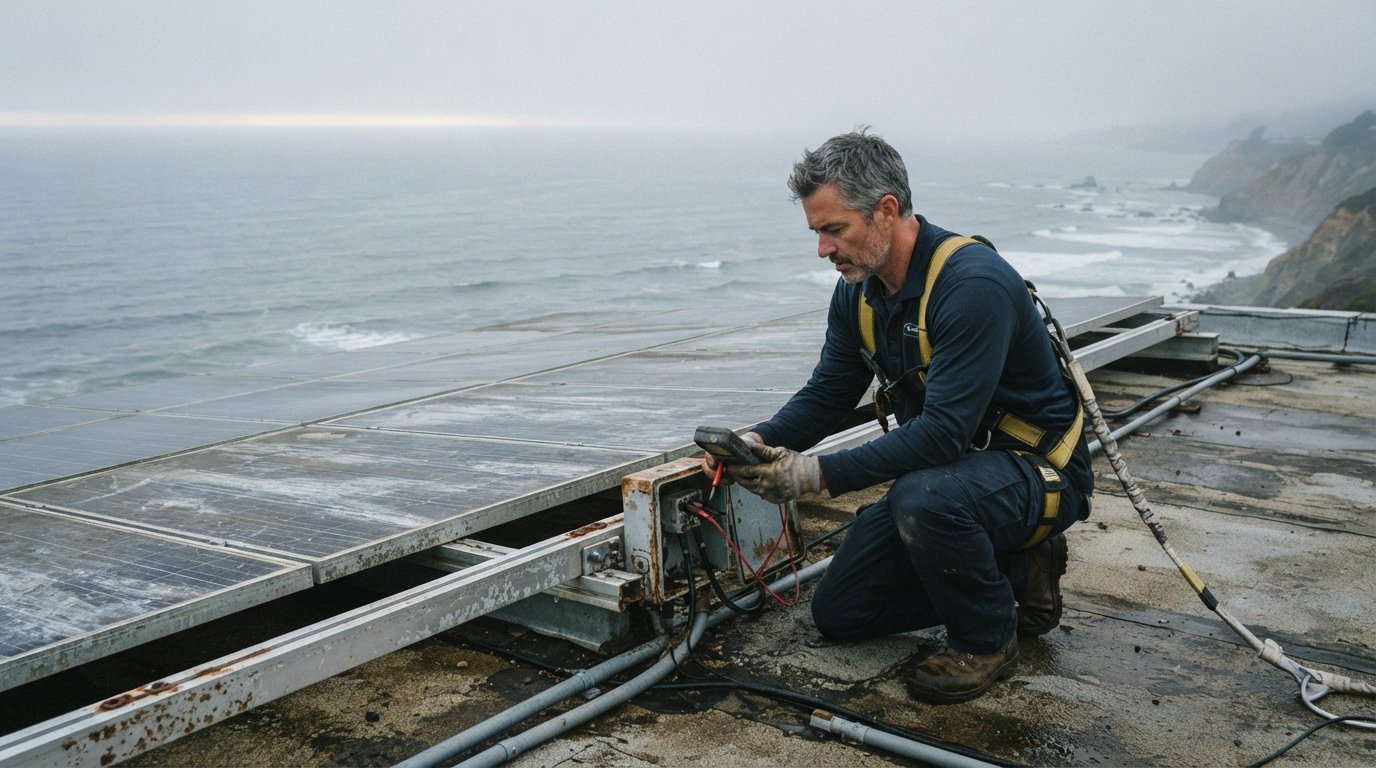
Solar Panel Performance in Humid Coastal Climates
Solar panel performance in humid coastal climates depends on salt-resistant materials and regular cleaning. Call 8334344023 for expert guidance.

By Wendy Young
Learn more about Solar Panel Cleaning for guides, costs, and what to expect.
Compare Solar Panel Cleaning Pros Near You

Enter your ZIP code to compare top-rated local professionals and request free quotes.
Coastal homeowners often wonder whether solar panels can thrive in salty, moisture-heavy air. The answer is yes, but the journey looks different from a dry inland installation. Humidity, salt spray, and frequent cloud cover all influence how much electricity your system produces and how long it lasts. Understanding these forces lets you design, maintain, and monitor a solar array that performs reliably for decades. This guide breaks down the science, the risks, and the practical steps that keep coastal solar systems at peak output.
How Humidity and Salt Affect Solar Panel Output
Humidity alone does not destroy solar panels, but it changes the operating environment in subtle ways. Water vapor in the air scatters sunlight, which reduces the direct beam that photovoltaic cells convert most efficiently. On a hazy coastal morning, a panel might produce 10 to 15 percent less power than it would under a clear desert sky. That loss is not permanent, but it is real and should be factored into production estimates.
Salt is a more aggressive variable. Airborne salt particles settle on glass surfaces and form a thin, translucent film. Over weeks, that film can block a measurable fraction of incoming light. More importantly, salt accelerates corrosion on metal components such as mounting rails, junction boxes, and inverter housings. If those parts degrade, the entire system becomes less reliable, and repair costs climb.
Temperature adds another layer. Coastal climates rarely reach the extreme heat of inland deserts, which is actually good news. Solar panels lose efficiency as cell temperature rises, so mild coastal summers can partially offset the losses from haze and salt. The net effect depends on your specific microclimate: a foggy Northern California town behaves differently from a sunny Florida beach.
Corrosion Risks and Material Choices for Coastal Installations
Not all solar equipment is built for salt air. Standard aluminum frames and steel mounts can oxidize quickly when exposed to chloride-rich moisture. The best coastal systems use marine-grade materials or protective coatings that resist corrosion. Stainless steel hardware, anodized aluminum frames, and sealed junction boxes are baseline requirements, not upgrades.
Inverters deserve special attention. Many residential inverters are installed outdoors, where humidity and salt can attack circuit boards and connectors. Choosing an inverter with a high IP (Ingress Protection) rating, ideally IP65 or better, reduces the risk of moisture intrusion. Some homeowners place inverters in a garage or shaded enclosure to extend their lifespan.
Wiring and connectors are another weak point. Corroded connectors increase resistance, which wastes energy and generates heat. Using tinned copper wiring and marine-grade connectors helps preserve conductivity over time. These small choices add modest upfront cost but prevent expensive failures later.
If you are unsure which equipment suits your coastline, a professional energy survey can identify the right materials for your exposure level. SolarEnergy.ai offers on-site assessments that evaluate salt exposure, wind loading, and shading before any hardware is specified.
Design Strategies That Improve Coastal Solar Performance
Installation angle and mounting height matter more near the ocean. Panels mounted at a steeper tilt shed rain and salt deposits more effectively than flat arrays. Raising the mounting height above ground or roof surface improves airflow, which cools panels and reduces moisture accumulation. In flood-prone zones, elevated mounts also protect equipment from storm surge.
Wind is a constant companion on the coast. Proper structural engineering ensures that mounts and rails withstand gust loads without loosening. Loose hardware creates gaps where salt water can seep in, so torque specifications and periodic inspections are essential.
Shading analysis is equally important. Coastal vegetation and neighboring structures can cast shadows that disproportionately affect production because diffuse light is already reduced. A well-designed system minimizes shade and maximizes the useful hours of generation.
Battery storage can also play a role. During storm-related outages, which are common in coastal regions, a battery keeps critical loads running. Pairing solar with storage improves resilience and can reduce reliance on a fragile grid.
Maintenance Routines That Protect Your Investment
Coastal solar systems need more frequent cleaning than inland arrays. Salt film and bird droppings accumulate faster, and once they harden, they are harder to remove. A gentle rinse with fresh water every few weeks keeps glass clear without scratching the surface. Avoid abrasive tools or harsh chemicals, which can damage anti-reflective coatings.
Inspections should focus on corrosion hotspots: mounting bolts, rail splices, connector pins, and inverter vents. A qualified technician can spot early signs of oxidation and replace affected parts before they fail. Many homeowners schedule professional maintenance twice a year in coastal areas.
Monitoring systems provide early warning. If production drops suddenly, the cause might be salt buildup, a failing inverter, or a loose connection. Tracking performance data helps you address problems quickly. For a deeper dive into analytics and performance tracking, see this guide on solar system performance analytics.
Here is a simple checklist for coastal solar maintenance:
- Rinse panels with fresh water every 2 to 4 weeks.
- Inspect mounting hardware and connectors for corrosion each season.
- Check inverter logs and production data monthly.
- Schedule a professional inspection twice per year.
- Trim vegetation that shades panels or traps moisture.
These habits cost little but significantly extend system life. In salt-heavy environments, proactive care is the difference between a 15-year system and a 25-year system.
Performance Data and Realistic Expectations
How much does humidity actually cost you? Studies suggest that soiling and salt film can reduce output by 5 to 10 percent in coastal areas without regular cleaning. Diffuse light losses from haze and fog can add another 5 to 15 percent depending on location. However, cooler temperatures can recover some of that loss, especially in spring and fall.
Modern monitoring tools let you quantify these effects. By comparing your system's output to modeled expectations, you can see whether performance is within normal range or declining. If degradation exceeds normal rates, it may be time to investigate corrosion or shading issues.
It is also wise to review your financial assumptions. Incentives and net metering policies vary by state and utility, and they change over time. A solar savings calculator can help you estimate payback period and return on investment using local data. SolarEnergy.ai provides a free calculator that accounts for coastal production factors and available rebates.
If you are ready to compare quotes from vetted installers who understand coastal conditions, FreeSolarPowerQuotes connects homeowners with reputable providers at no cost.
Choosing the Right Installer for Coastal Conditions
Not every solar company has experience with salt air. Ask potential installers about their coastal projects, the materials they use, and how they handle corrosion prevention. A knowledgeable installer will discuss mounting heights, inverter placement, and maintenance schedules without prompting.
Certifications matter too. Look for NABCEP-certified professionals and companies with a track record in your region. Check reviews and ask for references from homeowners near the coast. The right partner will design a system that accounts for humidity, salt, and wind from day one.
Finally, clarify warranty terms. Some manufacturers offer enhanced warranties for coastal installations, while others exclude corrosion damage. Understanding the fine print prevents unpleasant surprises later.
Coastal solar is absolutely viable, and in many cases it is highly rewarding. With the right equipment, thoughtful design, and consistent maintenance, your panels can deliver clean energy and strong savings for decades. The key is to respect the environment you are building in and to plan for its challenges from the start.