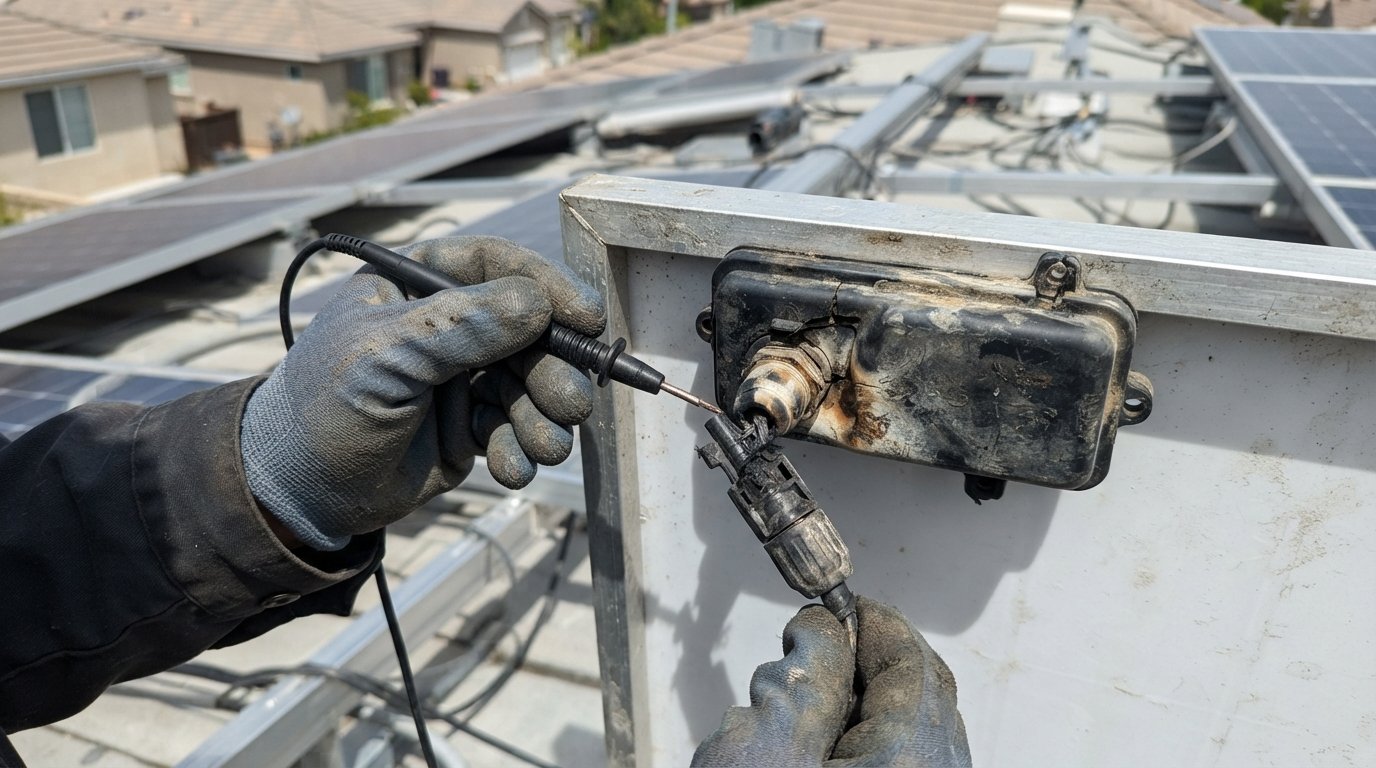
Solar Panel Junction Box and Connector Failure Signs
Spot solar panel junction box and connector failure signs early to avoid costly repairs. Call (833)-434-4023 for expert help.

By Julia Nguyen
Learn more about Solar Panel Installation and Repair for guides, costs, and what to expect.
Compare Solar Panel Installation and Repair Pros Near You

Enter your ZIP code to compare top-rated local professionals and request free quotes.
Your solar panels may be silently underperforming, and the culprit often hides in plain sight: the junction box and connectors. These small components are the critical links that carry direct current (DC) from each panel to the rest of your system. When they fail, you might notice a gradual drop in energy production, intermittent outages, or even a burning smell. Ignoring these warning signs can lead to costly repairs, safety hazards, and voided warranties. This guide will help you identify the early symptoms of junction box and connector failure, understand the risks of DIY fixes, and know when to call a professional.
Why Junction Boxes and Connectors Matter
The junction box is a weatherproof enclosure on the back of each solar panel where the DC output cables are connected. It protects the electrical connections from moisture, dust, and physical damage. Connectors, typically MC4 types, link panels together and to the inverter. Together, they ensure a safe and efficient flow of electricity. A failure in either component can disrupt the entire system, reduce your energy savings, and pose fire risks.
Common causes of failure include improper installation, UV degradation, thermal cycling (expansion and contraction from temperature changes), and physical damage from rodents or debris. Even high-quality components can fail over time, especially in harsh weather conditions. Regular inspections and monitoring are essential to catch problems early.
Symptoms of a Failing Junction Box or MC4 Connector
Early detection is key to preventing major damage. Here are the most common signs that your junction box or connectors may be failing. If you notice any of these, take action promptly.
- Intermittent or reduced power output: A drop in energy production, especially on sunny days, can indicate a loose or corroded connection. Monitoring your system's performance through an app or inverter display can help you spot anomalies.
- Visible damage or discoloration: Look for cracks, burns, melted plastic, or corrosion on the junction box or connectors. Discoloration often signals overheating.
- Burning smell or smoke: A burning odor near the panels or inverter is a serious safety hazard and may indicate arcing or a short circuit. Turn off the system immediately and call a professional.
- Error codes or ground faults: Many inverters display error codes related to ground faults or arc faults. These can be triggered by faulty wiring or connectors.
- Water intrusion: If the junction box seal is compromised, water can enter and cause corrosion or short circuits. Check for water stains or moisture inside the box.
These symptoms may also appear in other parts of the system, so a thorough inspection by a qualified professional is necessary to pinpoint the exact cause. For a broader understanding of system sizing and performance, you might find our guide on a 200 watt solar panel useful, as it explains how panel specifications affect overall output.
Thermal Imaging and Monitoring Clues
Advanced tools like thermal cameras can detect hot spots that are invisible to the naked eye. A failing connector or junction box often generates excess heat due to increased resistance. During a professional inspection, thermal imaging can quickly identify areas of concern. Additionally, many modern solar monitoring systems provide real-time data on each panel's performance. If one panel consistently underperforms, it could be a sign of a connector issue. Keep an eye on your monitoring dashboard and investigate any persistent discrepancies.
Another clue is a sudden increase in your electricity bill despite unchanged usage habits. This could indicate that your solar system is not producing as expected, possibly due to a faulty connection. Regular maintenance, including visual checks and professional inspections every few years, can help catch these issues early.
Why DIY Connector Replacement Carries Arc-Fault Risk
It might be tempting to replace a faulty connector yourself, but this is highly discouraged. Solar panels generate direct current (DC) electricity whenever exposed to light, making them live at all times. Unlike alternating current (AC), DC arcs do not self-extinguish and can sustain a dangerous arc fault. Improperly installed connectors can loosen over time, creating high-resistance joints that generate heat and potentially cause a fire. Moreover, DIY work often voids manufacturer warranties and may not comply with local electrical codes. Only licensed solar professionals should handle connector replacements, as they have the training and tools to do the job safely.
If you suspect a connector issue, do not attempt to fix it yourself. Instead, contact a qualified solar technician who can assess the problem and perform repairs according to safety standards. For other home repair needs beyond solar, such as appliance or electrical issues, you can find vetted professionals through platforms like Repairmen.
What to Ask a Service Pro During Inspection
When you hire a professional to inspect your solar system, ask specific questions to ensure a thorough job. Here are key points to cover:
- What testing methods will you use? Look for answers that include thermal imaging, IV curve tracing, and visual inspection.
- How will you check for arc faults and ground faults? A good technician should explain the diagnostic steps.
- Are replacement parts covered under warranty? Clarify whether the junction box or connectors are still under manufacturer warranty.
- What preventive measures can I take? Ask about regular maintenance and monitoring tips.
- Can you provide a written report? A detailed report helps you track the system's health and any repairs done.
A reputable service pro will be transparent about their process and findings. They should also offer recommendations for improving system safety and performance. Regular inspections, ideally every 2-3 years, can extend the life of your solar investment and prevent costly downtime.
Preventive Maintenance and Monitoring
To minimize the risk of junction box and connector failures, schedule routine maintenance with a certified solar installer. They can clean panels, tighten connections, and replace worn components before they fail. Additionally, invest in a monitoring system that alerts you to performance issues. Many systems offer remote diagnostics, allowing technicians to identify problems without a site visit. By staying proactive, you can protect your solar investment and ensure consistent energy savings.
Remember, your solar system is a long-term investment. Regular care and prompt attention to warning signs will keep it running smoothly for decades. If you need help finding a qualified solar professional, SolarEnergy.ai connects you with vetted local installers who can inspect and service your system.
Don't wait for a minor issue to become a major repair. Stay vigilant, monitor your system, and call a professional at the first sign of trouble. Your safety and energy savings depend on it.
Learn more about Solar Panel Installation and Repair for guides, costs, and what to expect.
Compare Solar Panel Installation and Repair Pros Near You
Enter your ZIP code to compare top-rated local professionals and request free quotes.