Solar Maintenance Guide: Keep Panels at Peak Output
Follow this solar maintenance guide to clean panels, inspect wiring, and use monitoring tools so your system keeps producing maximum savings.

By Owen Phillips
Learn more about Solar Panel Cleaning for guides, costs, and what to expect.
Compare Solar Panel Cleaning Pros Near You

Enter your ZIP code to compare top-rated local professionals and request free quotes.
Your solar panel system works silently year after year, converting sunlight into savings with almost no input from you. That quiet reliability can make it easy to forget that your investment still needs attention. Dust, debris, weather, and normal wear can quietly erode your system's efficiency, which means you could be losing money without ever noticing a single error message. This solar maintenance guide explains exactly what your system needs, how often it needs it, and how to spot small problems before they become expensive repairs.
Why Regular Maintenance Matters for Solar Panels
Solar panels have no moving parts, which leads many homeowners to assume they are maintenance-free. While it is true that they require far less care than a furnace or an air conditioner, they are still exposed to the elements 24 hours a day. Over time, that exposure takes a toll. A layer of dust can block sunlight, bird droppings can create hot spots, and loose wiring can reduce output or create a safety hazard.
The financial impact of neglect is significant. Studies and field reports consistently show that dirty panels can lose between 5% and 20% of their energy production. In dusty regions or areas with frequent pollen, that number can climb even higher. For a typical home system producing 10,000 kWh per year, a 15% loss means you are paying for electricity you could have generated yourself. Over a decade, that inefficiency can add up to thousands of dollars in wasted potential.
Beyond production losses, regular inspection helps you catch warranty issues early. Most quality panels carry 25-year performance warranties, but those warranties often require proof of proper upkeep. If a connection fails or an inverter breaks down and you have not performed basic checks, your claim may be denied. A simple schedule of inspections protects both your energy output and your legal right to repairs.
How Often Should You Perform Solar Maintenance?
The ideal maintenance schedule depends largely on your local environment. A homeowner in a rainy climate with minimal dust might only need to check their system twice a year. Someone living in a desert area with frequent dust storms or near a farm with constant pollen should plan for quarterly attention. The key is to observe your system's production data and respond to changes.
Most experts recommend a baseline schedule of a visual inspection every three months and a deep cleaning at least once or twice per year. If you have access to your monitoring app, review your daily production numbers weekly. A sudden drop that does not correlate with cloudy weather is your first clue that something needs attention.
Here are the critical times to schedule extra maintenance:
- After major storms, hail, or high winds that may have damaged panels or loosened mounting hardware.
- During heavy pollen seasons or after prolonged dry spells when dust accumulation accelerates.
- After wildlife activity, such as birds nesting under panels or squirrels chewing on wiring.
- When your monitoring system reports a voltage or temperature anomaly that persists for more than a day.
If you notice any of these triggers, do not wait for your scheduled checkup. Addressing issues promptly prevents minor problems from escalating into component failures. For a detailed month-by-month approach, you can reference our solar maintenance checklist for peak output that walks through the essential tasks.
DIY Solar Panel Cleaning: Steps and Safety
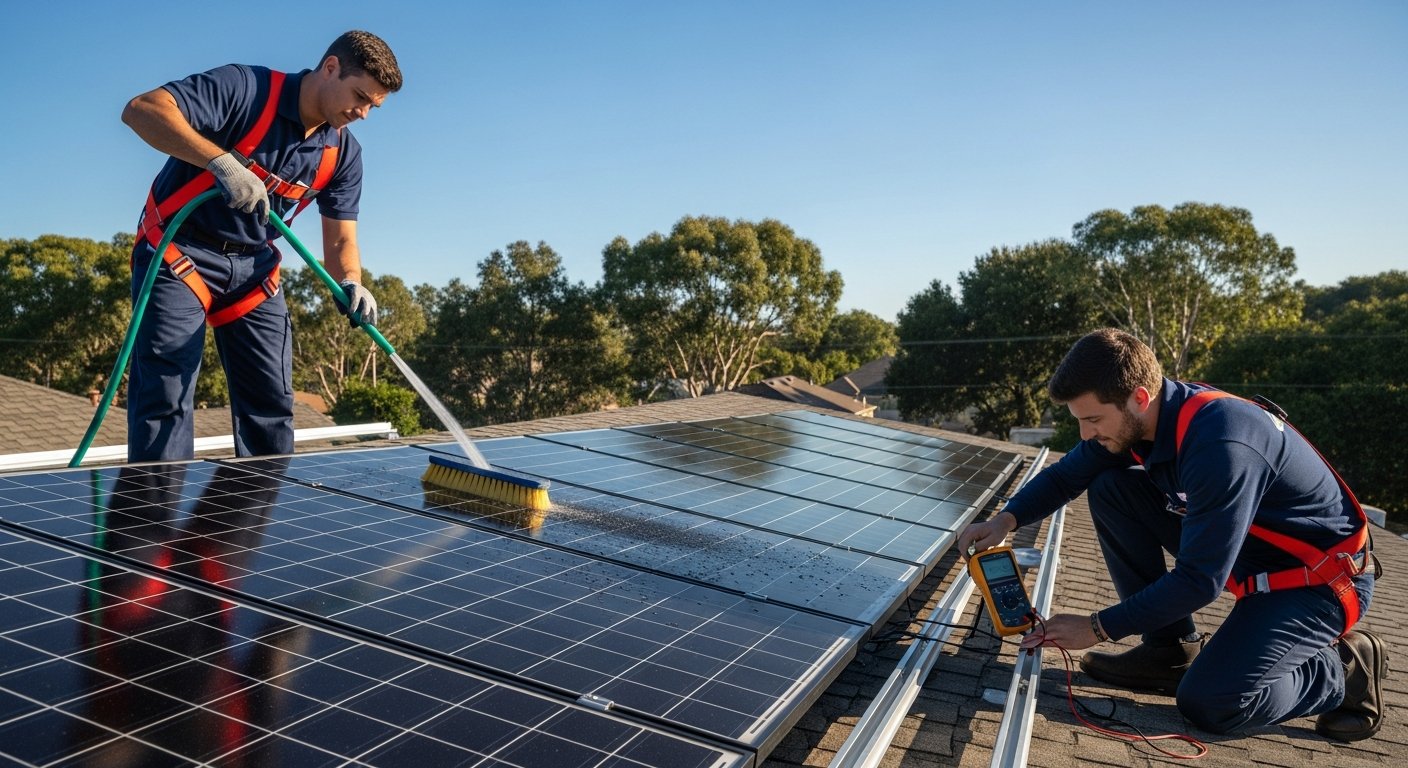
Cleaning your panels is the most common maintenance task, and it is one you can safely do yourself in most cases. The goal is simple: remove anything blocking sunlight. However, doing it wrong can scratch the glass or create a shock hazard, so follow a careful process.
Start by checking your system's shutdown procedure. While rainwater and a hose are generally safe, you should disconnect the system from the grid if you plan to use a pressure washer or if your roof is slippery. Always work from a stable ladder with a spotter, or better yet, clean from the ground using an extendable pole with a soft brush attachment. Never step on the panels themselves, as the glass is not designed to bear weight.
For the cleaning solution, plain water is often enough. If you have stubborn grime, use a mild soap mixed with water. Avoid harsh chemicals, abrasive pads, or metal scrapers, as these will scratch the anti-reflective coating. Here is a safe cleaning sequence:
- Rinse the panels with a gentle stream of water to remove loose dust and grit.
- Use a soft sponge or microfiber cloth with soapy water to wipe the surface gently.
- Rinse again thoroughly to remove all soap residue, which can leave a film that attracts more dirt.
- Dry the panels with a squeegee or let them air dry to prevent water spots.
Clean your panels in the early morning or late afternoon when they are cool. Cleaning hot panels can cause the water to evaporate instantly, leaving streaks, and the thermal shock can stress the glass. If you live in an area with hard water, use deionized water for the final rinse to avoid mineral deposits.
Inspecting Electrical Components and Inverters
While cleaning handles the visible surface, the real heart of your system lies in the electrical components. The inverter, which converts DC power from your panels into AC power for your home, is the most likely part to fail. Modern string inverters typically last 10 to 15 years, while microinverters may last 25 years. Knowing which type you have informs your inspection priorities.
Check your inverter's display screen or app for error codes or warning lights. A solid green light usually means everything is functioning correctly. A blinking red or orange light indicates a fault that needs investigation. Many inverters have a reset button, and a simple power cycle can clear transient errors. If the error persists, call a professional.
Inspect the visible wiring for signs of rodent damage, frayed insulation, or loose connections. Look at the junction boxes under the panels if you can access them safely. Also, check the mounting rails and clamps to ensure they are tight and free of rust. Loose connections create resistance, which generates heat and can lead to electrical fires, so this inspection is vital for safety as well as efficiency.
Monitoring System Performance with Smart Tools
Modern solar systems come with monitoring software that tracks production in real time. This data is your best diagnostic tool. By understanding your baseline production, you can quickly identify when something is off. For example, if your system typically produces 40 kWh on a sunny day and you see a sudden drop to 30 kWh, you know there is a problem.
Monitoring also helps you differentiate between temporary issues and long-term degradation. Solar panels naturally lose about 0.5% to 1% of their efficiency per year. That is normal. But a sudden, sharp decline is not. If your monitoring shows a consistent downward trend outside the expected degradation rate, it is time to schedule a professional inspection.
For homeowners who want to automate the detection process, new technology is making maintenance easier. AI solar maintenance tools can analyze your production data, weather patterns, and system health to predict failures before they happen. These systems learn your production curve and flag anomalies instantly, giving you a digital early warning system that never sleeps.
When to Hire a Professional for Solar Service
While many tasks are DIY-friendly, some situations demand a licensed professional. Roof work is inherently dangerous, and electrical work carries serious risk. If you are uncomfortable on ladders, if your roof has a steep pitch, or if you have a high-voltage system, hiring a professional is the smart choice.
You should also call a professional for any issue involving the main electrical panel, the utility meter, or the grid connection. Tampering with these components can violate local codes and your utility agreement. Professionals have the tools to safely test voltage, check insulation resistance, and verify that your system is grounding correctly.
Here are the signs that you need professional service rather than a DIY fix:
- Visible cracks, chips, or delamination on the panel glass.
- Burning smells, buzzing sounds, or visible sparks from the inverter or wiring.
- Persistent error codes on the inverter that do not clear with a reset.
- Water intrusion inside the inverter housing or junction boxes.
Professional maintenance services typically cost between $150 and $400 per visit, depending on system size and complexity. Given that a single inverter replacement can cost over $1,000, paying for an annual inspection is a wise investment. It is also a good time to have a professional torque down the mounting bolts and apply dielectric grease to connections to prevent corrosion.
Seasonal Solar Maintenance Considerations
Your maintenance routine should shift with the seasons. In the summer, high heat can cause panels to lose efficiency temporarily. While you cannot control the weather, you can ensure proper airflow under the panels to help them cool. Trim any vegetation that has grown too close to the system, as shading can cause hot spots.
In the fall, leaves and pine needles will accumulate on the panels. This debris holds moisture against the glass, which can lead to mineral deposits and reduce output. A thorough cleaning after the leaves fall is essential. In the winter, snow can cover panels completely, stopping production. While panels are designed to shed snow, heavy accumulation can last for weeks. You can use a soft roof rake to remove snow, but avoid using metal tools that can scratch the glass.
Spring is the ideal time for a comprehensive inspection. The weather is mild, and you can address any winter damage before the long, hot summer days that maximize production. This is also the time to check for nesting animals and to clean gutters near the system to prevent water backup.
Extending the Life of Your Solar Investment
Your solar panels are a 25-year investment, and a consistent maintenance routine is the key to realizing that full lifespan. Panels that receive regular cleaning and inspection often outperform their warranty degradation rates, meaning they produce more power in year 20 than the manufacturer promises. Inverters, while less durable, can also last longer when kept clean and well-ventilated.
Keep a maintenance log that records cleaning dates, inspection findings, and any repairs. This log is not just for your own reference; it is valuable documentation if you ever file a warranty claim or sell your home. A well-documented maintenance history signals to buyers that the system is in good condition, which can increase your home's resale value.
Finally, remember that your solar system is part of your home's energy ecosystem. A poorly performing system forces you to draw more power from the grid, which increases your bills and reduces your return on investment. By following this solar maintenance guide, you ensure that your panels continue to deliver clean, affordable energy for decades to come. Regular attention is a small price to pay for the certainty that your investment is performing at its absolute best.
Learn more about Solar Panel Cleaning for guides, costs, and what to expect.
Compare Solar Panel Cleaning Pros Near You
Enter your ZIP code to compare top-rated local professionals and request free quotes.