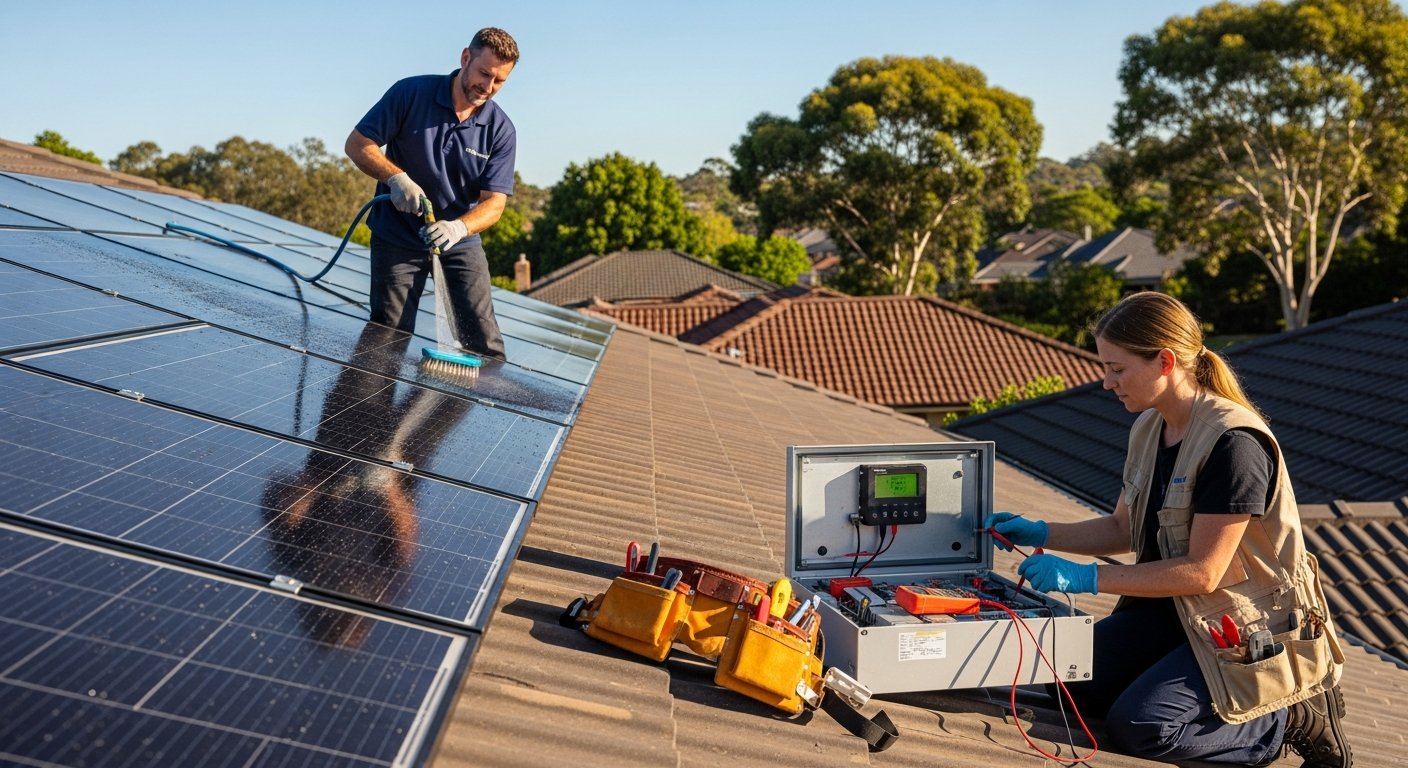
Solar Maintenance Checklist: 12 Steps for Peak Output
Use this solar maintenance checklist to catch small issues before they become costly repairs, keeping your panels at peak efficiency for decades.

By Owen Phillips
Learn more about Solar Panel Cleaning for guides, costs, and what to expect.
Compare Solar Panel Cleaning Pros Near You

Enter your ZIP code to compare top-rated local professionals and request free quotes.
Your solar panel system is a long-term investment, but it is not a set-and-forget one. Dust, debris, shading, and minor electrical faults can silently reduce your energy production by 5% to 25% over time. Without a routine solar maintenance checklist, you risk higher electricity bills, a shorter system lifespan, and potential safety hazards. The good news is that most maintenance tasks are simple, inexpensive, and take less than an hour when done regularly. This guide walks you through a practical, step-by-step checklist that keeps your panels generating at peak output for decades.
Why a Solar Maintenance Checklist Matters
Solar panels have no moving parts, which makes them remarkably reliable. However, their performance depends on clean surfaces, secure mounting, and functioning electrical connections. A single bird nest under a panel or a layer of pollen can create a hotspot that reduces the output of an entire string of panels. Over time, unchecked issues can lead to inverter failures, microcracks, and even fire risks.
Regular maintenance also protects your warranty. Most manufacturers require proof of annual inspections to honor performance guarantees. If you skip maintenance and your system underperforms, you might not be able to file a claim. In our guide on what is solar AI software, we explain how smart monitoring can catch early signs of degradation. Pairing that technology with a hands-on checklist gives you the best of both worlds: automated alerts and physical verification.
How Often Should You Perform Solar Maintenance?
There is no single answer because your location, weather, and system design all play a role. A general rule is to do a visual inspection every three months and a deeper cleaning twice a year. If you live in an area with heavy dust, frequent bird activity, or wildfire smoke, you may need monthly cleaning. Conversely, in rainy, mild climates, a yearly check might suffice.
Seasonal changes also matter. After a major storm, inspect for debris or damage. Before summer heatwaves, verify that your panels have adequate airflow to prevent overheating. In winter, check for snow accumulation and ice dams that can stress mounts. The key is consistency: mark your calendar and stick to a schedule.
The 12-Point Solar Maintenance Checklist
Work through these steps in order, from the simplest visual checks to more detailed electrical tests. Always prioritize safety: if you are uncomfortable working on a roof or near electrical components, hire a professional. SolarEnergy.ai offers energy surveys and professional inspection services that can handle the entire process for you.
- Review your energy production data from the past month. Compare it to the same period last year. A sudden dip of more than 10% signals a problem.
- Inspect for visible damage like cracks, chips, or discoloration on the glass surface. Use binoculars from the ground if you cannot safely access the roof.
- Check for shading, which is caused by new tree growth, nearby construction, or accumulated bird droppings. Trim branches and remove debris.
- Clean the panel surfaces with a soft brush or sponge and plain water. Use a squeegee to dry them to prevent mineral spots.
- Examine the mounting hardware for loose bolts, rust, or signs of movement. Tighten any fasteners that have vibrated free.
- Inspect the wiring and conduit for rodent chew marks, cracked insulation, or exposed copper. Replace damaged cables immediately.
- Check the inverter display for error codes or warning lights. Record any unusual readings in a maintenance log.
- Test the performance of each panel if your system has microinverters or power optimizers. Individual monitoring can pinpoint a failing panel.
- Verify that the system is properly grounded and that all electrical connections are tight. Loose connections cause arcing and heat buildup.
- Look for signs of water intrusion near roof penetrations and junction boxes. Seal any gaps with outdoor-grade silicone.
- Inspect the battery storage (if you have one) for corrosion, swelling, or unusual odors. Keep the area clean and well-ventilated.
- Schedule a professional inspection every 2 to 3 years for a thorough thermal scan and electrical load test.
This list covers the essentials, but it is not exhaustive. Your system may have unique features like trackers or specialized mounting systems that require additional checks. Always consult your owner's manual and follow the manufacturer's recommendations for your specific equipment.
Cleaning Your Panels: Do's and Don'ts
Cleaning is the most common maintenance task, yet it is also where homeowners make the most mistakes. Using a pressure washer can force water into the panel edges and void the warranty. Harsh chemicals can etch the glass and reduce light transmission. Even a simple mistake like cleaning in direct sunlight can cause thermal shock and crack the glass.
Instead, clean early in the morning or late in the evening when the panels are cool. Use deionized water or a mild dish soap solution with a soft cloth. A long-handled telescoping brush with a squeegee attachment is ideal for ground-level cleaning. If your panels are heavily soiled or you have a two-story roof, consider hiring a professional cleaning service that specializes in solar equipment.
After cleaning, take a moment to inspect the glass for any residue or film. A hazy look can indicate that you used too much soap or that the water has high mineral content. In that case, rinse again with clean water and dry with a microfiber cloth. Keeping the surface spotless maximizes light absorption and ensures that your system performs as designed.
Monitoring Performance with AI and Smart Software
Manual inspections are important, but they only show you what is visible on a given day. Solar performance can fluctuate due to weather, grid conditions, and equipment degradation. That is where smart monitoring tools come in. SolarEnergy.ai provides AI-powered energy management that analyzes your production data in real time and flags anomalies that a human eye might miss.
For example, a drop in output from one panel while the others perform normally often indicates a microcrack or a failing bypass diode. AI software can detect this pattern and alert you before it becomes a major issue. Similarly, it can correlate production with local weather data to distinguish between a cloudy day and an actual fault. This level of insight is invaluable for maximizing your return on investment.
If you are already using a monitoring platform, review its weekly reports and set up alerts for unusual changes. If you are not, consider upgrading to a smart monitoring system. The upfront cost is modest compared to the savings you gain from early fault detection and optimized energy usage. As we explain in our guide on AI energy management for homeowners, these tools can also help you shift energy-intensive tasks to peak production hours.
Seasonal Solar Maintenance Tips
Each season brings its own challenges for solar panels. In spring, pollen and bird nesting are common. In summer, high temperatures can reduce panel efficiency, so ensure there is adequate airflow underneath the panels. Fall brings falling leaves that can accumulate in gutters and on panel edges. Winter introduces snow and ice, which can block sunlight and add weight to the mounting system.
For winter, you should clear heavy snow with a soft roof rake designed for solar panels. Avoid using metal tools or shovels that can scratch the glass. It is also wise to inspect the seals around your panels before the freeze-thaw cycle begins. If you live in an area with frequent snow, consider installing snow guards to prevent sudden slides that could damage property below.
In spring, check for nesting birds and remove any nests before they cause damage. Birds often build nests under the panels, which can obstruct airflow and create fire hazards. Install bird-proofing mesh if you notice repeated activity. In autumn, trim overhanging branches and clear leaves from the perimeter of your system to maintain proper airflow and reduce the risk of moisture buildup.
When to Call a Professional
Some maintenance tasks require specialized equipment and expertise. If you see any of the following signs, contact a licensed solar service provider immediately:
- Cracks or chips on the glass surface that expose the solar cells
- Water stains, rust, or corrosion inside the inverter enclosure
- Burning smells, smoke, or discoloration around electrical connections
- Error codes on the inverter that you cannot resolve with a reset
- Physical damage to the mounting rails or roof flashing
Attempting to repair these issues yourself can be dangerous and may void your warranty. A professional will have the training to safely diagnose and fix the problem. They can also perform a thermal imaging scan to identify hotspots that are invisible to the naked eye. While this service costs money, it is far cheaper than replacing a damaged panel or inverter.
Creating a Maintenance Log
To get the most from your solar maintenance checklist, keep a written or digital log of every inspection and cleaning. Note the date, weather conditions, any issues found, and the action taken. Over time, this log will help you spot patterns, such as a panel that consistently underperforms after rain or a mounting bolt that loosens every few months.
A maintenance log also provides valuable documentation for warranty claims and insurance purposes. If your system suffers damage from a storm, your log can prove that you have been diligent about upkeep. When you sell your home, a well-documented maintenance history can be a selling point that reassures buyers about the condition of the solar system.
To simplify the process, you can use a spreadsheet or a dedicated app that reminds you when tasks are due. Some smart monitoring platforms include maintenance scheduling features that automate reminders based on your system's usage and weather patterns. As we describe in our article on solar AI software benefits, these tools can also generate reports that make it easy to track your system's health.
Extending the Lifespan of Your Solar Investment
A well-maintained solar system can last 25 to 30 years or more. Panels themselves are durable, but inverters typically need replacement after 10 to 15 years. Batteries, if you have them, have their own lifespan and maintenance needs. By following a regular checklist, you can catch small issues before they escalate into costly failures.
Beyond cleaning and inspections, consider upgrading components as technology improves. Newer inverters are more efficient and offer better monitoring capabilities. Adding a battery storage system can help you use more of the energy you produce and provide backup during outages. These improvements can extend the useful life of your system and increase your overall savings.
Remember that solar maintenance is not just about fixing problems; it is about optimizing performance. A clean, well-tuned system produces more electricity, which means lower bills and a faster payback period. Even a 5% efficiency gain from regular cleaning can translate into hundreds of dollars in savings over the lifetime of your system.
Adopting a solar maintenance checklist is one of the smartest moves you can make as a solar homeowner. It keeps your system safe, efficient, and profitable for years to come. Start with a visual inspection this weekend, schedule a cleaning for next month, and set a reminder to review your production data quarterly. If you ever feel overwhelmed or unsure, SolarEnergy.ai offers professional inspection and maintenance services that handle the details for you. Your panels work hard every day; return the favor with regular care.