Solar Installers Near Me: Free Quote Process Guide
Understand every step of the solar installers near me free quote process. Call (833)-434-4023 to compare local installer proposals and secure the best value.

By Dylan Harris
Learn more about Solar Panel Installation and Repair for guides, costs, and what to expect.
Compare Solar Panel Installation and Repair Pros Near You

Enter your ZIP code to compare top-rated local professionals and request free quotes.
Most homeowners start their solar journey with a simple search: solar installers near me free quote process. That single query usually means you are ready to move beyond curiosity and want to know exactly what happens after you click the request button. The good news is that the free quote process is straightforward, transparent, and designed to protect you from costly mistakes. The better news is that when you use a vetted platform like SolarEnergy.ai, you get matched with local installers who compete for your business, which often leads to better pricing and stronger warranties. This guide walks you through every stage, from the moment you request a quote to the day your system goes live, so you can compare proposals with confidence and avoid the red flags that trip up unprepared homeowners.
What Happens After You Request a Free Solar Quote
When you submit a request through a reputable platform, your information is routed to a small network of pre-screened local installers. Within one to two business days, you should receive a call or email to confirm basic details: your address, average monthly electric bill, roof type, and whether you are interested in battery storage. This initial conversation is not a sales pitch. It is a qualification step to ensure the installer operates in your area and handles the kind of project you have in mind. If you are also planning a move, resources like Moving.Homes relocation guides can help you coordinate a solar installation with a change of address, since timing a system purchase around a move requires extra planning.
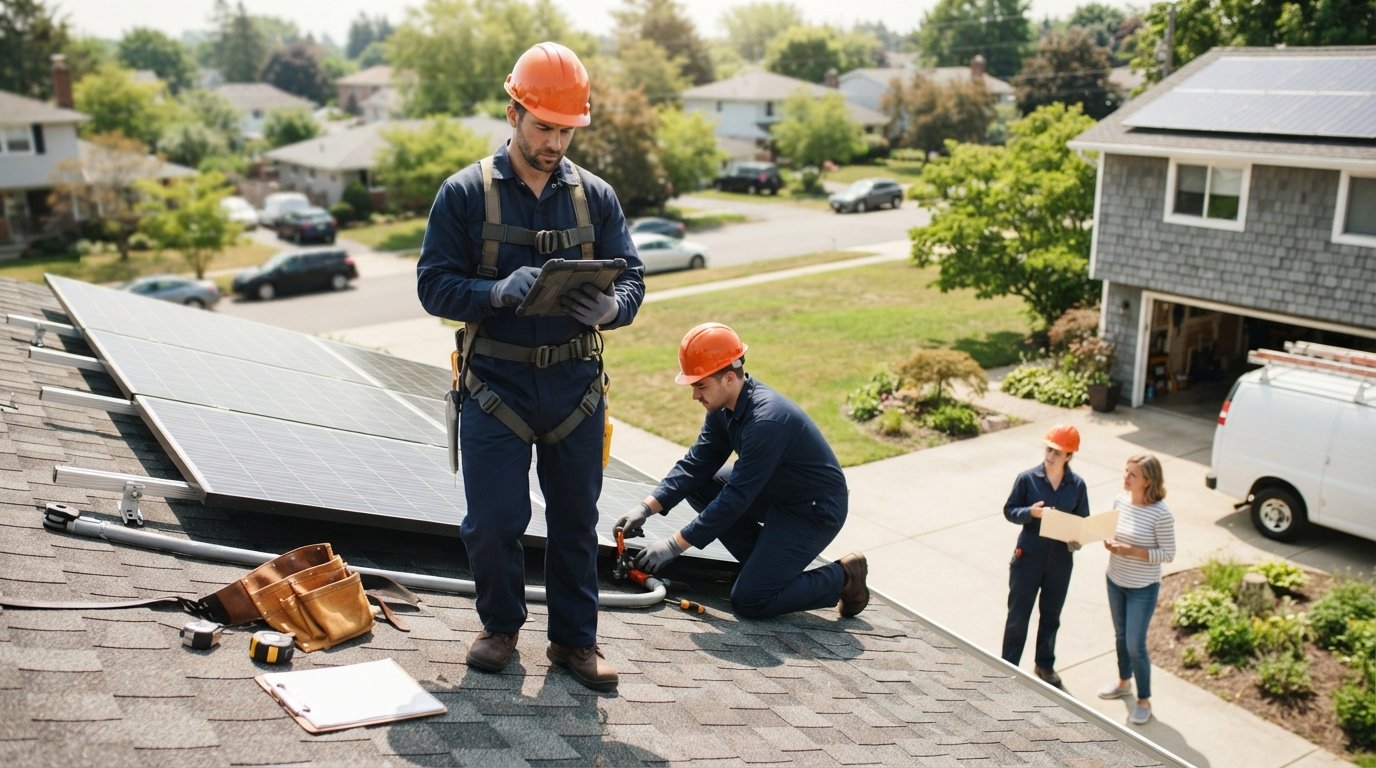
After the phone screen, the installer will schedule a site visit or a remote assessment using satellite imagery and your usage data. Many companies now offer a virtual quote first, then follow up with an on-site verification before finalizing the design. The goal is to gather three things: your roof's orientation and shading, your historical energy consumption, and any structural or electrical constraints. Once that data is collected, the installer prepares a proposal that includes system size, equipment brands, estimated production, financial projections, and warranty terms. This entire front-end process is free and carries no obligation, which is why requesting multiple quotes is the smartest first step.
SolarEnergy.ai streamlines this flow by connecting you with vetted solar pros near you. Instead of calling five companies individually, you fill out one short form and let qualified installers reach out. The platform's Find Solar Installers tool is built for exactly this purpose: get a free quote in minutes and compare options side by side. The system is designed to reduce pressure and increase transparency, so you can evaluate proposals on their merits rather than on a pushy sales pitch.
Questions to Ask Each Vetted Installer Before Signing
The free quote process is your best opportunity to interview installers and separate true professionals from order-takers. A vetted installer should welcome detailed questions and provide clear, documented answers. Start with licensing and insurance: ask for the company's state contractor license number, proof of general liability insurance, and workers' compensation coverage. Any hesitation here is a serious warning sign. Next, ask about the specific equipment being proposed. Which panel brand and model? Which inverter? Are the components tier-one products with published degradation curves? A quality installer will explain why they chose those components for your roof and energy profile.
Warranty terms deserve their own conversation. You need to understand three layers of protection: the product warranty from the manufacturer, the workmanship warranty from the installer, and the performance guarantee that estimates how much electricity the system will produce. Ask how long each warranty lasts, what it covers, and who honors it if the installer goes out of business. Also ask about monitoring: will you get a homeowner app, and does the installer provide production guarantees with recourse if the system underperforms? Finally, ask about the installation timeline and what happens if weather or permit delays occur. A transparent installer will give you a realistic schedule and explain the milestones.
Here is a short list of questions that consistently surface the most useful information:
- What is your state license number, and can you provide a certificate of insurance?
- Which panel and inverter models are in this proposal, and why were they selected for my roof?
- What do the product, workmanship, and performance warranties cover, and for how long?
- How do you handle permits, utility interconnection, and inspections?
- What is the expected timeline from contract signing to system activation?
Write down the answers and compare them across installers. The company that gives you specific, documented responses is usually the one that will communicate well during the project. Vague answers about warranties or timelines often signal a contractor that subcontracts the work or rushes through installations. Remember that the cheapest quote is rarely the best value if it comes with weak warranties or undersized equipment.
How to Compare Solar Quotes on System Size, Equipment, and Warranty
Comparing solar quotes is not about picking the lowest total price. It is about normalizing the proposals so you can see which one delivers the best long-term value. Start with system size measured in kilowatts (kW) and estimated annual production in kilowatt-hours (kWh). A reputable installer will size the system to cover most or all of your annual usage, not just a fraction of it. If one quote proposes a 6 kW system and another proposes 9 kW for the same house, ask why. The difference could be panel efficiency, roof space constraints, or simply an attempt to keep the sticker price low by undersizing the system.
Equipment tiers matter enormously. Tier-one panels from established manufacturers typically come with 25-year product warranties and 30-year performance warranties. Inverters vary widely: string inverters are cheaper but less flexible, while microinverters and DC optimizers offer panel-level monitoring and better shade tolerance. Ask each installer to specify the exact model numbers and datasheets. Then compare warranty terms line by line. A 25-year workmanship warranty is far better than a 10-year one, and a production guarantee with a defined payout for underperformance is a strong signal of confidence. Also check whether the quote includes monitoring hardware, critter guard, and any necessary electrical panel upgrades.
Financing terms can obscure the true cost of a system. Cash price, loan price, and lease or power purchase agreement (PPA) prices are not directly comparable. Ask for the cash price even if you plan to finance, then compare loan terms including interest rate, fees, and whether the loan is secured or unsecured. Be cautious of quotes that inflate the cash price to make a financed option look attractive. The federal solar tax credit (currently 30 percent through 2032) applies to the total system cost, so a higher quote means a larger credit but also a larger out-of-pocket expense. Use the Solar Savings Calculator to model payback periods and return on investment for each proposal.
Red Flags in Solar Proposals That Signal Inflated Pricing or Undersized Systems
Not every solar quote is created equal, and some contain warning signs that should prompt you to walk away. One of the most common red flags is an unrealistically low price paired with a system size that covers only part of your energy usage. An undersized system may look affordable on paper, but it will leave you buying expensive grid electricity for the remainder of your needs, which defeats the purpose of going solar. Another red flag is a proposal that uses vague language like "Tier 1 panels" without naming the manufacturer or model. You cannot compare equipment you cannot identify.
High-pressure sales tactics are another clear warning. If an installer demands a decision on the spot, offers a discount that expires in 24 hours, or refuses to leave a copy of the proposal, take your business elsewhere. Legitimate solar companies provide written proposals and give you time to review them. Similarly, be wary of any installer who discourages you from getting a second quote or who claims you do not need a site visit. Remote quotes can be accurate, but a final design should always be verified against your actual roof conditions before installation.
Other red flags include unclear warranty terms, missing permit and inspection fees, and proposals that do not include monitoring or performance guarantees. If a quote omits the cost of a main panel upgrade or trenching, you may face surprise charges later. Ask for an all-inclusive quote that lists every line item, including permits, labor, equipment, and any add-ons. A transparent installer will happily provide this breakdown. For a deeper look at how automation can help you monitor and optimize production after installation, see this guide on solar energy automation, which explains how smart controls can squeeze more value from every kilowatt-hour.
Timeline Expectations from Quote to Installation Day
Understanding the timeline helps you plan and set realistic expectations. In the U.S. market, the process from signed contract to system activation typically takes one to three months, though it can stretch longer in high-demand areas or if your utility has a backlog. The first step after signing is the site survey and final design, which usually takes one to two weeks. The installer then submits permit applications to your local building department and interconnection paperwork to your utility. Permit approval can take anywhere from a few days to several weeks depending on your jurisdiction.
Once permits are approved, the installation itself is often completed in one to three days for a typical residential system. After installation, you need a building inspection and utility approval before you can turn the system on. Some utilities require a meter swap, which can add another one to two weeks. Throughout this process, a good installer will keep you informed with regular updates. Ask for a projected schedule in writing and clarify who is responsible for each step. If you are planning a move during this window, coordinate carefully so the installation and any home sale or purchase do not conflict.
Weather, equipment availability, and utility policies can all affect the timeline. In regions with net metering changes or high solar adoption, interconnection queues can be longer. A vetted installer will have experience navigating your local utility and can set realistic expectations. They should also tell you what happens if a delay occurs, whether they provide temporary power or adjust the schedule. The best installers treat timeline communication as part of customer service, not an afterthought.
Requesting a free solar quote is a low-risk, high-reward step. It costs nothing, carries no obligation, and gives you the information you need to make a confident decision. By understanding the process, asking the right questions, and comparing quotes on system size, equipment, and warranty rather than price alone, you can avoid the common pitfalls that lead to regret. When you are ready to see what local installers can offer, start with a trusted platform that connects you with vetted professionals and puts the power of choice back in your hands.
Learn more about Solar Panel Installation and Repair for guides, costs, and what to expect.
Compare Solar Panel Installation and Repair Pros Near You
Enter your ZIP code to compare top-rated local professionals and request free quotes.