Solar Panel Roof Warranty Voiding: What Homeowners Need to Know
Solar panel roof warranty voiding can cost you thousands. Learn how to protect your coverage and coordinate roof and solar timing. Call (833)-434-4023 for expert guidance.

By Julia Nguyen
Learn more about Solar Panel Installation and Repair for guides, costs, and what to expect.
Compare Solar Panel Installation and Repair Pros Near You

Enter your ZIP code to compare top-rated local professionals and request free quotes.
Your roof warranty is one of the most valuable protections you have as a homeowner, and the last thing you want is to accidentally void it by adding solar panels. Yet across the United States, thousands of homeowners discover too late that their roofing manufacturer has excluded coverage for any damage related to the solar installation. The result is a costly surprise: a leak that nobody will fix, or a roof replacement that falls entirely on your shoulders. The good news is that with the right preparation and knowledge, you can install solar panels without sacrificing your roof warranty. This guide explains exactly how solar panel roof warranty voiding happens, what to look for in your warranty documents, which mounting methods minimize risk, and how to coordinate your solar project with your roofing timeline so you never pay twice for the same work.
Why Solar Installations Can Void Your Roof Warranty
Most asphalt shingle, tile, and metal roof warranties include clauses that exclude coverage for penetrations, alterations, or any damage caused by third-party attachments. These exclusions exist because manufacturers cannot control the quality of work performed by outside contractors. When a solar installer drills through your shingles to anchor mounting brackets, the roofing manufacturer may declare that area of the roof no longer covered. Even if the installation is flawless, the mere presence of penetrations can be enough to void the warranty for the entire roof or at least the affected sections.
The problem is compounded by ambiguous language. Some warranties state that coverage is void if the roof is "altered" or if any object is attached without written approval. Others specifically mention solar panels, while many do not. Homeowners often assume that because solar is common, their warranty must allow it. That assumption can be expensive. The only way to know for sure is to read your warranty document carefully and, when in doubt, contact the manufacturer directly before signing any solar contract.
Key Warranty Language That Should Raise a Red Flag
When reviewing your roof warranty, pay close attention to terms like "penetration," "alteration," "void," "exclusion," and "third-party attachment." These words frequently appear in clauses that limit or eliminate coverage. For example, a warranty might say: "This warranty does not cover damage caused by any penetration of the roofing membrane, including but not limited to attachments for solar panels, satellite dishes, or other equipment." If you see language like that, you know that a traditional drilled mounting system will likely void coverage for the penetrated areas.
Some manufacturers offer specific provisions for solar installations. They may require that the installer use proprietary mounting hardware, or they may offer a separate rider that preserves coverage when approved methods are used. Other manufacturers simply state that any penetration voids the entire warranty. The variation is enormous, which is why a one-size-fits-all approach does not work. You need to know exactly what your warranty says and what steps, if any, the manufacturer requires to keep coverage intact.
It also helps to understand the difference between a material warranty and a workmanship warranty. The material warranty covers defects in the shingles or roofing materials themselves. The workmanship warranty covers the quality of the original installation. Solar penetrations typically affect both: the material warranty may exclude the penetrated area, and the original roofer's workmanship warranty may be voided because someone else modified the roof. Always check both documents before proceeding.
Mounting Methods That Minimize Penetration Risk
The good news is that you do not have to choose between solar energy and a valid roof warranty. Several mounting methods can significantly reduce or eliminate the risk of voiding your coverage. The best choice depends on your roof type, your local climate, and the specific requirements of your roofing manufacturer.
Here are the most common approaches, ranked from least invasive to most invasive:
- Ballasted mounting: Weights or ballast trays hold the panels in place without drilling any holes. This method is common on flat commercial roofs but can work on some residential flat roofs. It avoids penetrations entirely, so your warranty remains intact. However, ballasted systems require a structural engineer to confirm the roof can handle the added weight, and they may not be suitable for steep-slope residential roofs.
- Adhesive mounting: Some manufacturers offer adhesive brackets that bond to the roofing membrane without penetrations. These are growing in popularity for metal and certain membrane roofs. Adhesive systems must be approved by the roofing manufacturer to preserve the warranty, and they may have temperature and cure-time restrictions.
- Penetration-free clamps and rails: For standing seam metal roofs, non-penetrating clamps attach directly to the seams without drilling. This is one of the safest options because it avoids puncturing the metal. The clamps must be compatible with the seam profile, and the roofing manufacturer should confirm in writing that the method is approved.
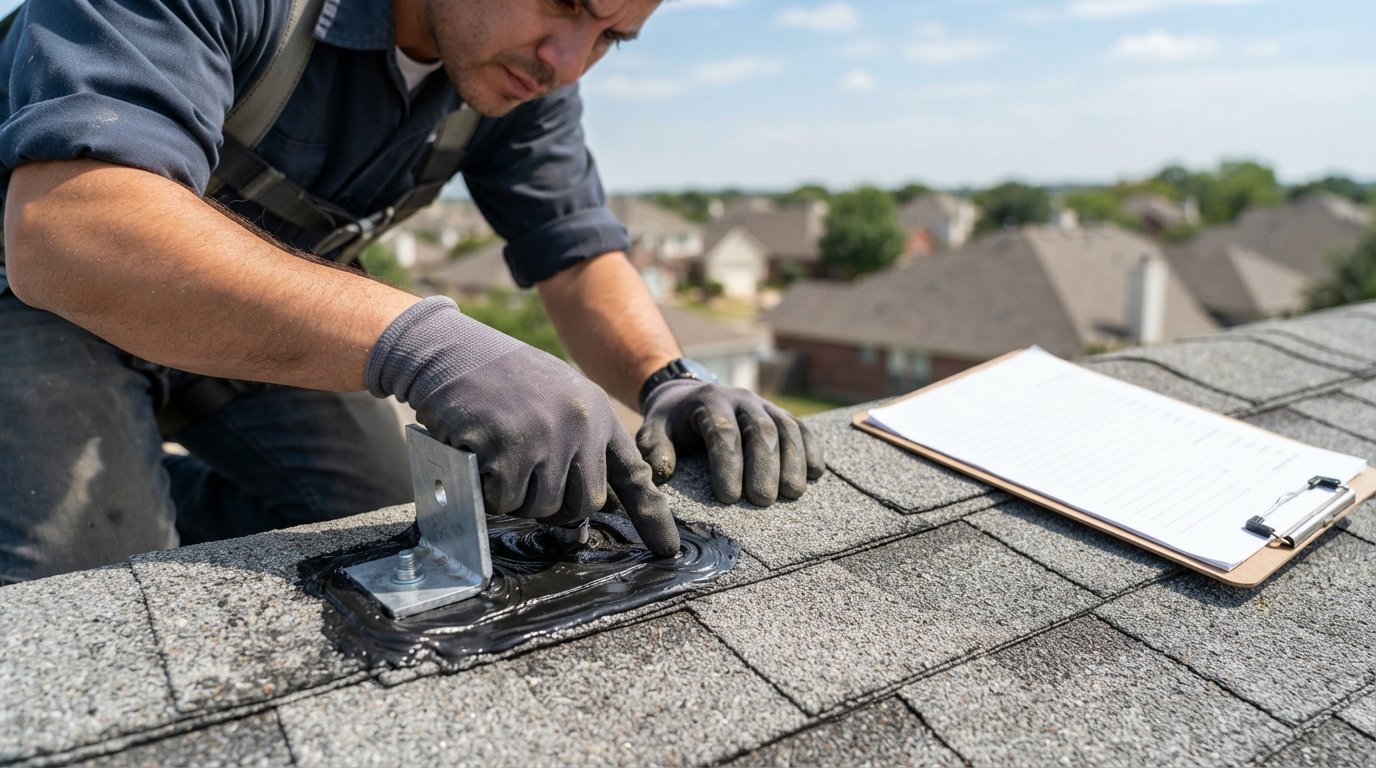
- Flashings and sealants with manufacturer approval: When penetrations are unavoidable, using manufacturer-approved flashings and sealants can sometimes preserve coverage for the penetrated area. The key is prior written approval from the roofing manufacturer. Without that approval, even the best flashing job may not protect your warranty.
Before choosing a mounting method, ask your solar installer whether they have experience with your specific roof type and whether they can provide documentation showing that the method is approved by your roofing manufacturer. A reputable installer will welcome these questions and can often supply references from similar projects.
Coordinating Roof Age and Solar Timing to Avoid Double Work
Timing is everything when it comes to solar and roofing. If your roof is nearing the end of its useful life, installing solar panels now could be a costly mistake. You may void the warranty on an aging roof, and then a few years later you will need to remove the panels, replace the roof, and reinstall the panels, paying for labor twice. The smarter approach is to replace the roof first, then install solar on a new, warranty-covered surface.
As a general rule, if your roof is more than 15 years old, or if you plan to sell your home within the next decade, consider a roof replacement before going solar. The incremental cost of a new roof is often far less than the cost of removing and reinstalling a solar array later. Moreover, a new roof may come with a fresh warranty that you can coordinate with your solar installer to preserve.
If your roof is relatively new and in good condition, you can proceed with solar, but you should still document the roof's condition before installation. Take dated photos of the roof surface, and ask your roofer to inspect and confirm in writing that the roof is in suitable condition for solar. This documentation protects you if a dispute arises later about whether damage was pre-existing or caused by the solar installation.
For homeowners who want to maximize their energy savings and understand how solar interacts with home efficiency, resources like AI-driven energy efficiency for home solar can provide additional insights into optimizing system performance. But none of that matters if your roof warranty is compromised, so address the roofing question first.
Written Documentation and Installer Warranties to Request Before Signing
Never rely on verbal assurances when it comes to warranty preservation. Before you sign any solar contract, request the following documents in writing:
- A copy of your roofing warranty with the sections on exclusions and third-party attachments highlighted. If you cannot find it, contact the manufacturer or your original roofer for a copy.
- A written statement from the solar installer describing the mounting method they will use, including whether it involves penetrations and how they will seal and flash any holes.
- Proof that the mounting method is approved by your roofing manufacturer, such as a letter, email, or technical bulletin from the manufacturer. If the installer cannot provide this, ask them to obtain it before work begins.
- The installer's own workmanship warranty, which should cover leaks or damage related to the solar installation for a specified period, typically 5 to 10 years. Make sure it explicitly covers roof penetrations and flashing.
- A pre-installation roof inspection report with photos, signed by both you and the installer, documenting the condition of the roof before any work starts.
These documents serve two purposes. First, they force the installer to be transparent about their methods and responsibilities. Second, they give you a paper trail if a problem arises later. If an installer resists providing any of these items, consider that a red flag and look for another contractor.
For homeowners who want to compare vetted solar professionals and ensure they are working with experienced installers, NewSolarQuotes offers a free service to connect with pre-screened solar contractors in your area. This can be a valuable step in finding an installer who understands warranty preservation and will document their work properly.
What to Do If Your Warranty Is Already Voided
If you discover that your roof warranty has already been voided by a previous solar installation, do not panic. You still have options. First, contact the roofing manufacturer to understand exactly what is and is not covered. Sometimes only the penetrated areas are excluded, while the rest of the roof remains under warranty. In that case, you may be able to have a roofer repair or re-flash the penetrations and restore partial coverage.
Second, review your solar installer's workmanship warranty. Even if the roofing manufacturer will not cover damage, the installer may be contractually obligated to fix leaks or defects related to their work. If the installer is unresponsive or no longer in business, you may need to consult a consumer protection attorney or your state's contractor licensing board.
Finally, consider a roof inspection by a licensed roofer who specializes in solar. They can identify any vulnerable areas and recommend remedial measures, such as adding secondary waterproofing or replacing compromised flashings. While this will not reinstate the original warranty, it can prevent small issues from becoming major leaks.
How to Protect Yourself During the Solar Installation Process
Prevention is always better than cure. During the installation, take these steps to minimize the risk of warranty voiding:
- Be present or have a representative present during the installation to observe the work and ensure the installer follows the agreed-upon methods.
- Photograph the roof before, during, and after the installation, especially any penetrations and flashing. This documentation is invaluable if a dispute arises.
- Ask the installer to walk you through the finished work and explain how each penetration was sealed and protected.
- Schedule a post-installation inspection by your roofer or a third-party inspector to confirm that the roof is watertight and the workmanship is sound.
These steps add little cost but provide significant peace of mind. They also demonstrate to your installer that you are informed and attentive, which tends to improve the quality of their work.
Frequently Asked Questions About Solar and Roof Warranties
Will solar panels always void my roof warranty? No. Many warranties allow solar installations if approved mounting methods are used and the manufacturer provides written consent. The key is to check your specific warranty and follow its requirements.
Does the solar installer's warranty cover roof damage? It should, but you must confirm that the workmanship warranty explicitly includes roof penetrations and leaks. Ask for the warranty document before signing.
Can I install solar on a roof that is already out of warranty? Yes, but you have less protection. In that case, the installer's workmanship warranty becomes even more important. Consider a roof replacement first if the roof is old.
What if my roofing manufacturer offers a solar-specific warranty rider? Some do. If available, purchase the rider. It typically extends coverage to include solar penetrations when approved installers and methods are used.
Understanding solar panel roof warranty voiding is essential for any homeowner considering solar energy. By reviewing your warranty, choosing penetration-minimizing mounting methods, timing your roof replacement and solar installation wisely, and demanding written documentation, you can enjoy the benefits of solar power without sacrificing the protection your roof warranty provides. When in doubt, consult with both your roofer and a reputable solar installer, and never sign a contract until you have all the facts in writing.