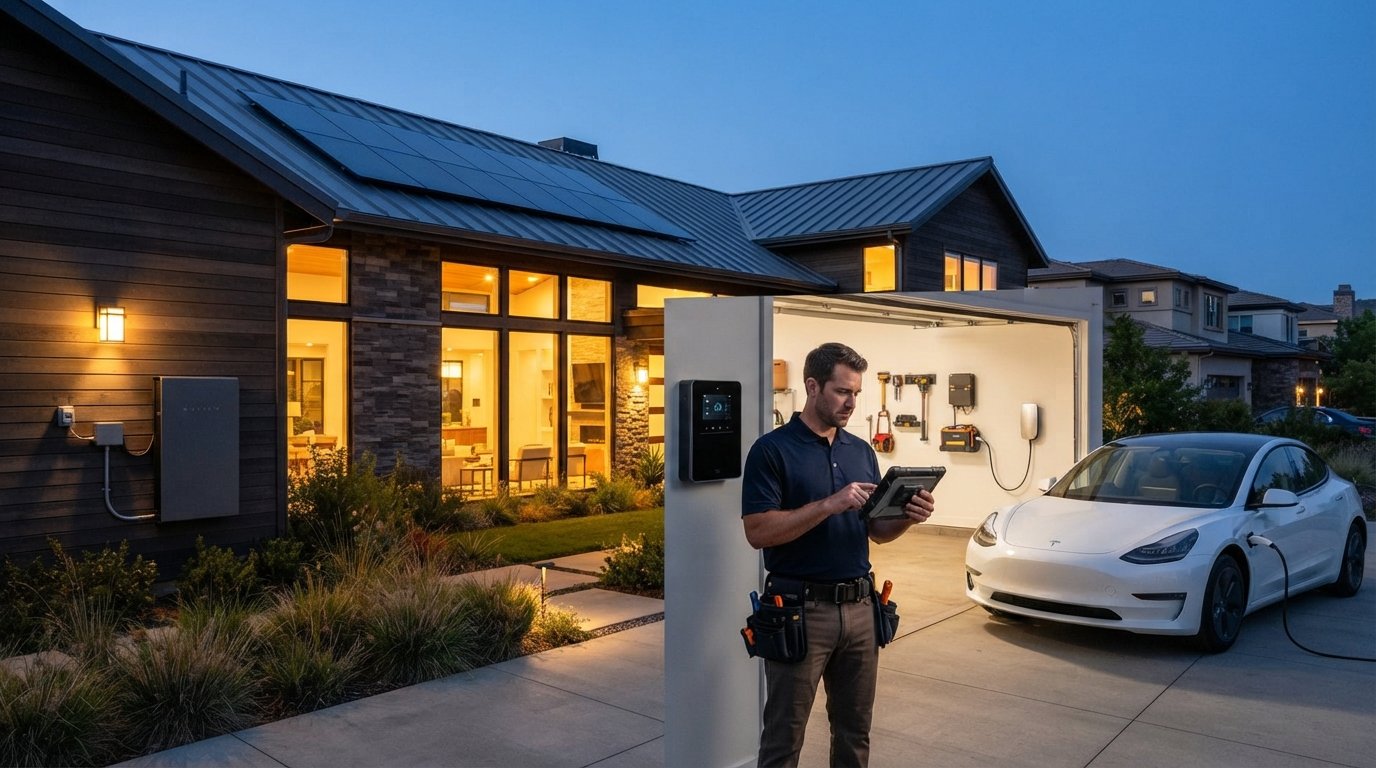
Smart Home Solar Integration: 2026 Best Practices
Smart home integration with solar energy systems in 2026 can maximize your savings, boost energy independence, and prepare your home for grid outages.

By Dylan Harris
Learn more about Solar Panel Installation and Repair for guides, costs, and what to expect.
Compare Solar Panel Installation and Repair Pros Near You

Enter your ZIP code to compare top-rated local professionals and request free quotes.
Imagine your home not just consuming energy, but intelligently managing its own power supply. That vision is now a practical reality. Smart home integration with solar energy systems in 2026 has moved far beyond simple monitoring, creating homes that are more efficient, more resilient, and less dependent on the grid than ever before. This synergy is transforming how we think about energy, turning passive panels into a dynamic, responsive asset that works in harmony with your lifestyle.
The Evolution of Home Energy Management
Just a few years ago, a home solar system operated in a fairly isolated way. Panels generated DC electricity, an inverter converted it to AC for household use, and excess power was sent back to the grid, often for a small credit. Homeowners had limited visibility into their energy production and consumption patterns. The smart home technology revolution has changed all that, bringing a level of control and intelligence that was previously only available to commercial facilities.
Today, the core of this integration lies in sophisticated energy management systems (EMS). These platforms act as the central brain, connecting your solar inverter, battery storage, home appliances, and even your electric vehicle charger. Through machine learning algorithms, the EMS learns your family's habits, anticipates energy needs, and automatically optimizes the flow of power to ensure you are using your self-generated solar energy as efficiently as possible. This is not just about convenience, it is about real, measurable savings and a move toward true energy independence.
This shift towards a more responsive and connected home is a key part of the broader renewable energy landscape. For a deeper look at how artificial intelligence is shaping this sector, you can explore our analysis of AI renewable energy for homeowners. The future of solar is undeniably smart.
Key Components of a Modern Integrated System
To truly harness the benefits of smart home integration with solar energy systems in 2026, it helps to understand the key players in your home's energy ecosystem. The goal is to create a seamless loop where production, storage, and consumption are all coordinated for maximum efficiency. Here are the essential components that make this possible:
- Smart Inverters and Energy Meters: These are the data collectors. They provide real-time, granular data on solar production and household consumption, which is the foundation for any intelligent decision-making.
- Home Battery Storage: This is the energy reservoir. A battery allows you to store excess solar power generated during the day for use at night, during peak rate periods, or in the event of a power outage.
- Intelligent Load Controllers: These smart devices can automatically switch high-energy appliances (like electric water heaters, EV chargers, or pool pumps) on and off based on energy availability and pricing signals.
- Smart Thermostats: A major energy consumer is HVAC. Smart thermostats can pre-cool or pre-heat your home when solar energy is plentiful and cheap, then ease off during peak times.
When these components are linked together through an Energy Management System, they can communicate and act autonomously. For example, on a sunny afternoon, your EV charger will turn on to use the surplus solar power, rather than waiting until night and drawing expensive energy from the grid. This orchestration is what turns a collection of smart devices into a truly integrated and intelligent home.
Why 2026 Is the Year for This Upgrade
The convergence of several factors has made smart home integration with solar energy systems 2026 a compelling proposition for homeowners across the United States. The technology is no longer experimental; it is mature, reliable, and more affordable than ever before. The cost of lithium-ion battery storage has continued its steep decline, making energy independence financially accessible to a wider audience.
Furthermore, the utility rate structures in many states are changing. Traditional net metering policies, which credited solar owners for their excess power at the retail rate, are being replaced by less favorable structures that pay lower wholesale rates for exported power. This shift makes it economically vital to consume more of your own solar energy at home. A smart system can automatically shift your usage to align with peak solar production, ensuring that you are maximizing your savings by using your own power instead of selling it low and buying it back high. This is the key to maximizing your return on a solar investment in the current regulatory climate.
Bridging the Gap Between AI and Solar
The true power of a modern smart home lies in its ability to forecast and adapt. This is where artificial intelligence and machine learning play a crucial role. These systems don't just react to real-time data; they analyze historical patterns and even local weather forecasts to predict your home's energy production and needs for the next few days.
For instance, if the forecast predicts a cloudy day tomorrow, your AI-enabled system will ensure your battery is fully charged today and might pre-cool your home in anticipation of higher solar production during peak sun hours. This proactive management goes beyond simple automation. It involves complex algorithms that consider multiple variables, such as electricity rate schedules, your family's occupancy patterns, and the condition of your solar equipment. This level of sophistication ensures that every kilo-watt hour of solar energy is used in the most valuable way possible, minimizing waste and slashing your dependence on the grid. This is the essence of a system that learns and improves every single day.
Enhancing Battery Storage and Backup Power
For many homeowners, the primary motivation for a smart home setup is resilience. A smart home integration with solar energy systems in 2026 provides an unmatched layer of security when the grid goes down. A standard grid-tied solar system shuts off during a power outage for safety reasons. However, a system paired with smart battery storage can seamlessly disconnect from the grid and run your essential loads, including lights, refrigeration, and internet, for days on end.
The integrated management system takes this a step further by intelligently managing the battery's state of charge. It can identify your critical load panel and prioritize power to those circuits first. It can also manage a generator or other backup sources if needed. The transition during an outage is now so seamless that you might not even notice the power flickered. This combines the financial benefits of saving on electricity bills with the priceless benefit of being prepared for any emergency.
Practical Steps for a Successful Smart Home Solar Setup
Adopting this technology can seem complex, but breaking it down into a clear process makes it manageable. Whether you are building a new home or retrofitting an existing one, following these steps will help you avoid common pitfalls and achieve the best possible performance from your system.
- Start with an Energy Audit: Before adding any new technology, it is essential to understand your current energy consumption. A professional energy audit will identify where your home is wasting energy and help you right-size your solar and battery installation.
- Choose an Intelligent Inverter: The inverter is the heart of your solar system. Opt for a smart inverter with built-in monitoring and the ability to communicate with other devices in your home network. This is the foundation for future integration.
- Design for Intelligent Storage: Work with your installer to size your battery based on your goals, whether that is saving money through time-of-use arbitrage or ensuring backup power for critical appliances during an outage.
- Install a Central Energy Management System: This is the software and hardware hub that connects everything. It should be compatible with your inverter, battery, smart thermostat, and EV charger to provide a single point of control.
- Integrate and Automate Gradually: You don't have to connect every device at once. Start with the biggest energy hogs and then add more controllable loads over time, allowing you and the system to adapt smoothly.
After you complete these steps, you will be able to track your performance through dashboard analytics. This data is invaluable, as it shows you not just how much energy you are producing, but how effectively you are using it, providing a clear picture of your home's overall efficiency and savings.
Beyond the Panels: Comprehensive Home Energy Solutions
The principles of smart integration extend beyond just solar panels and batteries. Homeowners are now looking at their entire property as a single, connected energy network. This includes smart lighting systems that automatically dim when natural light is plentiful, and smart plugs that eliminate phantom loads from devices not in use. This holistic view is essential for maximizing the value of your investment.
Furthermore, this integrated approach often pairs well with other home improvements. For example, upgrading your home's electrical panel is often a prerequisite for adding a battery and EV charger. Some solar providers offer complementary services, such as electrical security systems and emergency lighting installation, which can be tied into the same energy management platform. To get a better understanding of the potential savings and system requirements for your specific home, you might consider using a detailed solar quoting and savings tool to compare your options. This helps ensure you are making a fully informed decision that aligns with your long-term energy goals.
Overcoming Common Integration Challenges
While the benefits are clear, the path to a fully integrated smart home is not without its potential obstacles. The most common issue is compatibility. The smart home industry has a history of various communication protocols that didn't always work well together. In 2026, the adoption of standards like Matter and the widespread use of Wi-Fi and Zigbee have mitigated this, but it is still critical to ensure all your chosen components are compatible with your central energy management system and your home network.
Another challenge is the initial investment. Adding a smart EMS and a home battery increases the upfront cost of a solar installation. However, it is crucial to view this not as an expense, but as a strategic investment. The long-term savings from avoiding peak electricity rates and the added home value from a resilient, energy-efficient property often far outweigh the initial increase in cost. Additionally, many installers now offer financing options that can be structured around the projected energy savings, making the upgrade more accessible from day one.
The future of home energy is undeniably smart, connected, and clean. By taking a thoughtful approach to integrating your solar power system with your home's technology, you can unlock a level of efficiency, control, and resilience that was unimaginable just a few years ago. It is an investment in your home's value, your financial stability, and a more sustainable future, all powered by the sun.