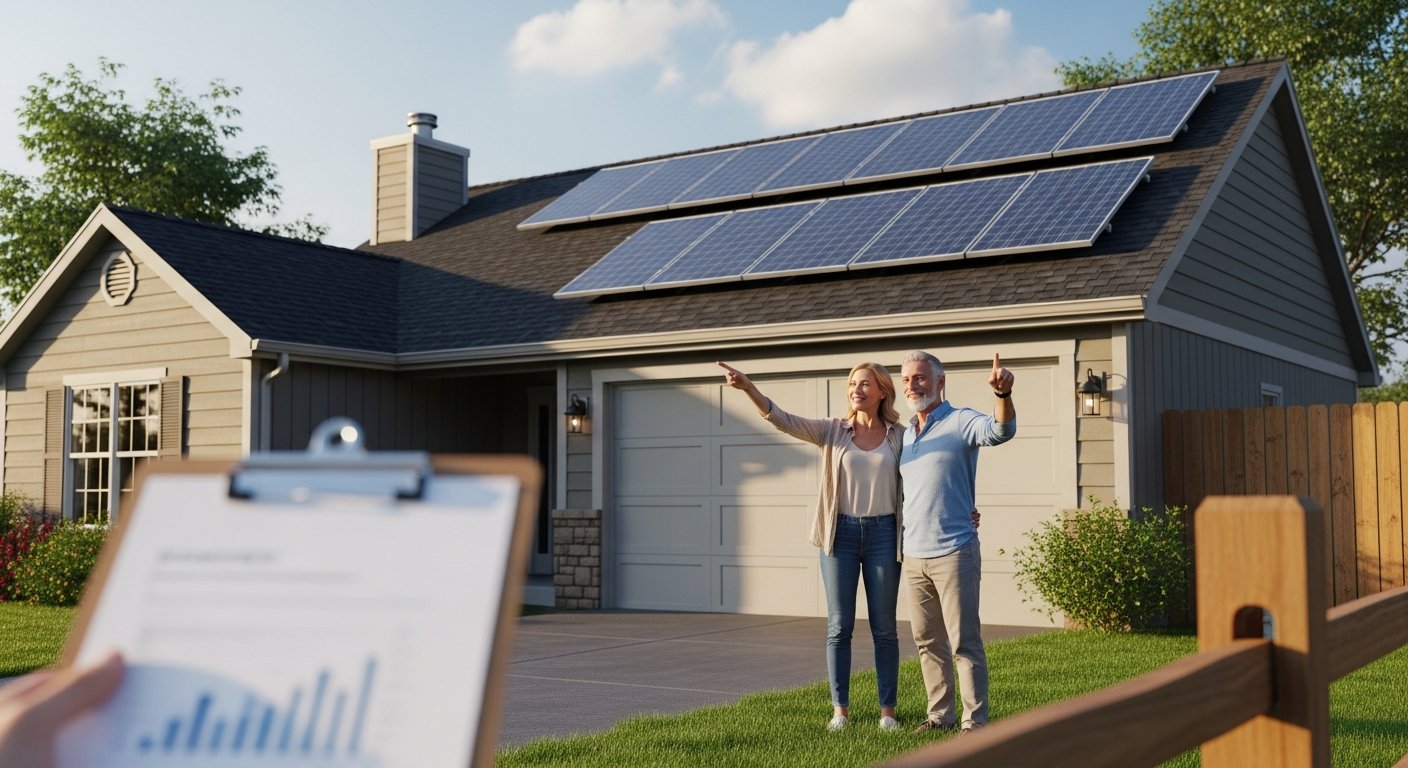
Renewable Energy Guide: How to Choose Solar for Your Home
Use this renewable energy guide to cut through the jargon, understand solar costs, and learn the exact steps to power your home with clean energy.

By Owen Phillips
Learn more about Solar Panel Installation and Repair for guides, costs, and what to expect.
Compare Solar Panel Installation and Repair Pros Near You

Enter your ZIP code to compare top-rated local professionals and request free quotes.
For most American homeowners, the monthly electricity bill is a source of quiet frustration. Prices fluctuate, usage climbs during extreme weather, and the environmental cost of fossil fuels grows harder to ignore. A better path exists, and it starts with understanding how to harness the power of the sun. This renewable energy guide is designed to cut through the jargon and give you a clear, practical roadmap for transitioning your home to solar power, from the first cost calculation to the final installation and beyond.
The shift toward renewable energy is no longer a fringe movement; it is a mainstream financial and environmental strategy. Solar technology has matured dramatically over the past decade, making it more efficient and affordable than ever before. However, the process of going solar involves more than just placing panels on a roof. It requires a careful evaluation of your energy needs, your property's solar potential, and the complex web of incentives that can make the investment worthwhile. This guide will walk you through each of those steps so you can make a confident, informed decision.
Why Solar Power Makes Sense in 2026
The economic landscape for residential solar has never been more favorable. The cost of photovoltaic panels has dropped by more than 60% over the last decade, while utility rates continue to rise in most states. This widening gap means that locking in your energy rate with a solar array is a hedge against future inflation. Instead of renting your electricity from a utility company, you become the producer, generating a tangible asset on your own property that pays dividends every sunny day.
Beyond the financial math, there is the undeniable benefit of energy independence. Homes with solar panels and battery storage are far less vulnerable to grid outages caused by storms, wildfires, or rolling blackouts. This resilience is particularly valuable in regions like the Southwest, where extreme heat drives up both cooling costs and grid strain. When the grid goes down, a solar-plus-storage system keeps your lights on, your food cold, and your air conditioning running.
Step 1: Assessing Your Home's Solar Potential
Before you can calculate savings, you must first determine if your roof is suitable. Not every home is an ideal candidate for photovoltaic panels. The orientation, angle, and shading of your roof all play critical roles in the system's efficiency. In the Northern Hemisphere, south-facing roofs with a pitch between 15 and 40 degrees typically capture the most sunlight. East and west-facing roofs can also work, though they will produce slightly less energy and may require a larger system to meet the same demand.
Shading is the enemy of solar production. A single large tree or a neighboring building can cast a shadow that significantly reduces output. Modern tools like satellite imaging and on-site surveys can model solar exposure across an entire year, accounting for seasonal sun paths. A professional AI renewable energy assessment can precisely map your roof's potential, identifying the optimum placement for each panel to maximize generation. This data-driven approach removes guesswork and ensures your system is sized correctly from day one.
Rooftop Condition and Lifespan
Your roof is the foundation of your solar investment. If your roof is older than 15 years, you should strongly consider replacing it before installing panels. Solar panels have a lifespan of 25 to 30 years, and it is costly and inconvenient to remove and reinstall an array to fix a roof. A new roof ensures you can take full advantage of your system's warranty without interruption.
Solar installers typically inspect the structural integrity of your roof deck to ensure it can support the added weight of the panels and mounting hardware. This assessment is not just about safety; it is about protecting your investment. Most high-quality installations come with a 25-year workmanship warranty, which is only valuable if the roof beneath it is in good condition.
Step 2: Navigating Costs and Financing Options
Understanding the upfront cost of solar is the biggest hurdle for most homeowners, but it is also the most misunderstood aspect of the process. The gross price of a typical residential system can range from $15,000 to $30,000 before incentives, depending on size and equipment quality. However, the net cost is significantly lower. The Federal Investment Tax Credit (ITC) allows you to deduct 30% of the total system cost from your federal taxes, a benefit that is still fully available in 2026.
Beyond the federal credit, many states, counties, and utilities offer additional rebates, performance-based incentives, and property tax exemptions. These can stack to reduce the final price by thousands of dollars. The key is to research your specific local incentives. A reliable way to do this is to use a renewable energy software tool that aggregates current data and calculates your personalized payback period.
When it comes to paying for the system, you have several options beyond an outright cash purchase:
- Solar Loans: These allow you to own the system with little to no money down, paying a fixed monthly amount that is often less than your previous utility bill.
- Solar Leases and PPAs: You pay a low monthly fee to use the equipment, while the installer owns and maintains it. You save money on electricity, but you do not own the asset or qualify for the tax credit.
- Home Equity Financing: Using a HELOC or home equity loan can offer low interest rates and potential tax deductions on the interest.
Each option has distinct trade-offs between short-term cash flow and long-term equity. A loan or cash purchase yields the highest financial return over time. Leases offer immediate savings with zero maintenance risk, but they do not increase your home's resale value as much as an owned system. Your choice should align with your financial goals and how long you plan to stay in your home.
Step 3: Choosing the Right Equipment and Installer
The quality of your solar system depends on two factors: the hardware and the person who installs it. High-efficiency panels can convert more sunlight into electricity, which is crucial if you have limited roof space. However, the difference in efficiency between premium and standard panels is often just a few percentage points, so you must weigh the cost premium against the added output.
Inverters are the brains of the system, converting the direct current (DC) electricity from the panels into alternating current (AC) for your home. You can choose between string inverters, which are cost-effective for simple roofs, and microinverters, which optimize each panel individually and are ideal for roofs with partial shading. Battery storage, like the Tesla Powerwall or similar products, is an optional add-on that stores excess energy for use at night or during an outage.
Selecting a reputable installer is arguably more important than the brand of panel you choose. A poorly installed premium system will underperform, while a well-installed standard system will run flawlessly for decades. Look for installers that are certified and have a strong track record in your area. A comprehensive AI renewable energy solution platform can streamline this process by matching you with vetted, high-quality installers who compete for your business, ensuring you get a competitive price without sacrificing quality.
Step 4: Understanding Net Metering and Grid Interconnection
Once your panels are generating electricity, you rarely use 100% of it the moment it is produced. During peak sunlight hours, you may generate a surplus. This is where net metering comes into play. A bidirectional meter tracks both the electricity you draw from the grid and the excess you send back to it. Your utility grants you credits for that excess power, which you can then use to offset the electricity you consume at night or on cloudy days.
Net metering policies vary wildly by state. Some states mandate full retail-rate credits, while others offer only wholesale rates or have phased out net metering in favor of other compensation structures. It is crucial to understand your utility's specific policy before signing a contract. If net metering is limited, a battery storage system becomes financially more attractive, as it allows you to store your own power rather than selling it cheaply and buying it back later at a premium.
The interconnection process involves applying to your utility for permission to connect your system to the grid. This process includes an inspection and approval step. Your installer typically handles all this paperwork, but you should be aware of the timeline, which can take anywhere from a few weeks to a few months depending on your local bureaucracy.
Monitoring, Maintenance, and Long-Term Value
Solar panels are remarkably low-maintenance. Because they are angled to shed rain, they are largely self-cleaning. In dusty climates or areas with little rainfall, you may need to hose them off a few times a year to remove accumulated grime. Beyond that, there are no moving parts to wear out, and most systems require zero maintenance for the first 20 years.
Modern solar systems come with sophisticated monitoring software that tracks production in real time. This is where the integration of smart technology shines. These platforms can detect a drop in performance immediately, alerting you to a potential issue like a fallen branch or a faulty connection. This proactive approach prevents small problems from becoming major repair costs.
Investing in solar is also an investment in your property's resale value. Numerous studies have shown that homes with owned solar panels sell faster and for a premium compared to comparable homes without them. As energy costs rise, the appeal of a home with a low or non-existent electric bill becomes a major selling point for environmentally conscious and budget-minded buyers alike.
The journey to renewable energy is a marathon, not a sprint. It requires research, financial planning, and a partnership with the right professionals. But the rewards are substantial: predictable energy costs, a smaller carbon footprint, and a measure of control over your household's energy future. As technology continues to advance and prices continue to fall, there has never been a better moment to make the switch. Armed with the knowledge in this renewable energy guide, you are ready to take the next step toward a cleaner, more resilient home.
Learn more about Solar Panel Installation and Repair for guides, costs, and what to expect.
Compare Solar Panel Installation and Repair Pros Near You
Enter your ZIP code to compare top-rated local professionals and request free quotes.