Integrated Solar and Electrical Security: Property Value
Integrated solar and electrical security system property value grows with documentation and resilience. Call 8334344023 for expert guidance.

By Maya Hayes
Learn more about Solar Panel Installation and Repair for guides, costs, and what to expect.
Compare Solar Panel Installation and Repair Pros Near You

Enter your ZIP code to compare top-rated local professionals and request free quotes.
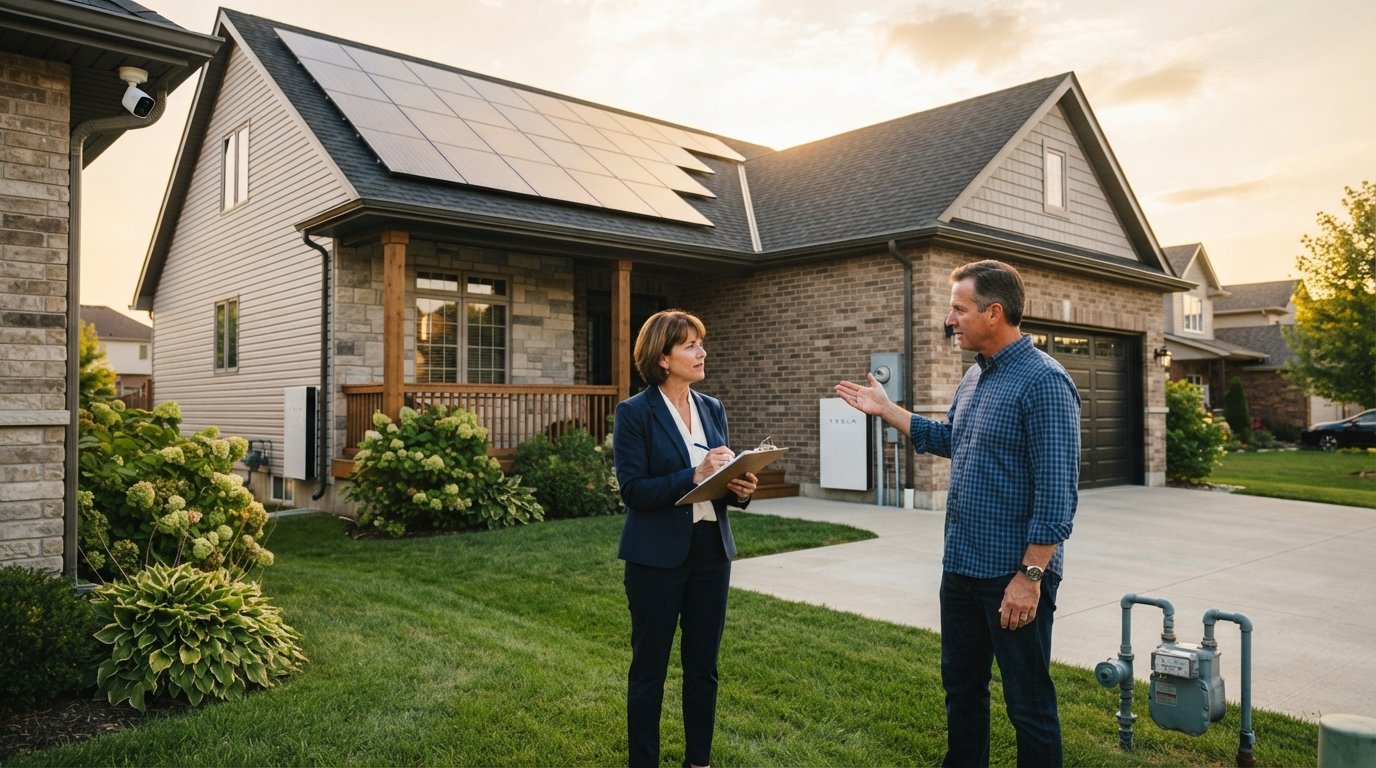
When a homeowner asks what a solar array actually adds to resale value, the answer rarely comes from the panels alone. It comes from the combined package: power generation plus protection. An integrated solar and electrical security system property value calculation treats the two as a single asset class, and appraisers, insurers, and buyers increasingly evaluate them that way. A grid-tied array with no storage and no security layer is a cost saving device. Add battery backup, monitored cameras, smart lighting, and hardened electrical infrastructure, and the home becomes resilient, insurable, and demonstrably cheaper to operate. That shift moves the property into a different pricing tier.
This matters because the economics of solar have matured. Buyers no longer ask whether solar works. They ask who maintains it, what happens during an outage, and whether the security system keeps running when the grid fails. The property value question is really a resilience question, and resilience is now measurable. Lenders, appraisers, and insurance underwriters have frameworks for it, even if those frameworks are still uneven across states.
Why Integration Changes the Valuation Math
A standalone solar system is valued primarily through energy savings: kilowatt-hours produced times the local utility rate, discounted over the system's remaining life. That method, often called the income approach, produces a number that is real but modest. A 7 kilowatt array in a moderate-sun state might offset 900 dollars of electricity per year, and a buyer might capitalize that stream at a discount that accounts for maintenance, inverter replacement, and uncertainty about future rates.
An integrated system changes the inputs. When the solar array, battery, and security infrastructure share one design, one monitoring platform, and one service relationship, the whole package reduces risk. There is less ambiguity about who fixes what. The battery serves double duty: it stores cheap midday production and it keeps cameras, alarms, and emergency lighting alive during an outage. That dual function is what pushes the value above the sum of the parts.
Three forces drive the premium. First, buyers pay for certainty, and an integrated system is easier to inspect and understand. Second, insurance carriers reward documented protection, sometimes through premium credits. Third, utility bills become predictable, and predictable expenses support higher appraised values under income-based methods. None of these forces require the buyer to be a solar enthusiast. They appeal to ordinary risk-averse purchasers, which widens the pool of willing buyers.
The Components That Create Measurable Value
Not every add-on contributes equally. Appraisers tend to reward items that are permanent, verifiable, and difficult to remove. That means roof-mounted or ground-mounted panels with a documented warranty, a wall-mounted battery with a transferable warranty, and hardwired security equipment all carry more weight than plug-in gadgets. The integration layer, which is the software and wiring that ties generation to protection, is the part most often overlooked and most valuable when done properly.
Consider how the pieces interact. Solar production charges the battery during daylight. The battery maintains the security system through grid outages. Smart lighting activates on motion and draws from the same stored energy. The electrical panel is upgraded to handle both the inverter and the security circuits, and that upgrade is inspected and permitted. Each step produces a paper trail: permits, inspection reports, warranty documents, and monitoring data. That paper trail is what an appraiser or buyer can actually verify.
- Solar array with a transferable performance warranty and production history
- Battery storage sized to cover critical loads, not just a token backup
- Hardwired cameras, alarms, and emergency lighting on dedicated circuits
- Upgraded electrical panel and disconnects with permits and inspection records
- Unified monitoring that reports both energy production and security status
The last item deserves emphasis. Unified monitoring is what makes the system legible to a stranger. If a buyer can open one dashboard and see production, storage state, and camera health, the integration is tangible. Tangible features appraise better than features that require explanation. For a deeper look at how this works in practice, our guide on solar powered electrical security systems walks through the architecture and the failure points to avoid.
How Appraisers and Lenders Actually Treat These Systems
Residential appraisals typically rely on comparable sales, and comparables with integrated solar plus security are still scarce in many markets. When true comparables are missing, appraisers fall back on cost and income approaches. The cost approach asks what it would take to rebuild the system today, adjusted for depreciation. The income approach capitalizes the energy savings. A well-documented integrated system can support both, and that dual support is what raises the final opinion of value.
Lenders add a second layer of scrutiny. Government-backed loans and many conventional mortgages require that solar systems be properly permitted, that leases or power purchase agreements be disclosed, and that the system not complicate the title. An owned system with clean paperwork is far easier to finance than a leased one with an unclear transfer clause. Security equipment is generally treated as a fixture when it is hardwired and permanent, which means it can be included in the appraised value rather than treated as personal property.
The practical lesson is that documentation drives valuation. A homeowner who keeps a binder with permits, warranties, monitoring exports, and utility bill comparisons gives the appraiser everything needed to justify a higher number. A homeowner who cannot produce those records often sees the system valued at or near zero, regardless of how well it performs. The system is only worth what a third party can confirm.
Insurance, Risk, and the Premium Effect
Insurance carriers price risk, and an integrated system changes the risk profile in two directions. It adds replacement cost, because the equipment itself is valuable. It also reduces certain loss probabilities, because monitored security deters theft and because battery backup keeps alarms and lighting functional during outages. Carriers weigh both. Some offer credits for monitored security, and some offer discounts for documented smart home safety features. The net effect varies by state and carrier, but the direction is generally favorable when the system is professionally installed and monitored.
There is a caution here. A do-it-yourself installation with no permits can create coverage disputes. If a fire or electrical fault traces back to unpermitted work, the carrier may reduce or deny a claim. That risk alone can wipe out the value premium. Professional installation, inspection, and clear documentation are not bureaucratic extras. They are the foundation of the insurable value that buyers and lenders recognize.
Battery chemistry and placement also matter for underwriting. Lithium-based storage installed in a garage or exterior cabinet with proper ventilation and clearances is easier to insure than improvised installations. Emergency lighting on dedicated circuits is a small cost item that underwriters notice because it supports safe egress. These details do not appear in glossy marketing, but they appear in claims data, and claims data drives premiums.
Quantifying the Value Premium
Studies of solar homes have found resale premiums that vary widely by market, often in the range of a few thousand dollars to over twenty thousand, depending on system size, local electricity prices, and buyer demand. Adding an integrated security layer tends to push the estimate toward the higher end because it broadens the appeal beyond energy-focused buyers. The premium is not automatic. It depends on the system being owned, documented, and well matched to the home.
A simple framework helps homeowners estimate their own position. Start with annual energy savings and multiply by a capitalization factor that reflects remaining system life and local rate trends. Add the depreciated replacement cost of battery and security hardware. Then apply a documentation and integration adjustment: systems with clean permits, transferable warranties, and unified monitoring typically capture more of that theoretical value, while undocumented systems capture less.
- Calculate annual energy savings from monitoring data and utility rates.
- Capitalize that savings stream over the system's remaining warranted life.
- Add depreciated replacement cost for battery and security equipment.
- Adjust for documentation quality, permits, and transferable warranties.
- Compare against local comparable sales that include solar or security features.
This framework is a starting point, not an appraisal. It is useful because it forces the homeowner to gather the same evidence an appraiser would request. Homeowners who want a more precise estimate of energy savings before they build the case can use a solar savings calculator to model production and bill offsets for their address, then bring those figures into the valuation conversation.
Design Choices That Protect Resale Value
Value retention depends heavily on design decisions made before installation. Oversizing a battery for the sake of marketing rarely pays back, while undersizing it so that it cannot carry security loads defeats the integration purpose. The sweet spot is a battery sized to critical loads: refrigeration, communications, security, and emergency lighting for a defined outage window. That specification is easy to explain to a buyer and easy to verify.
Aesthetics also influence resale. Panels that follow roof lines, conduit that is concealed or painted, and equipment placed out of primary sightlines all reduce buyer resistance. Security cameras that are visible but tidy signal care rather than clutter. The goal is a system that looks intentional, because intentional systems read as quality, and quality supports price.
Finally, consider transferability. Warranties, monitoring accounts, and service contracts should all be assignable to a new owner. A buyer who inherits a working, monitored, warrantied system is inheriting peace of mind. That inheritance is precisely what shows up in the final sale price.
Integrated solar and electrical security is not a gimmick. It is a package that lowers operating costs, improves resilience, satisfies insurers, and gives appraisers verifiable evidence. Homeowners who treat documentation and professional installation as part of the product, rather than an afterthought, are the ones who see the premium at closing.