Energy Audit Action Plan: Home Efficiency Upgrades After Solar
Maximize your solar investment with a post-solar energy audit action plan. Identify efficiency upgrades that cut waste and boost savings.

By Mason Carter
Learn more about Weatherization for guides, costs, and what to expect.
Compare Weatherization Pros Near You

Enter your ZIP code to compare top-rated local professionals and request free quotes.
You have made the smart investment in solar panels. Your roof is now a mini power plant, converting sunlight into electricity and reducing your reliance on the grid. But here is a question many new solar owners face: why are my energy bills still higher than expected? The answer often lies not in your solar system, but in the energy efficiency of your home itself. An energy audit action plan for home efficiency upgrades after solar is the logical next step to maximize your investment. Without it, you might be generating power that literally leaks out of your windows and doors. This guide will walk you through creating a comprehensive plan to tighten your home's envelope, upgrade its systems, and ensure every kilowatt your panels produce is used wisely.
Why Efficiency Matters More After Solar
When you install solar panels, you change the economics of your home's energy use. Before solar, every kilowatt-hour (kWh) you saved translated directly into a lower utility bill. After solar, the equation shifts. If your panels produce more electricity than your home consumes at any given moment, the excess is sent to the grid. Depending on your utility's net metering policy, you may receive credits, but these credits are often less valuable than the retail rate you pay for electricity. In essence, wasting energy in a solar home is doubly costly: you lose the opportunity to use your own clean power, and you may need to draw from the grid during peak times when your panels are not producing.
Furthermore, many homeowners install solar to achieve a certain level of energy independence. But if your home is drafty and inefficient, you may still find yourself relying on the grid more than you'd like. By addressing efficiency first, you reduce your overall energy demand, making it easier for your solar system to cover your needs. This is where an energy audit action plan becomes crucial. It identifies the specific areas where your home is losing energy and provides a roadmap for improvements that will enhance your solar investment.
Consider this: a typical home loses up to 30% of its energy through air leaks, poor insulation, and outdated appliances. If you have a 5 kW solar system, that is like throwing away 1.5 kW of capacity. Upgrading your home's efficiency is like adding more panels without the cost of additional hardware. It also reduces wear and tear on your HVAC system, extending its lifespan and improving comfort. The benefits stack up quickly, making the post-solar audit a high-return project.
Conducting a Professional Energy Audit
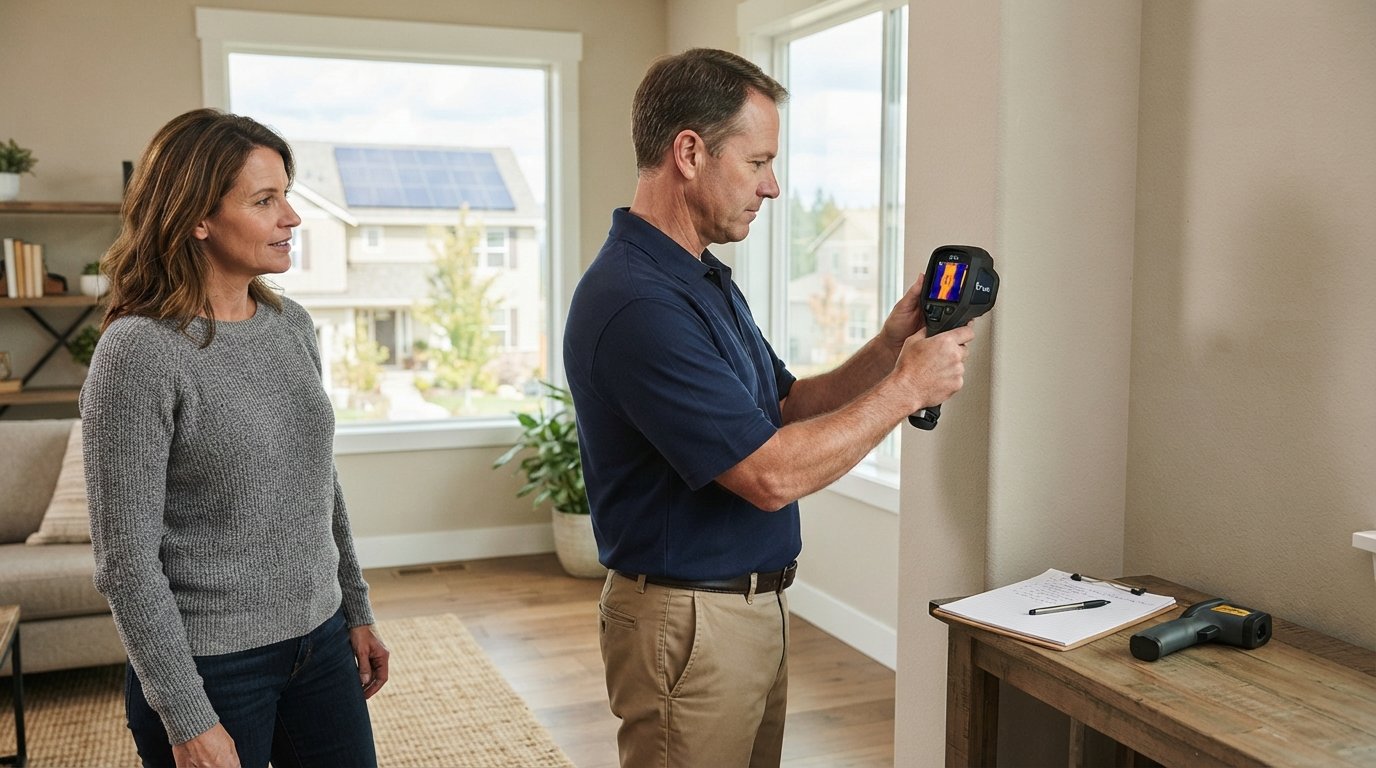
The first step in your action plan is to get a professional energy audit. While you can do a DIY walkthrough, a certified auditor uses specialized tools like blower doors and thermal imaging cameras to pinpoint exactly where your home is leaking energy. They will also assess the efficiency of your heating, ventilation, and air conditioning (HVAC) system, your water heater, and your lighting. The audit typically includes a detailed report with prioritized recommendations, estimated costs, and potential savings. This report becomes the foundation of your action plan.
When hiring an auditor, look for one who is certified by the Building Performance Institute (BPI) or the Residential Energy Services Network (RESNET). Many utilities offer free or subsidized audits, so check with your provider first. You can also use our guide on how AI improves energy efficiency for home solar to understand how technology can enhance the audit process. The auditor will likely use AI-powered software to analyze data and generate insights, giving you a clear picture of your home's performance.
During the audit, the auditor will examine your insulation levels, check for air leaks around windows, doors, and electrical outlets, and test the efficiency of your appliances. They will also look at your ductwork for leaks and your windows for proper sealing. The goal is to identify the low-hanging fruit first: the improvements that offer the biggest bang for your buck. Often, these include air sealing and insulation, which are relatively inexpensive and can yield significant savings.
Once you have the audit report, you can prioritize upgrades based on cost, impact, and your budget. The report will typically categorize recommendations into immediate, short-term, and long-term actions. For example, immediate actions might include sealing air leaks and switching to LED bulbs. Short-term could involve adding insulation to your attic. Long-term might be replacing an old HVAC system. By following this prioritized list, you ensure you are making the most cost-effective improvements first.
Creating Your Action Plan: Prioritizing Upgrades
With the audit report in hand, you can now build your action plan. A good plan balances quick wins with larger investments. Here is a framework to help you prioritize:
- Air sealing and insulation: These are almost always the first step. Sealing cracks and adding insulation to your attic, walls, and floors can reduce your heating and cooling needs by 20% or more. This directly reduces the amount of solar power you need to generate.
- Duct sealing and repair: If you have forced-air heating and cooling, leaky ducts can waste up to 30% of the energy your HVAC system produces. Sealing and insulating ducts can dramatically improve efficiency.
- Upgrade to energy-efficient appliances: Old refrigerators, washing machines, and water heaters can be energy hogs. Look for ENERGY STAR certified models, which use significantly less energy than standard ones.
- Smart thermostats and lighting: These are inexpensive upgrades that can yield significant savings. Smart thermostats learn your schedule and adjust temperatures automatically, while LED lighting uses up to 75% less energy than incandescent bulbs.
- HVAC optimization: Regular maintenance, such as changing filters and tuning up your system, can improve efficiency. If your system is old, consider upgrading to a high-efficiency heat pump or furnace.
As you implement these upgrades, you will likely see a noticeable drop in your energy consumption. This means your solar panels will cover a larger portion of your usage, and you may even export more excess power to the grid. The key is to tackle the cheapest, most impactful items first. For many homeowners, air sealing and insulation offer the best return on investment.
It is also important to consider the interaction between your solar system and your efficiency upgrades. For instance, if you add a lot of insulation, your heating and cooling needs will drop, which might mean you can downsize your HVAC system when it is time to replace it. Similarly, if you upgrade to a heat pump, you may be able to use your solar power to run it, further reducing your reliance on fossil fuels. These synergies are what make the post-solar efficiency plan so powerful.
Financing and Incentives for Efficiency Upgrades
One of the biggest barriers to implementing an action plan is upfront cost. However, there are numerous financing options and incentives available. The federal government offers tax credits for certain efficiency improvements, such as installing insulation, windows, and doors, as well as high-efficiency HVAC systems. Many states and utilities offer additional rebates. For example, some utilities will pay for a portion of your insulation or duct sealing costs. You can find a comprehensive list of incentives on our Incentives & Rebates Guide.
If you need help financing the upgrades, consider options like property-assessed clean energy (PACE) loans, which allow you to pay for improvements through your property tax bill. Some solar installers also offer efficiency upgrades as part of a package, which can be rolled into your solar loan. Be sure to check with your solar provider about bundling options. Additionally, if you are planning to sell your home, energy efficiency improvements can increase its resale value and appeal to buyers.
When evaluating the cost of an upgrade, always look at the simple payback period: the time it takes for the energy savings to equal the upfront cost. Many efficiency upgrades have payback periods of just a few years, making them very attractive. For example, adding attic insulation might cost $1,500 but save $300 per year, giving a payback of five years. After that, the savings are pure profit. With solar, those savings are amplified because you are not just saving on your utility bill; you are also maximizing the value of your solar investment.
Integrating Smart Home Technology
After you have addressed the building envelope and major appliances, you can further optimize your home's energy use with smart home technology. Devices like smart plugs, smart lighting, and smart thermostats can automatically reduce energy waste when you are not home. They can also be integrated with your solar system to maximize self-consumption. For example, you can set your smart thermostat to pre-cool your home when your solar panels are producing excess power, then reduce cooling when the sun goes down. This way, you are using your own clean energy instead of drawing from the grid.
AI-driven energy management systems are becoming increasingly popular. These systems learn your habits and adjust your energy usage accordingly. They can also monitor your solar production and battery storage (if you have it) to optimize when you use grid power versus solar power. This level of optimization can squeeze even more savings out of your solar investment. For more on this, see our article on AI energy management.
When selecting smart home devices, look for ones that are compatible with your solar inverter and battery system. Many manufacturers offer integrated ecosystems that make it easy to manage everything from one app. This not only simplifies your life but also ensures you are getting the most out of your solar panels. As you add these devices, you may find that your energy consumption drops further, allowing you to potentially add a battery to store excess power for nighttime use.
Monitoring and Maintaining Your Upgrades
Once your upgrades are installed, it is important to monitor their performance to ensure they are delivering the expected savings. Many smart home systems come with energy monitoring features that show you real-time consumption. You can also use your solar inverter's monitoring app to see how much energy your panels are producing and how much your home is consuming. By comparing the two, you can identify any unexpected spikes in usage and address them promptly.
Regular maintenance is also key. For example, change your HVAC filters regularly, clean your solar panels as needed, and check for new air leaks around windows and doors. If you notice a sudden increase in your energy bill, it could be a sign that something is not working efficiently. Addressing these issues quickly will keep your home running smoothly and your savings on track.
Finally, consider re-auditing your home every few years. As your home ages and your family's needs change, new opportunities for efficiency may arise. A follow-up audit can identify new leaks or outdated appliances, ensuring your action plan stays current. By staying proactive, you can continue to enjoy the benefits of a highly efficient, solar-powered home.
Conclusion: A Holistic Approach to Energy Independence
An energy audit action plan for home efficiency upgrades after solar is not just about saving money; it is about taking control of your energy future. By combining solar power with a comprehensive efficiency strategy, you reduce your carbon footprint, increase your comfort, and protect yourself from rising utility rates. The steps outlined here, from the initial audit to smart home integration, provide a clear path forward. Remember that every home is unique, so tailor your plan to your specific circumstances. With careful planning and execution, you can turn your home into a model of sustainability and savings. And when you are ready to take the next step, consider connecting with vetted solar professionals through NewSolarQuotes to ensure your solar and efficiency upgrades work in harmony.