Electrical Panel Upgrades Needed Before Solar Installation
Electrical panel upgrades needed before solar installation can add cost and delay. Learn the warning signs, typical prices, and how to plan ahead.

By Mason Carter
Learn more about Circuit Breaker Panel or Fuse Box Installation for guides, costs, and what to expect.
Compare Circuit Breaker Panel or Fuse Box Installation Pros Near You

Enter your ZIP code to compare top-rated local professionals and request free quotes.
You have picked the perfect roof, gathered three solar quotes, and you are ready to sign. Then your installer says four words that change everything: your panel cannot handle it. For thousands of homeowners, this moment turns an exciting clean energy project into a stressful detour. The good news is that an electrical panel upgrade is rarely a deal breaker. In most cases, it is a manageable step that makes your home safer, your solar system more powerful, and your property more valuable. Understanding what triggers an upgrade, what it costs, and how to plan for it can save you weeks of delays and thousands of dollars in surprises.
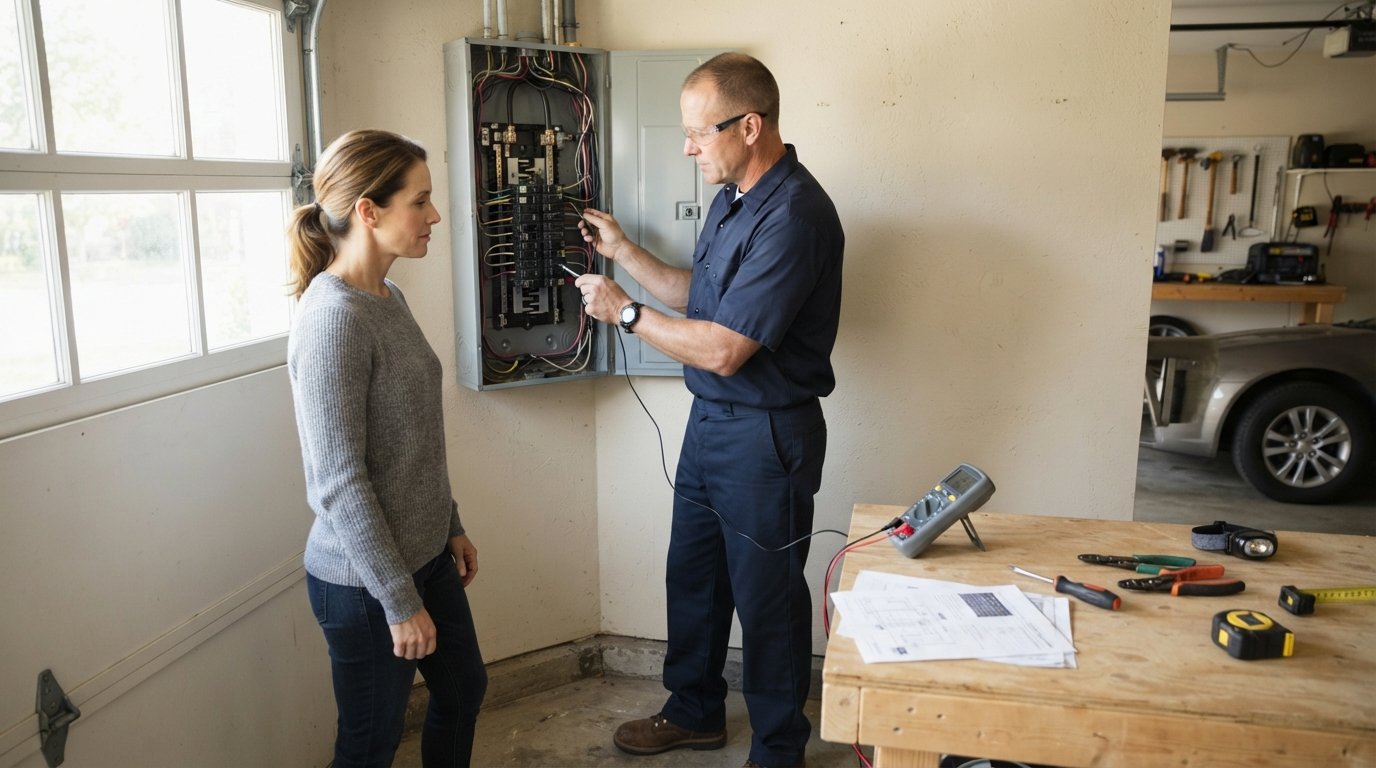
Solar installers evaluate your main service panel on almost every site visit. That gray metal box in your garage or basement controls how much electricity flows into your home and how much can flow back out to the grid. When you add solar, you are essentially adding a second power source, and the panel must be able to manage both directions safely. If it cannot, the utility company will not approve the interconnection, and your project stalls until the work is done.
Why Solar Installers Scrutinize Your Electrical Panel
Your main service panel does more than hold circuit breakers. It is the central hub where utility power, home circuits, and any backup or renewable sources meet. The National Electrical Code sets strict rules about how much power a panel can handle, and solar adds a new layer of complexity because electricity can now flow in two directions. The code includes what electricians call the 120 percent rule, which limits the total of your main breaker and your solar backfeed breaker to 120 percent of your panel busbar rating. A typical 200-amp panel with a 200-amp busbar can usually accept about 40 amps of solar backfeed without triggering a major upgrade. If your solar array needs more, or if your panel is older and smaller, an upgrade becomes necessary.
Age matters just as much as capacity. Panels installed before the 1990s often use fuses instead of breakers, lack proper grounding, or rely on outdated aluminum wiring that overheats under load. Federal Pacific and Zinsco panels, common in homes built between the 1950s and 1980s, have known safety defects and are frequently rejected by inspectors and utilities for any new interconnection. Even some panels from the 1990s and early 2000s are now at the end of their service life. A solar installation is the perfect moment to address these weaknesses because the electrician is already on site and the utility is already involved.
Finally, physical space inside the panel matters. Solar requires a dedicated backfeed breaker, and many panels are already full. If there is no room for a new breaker, or if the busbar cannot accept the additional amperage, the only code-compliant solution is a panel replacement or a line-side tap, which some utilities do not allow. Installers also check the meter socket and service entrance conductors, because upgrading the panel without upgrading the service wires can create a bottleneck that fails inspection.
Signs You Will Need a Panel Upgrade Before Solar
Not every home needs a new panel before going solar. However, certain conditions almost always trigger an upgrade. If you recognize your home in several of the following scenarios, budget for panel work in your solar plan. Addressing it early keeps your project on schedule and prevents the utility from rejecting your application at the last minute.
- Panel age over 25 years: Older panels may still function, but they often lack modern safety features, spare capacity, and proper grounding for a solar interconnection.
- Fuse box instead of breakers: Fuse-based panels cannot safely accommodate a solar backfeed breaker and are usually flagged during inspection.
- Known defective brands: Federal Pacific Stab-Lok and Zinsco panels are routinely rejected by utilities and insurers because of fire risk and failure-to-trip issues.
- No available breaker space: A full panel leaves no room for the solar breaker, forcing either a subpanel, a line-side tap, or a full replacement.
- 100-amp service with high demand: Homes with electric ranges, heat pumps, EV chargers, or electric water heaters often exceed 100 amps and need a 200-amp upgrade to support solar plus everyday loads.
Beyond these hardware issues, your utility may impose its own requirements. Some utilities limit solar backfeed to a percentage of the main breaker, while others require a visible lockable AC disconnect near the meter. A panel upgrade is often the simplest way to satisfy these rules without complicated workarounds. If your installer proposes a line-side tap to avoid replacing the panel, ask whether your utility permits it and whether your insurance company will accept it. In many cases, a straightforward panel replacement is the cleaner, more durable solution.
What a Panel Upgrade Actually Involves
A main service panel upgrade is a licensed electrical project, not a weekend DIY task. The electrician must coordinate with your utility to disconnect power, pull a permit, install the new panel and breakers, upgrade the grounding and bonding, and pass inspection before the utility reconnects service. The process typically takes one to two days of on-site work, though permitting and utility scheduling can stretch the timeline to several weeks. During the disconnect, your home will be without power for several hours, so plan accordingly.
The scope of work depends on whether you are replacing like-for-like or increasing capacity. A simple 200-amp replacement in the same location is the least invasive. Moving the panel to a new location, upgrading from 100 amps to 200 amps, or relocating the meter adds cost and complexity. If your service entrance wires, meter socket, or grounding electrode system are undersized or degraded, those must be upgraded too. Some jurisdictions also require arc-fault or ground-fault protection on certain circuits when a panel is replaced, which can add breakers and labor to the estimate.
For commercial properties, the stakes are higher. A commercial solar installation often involves three-phase power, larger service equipment, and more complex interconnection studies. In our guide on commercial solar installation, we explain how service capacity, switchgear, and utility coordination shape the timeline and budget. The same principles apply to large residential systems, just at a smaller scale. The key takeaway is that the panel is not an afterthought, it is part of the solar system design.
Costs, Timelines, and How to Budget
Homeowners often ask whether the panel upgrade is included in their solar quote. Sometimes it is, sometimes it is listed as a separate line item, and sometimes it is discovered only after the site audit. The cost varies widely by region, panel size, and whether the service entrance must be modified. As a general planning range, a 200-amp residential panel replacement in the United States often falls between $2,000 and $4,500, while a 100-amp to 200-amp service upgrade with new meter and grounding can run $3,500 to $7,000 or more. Complex relocations, underground service, or historic home constraints can push costs higher.
Timelines matter because solar incentives and net metering rules can change. If your panel upgrade delays the project by two months, you might miss a utility program deadline or a state rebate window. Start the panel conversation during your initial solar consultation, not after you sign the contract. A good installer will flag panel issues upfront, include the work in the proposal, and coordinate permitting and utility scheduling so the solar installation and panel upgrade happen in the right order. In many cases, the panel is upgraded first, then the solar system is installed and inspected.
Financing can soften the blow. Some solar loans allow you to roll the panel upgrade into the project cost, and some states offer low-interest energy improvement loans that cover both solar and electrical work. The federal residential clean energy credit may apply to certain panel upgrades when they are necessary for the solar installation, though you should confirm eligibility with a tax professional. Always ask your installer for a written breakdown that separates solar equipment, labor, panel work, and permitting fees so you can compare quotes accurately.
How to Plan Ahead and Avoid Delays
The best way to handle a panel upgrade is to find out about it before you commit to a solar contract. Request a site audit that includes a photo of your panel label, the busbar rating, the main breaker size, and the available breaker spaces. If your installer does not ask for these details, that is a red flag. A thorough assessment also checks the meter socket, service entrance conductors, grounding, and any signs of overheating or corrosion. Once you know the condition of your electrical service, you can decide whether to upgrade now, phase the work, or choose a smaller solar system that fits within your existing panel limits.
For homeowners who want a clear picture of costs and savings before committing, independent educational resources can help. Sites like NewSolarQuotes offer guides, calculators, and comparisons that explain how panel capacity, utility rules, and incentives interact. Use these tools to pressure-test your installer's recommendations and to understand whether a proposed upgrade is truly necessary or simply a upsell. Knowledge is your best protection against surprise bills.
Finally, think beyond solar. If you are already upgrading your panel, consider whether you want to add capacity for an EV charger, a heat pump, a battery storage system, or a future ADU. The marginal cost of a larger panel or a few extra breaker spaces now is far lower than a second upgrade later. A well-planned panel upgrade future-proofs your home for electrification and makes your property more attractive to buyers who value modern, safe electrical service.
An electrical panel upgrade is not the most glamorous part of going solar, but it is often the foundation that makes everything else work. By understanding why panels fail solar inspections, recognizing the warning signs, and budgeting for the work early, you turn a potential roadblock into a smart investment. Your solar system will perform better, your home will be safer, and your project will move through permitting and utility approval with far fewer headaches.