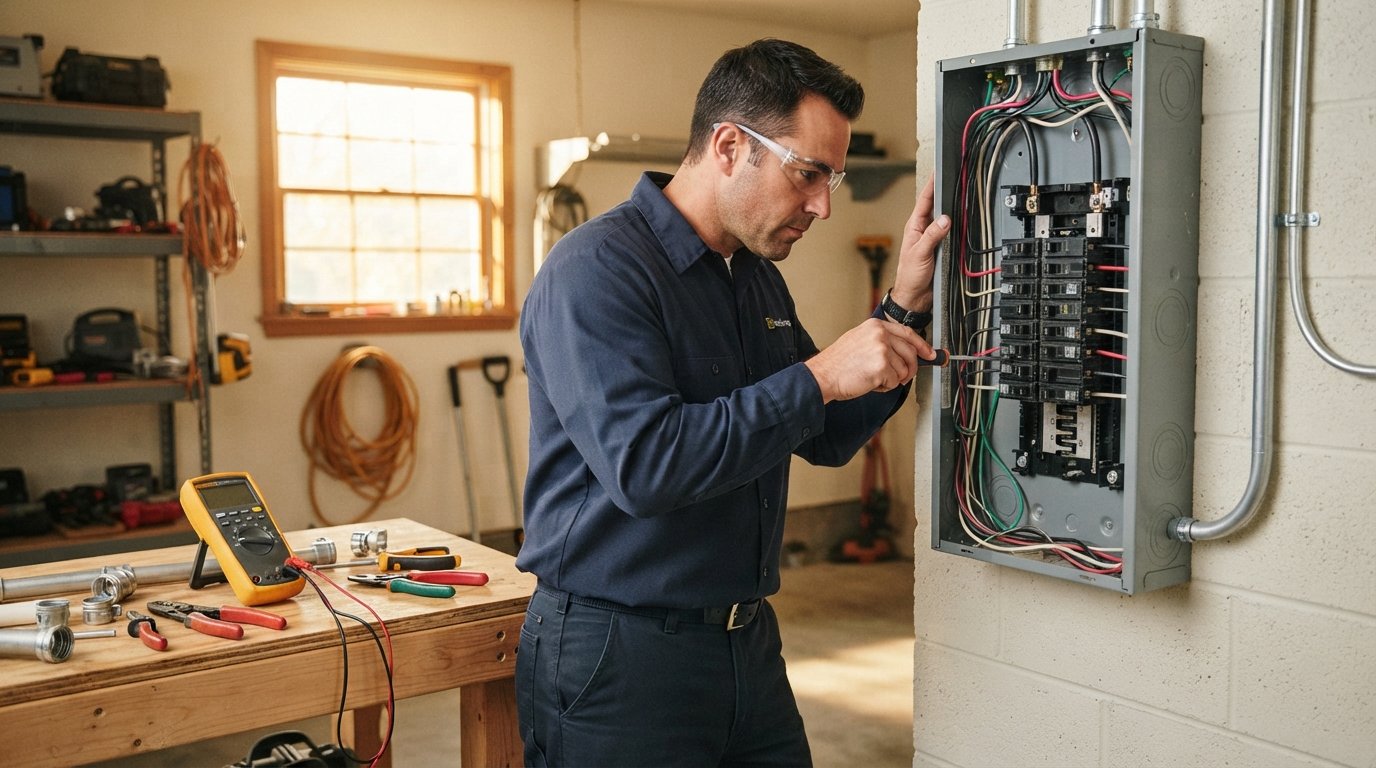
Electrical Panel Upgrade Cost Before Solar Installation
Understand electrical panel upgrade cost before solar installation and avoid budget surprises. Call (833)-434-4023 to plan your project with confidence.

By Dylan Harris
Learn more about Circuit Breaker Panel or Fuse Box Installation for guides, costs, and what to expect.
Compare Circuit Breaker Panel or Fuse Box Installation Pros Near You

Enter your ZIP code to compare top-rated local professionals and request free quotes.
You have probably heard that solar panels can slash your electric bill, but there is a critical detail that often surfaces during the first site assessment: your electrical panel. Many homeowners are surprised to learn that their existing service panel may not be able to handle the additional load from a solar energy system, and the cost to upgrade it can add thousands to the project. According to industry data, a significant share of residential solar installations require some form of panel upgrade, especially in older homes or those with high electricity demand. Understanding the electrical panel upgrade cost before solar installation is essential for accurate budgeting and avoiding last-minute surprises. This guide breaks down the triggers that necessitate an upgrade, the typical price ranges by amperage and region, alternative solutions like line-side taps, smart bundling strategies, and the permit and utility coordination timelines you should plan for.
Why Your Electrical Panel Matters for Solar
Your electrical panel, also known as the load center or breaker box, is the distribution hub for all electricity in your home. It receives power from the utility and routes it to individual circuits. When you add solar panels, the system backfeeds electricity into your panel, and the panel must be rated to handle that additional current safely. The key metric here is the bus bar rating, which is the maximum current the panel's internal metal bars can carry. The National Electrical Code (NEC) includes the 120 percent rule: the sum of the main breaker rating and the solar backfeed breaker rating cannot exceed 120 percent of the bus bar rating. For example, a 200-amp panel with a 200-amp main breaker has a bus bar rating of 200 amps, so the maximum solar backfeed breaker is 40 amps (since 200 + 40 = 240, which is 120% of 200). If your solar system requires a larger backfeed breaker, you will either need a panel upgrade or an engineering alternative.
Beyond the 120 percent rule, other factors come into play. Older panels may have outdated components, lack spare breaker spaces, or be from manufacturers with known safety issues. Some utilities also have their own interconnection rules that may be stricter than the NEC. During a solar site survey, an installer will examine your panel's bus bar rating, main breaker size, available breaker slots, and overall condition. If any of these are insufficient, they will recommend an upgrade. The cost of that upgrade is not just the hardware; it includes labor, permits, utility coordination, and potentially a service entrance upgrade. That is why it is wise to get a clear picture of electrical panel upgrade cost before solar installation so you can plan your finances accordingly.
What Triggers a Panel Upgrade for Solar?
Several specific conditions will typically force a panel upgrade when you go solar. The most common is the bus bar rating and main breaker combination. If your home has a 100-amp panel with a 100-amp main breaker, the maximum solar backfeed breaker is 20 amps (100 + 20 = 120, which is 120% of 100). A 20-amp backfeed breaker can only accommodate a solar system of about 4.8 kW (assuming 240 volts). If you want a larger system, you will need a 200-amp panel upgrade. Many modern homes already have 200-amp panels, but older homes often have 100-amp or even 60-amp panels. Even with a 200-amp panel, if you have a 200-amp main breaker, the maximum solar backfeed is 40 amps, which supports roughly 9.6 kW. If your solar plans exceed that, you may need a line-side tap or a panel upgrade with a smaller main breaker.
Another trigger is the lack of physical space for additional breakers. Solar requires a dedicated two-pole breaker, and if your panel is full, you cannot simply add another breaker without upgrading the panel or using tandem breakers (which may not be allowed for solar). The age and condition of the panel also matter. Panels from certain manufacturers, such as Zinsco or Federal Pacific, are known to be problematic and may be rejected by utilities or inspectors. Additionally, if your panel is located outdoors in a harsh environment or shows signs of corrosion or overheating, replacement is prudent. Finally, if you are planning to add battery storage or an electric vehicle charger along with solar, the load calculations will likely push you toward a higher-capacity panel. All these factors contribute to the overall electrical panel upgrade cost before solar installation, and addressing them upfront ensures a smooth solar journey.
Electrical Panel Upgrade Cost by Amperage and Region
The cost to upgrade an electrical panel varies widely based on the amperage rating, the complexity of the job, and regional labor rates. A straightforward panel replacement (same amperage, same location) is the least expensive, while a service upgrade that increases amperage and requires new wiring from the meter to the panel costs more. Below is a general breakdown of typical costs across the United States. Keep in mind that these are ballpark figures and actual quotes will depend on your specific situation.
- 100-amp to 200-amp upgrade: $1,500 to $3,500. This is the most common upgrade for solar, as it provides ample capacity for a typical residential system.
- 200-amp to 400-amp upgrade: $2,500 to $5,000. This is often needed for larger homes with high electrical demand or those adding battery storage and EV charging.
- Panel replacement (same amperage): $1,000 to $2,500. If your panel is full or outdated but the amperage is sufficient, a simple replacement may suffice.
- Service entrance upgrade (including meter base and wiring): $2,000 to $4,500. This is sometimes required when increasing amperage, especially in older homes.
Regional labor rates can shift these numbers by 20 to 30 percent. For example, in high-cost areas like California or New York, expect to pay toward the higher end of the range. In the Midwest or South, costs may be lower. It is also important to factor in permit fees, which can range from $100 to $500, and utility coordination fees, which vary by utility. When you request quotes for solar, ask the installer to break out the electrical panel upgrade cost before solar installation so you can see exactly what you are paying for. Some solar companies bundle the panel upgrade into the overall project cost, which can simplify financing but may obscure the true expense. Always request a line-item breakdown.
When a Line-Side Tap or Downsized Breaker Avoids a Full Upgrade
Before you resign yourself to a costly panel upgrade, explore alternatives. A line-side tap (also known as a supply-side connection) allows the solar system to connect directly to the utility's lines before they enter your main panel. This bypasses the panel's bus bar limitations entirely. Line-side taps are permitted by the NEC and many utilities, but they require a separate disconnect and may add $500 to $1,500 to the installation cost. They are often a cost-effective solution when your panel is otherwise adequate but cannot accommodate the solar backfeed breaker. However, not all utilities allow line-side taps, and some require additional equipment or fees, so check with your local utility first.
Another option is to downsize the main breaker. The 120 percent rule is based on the main breaker rating, not the bus bar rating. If you have a 200-amp panel with a 200-amp main breaker, you could replace the main breaker with a 175-amp breaker (if your utility allows it) to free up capacity for solar. This is a relatively inexpensive modification (a few hundred dollars) and can allow a larger solar system without a full panel upgrade. However, downsizing the main breaker reduces your home's total electrical capacity, which may be a concern if you have high-demand appliances or plan to add loads later. Your electrician can perform a load calculation to determine if downsizing is safe. These alternatives are worth discussing with your solar installer because they can significantly reduce the electrical panel upgrade cost before solar installation.
Bundling Panel Upgrades with Solar-Ready Wiring and Surge Protection
If you do need a panel upgrade, consider it an opportunity to make your home truly solar-ready and improve overall electrical safety. Bundling additional improvements with the panel upgrade can save you money on labor and permits compared to doing them separately. For instance, you can upgrade to a panel with a higher bus bar rating (such as a 225-amp panel) to future-proof for larger solar systems or battery storage. You can also install a surge protective device (SPD) at the panel to protect your solar inverter and other electronics from power surges. SPDs cost $200 to $600 installed and are a wise investment. Additionally, if you are planning to add an electric vehicle charger or a heat pump water heater, now is the time to run the necessary wiring while the walls are open and the electrician is already on site.
Another smart addition is a dedicated solar disconnect and a monitoring system. Some utilities require an external, lockable disconnect for solar, and installing it during the panel upgrade is more efficient. You might also consider upgrading to a smart panel that provides real-time energy monitoring and control, which can help you maximize your solar savings. These smart panels cost $1,500 to $3,000 but can integrate seamlessly with your solar system and provide valuable data. When discussing the electrical panel upgrade cost before solar installation with your contractor, ask about bundling these extras. A reputable installer will provide a detailed proposal that outlines the benefits and costs of each add-on, allowing you to make an informed decision.
Permit and Utility Coordination Timelines for Service Changes
Upgrading an electrical panel is not just a physical job; it involves permits and utility coordination that can extend the project timeline. The process typically follows these steps: First, your contractor pulls an electrical permit from your local building department. Permit approval can take anywhere from a few days to several weeks, depending on the jurisdiction. Next, the utility must be notified of the service change (if you are increasing amperage or relocating the meter). The utility will schedule a disconnect and reconnect, which may require a temporary power interruption. In some areas, the utility may need to upgrade the service drop or transformer to handle the increased load, which can add weeks or even months to the timeline. After the work is completed, the local building inspector must sign off, and then the utility will reconnect power. Only after that can the solar installation be commissioned and interconnected.
To avoid delays, it is crucial to work with an experienced contractor who understands the local permitting and utility landscape. They can help you navigate the paperwork and set realistic expectations. In some cases, you can sequence the panel upgrade and solar installation to minimize downtime. For example, you might complete the panel upgrade first, then have the solar installed a few weeks later. This allows the utility to focus on the service change separately from the solar interconnection. Be sure to factor these timelines into your project schedule. The electrical panel upgrade cost before solar installation includes not just money but also time, so plan accordingly. If you are also planning a move, resources like Moving.Homes offer checklists and guides that can help you coordinate home improvements with a relocation.
How to Get Accurate Quotes and Avoid Surprise Costs
To get a realistic estimate for your electrical panel upgrade cost before solar installation, start by requesting quotes from at least three licensed electricians or solar installers who handle panel upgrades. Provide them with details about your current panel, including the brand, amperage, and a photo of the label. Ask for a line-item quote that separates the panel upgrade from the solar installation. Be wary of any contractor who refuses to break down costs or pressures you into a bundled package without explanation. During the quote process, ask about permit fees, utility coordination fees, and any potential hidden costs such as upgrading the service entrance or relocating the meter. A thorough contractor will perform a load calculation and explain why an upgrade is necessary, rather than simply asserting that it is required.
Also, inquire about financing options. Many solar companies offer financing that includes the panel upgrade, which can make the upfront cost more manageable. However, be sure to compare the interest rates and terms with other financing sources, such as home equity loans or credit unions. Finally, check whether your utility offers any rebates or incentives for panel upgrades, especially if you are also installing solar or battery storage. Some states and utilities have programs that offset the cost of service upgrades for solar customers. For commercial properties, the considerations are similar but with larger scale; our commercial solar installation guide covers how to manage panel upgrades and utility coordination for businesses. By doing your homework and asking the right questions, you can avoid surprise costs and ensure that your solar project stays on budget.
In summary, the electrical panel upgrade cost before solar installation is a variable that depends on your home's existing electrical infrastructure and your solar plans. By understanding the triggers, exploring alternatives, and planning for permits and utility coordination, you can navigate this step with confidence. For personalized guidance and to connect with vetted solar professionals in your area, reach out to SolarEnergy.ai at (833)-434-4023. Our team can help you assess your panel, obtain accurate quotes, and streamline your solar journey.
Learn more about Circuit Breaker Panel or Fuse Box Installation for guides, costs, and what to expect.
Compare Circuit Breaker Panel or Fuse Box Installation Pros Near You
Enter your ZIP code to compare top-rated local professionals and request free quotes.