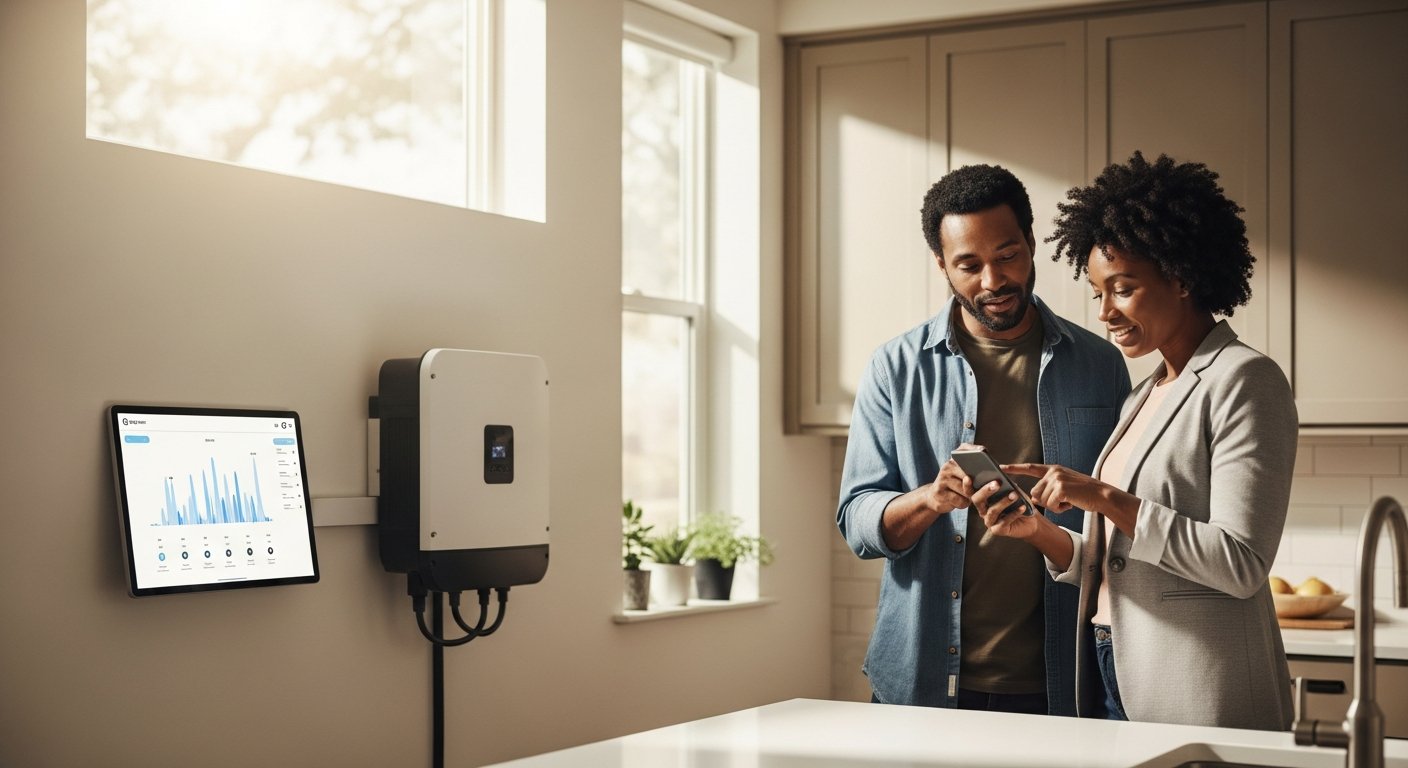
AI Energy Management: Cut Bills and Maximize Solar Savings
AI energy management learns your habits and automates your home to maximize solar savings, cut bills, and reduce grid reliance.

By Owen Phillips
Learn more about Solar Panel Installation and Repair for guides, costs, and what to expect.
Compare Solar Panel Installation and Repair Pros Near You

Enter your ZIP code to compare top-rated local professionals and request free quotes.
Rising electricity rates and an unstable grid have homeowners looking for smarter ways to control their power use. Solar panels are a strong start, but they only reach their full potential with intelligent oversight. That is where AI energy management comes in. This technology learns your habits, predicts your needs, and automates your home's energy flow, promising lower bills and a smaller carbon footprint. But what does it really do, and how can you use it to get the most from your solar investment? This guide breaks down the practical benefits, the technology behind it, and the steps you can take to put it to work in your own home.
What Is AI Energy Management?
At its core, AI energy management is the use of artificial intelligence to monitor, forecast, and control energy consumption and production in a building. Unlike a simple programmable thermostat or a timer on your appliances, an AI system continuously learns from your lifestyle, local weather patterns, and real-time energy prices. It then makes automatic adjustments to optimize for your priorities, be it saving money, reducing carbon emissions, or maintaining battery backup for emergencies.
For a home with solar panels, the system acts like a conductor, coordinating the flow of electricity between your panels, your battery, your appliances, and the grid. It decides the best times to draw power from your battery, when to sell excess solar energy back to the utility, and when to pre-cool your home before peak pricing hours. This level of automation removes the guesswork and manual effort from energy management, turning your home into an active participant in a smarter, more efficient grid.
How AI Optimizes Solar Energy Use
Integrating AI with your solar array creates a synergy that delivers tangible results. The primary goal is to increase self-consumption: using the energy your panels produce directly in your home, rather than exporting it to the grid for a low credit and then buying it back at a higher rate later. AI accomplishes this through several key functions.
1. Accurate Production Forecasting
AI models are trained on vast datasets of historical weather, satellite imagery, and your own solar production data. They can forecast the next day's solar output with remarkable accuracy, accounting for cloud cover, rain, and even seasonal sun angles. This forecast is the foundation for all other optimization decisions. If the system predicts a sunny day, it might fill your battery early in the morning to prepare for evening use, or it might run your dishwasher at midday to take advantage of the abundant solar power.
2. Intelligent Load Scheduling
Your home is full of flexible loads: the water heater, the pool pump, the electric vehicle charger, the dishwasher, and the washing machine. AI identifies these deferrable loads and schedules them to run when your solar generation is highest or when electricity rates are lowest. For example, it might delay the pool pump from running at 2 PM to running at 10 AM, ensuring it runs on pure sunshine. This shift alone can significantly reduce the amount of grid electricity you purchase.
3. Smart Battery Management
If you have a solar battery, AI treats it as a strategic asset. It decides when to charge the battery (usually during peak solar production) and when to discharge it (typically during evening peak rate hours). The system also factors in your backup needs. It can maintain a reserve charge to protect you from grid outages, or it can cycle the battery daily to maximize financial savings. In our guide on AI energy optimization to cut waste, we explain how this proactive battery management is a cornerstone of modern energy savings.
Key Benefits of AI Energy Management for Homeowners
Adopting an AI energy management system is not just about being tech-savvy; it delivers concrete, measurable advantages. Here are the primary benefits homeowners experience:
- Lower electricity bills: By maximizing solar self-consumption and shifting usage to off-peak times, you can reduce the amount of energy you buy from the utility, directly lowering your monthly bill.
- Increased savings from solar: You stop exporting excess energy for pennies and instead use it yourself, avoiding the spread between retail and wholesale electricity prices. This can improve your solar payback period.
- Reduced carbon footprint: Using more of your own clean solar energy means relying less on fossil-fuel-powered grid electricity, shrinking your household's greenhouse gas emissions.
- Protection against power outages: AI can ensure your battery has a reserve charge, keeping your lights on and your fridge running during a grid failure.
- Peace of mind: You gain a clear, real-time view of your energy production and consumption. No more guessing which appliance is the energy hog; the system shows you exactly where your power goes.
These benefits are not theoretical. Homeowners using AI-managed systems have reported cutting their grid reliance by 30% to 50% or more. The system pays for itself over time through the additional savings it unlocks from your existing solar investment.
AI Energy Management vs. Traditional Energy Monitoring
It is important to distinguish between passive monitoring and active management. A traditional energy monitor, such as a smart meter or a clamp-on sensor, simply tells you how much energy you are using in real time. It provides data but does not act on it. You see the information, and you are expected to change your behavior. This approach is helpful, but it relies on your constant attention and discipline.
AI energy management, on the other hand, is proactive. It does not just show you the problem; it fixes it. The system automatically adjusts your thermostat, schedules your appliances, and manages your battery without you lifting a finger. It is the difference between having a dashboard that displays your car's fuel efficiency and having a self-driving car that optimizes its route for maximum mileage. The former informs you; the latter acts for you.
Integrating AI with a Home Energy Management Platform
To bring all these capabilities together, you need a central hub: a home energy management platform. This software connects to your solar inverter, battery, smart thermostat, smart plugs, and even your EV charger. It is the brain that runs the AI algorithms and executes the optimization commands. For many, this platform is the most practical way to start using AI energy management, as it can often be layered onto existing equipment.
When choosing a platform, look for one that supports your specific hardware and offers clear, actionable insights. A good platform will provide an easy-to-read dashboard, detailed reports on your savings, and the ability to set custom priorities. As we detailed in our article on cutting bills with an energy management platform, the right software is key to unlocking the full potential of your solar investment. It turns a collection of smart devices into a single, cohesive, intelligent system.
Steps to Implement AI Energy Management in Your Home
Ready to take control of your energy use? Here is a practical, step-by-step approach to integrate AI energy management into your home, whether you are starting from scratch or have existing solar equipment.
- Audit your current energy system: Review your solar production, your battery capacity (if any), and your major energy-consuming appliances. Identify which loads are flexible and could be shifted, such as your EV charger, water heater, or pool pump.
- Choose your control hub: Select a home energy management platform or a smart energy monitor that is compatible with your solar inverter and battery. Popular options work with major brands like Tesla, Enphase, and SolarEdge. If you are unsure, a professional energy survey can help you make the right choice.
- Install smart devices: Add smart thermostats, smart plugs, and smart relays to the flexible loads you identified. These devices allow the AI platform to control them remotely. This step may require professional installation for hardwired appliances like water heaters.
- Connect and configure the system: Follow the platform's instructions to connect your devices and your solar/battery system. Set your goals: minimal cost, maximum backup, or a balanced approach. The AI will take it from there, learning and adjusting over the first few weeks.
- Monitor and refine: Use the dashboard to track your performance. Check your savings reports and see how the AI is scheduling your loads. You can tweak your preferences, such as setting a minimum battery level, to better align with your comfort and security needs.
This process is not just about installing new technology; it is about adopting a new mindset for your home's energy flow. The initial setup requires some effort, but the ongoing, automatic optimization makes it a worthwhile investment for the long term.
The Financial Case for AI Energy Management
Beyond the convenience and control, the financial logic of AI energy management is compelling. The system's primary job is to save you money, and it does so in several direct ways. By increasing your solar self-consumption from, say, 40% to 80%, you effectively double the value of the electricity your panels generate. This is because every kilowatt-hour you use yourself is a kilowatt-hour you do not have to buy from the utility at retail rates, which can be three to four times higher than what your utility pays you for exported solar energy.
Furthermore, AI can help you take advantage of time-of-use (TOU) rate plans. In our comprehensive guide on AI energy management to cut bills and maximize solar savings, we emphasize how shifting your energy consumption to off-peak periods can lead to substantial savings. For example, charging your EV at 11 PM instead of 6 PM could cut the cost of that charge in half. Over a year, these small, automated adjustments add up to hundreds or even thousands of dollars in savings, depending on your usage and local rates.
These savings also improve your return on investment for solar. A solar panel system that pays for itself in 8 years might pay for itself in 6 years when paired with AI optimization. The technology effectively makes your clean energy system more productive and more profitable.
The Future of Home Energy: AI and the Smart Grid
The role of AI in home energy is only set to expand. We are moving toward a future where homes are not just consumers of energy but are active participants in a distributed, intelligent grid. In this model, your home's battery and EV can be aggregated with others to form a virtual power plant (VPP). When the grid is stressed on a hot summer day, your AI system could automatically discharge your battery to support the grid, and you would be compensated for that service.
AI will also become more adept at predicting your personal energy needs with near-perfect accuracy. It will learn your daily routines, your cooking habits, and even your preferred indoor temperatures for different times of the day. This level of personalization will squeeze out every last drop of inefficiency. As the technology matures, it will also become more accessible, with simpler interfaces and broader hardware compatibility, making AI energy management a standard feature of modern, energy-efficient homes.
For homeowners looking to future-proof their property, investing in AI energy management is a strategic move. It prepares you for a grid that will increasingly reward flexibility and penalize wasteful consumption. It is an investment in your home's efficiency, your financial stability, and your energy independence.
Ultimately, AI energy management is not a luxury; it is a practical upgrade that maximizes your solar savings, reduces your environmental impact, and gives you a level of control over your energy destiny that was impossible just a few years ago. By taking the step to implement it today, you are not just cutting your current bills; you are building a smarter, more resilient home for the future.
Learn more about Solar Panel Installation and Repair for guides, costs, and what to expect.
Compare Solar Panel Installation and Repair Pros Near You
Enter your ZIP code to compare top-rated local professionals and request free quotes.