Whole Home Backup Power Planning Beyond Battery Storage
Whole home backup power planning beyond battery storage means layering solar, generators, and smart panels so your house stays powered for days, not hours.

By Dylan Harris
Learn more about Generator Installation for guides, costs, and what to expect.
Compare Generator Installation Pros Near You

Enter your ZIP code to compare top-rated local professionals and request free quotes.
When the grid goes down, a battery alone rarely carries the whole house for long. True resilience comes from stacking generation, storage, smart controls, and load management into one coordinated plan. This guide explains how to move past the battery-only mindset and design a backup power system that actually keeps your lights on, your food cold, and your family comfortable.
Why Battery Storage Alone Falls Short
A home battery is a powerful tool, but it is only one part of the equation. Most residential batteries store between 10 and 20 kilowatt-hours of usable energy. A typical American home uses roughly 30 kilowatt-hours per day. That math means a single battery can carry a few critical circuits for a day, not an entire household for a week. If an outage stretches beyond a few hours, the battery drains and the house goes dark unless something recharges it.
Whole home backup power planning beyond battery storage starts with this reality check. Batteries are energy buffers, not energy generators. They shift power across time, but they do not create it. To keep a home running through a multi-day outage, you need a source that refills the battery and a control system that decides which loads deserve that stored energy.
There is also the question of peak demand. A single battery may deliver 5 to 10 kilowatts continuously. A central air conditioner, electric range, and well pump can spike well past that. Without load management or additional generation, the battery trips offline just when you need it most. Planning beyond the battery means planning for those surges.
Build a Layered Backup Power Architecture
The most reliable home backup systems use layers. Each layer covers a different failure mode, and together they create redundancy. Think of it as a pyramid: efficiency at the base, storage in the middle, and generation at the top.
- Layer 1: Efficiency and weatherization. Seal air leaks, insulate attics, and upgrade to LED lighting. Every watt you do not need is a watt you do not have to back up.
- Layer 2: Load management. Smart panels and controllable breakers shed non-essential circuits during outages so critical loads keep running.
- Layer 3: Battery storage. One or more batteries provide instant, seamless power for the circuits you prioritize.
- Layer 4: On-site generation. Solar arrays, generators, or both recharge the batteries and extend runtime indefinitely.
This layered approach changes the conversation from "how big is my battery" to "how many days can my home operate." That is the right question. A well-designed system with 10 kilowatts of solar and 20 kilowatt-hours of storage can often ride through a sunny week without grid power, as long as loads stay managed. Add a small generator or a second battery, and even cloudy weeks become survivable.
Layering also protects against single points of failure. If the inverter fails, a generator can still run critical loads through a transfer switch. If the generator runs out of fuel, the battery and solar keep going. Redundancy is not paranoia; it is good engineering.
Solar Plus Storage: The Core of Modern Resilience
Solar paired with batteries has become the default backbone of resilient homes in the United States. The reason is simple: solar generates during the day, batteries carry the night, and the cycle repeats. Unlike a generator, solar needs no fuel deliveries and produces no exhaust. Unlike a battery alone, solar recharges indefinitely as long as the sun rises.
Sizing this pairing correctly matters. A system that is too small will leave you rationing power. A system that is too large wastes money on capacity you rarely use. Most homeowners start by identifying critical loads: refrigeration, well pumps, medical equipment, internet, a few lights, and perhaps a space heater or window air conditioner. From there, an energy audit estimates daily critical-load consumption, and the solar and battery sizes follow.
If you are new to battery systems, our home battery backup guide walks through the basics of capacity, chemistry, and inverter pairing before you commit to a design.
For homeowners in sunny states, pairing solar with storage also delivers everyday savings. The battery charges from solar during off-peak hours and discharges during expensive peak windows, trimming utility bills even when the grid is up. That dual purpose, resilience plus savings, is what makes solar-plus-storage the smartest first step in whole home backup power planning beyond battery storage.
Generator Options That Complement Battery Systems
Generators still have a place, especially in regions with long winter storms or heavy wildfire smoke that dims solar output. The key is to treat the generator as a partner to the battery, not a replacement. Running a generator continuously is noisy, fuel-hungry, and maintenance-heavy. Running it only to recharge a battery bank is far more efficient.
There are three common configurations:
- Standby generator with automatic transfer switch. The generator kicks on within seconds of an outage and powers the whole house or a subpanel. It can also charge the battery bank through the inverter.
- Portable generator with manual transfer switch. A lower-cost option that requires you to plug in and start the generator. Best for short outages and budget-conscious households.
- Generator plus battery hybrid. The battery handles short outages silently, and the generator only runs when the battery drops below a set threshold. This minimizes fuel use and noise.
Fuel storage is the hidden constraint. Propane lasts indefinitely, natural gas is continuous if the line stays pressurized, and gasoline degrades within months. In a widespread disaster, fuel deliveries may stop for days. That is why many planners treat the generator as a backup to the backup, not the primary source.
Smart Panels and Load Management
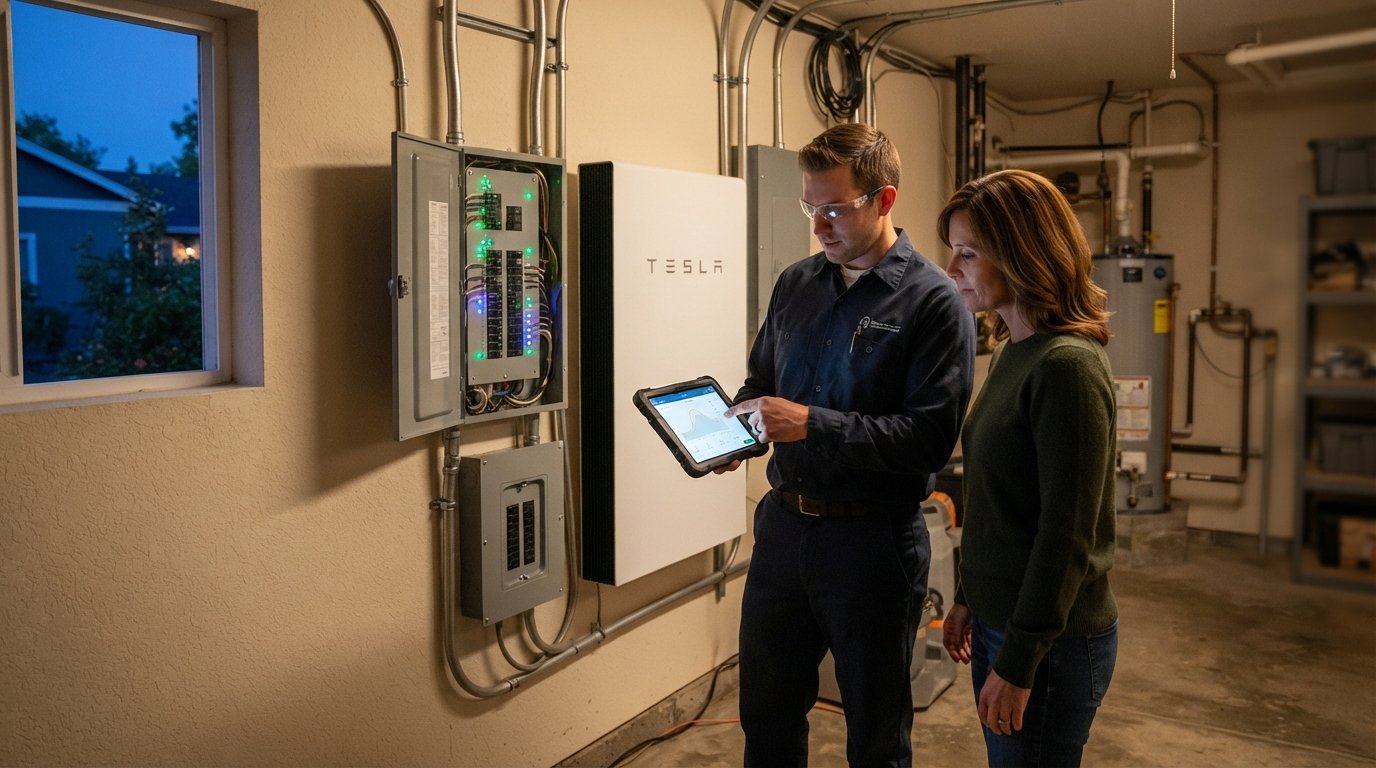
Whole home backup does not mean powering every load simultaneously. It means powering the right loads at the right time. Smart electrical panels make this possible by monitoring and controlling individual circuits from a phone or web dashboard. During an outage, the panel can automatically shed the electric dryer, pool pump, or EV charger while keeping the refrigerator and medical devices online.
Load management also reduces the size, and therefore the cost, of the battery and inverter you need. Instead of buying a 15-kilowatt inverter to handle simultaneous surges, you can install a 7.5-kilowatt inverter and let the panel sequence loads. That savings often pays for the smart panel itself.
Some utilities also offer demand response programs that reward homeowners for letting the utility throttle certain loads during grid stress. A smart panel makes participation automatic. You get bill credits, and the grid gets stability. It is a rare win-win in energy planning.
Planning Steps for a Resilient Whole Home System
A resilient system does not happen by accident. It follows a sequence. Skipping steps leads to oversized batteries, undersized inverters, or circuits that fail when you need them. The following framework keeps the project grounded.
- Define your resilience goal. Decide whether you want to ride through a two-hour outage, a two-day storm, or a two-week grid failure. The goal drives every other decision.
- Audit your loads. List every circuit and mark it critical, important, or deferrable. Measure actual wattage where possible.
- Model solar production. Use local irradiance data to estimate how much energy a rooftop array will generate in each season.
- Size storage and generation together. Match battery capacity to overnight critical loads and solar capacity to daily recharge needs.
- Choose controls and interconnection. Select a smart panel, transfer switch, and inverter architecture that supports future expansion.
- Verify incentives and permits. Federal tax credits, state rebates, and utility programs can cover a significant share of the cost, but rules change yearly.
Each step feeds the next. If you skip the load audit, you will guess at battery size and probably guess wrong. If you skip the solar model, you may buy more battery than your panels can recharge. If you skip incentives, you leave money on the table.
It also helps to work with professionals who do this daily. Vetted solar and electrical contractors can run the load calculations, pull permits, and coordinate utility interconnection. Directories such as Homes.Contractors help homeowners find pre-screened local pros for backup power and electrical work, which reduces the risk of a mismatched system.
Costs, Incentives, and Payback
Whole home backup is an investment, and the numbers vary widely by region, utility, and system size. A modest critical-load system with 10 kilowatt-hours of storage and 5 kilowatts of solar might run $20,000 to $30,000 before incentives. A whole-home system with 30 kilowatt-hours of storage and 12 kilowatts of solar can exceed $60,000. Generators add $3,000 to $15,000 depending on type and capacity.
Incentives soften the blow. The federal residential clean energy credit covers a percentage of solar and battery costs, and many states add their own rebates. Some utilities offer additional payments for allowing the battery to support the grid during peak demand. Because these programs shift with each legislative cycle, always confirm current details with a qualified installer or official program source before signing a contract.
Payback comes from two directions. First, everyday bill savings from solar self-consumption and peak shaving. Second, avoided losses from outages: spoiled food, hotel stays, damaged equipment, and lost work time. For households that experience frequent or long outages, the resilience value alone can justify the investment. For others, the bill savings carry the math.
Common Planning Mistakes to Avoid
Even well-intentioned homeowners make predictable errors. Knowing them in advance saves money and frustration.
- Buying the battery first. Storage without generation or load management runs out fast. Start with an audit and a goal.
- Ignoring surge loads. Motors and compressors draw far more at startup than at steady state. Inverters must handle the surge.
- Forgetting the fuel supply. A generator without stored fuel is a lawn ornament. Plan for days of fuel, not hours.
- Skipping maintenance. Batteries, generators, and solar panels all need periodic checks to perform when called upon.
- Overlooking code and permits. Improper transfer switches can backfeed the grid and endanger utility workers. Always permit and inspect.
Avoiding these mistakes is mostly about sequencing and honesty. Be realistic about what you need, and resist the urge to buy the shiniest component first. The system works as a whole or not at all.
Bringing It All Together
Whole home backup power planning beyond battery storage is ultimately about designing a system, not buying a product. Batteries, solar, generators, smart panels, and efficiency upgrades each play a role, and the magic happens when they work together. Start with your resilience goal, audit your loads, size generation and storage as a pair, and choose controls that let you expand later. Verify incentives, work with qualified pros, and maintain what you install. Do that, and the next outage becomes an inconvenience rather than a crisis.