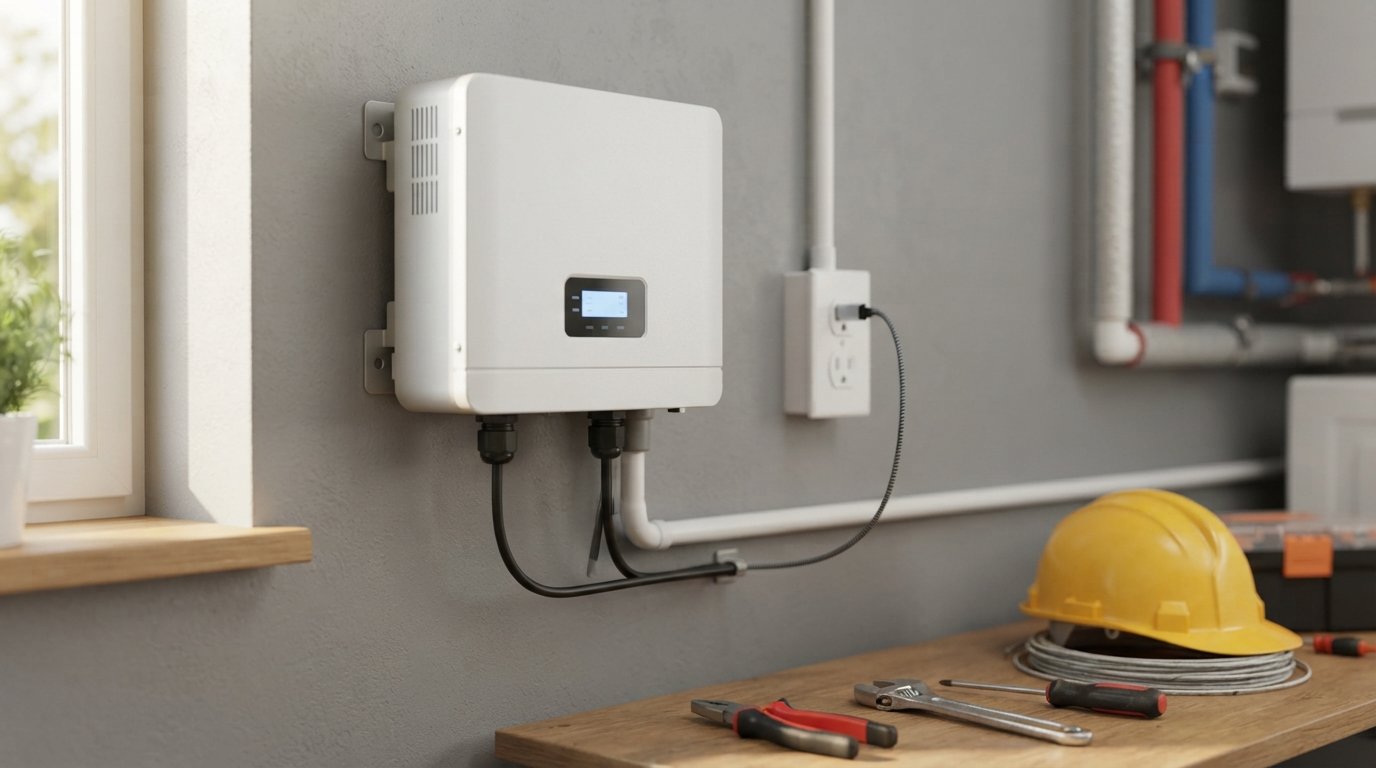
What Is a Solar Inverter and How Does It Work? Simple Guide
A simple explanation of what is a solar inverter and how does it work, revealing how this key device powers your daily life.

By Mason Carter
Learn more about Solar Panel Installation and Repair for guides, costs, and what to expect.
Compare Solar Panel Installation and Repair Pros Near You

Enter your ZIP code to compare top-rated local professionals and request free quotes.
When most people picture solar power, they imagine sleek blue panels soaking up the sun on a rooftop. However, those panels are only half of the story. The real magic that powers your coffee maker and charges your phone happens inside a box usually mounted on your wall. That box is the solar inverter, and it is the true workhorse of any home solar system. Without it, the raw energy from the sun would be completely useless to your household. In this article, we offer a simple explanation of what is a solar inverter and how does it work, breaking down the technology into clear, everyday terms.
Why Solar Panels Need an Inverter
To understand the role of the inverter, you first need to know about the two types of electrical current. Solar panels generate electricity in the form of Direct Current (DC). In DC, electricity flows in a single, constant direction, much like the power stored in a standard AA battery.
Your home, however, runs on Alternating Current (AC). In AC, the flow of electricity reverses direction periodically, typically 60 times per second in the United States. This is why your wall outlets are designed the way they are. The power grid operates on AC because it is far more efficient to transmit over long distances. Every appliance you own, from your refrigerator to your laptop charger, is engineered to use AC power.
This fundamental difference creates a compatibility issue. You cannot simply connect a solar panel directly to your home's wiring. You would risk damaging your appliances or starting an electrical fire. The solar inverter solves this problem by acting as a translator. It takes the DC electricity produced by your panels and converts it into clean, stable AC electricity that your home can safely use.
Simple Explanation of the Inverter's Core Function
At its most basic level, the answer to "what is a solar inverter and how does it work simple explanation" involves a process called inversion. The inverter rapidly switches the direction of the DC current to mimic AC. This is done using high-speed electronic switches called transistors. By turning these switches on and off in a precise sequence, the inverter creates an alternating current output.
But modern inverters do much more than just switch directions. They are intelligent devices that manage the entire solar system. They constantly track the voltage of your solar panels to ensure they are operating at their maximum power point, a feature known as Maximum Power Point Tracking (MPPT). This optimization ensures you get the highest possible energy yield from your panels, even on cloudy days or during partial shading.
Furthermore, the inverter acts as the safety hub of your system. It monitors the electrical flow for faults and can shut down the system instantly if it detects an arc or a ground fault. This is a crucial safety feature that protects your home and the utility workers who may be repairing the grid. This digital intelligence is why modern inverters are often called the "brains" of a solar array.
The Main Types of Solar Inverters
Not all solar inverters are created equal. The type you choose depends on your roof layout, budget, and energy goals. Each type has distinct advantages that cater to different situations. Here is a breakdown of the most common options for homeowners:
- String Inverters: These are the most traditional and cost-effective option. Solar panels are connected in series to form a "string." All the DC power from that string flows to a single central inverter. They are simple to maintain but have a downside: if one panel in the string is shaded or fails, it can reduce the output of the entire string.
- Microinverters: Instead of one large inverter, microinverters are small units installed on the back of every single solar panel. They convert DC to AC right at the source. This means that each panel operates independently. If one panel is shaded, the rest of the system continues to produce at full capacity. This design also allows for individual panel monitoring, making it easier to spot performance issues.
- Power Optimizers: These devices are a hybrid solution. They are attached to each panel like microinverters, but they do not convert the current fully. Instead, they "condition" the DC power and send it to a central string inverter. They offer panel-level optimization and monitoring but keep the central inverter for the final conversion step.
For many homeowners, the choice comes down to balancing upfront costs with long-term performance. String inverters are cheaper to install initially, but microinverters and power optimizers often yield higher energy production over the system's lifetime due to their resilience against shading. If your roof has complex angles or experiences partial shading throughout the day, the extra investment in module-level power electronics is often worth it. To see how these differences impact your overall setup, you might find our detailed guide on the best solar inverter types for home comparison helpful.
How Inverters Connect to Your Home and the Grid
Understanding the connection process is key to understanding the entire system. After the inverter converts the DC power to AC, it sends that electricity to your home's main electrical panel, often called the breaker box. From there, the AC power is distributed to your lights, outlets, and appliances, just like power from the utility grid.
In a grid-tied system, which is the most common type, your home remains connected to the local utility. Your solar inverter is designed to synchronize its frequency and voltage perfectly with the grid's power. This synchronization allows for seamless power sharing. When your solar panels produce more electricity than your home needs, the excess is pushed back to the grid.
This process triggers a billing mechanism called net metering. Over time, this can significantly reduce your electric bill, and in some cases, it can even generate credits. When your panels produce less power than you need, such as at night, you automatically draw electricity from the grid. The utility company tracks this energy exchange, and you are only billed for the "net" amount of energy you consumed. This is how solar power becomes a financially viable investment for millions of Americans.
Understanding Inverter Efficiency and Monitoring
No electrical conversion is 100% efficient. Some energy is always lost as heat during the inversion process. High-quality solar inverters are remarkably efficient, typically operating between 96% and 99% efficiency. This means that for every 100 units of DC power generated by your panels, the inverter delivers roughly 97 to 99 units of usable AC power to your home.
To ensure your system is performing at its best, you need monitoring. Most modern inverters come with built-in Wi-Fi or Ethernet connectivity. They connect to a mobile app or a web portal, allowing you to watch your energy production in real time. This data is invaluable. You can see exactly how much power your system generates each day, track historical trends, and quickly identify if a panel is underperforming.
This monitoring capability turns your solar installation into a transparent, data-driven asset. Instead of wondering if your panels are working, you can verify their performance daily. If a problem arises, the monitoring system often sends you an alert, allowing you to address the issue quickly and avoid prolonged energy loss.
Battery Backup and Hybrid Inverters
As battery storage becomes more popular, the role of the inverter is expanding. In a standard solar system, the inverter is responsible for converting DC from the panels. In a system with batteries, you also need to manage the charge and discharge of the battery, which also stores DC power.
To handle this, manufacturers have developed hybrid inverters, also known as battery-ready inverters. These units combine the function of a traditional solar inverter with a battery inverter. They can manage the flow of energy from solar panels, battery storage, and the utility grid all at once. This allows you to store excess solar energy during the day and use it during the evening when electricity rates are higher.
Hybrid inverters are essential for homeowners who want energy independence or who live in areas prone to power outages. During a grid failure, a standard grid-tied inverter will automatically shut down for safety reasons. A hybrid inverter, however, can isolate your home from the grid and use power from your solar panels and batteries to keep your essential appliances running. This is called islanding, and it is the core technology behind home backup power solutions.
Maximizing Savings with the Right Technology
The choice of inverter directly impacts how much money you save over the life of your solar system. A system with a subpar inverter will lose more energy to heat and will not capture power as efficiently from the panels. Conversely, a premium inverter with robust MPPT tracking can significantly increase the annual energy yield of your array.
It is also wise to consider the lifespan of the equipment. Solar panels often come with 25-year performance warranties. String inverters typically have a lifespan of 10 to 15 years, meaning you might need to replace them once during the life of your panels. Microinverters and power optimizers often come with 20 to 25-year warranties, aligning their lifespan with the panels themselves.
When planning your system, you must also consider your personal energy consumption habits. If you are home during the day and use significant power, a simple string inverter might be sufficient. If you are looking to maximize self-consumption and protect against rate hikes, exploring hybrid inverters and battery storage is a smart move. Working with a qualified installer is the best way to ensure you select the right configuration for your specific needs.
Your Next Steps Toward Solar Adoption
Choosing the right solar inverter is a critical decision that affects the performance, safety, and financial return of your solar investment. As you can see, answering "what is a solar inverter and how does it work simple explanation" reveals a device that is far more complex and essential than it first appears. It is not just a converter; it is a manager, a safety device, and a data hub for your entire energy system.
Because the technology can be complex, it is crucial to get professional advice. A reputable solar installer will assess your roof, analyze your energy usage, and recommend the best inverter type for your situation. They will ensure that all components are compatible and that the system is installed to code. For those just beginning their research, understanding the basics is the first step. You can also consult an independent educational resource like NewSolarQuotes to compare information and costs before you talk to installers.
The transition to solar energy is a significant investment, but the rewards are substantial. You gain control over your energy future, reduce your carbon footprint, and protect yourself from volatile utility rates. By understanding how each part works, including the vital inverter, you are empowered to make the best choices for your home and your wallet.