Sustainable Energy Solutions for Modern Homes
Discover how sustainable energy systems with solar and battery storage can cut your electricity bills and protect your home during outages.

By Dylan Harris
Learn more about Solar Panel Installation and Repair for guides, costs, and what to expect.
Compare Solar Panel Installation and Repair Pros Near You

Enter your ZIP code to compare top-rated local professionals and request free quotes.
Across the United States, homeowners are feeling the pinch of rising electricity costs and increasingly frequent grid disruptions. The conversation has shifted from whether to embrace cleaner power to how quickly we can make the switch. Sustainable energy is no longer a distant ideal; it is a practical, accessible strategy for protecting your household budget and securing your property against an unpredictable future. By integrating solar power with modern storage and smart management, you can reduce reliance on traditional utilities and take direct control of your energy destiny.
This guide moves beyond the basics to explore how sustainable energy systems work in practice, what they cost, and how you can maximize their financial and environmental benefits. We will cover the role of solar panels, the importance of battery storage, the financial incentives available in 2026, and the emerging technologies that make these systems more intelligent than ever. Whether you are a homeowner exploring options or a professional seeking current data, the information here is designed to give you a clear path forward.
Defining Sustainable Energy in the Home Context
Sustainable energy refers to power sources that meet our present needs without compromising the ability of future generations to meet theirs. In a residential setting, this typically means generating electricity from renewable resources like sunlight, which are naturally replenished. Unlike fossil fuels that release harmful emissions and are subject to volatile price swings, sustainable energy systems provide a cleaner, more predictable, and often more affordable alternative over the long term.
For most American households, solar power is the most viable entry point into sustainable living. Solar photovoltaic (PV) panels convert sunlight directly into electricity, and when paired with a modern inverter and monitoring system, they can power everything from your refrigerator to your electric vehicle. The technology has matured significantly over the past decade, with panels becoming more efficient and durable, and installation costs dropping by more than 60% since 2010. This trend makes solar an increasingly wise investment for families across the country.
Core Components of a Modern Sustainable Energy System
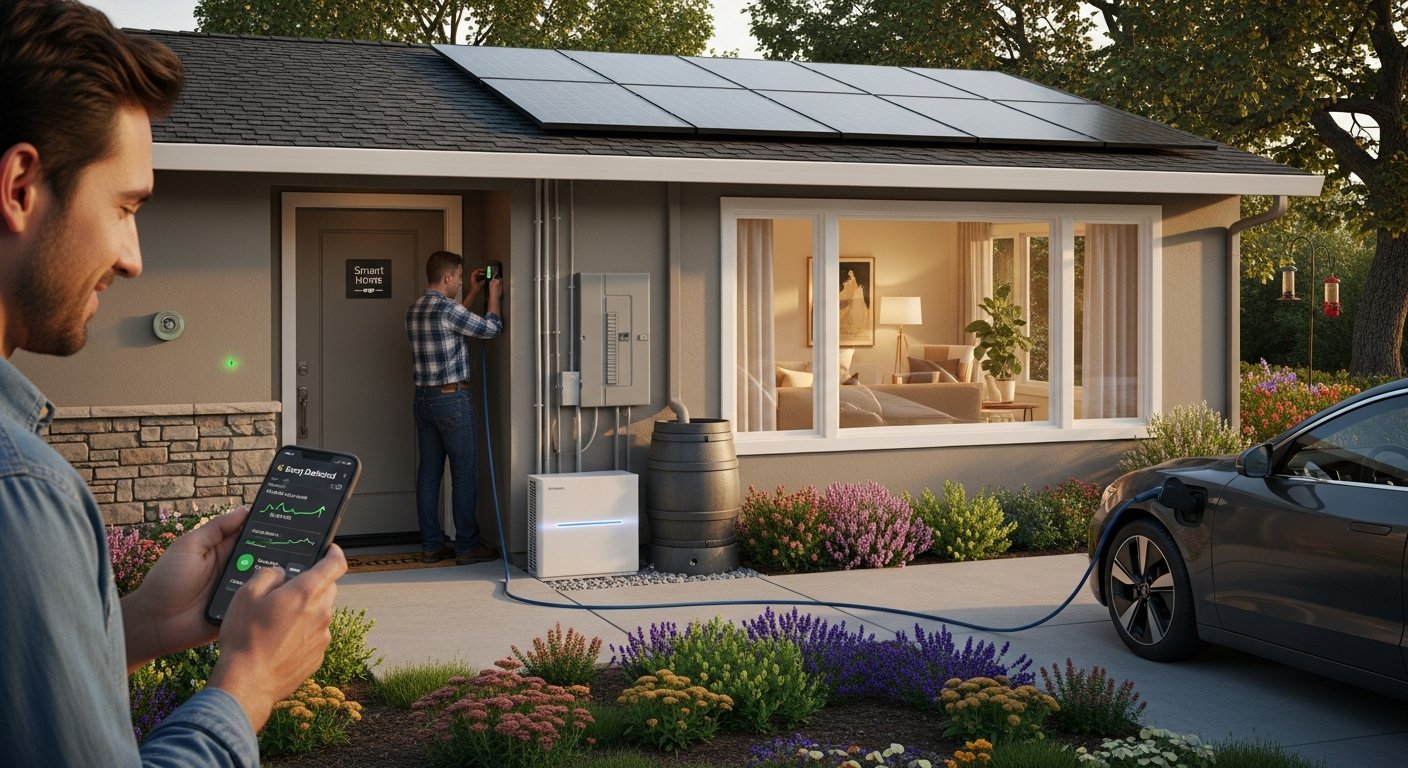
Building a truly sustainable home energy setup involves more than just slapping panels on your roof. It requires a holistic approach that combines generation, storage, and intelligent consumption. Each component plays a critical role in ensuring you get the most value from your investment and maintain power even when the grid falters.
- Solar Panels: The primary generation source, capturing sunlight and converting it to direct current (DC) electricity. High-efficiency panels maximize energy yield per square foot of roof space.
- Inverter: Converts the DC electricity from your panels into alternating current (AC) that your home appliances can use. String inverters, microinverters, and power optimizers each have unique advantages depending on your roof design and shading.
- Battery Storage: Stores excess solar energy for use at night or during outages. Lithium-ion batteries are the industry standard, offering high capacity, long lifespan, and minimal maintenance.
- Smart Monitoring: Software and hardware that track real-time energy production and consumption, allowing you to optimize usage patterns and detect system issues early.
When these components are integrated correctly, they create a synergistic system that reduces your carbon footprint while increasing your home's resilience. The key is to design the system based on your specific energy needs, local climate, and budget constraints, rather than adopting a one-size-fits-all approach.
The Critical Role of Solar Battery Storage
One of the most significant advancements in sustainable energy is the integration of battery storage. Without a battery, your solar system is tied to the grid; you can only use the energy you produce in real time, and you are still vulnerable to blackouts. Adding a battery allows you to store surplus power during peak sunlight hours and use it in the evening, effectively making your home energy independent.
Battery storage also protects you from time-of-use (TOU) rate structures, where electricity is more expensive during afternoon and early evening hours. By discharging your stored solar energy during peak pricing windows, you can significantly lower your monthly bill. In some regions with net metering policies, you can even sell excess stored energy back to the grid for credits, further improving your return on investment. The upfront cost of batteries has fallen sharply, and with federal tax credits available, they are becoming a smart addition to any new or existing solar installation.
Financial Incentives and Federal Tax Credits in 2026
Affordability is a common concern for homeowners considering sustainable energy, but the financial landscape in 2026 is more favorable than ever. The federal Investment Tax Credit (ITC) remains a powerful tool, allowing you to deduct a significant percentage of your solar system's cost from your federal taxes. As of 2026, the ITC is set at 30% of the total system cost, with no upper limit, which means a $20,000 system could yield a $6,000 credit.
Beyond the federal level, many states and local utilities offer additional incentives, rebates, and performance-based payments. For example, states like California, New York, and Massachusetts have aggressive renewable portfolio standards that drive additional financial support for homeowners. It is essential to research the specific incentives available in your area, as they can dramatically shorten your payback period. Our solar savings calculator can help you estimate your potential savings based on your location, energy usage, and system size, giving you a clear picture of your financial future.
Conducting a Detailed Energy Survey
Before installing any sustainable energy system, a professional energy survey is a critical first step. This assessment goes beyond simply measuring your roof's square footage. It involves analyzing your historical electricity bills to understand your usage patterns, evaluating your roof's orientation, tilt, and shading, and identifying any energy inefficiencies in your home.
Our team at SolarEnergy.ai performs comprehensive energy surveys that examine every aspect of your home's energy profile. We look at your insulation, window quality, appliance efficiency, and even your HVAC system to determine the best way to reduce overall consumption. By optimizing your home's efficiency first, you can install a smaller, more cost-effective solar and battery system that still meets all your needs. This proactive approach ensures you are not paying for excess capacity and that your system operates at peak performance from day one.
Smart Home Integration and AI Energy Management
The next frontier in sustainable energy is the seamless integration of your power system with smart home technology and artificial intelligence (AI). Modern energy management systems can learn your daily routines, automatically adjust your thermostat, charge your electric vehicle during off-peak hours, and even shift heavy appliance usage to times when your solar panels are producing the most electricity. This intelligent automation maximizes your self-consumption of solar energy and minimizes your reliance on the grid.
AI-powered platforms also provide predictive maintenance alerts, notifying you of potential issues before they become costly repairs. For example, if a panel underperforms due to debris or a microinverter failure, the system can flag it immediately. This level of oversight ensures your system always operates at its highest efficiency, protecting your investment and maximizing your long-term savings. As technology advances, these systems will only become more intuitive, making sustainable living easier and more profitable for homeowners.
Emergency Preparedness with Solar and Battery Backup
One of the most undervalued benefits of a sustainable energy system is its ability to provide backup power during emergencies. Severe weather events, aging grid infrastructure, and increasing electricity demand have made power outages more frequent and longer-lasting. A solar panel system paired with a battery can keep your lights on, your refrigerator running, and your communications active when the grid goes down.
In addition to solar and battery, we recommend integrating emergency lighting solutions and electrical security systems to enhance your home's resilience. Emergency lighting ensures safe navigation during a blackout, while security systems with battery backup help protect your property even when power is interrupted. These additions transform your home into a self-sufficient haven, providing peace of mind for your family and protecting your property from weather-related damage.
Government Policies and Local Regulations
Navigating the complex web of local permitting, interconnection standards, and utility regulations can be daunting for any homeowner. However, these policies are critical to the success of your sustainable energy project. Many municipalities have streamlined the permitting process for solar installations, and some states have passed laws guaranteeing a property owner's right to install solar panels, overriding restrictive homeowners association (HOA) rules.
It is also important to understand your utility's net metering policy. Net metering allows you to receive credits for the excess power your system sends to the grid, effectively running your meter backward. While this policy is under review in some states, it remains a valuable financial benefit in many areas. Our team stays up-to-date on federal, state, and local solar policies to ensure your installation is fully compliant and you receive every incentive you are entitled to.
Long-Term Savings and Return on Investment
When evaluating the financial viability of sustainable energy, it is crucial to look at the long-term picture. The initial investment in a solar and battery system is significant, but the payback period has shortened dramatically. In many regions, homeowners recoup their entire investment within 6 to 10 years, after which they enjoy free electricity for the next 20 to 30 years. Over the lifespan of a typical system, the total savings can exceed $50,000, even after accounting for maintenance and inverter replacement costs.
Moreover, installing a sustainable energy system can increase your home's resale value. Studies have shown that homes with solar panels sell for a premium compared to similar homes without them. As energy prices continue to rise, the demand for energy-efficient homes will only grow, making your investment in sustainable energy a wise financial move that pays off both immediately and in the long run.
Steps to Begin Your Transition Today
Making the switch to sustainable energy is a straightforward process when you have the right guidance. The first step is to conduct a DIY energy audit to identify simple changes, such as switching to LED lighting or sealing drafts. Next, use our online tools to calculate your potential solar savings based on your location and electricity usage. This will give you a realistic estimate of system size and cost.
Once you have a clear picture, the next step is to schedule a professional energy survey with our team. Our experts will perform a detailed assessment of your property, answer your questions, and provide a customized system design. We will handle the permitting, installation, and interconnection process from start to finish, ensuring a smooth and hassle-free experience. Finally, we will help you set up smart monitoring so you can track your system's performance and savings in real time.
The Future of Sustainable Energy
As we look toward the future, the trajectory of sustainable energy is one of continuous innovation and falling costs. Advances in solar cell efficiency, battery chemistry, and AI-driven energy management are making these systems more powerful and user-friendly. Community solar projects are expanding access to renters and those with shaded roofs, while microgrids are enhancing resilience at the neighborhood level. The transition to a clean energy economy is not just inevitable; it is already happening in homes across America.
By embracing sustainable energy today, you are not only reducing your carbon footprint and saving money, but you are also contributing to a more stable and secure energy future for everyone. The time to act is now, as incentives are generous and the technology is proven. Take the first step toward energy independence and discover how sustainable energy can transform your home and your life.
Learn more about Solar Panel Installation and Repair for guides, costs, and what to expect.
Compare Solar Panel Installation and Repair Pros Near You
Enter your ZIP code to compare top-rated local professionals and request free quotes.