Solar Tax Credits and Rebates: Your Guide to Major Savings
If you’ve opened your electricity bill recently and felt a jolt of surprise, you’re not alone. Rising energy costs are prompting more homeowners than ever to explore a powerful solution: solar panels. The promise of reducing your monthly bills and gaining independence from the unpredictable grid is compelling, especially when you learn that solar tax credits and rebates can make the initial investment much more affordable. This guide will walk you through everything you need to know to make an informed decision.
Understanding Solar Tax Credits and Rebates
Let’s break down these key financial incentives in simple terms. A solar tax credit is a dollar-for-dollar reduction in the amount of income tax you owe the federal government. Think of it as a direct discount on your tax bill, not just a deduction from your taxable income.
Rebates, on the other hand, are typically upfront cash incentives. They can come from your state government, local utility company, or even the manufacturer. A rebate is often applied directly to your installation cost, immediately lowering your out-of-pocket expense. Together, these incentives can slash thousands of dollars off the price of your solar energy system.
What Is the Federal Solar Investment Tax Credit (ITC)?
The most significant incentive is the federal Solar Investment Tax Credit (ITC). This program allows you to deduct a major percentage of your solar installation costs from your federal taxes. It’s designed to encourage adoption by making renewable energy more accessible to average homeowners.
Why Solar Energy Is Becoming More Popular
Homeowners are turning to solar power for a powerful combination of financial and personal reasons. First and foremost, it’s a proven strategy to lock in lower, predictable energy costs for decades. While utility rates continue to climb, your cost for sunshine remains constant at zero.
Beyond the wallet, there’s a growing desire for energy independence and environmental stewardship. Generating your own clean electricity reduces your carbon footprint and makes your home more resilient. You’re no longer solely at the mercy of grid outages or fossil fuel price spikes, creating genuine peace of mind.
If you are considering solar power for your home, comparing installation quotes can help you understand your options. Request a free solar quote or call to learn more.
Common Questions Homeowners Have About Solar
It’s normal to have questions before making a significant home upgrade. Many people wonder if their roof is suitable, how long the system will last, and what happens on cloudy days. A reputable installer will gladly address all these concerns during a consultation.
The key is to separate myths from facts. Modern solar systems are durable, efficient, and designed to work in various climates. They also require minimal maintenance, often just an occasional rinse with a garden hose to keep panels clean.
- How much will a solar panel system really cost after incentives?
- Is my roof strong enough and does it get enough sun?
- What happens during a power outage or at night?
- How long will the installation process take?
- Will solar panels increase my property taxes or home insurance?
- What are the maintenance requirements?
How Solar Panel Installation Works
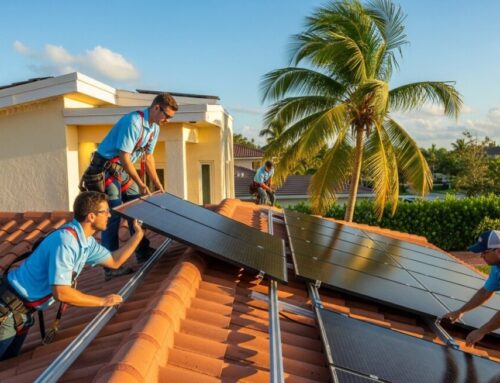
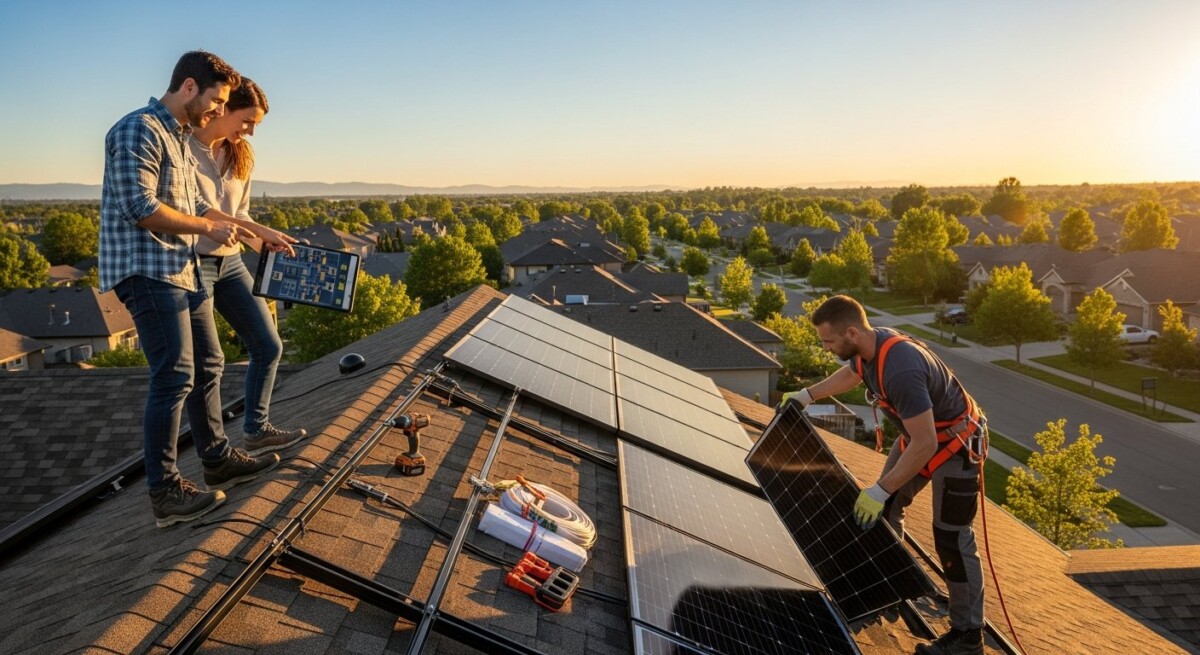
The installation process is highly structured and managed by professionals from start to finish. It begins with a detailed assessment of your home’s energy use and physical characteristics. Your installer handles all the complex paperwork, including permits, utility interconnection agreements, and applying for available rebates on your behalf.
The physical installation is typically quicker than most people expect. A qualified crew ensures your roof is protected and the system is securely and correctly mounted. Once installed, a final inspection ensures everything is up to code before your system is activated.
- Home Energy Assessment & Consultation: Review your bills, evaluate your roof, and discuss goals.
- Custom System Design & Proposal: Receive a tailored plan showing system size, equipment, costs, and savings.
- Permits & Approvals: Your installer secures all necessary local permits and utility approvals.
- Panel Installation & Electrical Work: The racking, panels, and inverter are installed by a certified crew.
- Inspections & Permission to Operate: The system passes final inspections and is connected to the grid.
Speaking with experienced installers can help you determine the best solar solution for your home. Compare solar quotes here or call to explore available options.
Signs Your Home May Be Ideal for Solar
While solar can work for many homes, some characteristics make the investment particularly advantageous. The most obvious factor is a roof with good, unobstructed exposure to the south, east, or west. Shading from large trees or other buildings can impact production.
Your current energy consumption and future plans also matter. If you have high electricity bills, you’ll see a faster return on investment. Furthermore, if you plan to stay in your home for the long term, you’ll reap the full benefit of decades of free power after the system pays for itself.
- You pay more than $100 per month in electricity.
- Your roof is in good condition and receives direct sunlight for most of the day.
- You have a suitable roof area (often 200+ square feet of clear space).
- You plan to own your home for 5-10+ years.
- Your state or utility offers strong additional rebates or incentives.
- You are interested in reducing your environmental impact.
What Affects Solar Installation Costs
The final price of your solar energy system depends on several key factors. The size of the system, measured in kilowatts (kW), is the primary driver,a larger system for a bigger home costs more. The quality and efficiency of the panels and inverter you choose also influence the price.
Installation complexity, like a steep or multi-level roof, can add labor costs. Most importantly, your local and state incentives dramatically affect the net cost. This is why it’s crucial to work with an installer who is an expert in navigating all available solar tax credits and rebates in your area.
The cost of solar installation varies depending on your home and energy needs. Request personalized solar quotes or call to see what options are available.
Tips for Choosing a Reliable Solar Installer
Selecting the right installer is as important as choosing the right equipment. Look for a company with a strong local track record, proper licensing, and certifications from organizations like NABCEP (North American Board of Certified Energy Practitioners). They should provide clear, detailed proposals without high-pressure sales tactics.
Always review the warranties offered on both the equipment and the installation workmanship. A robust warranty protects your investment for 25 years or more. Don’t hesitate to ask for and contact references from past customers in your neighborhood.
- Verify licenses, insurance, and industry certifications (e.g., NABCEP).
- Read customer reviews and ask for local references.
- Compare detailed quotes from at least 3 different companies.
- Understand the full scope of warranties on parts and labor.
- Ensure they handle the entire process: permits, installation, and incentive paperwork.
- Ask about their experience with your specific utility company.
Long-Term Benefits of Installing Solar Panels
The financial benefits extend far beyond the first-year tax credit. Over the 25+ year life of a system, the savings on your electricity bills can total tens of thousands of dollars. You are essentially pre-paying for decades of energy at a stable, known cost, insulating yourself from inflation.
Solar panels also increase your home’s market value and appeal to future buyers. Studies consistently show homes with solar sell faster and for a premium. Perhaps most rewarding is the knowledge that you are generating clean, renewable energy and contributing to a healthier environment for your community.
How do I claim the federal solar tax credit?
You claim the credit when you file your federal income taxes for the year your system was installed. You will need to complete IRS Form 5695 and include it with your tax return. It’s wise to consult with a tax professional to ensure you claim it correctly, especially if your tax situation is complex. For more detailed guidance, see our article on how to claim the solar tax credit.
Can I get solar if my roof is shaded?
Some shading may be manageable with modern microinverter technology, which optimizes each panel individually. However, significant, all-day shading will reduce system output. A professional installer can conduct a shade analysis to give you a realistic production estimate and help you decide if trimming trees or considering a ground-mounted system is a better option.
What is net metering?
Net metering is a billing arrangement with your utility company. When your solar panels produce more electricity than your home uses, the excess is sent to the grid, and your meter runs backward. You receive credits for this power, which you can use to draw electricity from the grid at night or on cloudy days, significantly reducing your bill.
Do solar panels work in cold or snowy climates?
Yes, solar panels actually operate more efficiently in cooler temperatures. Snow will temporarily reduce output, but it usually slides off smooth panels quickly, and the dark surfaces help melt it. Systems are designed to handle the weight, and production on clear, cold winter days can be excellent.
How long does a solar panel system last?
Most high-quality solar panels come with a performance warranty guaranteeing they will still produce at least 80-90% of their original output after 25-30 years. The inverter, which converts the power, may need replacement once during the system’s lifetime. The system itself has no moving parts and requires very little maintenance.
Will I still have an electric bill?
Most homeowners with grid-tied systems will still receive a small monthly bill from their utility for connection fees and any energy used beyond what their system produced that month. The goal is to design a system that covers 90-100% of your annual usage, making this bill minimal.
Investing in solar energy is a significant decision that offers substantial rewards: lower bills, energy security, and a positive environmental impact. By understanding solar tax credits and rebates, you can see how this upgrade is more accessible than ever. The most important next step is to gather information specific to your home. Comparing quotes from qualified, local installers is the best way to get a clear picture of your potential savings and find a trustworthy partner for your project.