Solar Plus Whole Home Surge Protection and Grounding
Protect inverters and electronics with solar plus whole home surge protection and grounding. Call (833)-434-4023 to plan your defense against costly surge damage.

By Isaac Reed
Learn more about Solar Panel Installation and Repair for guides, costs, and what to expect.
Compare Solar Panel Installation and Repair Pros Near You

Enter your ZIP code to compare top-rated local professionals and request free quotes.
When you invest in a solar energy system, you are adding sophisticated power electronics to your home that are far more sensitive than the appliances of a generation ago. Inverters, optimizers, and smart meters communicate constantly with the grid, and every one of those connections is a potential doorway for a surge. A single lightning strike a mile away or a utility switching event can send a spike of thousands of volts through your wiring, and the repair bill often lands on the homeowner. That is why solar plus whole home surge protection and grounding belongs on every installation checklist, not as an optional add-on but as a core part of a resilient energy plan. This guide explains how surges reach your equipment, what protective devices actually do, and what inspectors look for before they sign off.
Why Solar Inverters and Electronics Are So Vulnerable
Your inverter is the brain of the system. It converts direct current from the panels into alternating current for your home, manages battery charging, and reports performance data to monitoring platforms. Its internal components operate at low voltages and rely on delicate semiconductors. A surge lasting microseconds can exceed the breakdown voltage of those components and cause immediate failure or, more insidiously, gradual degradation that shortens the inverter's life by years.
Surges arrive from two main directions. Utility-side events include capacitor bank switching, transformer failures, and grid reconnections after an outage. These produce repetitive, lower-level spikes that accumulate damage over time. Lightning is the other major source, and it does not need a direct strike on your roof. A strike on a nearby tree or power pole can induce a surge that travels through the service panel and into every circuit, including the dedicated run to your inverter.
The DC side of a solar array adds a wrinkle. Long wire runs from the roof to the inverter act as antennas for induced voltage, and DC arcs are harder to extinguish than AC arcs. Without proper surge protective devices on both sides of the system, the inverter becomes the sacrificial component. Replacing a central inverter can cost several thousand dollars, and many warranties exclude damage from surges and lightning, which is why prevention is far cheaper than repair.
Homeowners often assume their utility provider absorbs this risk. In practice, utilities protect their own equipment first, and the surge that reaches your meter is your responsibility. A whole home approach closes that gap by intercepting surges at the service entrance and at the solar equipment itself.
Surge Protective Devices for the DC and AC Sides
A complete protection strategy uses layered devices, each sized for the voltage and current it will see. On the DC side, a Type 2 DC surge protective device mounts in a combiner box or near the inverter and clamps voltage spikes coming from the array. These devices must be rated for the system's maximum DC voltage, and they should be installed with short, straight conductor runs so that lead length does not undermine performance.
On the AC side, protection starts at the main service panel. A whole home surge protective device wired to a dedicated two-pole breaker diverts surges to ground before they spread through branch circuits. A second, smaller device at the inverter's AC disconnect adds a layer of defense for the solar circuit specifically. This tiered arrangement matters because a single device at the panel may not react fast enough to protect equipment at the end of a long feeder.
Here is how the layers typically break down for a residential solar installation:
- Service entrance: A Type 2 whole home surge protective device rated for the panel's voltage and connected with leads under 18 inches.
- DC combiner or inverter input: A DC-rated surge protective device matched to string voltage and current.
- Inverter AC disconnect: A supplementary Type 2 device to catch surges that enter through the solar feeder.
- Critical loads: Point-of-use protectors for medical equipment, home offices, and security panels.
Each device should have a visible status indicator and a replaceable cartridge so you can confirm protection is active. Surge protective devices sacrifice themselves during large events, and a unit that has absorbed a strike may look fine while offering no protection. Checking indicators during routine maintenance, and replacing cartridges as needed, keeps the system honest.
For homeowners who want to go further, pairing surge protection with intelligent monitoring is a natural next step. In our guide on AI powered solar solutions for homeowners, we explain how monitoring platforms can flag abnormal voltage events and alert you before small issues become expensive failures.
Grounding and Bonding Requirements Inspectors Check
Surge protection only works if there is a low-impedance path to earth. That is the role of grounding and bonding, and it is the area where solar installations most often fall short during inspection. The National Electrical Code requires a grounding electrode system that ties the solar array, inverter, and racking to the home's existing electrode, typically a ground rod or foundation electrode. Bonding jumpers connect metal module frames and rails so that all metal parts sit at the same potential, preventing dangerous voltage differences during a fault or surge.
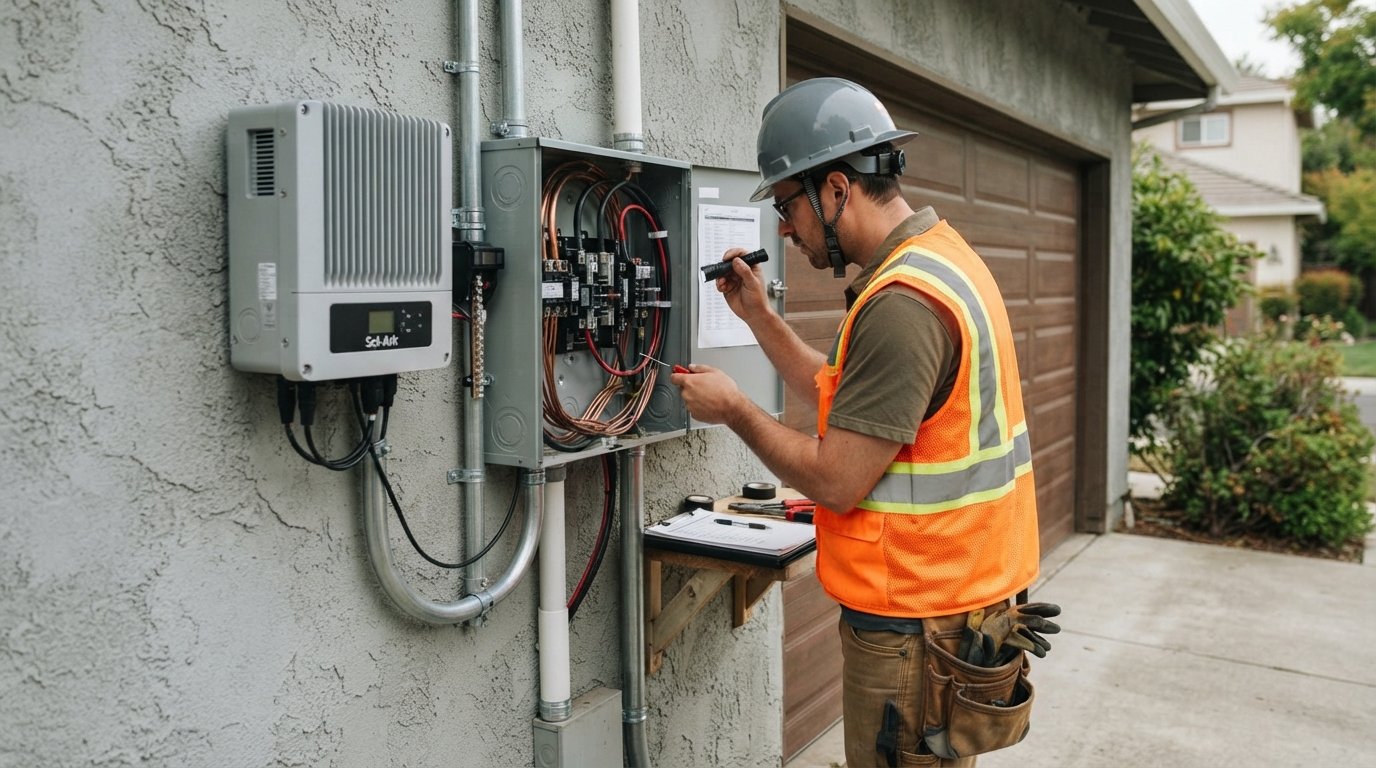
Inspectors look for several specific details. Equipment grounding conductors must be sized correctly for the overcurrent protection ahead of them. Bonding connections must use listed hardware and be made to bare metal, with paint removed where necessary. Grounding electrode conductors must run in a continuous path without splices and be secured along their route. On the roof, module frames and racking need listed bonding hardware, and any exposed conductors must be protected from physical damage.
One common mistake is relying on a single ground rod added near the array without bonding it to the main electrode system. Separate grounds create voltage differences that can actually attract surges and interfere with inverter operation. Another is using self-tapping screws for bonding connections, which are not listed for that purpose and can loosen over time.
Because these details vary by jurisdiction, it helps to have a qualified professional review the design before installation. If you are comparing contractors or need electrical work beyond the solar scope, a platform that connects you with vetted local trades can simplify the process; for electrical and general repair professionals, Repairmen offers a nationwide directory of licensed and reviewed service providers.
Integrating Surge Protection With Security and Lighting Upgrades
Whole home surge protection fits naturally into broader electrical upgrades. If you are adding a security system, exterior lighting, or emergency lighting, those devices share the same wiring and the same exposure to surges. A single service-entrance device protects all of them, and point-of-use protectors can be added at control panels and camera power supplies for extra assurance.
Emergency lighting is a good example. These fixtures are designed to run during outages, and a surge that damages their battery chargers or control boards defeats the purpose. Likewise, security panels and cameras often sit on circuits that experience repeated small surges, leading to mysterious failures and false alerts. Including these circuits in the protection plan, and verifying that their grounding is correct, extends equipment life and keeps safety systems operational when you need them most.
If you are planning a solar installation and want to coordinate it with security and lighting improvements, an on-site energy survey can map your electrical panel, identify available breaker spaces, and recommend a protection layout that covers everything at once. Bundling these upgrades reduces labor costs and ensures the grounding system supports all connected equipment.
Cost Expectations and Warranty Considerations
Budgeting for surge protection is straightforward once you know the components. A quality whole home surge protective device typically costs a few hundred dollars for the unit, plus installation by an electrician. DC-side devices and supplementary protectors add a few hundred more depending on the number of strings and the inverter configuration. Compared with the cost of replacing an inverter or a suite of smart home electronics, the investment pays for itself the first time a surge occurs.
Warranty language deserves careful reading. Many inverter manufacturers exclude damage caused by lightning, grid surges, and improper grounding. Some offer optional surge protection accessories that preserve coverage when installed together, so ask your installer whether the inverter warranty requires a specific device. Homeowner insurance policies vary widely on surge damage, and some carriers offer discounts for whole home protection, so a quick call to your agent can clarify coverage.
Keep records of your surge protective devices, including model numbers and installation dates, and note when cartridges are replaced. If a surge event does cause damage, documentation showing that protection was properly installed and maintained strengthens any warranty or insurance claim. Routine maintenance visits are a good time to photograph status indicators and log the results.
Finally, remember that protection is a system, not a product. Grounding, bonding, and layered surge devices work together, and weakening any one link reduces the effectiveness of the whole. A licensed installer who understands solar plus whole home surge protection and grounding will design the system as an integrated package and document it for inspection. That documentation, combined with annual checks of indicator lights and ground connections, keeps your solar investment and your home electronics safer for decades.