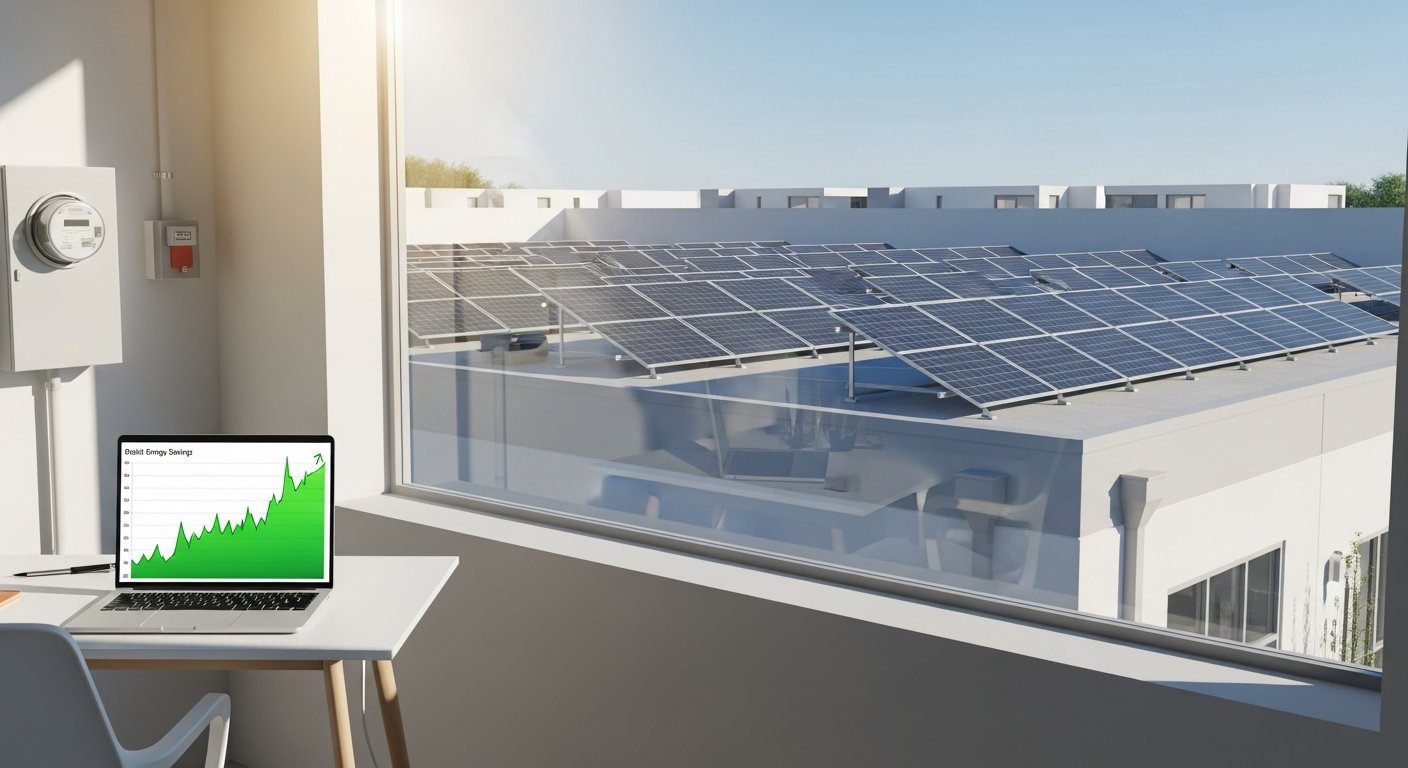
Solar Panels for Small Business: Cut Costs in 2026
Learn how solar panels for small business cut overhead, stabilize energy costs, and deliver strong ROI with available tax incentives.

By Owen Phillips
Learn more about Solar Panel Installation and Repair for guides, costs, and what to expect.
Compare Solar Panel Installation and Repair Pros Near You

Enter your ZIP code to compare top-rated local professionals and request free quotes.
Rising electricity rates and unpredictable utility bills can strain any small business budget. For owners who want to stabilize operating costs and invest in long-term assets, commercial solar installation has moved from an environmental statement to a financial strategy. The key is understanding that solar panels for small business use are not a one-size-fits-all purchase; they require a tailored approach to match your specific energy load, roof condition, and financial goals. When executed correctly, a solar array can lower monthly overhead, protect against rate hikes, and even increase property value.
Why Small Businesses Are Switching to Solar Energy
The primary driver for small businesses going solar is no longer just sustainability; it is economics. Commercial electricity rates often differ from residential rates, and for businesses operating during peak daytime hours, solar production aligns perfectly with consumption. This timing means that every kilowatt-hour generated by your panels directly offsets the most expensive electricity you would otherwise buy from the grid.
Furthermore, solar provides a hedge against future rate volatility. Utility companies frequently adjust rates based on fuel costs and infrastructure investments, which makes budgeting for energy difficult. By locking in a predictable energy cost through solar, you gain a level of financial certainty that helps with cash flow management. For many owners, this predictability is just as valuable as the raw savings.
Additionally, there is a growing market advantage for businesses that demonstrate environmental responsibility. Customers and corporate clients increasingly prefer to work with companies that have a tangible sustainability policy. A visible solar installation is a clear, verifiable signal of that commitment, which can differentiate you from competitors in bids and marketing materials.
Calculating the Financial Payback for Your Business
Before signing any contract, you need to understand your specific payback period. This is the time it takes for your cumulative energy savings to equal the total cost of the system. For commercial properties, this period typically ranges from 5 to 10 years, depending on your local utility rates and available incentives. The calculation starts with a review of your historical electricity usage, not just your current bill.
You must also consider the structural integrity of your roof. If your roof is nearing the end of its life, it is often wiser to replace it before installing panels, as removing and reinstalling a solar array later is costly. A reputable installer will conduct a site survey to assess shading, roof pitch, and structural load capacity. These factors directly influence system size and output.
Here are the critical financial components to evaluate during your planning phase:
- Net Metering Policies: Check if your utility offers full retail credit for excess energy you send to the grid, as this drastically improves payback.
- Federal Investment Tax Credit (ITC): This provides a dollar-for-dollar reduction on your federal income tax, currently covering 30% of the system cost.
- Modified Accelerated Cost Recovery System (MACRS): This allows you to depreciate the solar asset faster, providing additional tax savings.
- Performance Guarantees: Ensure the installer provides a warranty that guarantees a specific energy output level for 25 years.
Once you have these figures, you can calculate a realistic internal rate of return (IRR). Most small businesses see an IRR that outperforms standard market investments, making solar a compelling use of capital. If you are considering whether to use cash or financing, remember that a loan with a lower monthly payment than your current electric bill can provide immediate positive cash flow.
Choosing Between Cash Purchase, Loans, and PPAs
Your financing structure significantly impacts your upfront costs and long-term savings. A cash purchase offers the highest return over time because you own the system outright and collect all incentives and savings. However, this approach requires a significant capital outlay, which might not be ideal if you need to preserve cash for inventory or expansion.
Commercial solar loans are a popular alternative, allowing you to spread the cost over 10 to 20 years. In many cases, the loan payment is lower than the utility bill it replaces, creating immediate savings. You retain ownership of the system, which means you still qualify for the tax credits and depreciation benefits. Compare interest rates and terms carefully, as solar loans are structured differently from traditional equipment leases.
Power Purchase Agreements (PPAs) and leases are third-party ownership models where a provider installs and maintains the system on your roof. You agree to purchase the power generated at a set rate, usually lower than the utility's rate. This eliminates the need for upfront capital and maintenance responsibilities, but you do not receive the tax benefits. This option is best for businesses that cannot use tax credits or do not want to manage the system. For a deeper comparison of ownership models, you can review our analysis on how to use solar panels effectively for your property.
How AI Is Optimizing Commercial Solar Performance
The solar industry is no longer just about installing hardware; it is about optimizing software and data. Artificial Intelligence (AI) is transforming how business owners monitor and manage their energy assets. Modern AI systems can analyze weather patterns, grid pricing, and your building's consumption habits in real time to maximize savings.
For example, AI can detect a drop in performance from a single panel, alerting you to a potential issue before it becomes a major loss in revenue. It can also predict when to draw power from the grid versus your battery storage based on time-of-use rates. This intelligent management ensures you are always using the cheapest available energy source. Many of these tools integrate directly with your existing meter data to provide a granular view of your energy flow.
If you are installing a new system, ensure your inverter and monitoring equipment are compatible with smart energy management platforms. This future-proofs your installation and allows you to take advantage of AI-driven savings without replacing hardware later. Businesses that leverage these tools often see an additional 10 to 15 percent in efficiency gains beyond the raw solar generation. To understand how this works in practice, read our guide on monitoring solar panels using AI for maximum savings.
Steps to a Smooth Commercial Installation Process
Once you have decided to move forward, the installation process involves several steps that require coordination between your business, the installer, and the local utility. Understanding this timeline helps you prepare your staff and operations for minimal disruption. The process typically takes 8 to 16 weeks from contract signing to grid connection.
Here is the general sequence of events you can expect:
- Site Assessment: Engineers visit your property to verify electrical infrastructure, roof conditions, and safety code compliance.
- Permitting: The installer applies for a building permit and an electrical permit with your local jurisdiction.
- Utility Application: Your installer submits an interconnection application to your utility company for approval.
- Installation: The physical mounting of racks, panels, and wiring typically takes 3 to 10 days, depending on system size.
- Inspection and Activation: Local inspectors verify the installation, followed by the utility installing a new meter or flipping the switch to activate the system.
During the installation phase, it is wise to plan for a temporary power shutdown. Work with your installer to schedule this during off-hours or weekends if your business relies on continuous power for servers or refrigeration. Clear communication with your employees about the timeline will prevent confusion and ensure that safety protocols are followed.
Handling Maintenance and Long-Term Reliability
Commercial solar systems are remarkably durable, but they are not maintenance-free. Most panels come with a 25-year performance warranty, while inverters may need replacement after 10 to 15 years. The primary maintenance task is keeping the panels clean, as dust, bird droppings, and pollution can reduce output by up to 5 to 10 percent annually in dry climates.
You should plan for a professional cleaning at least once or twice a year, depending on your location and local weather conditions. Additionally, your monitoring software will alert you to any anomalies in production. If you notice a sudden drop in output, contact your installer immediately to diagnose whether it is an inverter fault, a wiring issue, or a shading problem caused by new construction nearby.
Many business owners choose to bundle solar maintenance with a broader energy management contract. This ensures that your system is checked by qualified electricians who can also service your lighting and electrical security systems. By integrating these services, you reduce the risk of downtime and extend the lifespan of all your electrical assets. When choosing a provider, look for one that offers robust customer support and a proven track record, similar to the comprehensive services detailed in our piece on AI powered solar panels to slash your electric bills.
Ultimately, the decision to invest in solar panels for small business operations is a long-term commitment to efficiency and independence. By approaching the project with a clear understanding of your energy profile, financial options, and maintenance responsibilities, you can turn your roof into a revenue-generating asset. The process requires careful planning, but the payoff is a more resilient and profitable business.