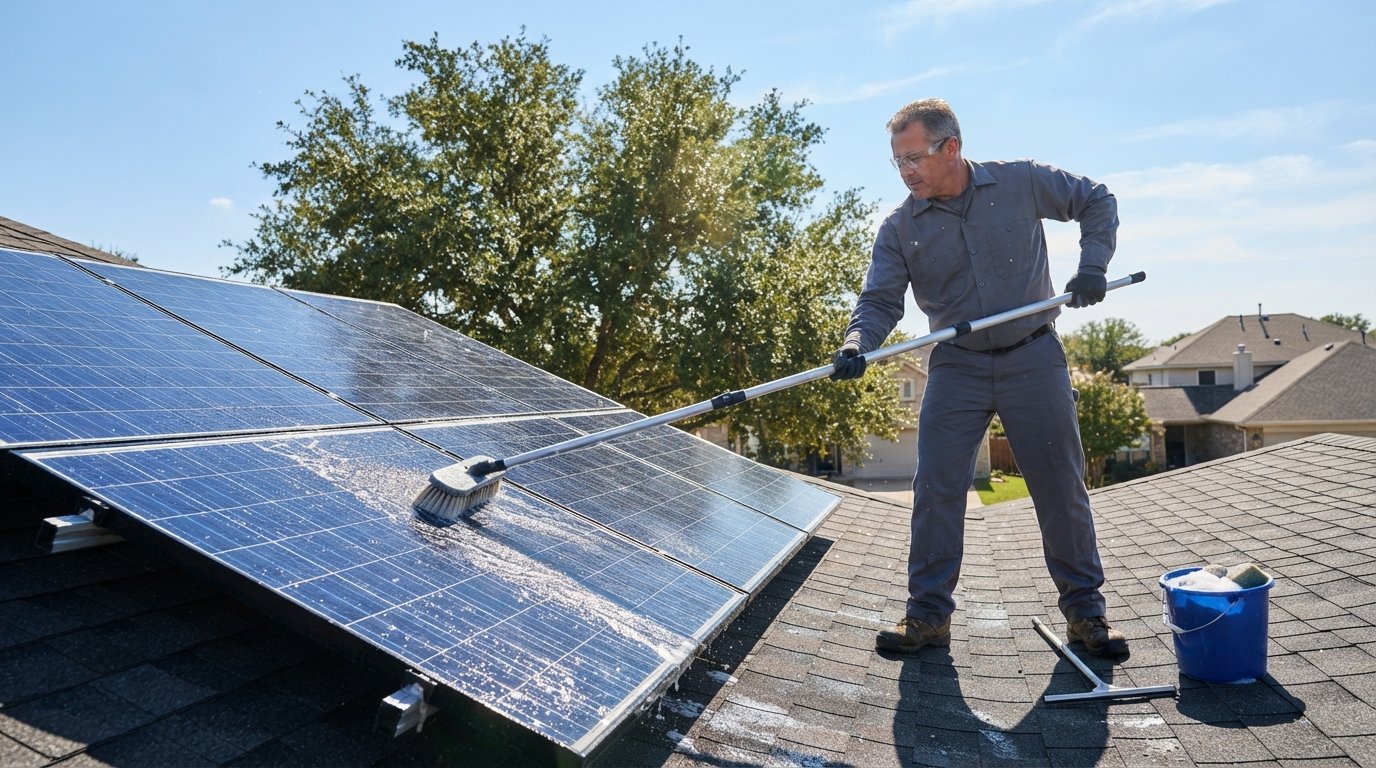
Solar Panel Washing Best Practices for 2026
Learn solar panel washing best practices to boost energy output, prevent damage, and extend system life. Simple steps for a cleaner, more efficient array.

By Ryan Brooks
Learn more about Solar Panel Cleaning for guides, costs, and what to expect.
Compare Solar Panel Cleaning Pros Near You

Enter your ZIP code to compare top-rated local professionals and request free quotes.
Dust, pollen, bird droppings, and urban grime settle on your solar array every single day. While rain rinses away some debris, it often leaves behind a hazy film that blocks sunlight. This buildup quietly reduces your system's electricity output, which means you earn less from your investment. Understanding the right way to clean your panels, and knowing when to call a professional, can protect your energy production and extend the life of your equipment. This guide covers solar panel washing best practices for homeowners who want maximum performance without risking damage.
Why Panel Cleaning Directly Impacts Your Energy Savings
Your photovoltaic system converts sunlight into electricity, so anything that blocks light reduces generation. Research from the National Renewable Energy Laboratory shows that dirty panels can lose between 5% and 25% of their output, depending on local conditions. In dusty regions or areas with frequent bird activity, losses can climb even higher. For a typical residential system producing 10,000 kWh annually, a 15% loss translates to hundreds of dollars in missed savings each year.
Solar panel washing best practices start with understanding that dirt accumulates unevenly. Lower edges collect more debris due to gravity and water runoff, while the center often stays cleaner. This uneven soiling creates hot spots that stress the cells and can shorten their lifespan. Regular cleaning prevents these hotspots and keeps your inverter operating within its optimal voltage range. When panels operate at peak efficiency, your payback period shortens, and your return on investment improves significantly.
The financial argument for cleaning becomes even stronger when you consider net metering policies. Many utilities credit you for excess power sent to the grid, but only if your system produces it. A clean array maximizes those credits during peak sunlight hours. Additionally, if you plan to sell your home, documented maintenance records, including panel cleaning, reassure buyers that the system has been well cared for.
Essential Tools and Safety Equipment
Before you climb onto your roof, gather the right supplies. Using improper tools is one of the most common mistakes homeowners make, and it can void your warranty. The photovoltaic panel surface is tempered glass, but it scratches easily under abrasive pressure. You need soft materials and gentle techniques to avoid micro-scratches that trap dirt permanently.
Here is a checklist of equipment that meets solar panel washing best practices:
- A soft-bristle brush with a telescopic handle, ideally one designed for solar panels or car washing
- A squeegee with a soft rubber blade for streak-free drying
- A garden hose with a spray nozzle that produces a gentle, wide spray
- Deionized water or a mild, non-abrasive soap specifically formulated for solar equipment
- A microfiber cloth for final touches and stubborn spots
Avoid using pressure washers at all costs. The high-pressure stream can force water under the panel frames, damaging the seals and electrical connections. Similarly, harsh chemical cleaners, ammonia-based glass sprays, and abrasive pads will degrade the anti-reflective coating. This coating is critical for capturing diffused light, and once it erodes, your panel efficiency drops permanently.
Safety equipment is just as important as cleaning gear. Wear non-slip shoes with good traction, use a safety harness if your roof has a steep pitch, and never work on wet or icy surfaces. If you feel uncomfortable at any point, stop and hire a professional. The risk of falling outweighs the savings from a DIY clean.
Step-by-Step Cleaning Process
Timing matters as much as technique, so plan your cleaning for early morning or late afternoon. Panels heat up quickly in direct sun, and cold water on hot glass can cause thermal shock and cracking. Cooler panels also allow soap and water to work longer before evaporating, which prevents unsightly mineral streaks.
Start by turning off your solar system at the inverter to eliminate any electrical risk. Then follow these steps to execute solar panel washing best practices correctly:
- Rinse the panels with plain water to remove loose dust, leaves, and pollen. This initial rinse prevents gritty particles from scratching the glass during the scrubbing phase.
- Fill a bucket with lukewarm deionized water and add a small amount of mild solar panel soap. Dip your soft brush and gently scrub the surface in a circular motion, working from top to bottom.
- Rinse thoroughly with the hose to remove all soap residue. Leftover soap creates a film that attracts more dirt, so this step is critical.
- Squeegee the panels from top to bottom to remove excess water, then wipe the edges with a microfiber cloth to catch drips.
For heavily soiled panels with bird droppings or tree sap, let the soapy water sit for a few minutes to soften the debris before scrubbing. Never use a razor blade or metal scraper to chip away hardened material. Instead, soak the spot with a wet cloth and gently rub until it releases. If you encounter stubborn residue that resists gentle cleaning, consider using a specialized solar panel cleaning solution that breaks down organic matter safely.
After cleaning, inspect the panels and mounting hardware for any signs of damage. Look for cracked glass, loose connections, or corrosion around the frames. Catching these issues early can prevent costly repairs and keep your system running smoothly. In our guide on affordable solar panel cost in Washington, we explain how regular maintenance fits into the overall ownership budget.
How Often Should You Wash Your Panels?
There is no universal answer because your location and environment dictate the ideal frequency. Homes in arid regions with frequent dust storms may need cleaning every few months, while those in rainy, mild climates might only need it once or twice a year. The best approach is to monitor your energy production data. If you notice a sudden drop in output that cannot be explained by weather or shading, dirty panels are likely the culprit.
A general schedule that follows solar panel washing best practices includes a thorough cleaning in spring and fall. Spring cleaning removes winter grime and pollen, while fall cleaning clears fallen leaves and prepares the system for shorter winter days. For areas with heavy bird activity or nearby construction, inspect your panels monthly and clean them as needed. You can also watch for visible dust buildup from the ground using binoculars, which saves you an unnecessary roof trip.
Rain helps but does not eliminate the need for manual cleaning. Light rain rinses surface dust, but it often leaves mineral deposits after evaporation. These deposits, called hard water stains, can be difficult to remove if they accumulate over years. Deionized water for your final rinse prevents these stains because it lacks the minerals that cause spotting.
Professional Cleaning Services vs. DIY
Deciding whether to clean your panels yourself or hire a professional depends on several factors. If your roof is steep, multi-story, or has fragile tiles, the risk of injury is substantial. Professional cleaning companies carry insurance, use specialized equipment, and know how to safely navigate different roofing materials. They also have access to pure water systems that polish panels without soap, leaving a perfectly clean surface.
However, professional services cost money, typically ranging from $150 to $400 per visit depending on system size and accessibility. For large systems or those with complex roof layouts, this expense is justified. On the other hand, DIY cleaning costs only a few dollars in supplies and takes about an hour for an average residential setup. If you have a safe, low-pitch roof and basic handyman skills, cleaning your own panels is a rewarding task.
One important consideration is your warranty. Most panel manufacturers require that cleaning not void the warranty, but some specify that only approved methods are used. Check your warranty documentation before attempting any aggressive cleaning technique. Also, if your panels are under a lease or power purchase agreement, the solar company may handle maintenance as part of your contract. Review your agreement to avoid duplicating services.
For those seeking to maximize system performance without the hassle, SolarEnergy.ai connects you with vetted solar professionals who offer panel cleaning and maintenance. These experts follow strict solar panel washing best practices and can also perform an energy survey to identify other efficiency improvements. Using a vetted installer ensures your system stays in top condition, and you avoid the risk of DIY damage.
Water Quality and Environmental Considerations
Using the right water is a key part of solar panel washing best practices. Tap water often contains calcium and magnesium, which leave white spots on glass after drying. These spots reduce light transmission and can accumulate over time, making panels look cloudy. Deionized water, which has had these minerals removed, is the gold standard for solar cleaning because it dries without residue.
You can buy deionized water at most auto parts stores or rent a deionization unit for large jobs. Alternatively, a simple water softener on your outdoor spigot can reduce mineral content significantly. If deionized water is not available, dry the panels with a squeegee immediately after rinsing to minimize spotting. This technique works well, though it requires more effort.
Environmental stewardship is another reason to follow proper cleaning methods. Avoid harsh detergents that can run off into your garden or local waterways. Mild, biodegradable soaps are safe for plants and wildlife, and they clean effectively. Also, minimize water usage by using a spray nozzle that shuts off automatically and by working quickly to avoid letting soap dry on the glass.
Special Considerations for Different Climates
Your local climate shapes your cleaning routine more than any other factor. In coastal areas, salt spray creates a corrosive film on panels that can damage connectors and frames. Rinse your panels with plain water monthly to remove salt buildup, and pay special attention to the metal edges where corrosion is most likely. In desert regions, fine dust particles cling to the glass and require frequent rinsing, even if a full scrub is not needed each time.
Cold climates present their own challenges. Snow can slide off panels naturally on sunny days, but ice patches may persist and block sunlight. Never chip ice off panels with a shovel or scraper, as this will scratch the glass. Instead, wait for warmer weather or use a soft brush to gently remove loose snow. In areas with heavy pollen, such as the Southeast, cleaning every six to eight weeks during peak season keeps panels clear.
If you live in an area with frequent wildfires, ash and soot can coat your panels and reduce output dramatically. After a fire event, rinse panels as soon as it is safe to do so. Ash is highly alkaline and can etch glass if left for long periods. Gentle cleaning with plenty of water is the safest approach.
Monitoring Performance After Cleaning
After you finish cleaning, track your system's output to verify the effort was worthwhile. Most modern solar systems have monitoring apps that show real-time production data. Compare the output on a sunny day before and after cleaning to calculate your efficiency gain. Many homeowners see a 10% to 20% improvement after a thorough wash, which confirms the value of regular maintenance.
If you notice no change in output after cleaning, the issue may not be dirt. Shading from nearby trees, a failing inverter, or a faulty panel could be the cause. In this case, contact a professional to perform a full system inspection. SolarEnergy.ai's network of experts can diagnose issues, recommend repairs, and ensure your system operates at full capacity. For more insights on system sizing and cost, explore independent resources like NewSolarQuotes, which provides educational guides on solar adoption and energy savings.
Keeping a maintenance log is a smart habit. Record the date of each cleaning, the method used, and any observations about panel condition. This log helps you spot trends, schedule future cleanings, and provide documentation if you ever file a warranty claim. It also demonstrates diligence to potential buyers if you sell your home.
Ultimately, solar panel washing best practices are about protecting your investment and maximizing clean energy generation. Whether you choose to DIY or hire a pro, regular cleaning ensures your panels work as hard as they should. A clean solar array not only saves you money but also contributes to a more sustainable future. Start with a simple inspection today, and your energy bill will thank you tomorrow.