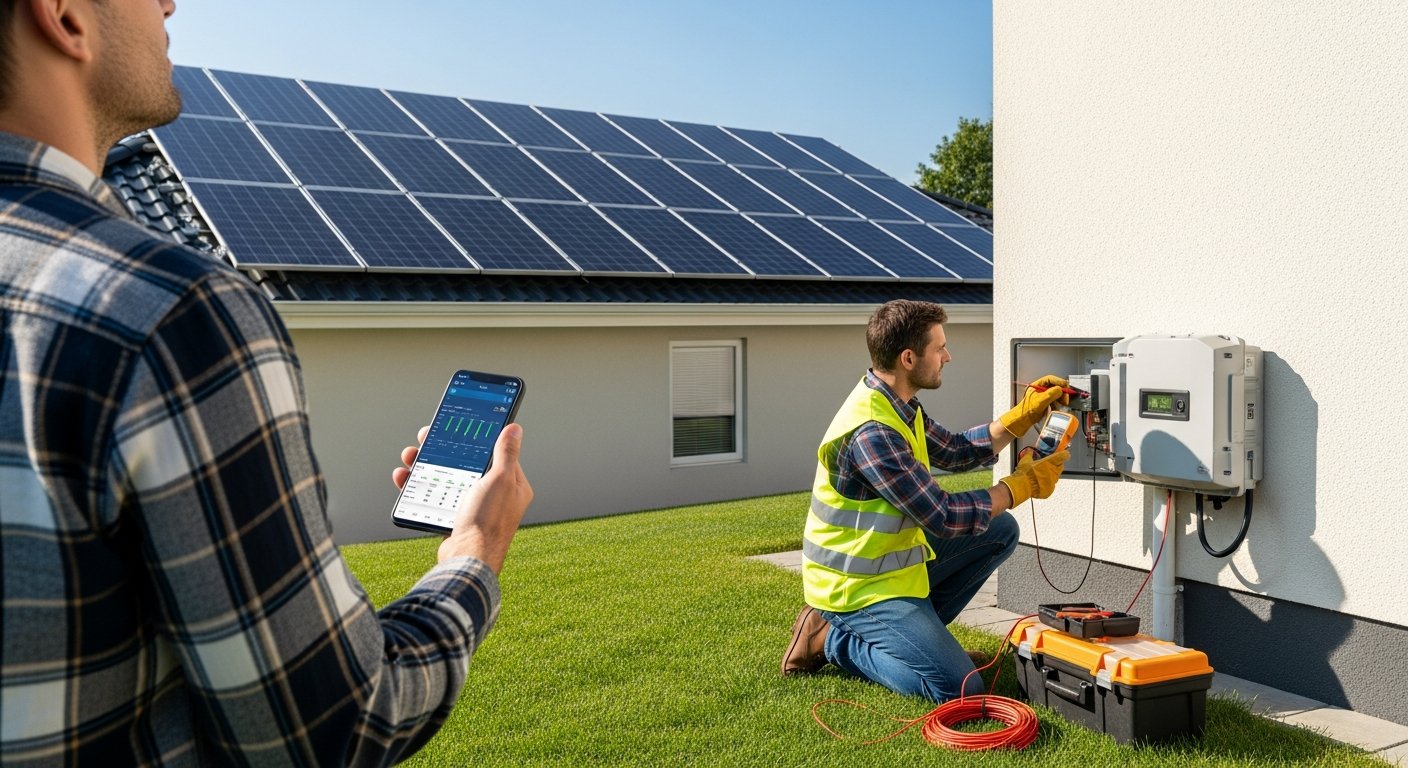
Solar Panel Troubleshooting: Fix Common Issues Fast
Identify and fix common solar panel problems with our practical troubleshooting guide, and get your system back to peak performance quickly.

By Owen Phillips
Learn more about Solar Panel Installation and Repair for guides, costs, and what to expect.
Compare Solar Panel Installation and Repair Pros Near You

Enter your ZIP code to compare top-rated local professionals and request free quotes.
Your solar panels are silent workhorses, converting sunlight into savings every day. So when your monitoring app shows a dip in production or your electricity bill creeps up, it can feel frustrating and confusing. The good news is that most solar panel problems are not catastrophic. Many issues have simple fixes you can handle yourself, while others require a quick call to a professional. This guide walks you through the most common solar panel troubleshooting scenarios, helps you identify the root cause, and shows you exactly when to call in the experts.
Start With the Basics: Check Your Monitoring System
Before you climb onto your roof or start inspecting wires, look at your monitoring data. Most modern solar systems include an app or web portal that shows real-time production, historical output, and system alerts. Your monitoring platform is the first place to start solar panel troubleshooting because it tells you whether the problem is system-wide or isolated to one panel.
Compare today's production with a similar sunny day from the past week. If production is down across the entire system, the issue likely lies with your inverter, grid connection, or a large obstruction like heavy cloud cover or a tree branch. If only one panel or one string of panels is underperforming, the problem is usually localized, such as a dirty panel, a faulty microinverter, or a loose connection.
If your monitoring system shows no communication at all, check that your internet connection and the monitoring device itself are powered on. A simple router reboot or power cycle of the monitoring gateway often restores the connection.
Inspect Your Inverter: The Heart of Your System
The inverter is the component that converts the direct current (DC) electricity from your panels into the alternating current (AC) electricity your home uses. It is also the most common source of solar panel troubleshooting issues. Inverters typically have indicator lights that communicate their status: a solid green light means everything is normal, a blinking green light indicates normal operation or communication, and a red or orange light signals a fault.
If your inverter displays a fault code, refer to your owner's manual or the manufacturer's website. Common fault codes include grid voltage issues, ground faults, or high-temperature shutdowns. For grid voltage problems, the inverter may be reacting to fluctuations from your utility. Sometimes this resolves itself within a few minutes, but if it persists, you may need to contact your utility company or an electrician. High-temperature shutdowns are common in summer, especially if your inverter is installed in direct sunlight or a poorly ventilated space. Ensure the area around the inverter is clear and has adequate airflow.
If your inverter is completely dead, check the AC and DC disconnects. Make sure they are in the on position. Then, check your home's breaker panel for a tripped breaker dedicated to the solar system. Reset it if necessary. If the inverter still doesn't power on, it may have a hardware failure that requires professional repair or replacement.
Common Solar Panel Problems and DIY Fixes
Some issues you can safely address yourself, provided you follow basic safety precautions. Never attempt to fix electrical components while the system is live. Always shut down the system via the disconnects before handling any wiring or connections. For anything beyond simple visual inspections and resetting breakers, it is wise to consult a professional.
Here are the most frequent problems you can tackle on your own:
- Dirty panels: Dust, bird droppings, leaves, and pollen accumulate on the glass surface, blocking sunlight. Cleaning your panels with a garden hose and a soft brush (or hiring a professional cleaning service) can restore lost production.
- Shading: A newly grown tree branch or a new structure can cast a shadow on your panels, significantly reducing output. Trim branches or remove obstructions to restore full sun exposure.
- Tripped breakers: As mentioned, a tripped breaker in your main electrical panel can cut off your solar system's connection. Flip it back on and monitor the system.
- Loose connections: Over time, connections can loosen from thermal expansion and contraction. If you are comfortable working with electrical components, you can check the connections in the inverter's wiring compartment, but only after shutting down the system completely.
After performing any of these fixes, monitor your system for a full sunny day to confirm production returns to normal. If it does not, the issue may be more complex.
Dealing With Performance Drops
A gradual decline in energy production over months or years is normal as panels age, but a sudden drop is a red flag. If your monitoring system shows a sharp decrease in output, start solar panel troubleshooting by checking for recent changes to your roof or surroundings. Did you have a new antenna installed? Did a neighbor's tree grow taller? These are common culprits.
Another potential cause is a failing component, such as a bypass diode inside the panel or a microinverter that has stopped working. Bypass diodes allow current to flow around shaded or damaged cells, and if they fail, the entire panel may underperform. If you suspect a hardware issue, contact your solar installer for a diagnostic check. They can use specialized equipment to measure each panel's output and pinpoint the faulty component.
For systems with string inverters, a single underperforming panel can drag down the output of the entire string. This is where a monitoring system that tracks per-panel data becomes invaluable. If you do not have per-panel monitoring, a professional can perform a thermal scan to identify hot spots or failing cells.
When to Call a Professional
While DIY troubleshooting can resolve many issues, there are times when you must call a licensed solar professional. Do not attempt to fix any issue that involves the electrical grid connection, the inverter's internal components, or roof work on a steep or fragile surface. Safety should always be your top priority.
Contact your installer or a certified technician if you encounter:
- Persistent fault codes on your inverter that you cannot resolve.
- Visible damage to panels, such as cracks, delamination, or water intrusion.
- Burning smells or visible sparks from any system component.
- Wiring that is frayed, chewed by animals, or exposed.
- Issues with your net metering or interconnection agreement with your utility.
Professional technicians have the training and tools to diagnose complex issues safely. They can also verify that your system is compliant with local electrical codes and manufacturer warranties. Many installers offer maintenance plans that include regular inspections and priority troubleshooting.
Preventive Maintenance: Avoiding Future Problems
The best solar panel troubleshooting strategy is prevention. A little routine maintenance goes a long way in keeping your system running at peak efficiency. Here are some habits to adopt:
- Inspect your panels visually for dirt, debris, cracks, or discoloration at least twice a year.
- Trim any overhanging branches before they become a shading problem.
- Keep the area around your inverter clear and unobstructed.
- Review your monitoring data monthly to catch issues early.
- Schedule a professional inspection every 2 to 3 years to check electrical connections and torque specifications.
By staying proactive, you can extend the life of your solar investment and ensure you are getting the maximum return from your system. Remember, solar panels are designed to last 25 years or more, but they need a bit of care along the way.
Solar Panel Troubleshooting for Specific System Types
Your troubleshooting steps may differ depending on whether you have a string inverter system, microinverters, or an optimizer system. Each has its own quirks and maintenance considerations.
For string inverter systems, all panels are connected in a series, and the inverter manages the whole string. This means a problem with one panel can affect the entire string's output. Troubleshooting typically involves checking the string voltage and current at the inverter. If the voltage is zero, there is likely a wiring issue or a failed panel. If the voltage is normal but current is low, a panel may be partially shaded or dirty.
Microinverter systems, on the other hand, have a small inverter attached to each panel. This allows each panel to operate independently, so a failure affects only that one panel. Your monitoring system should show the output of each microinverter, making it easy to identify the problem panel. Replacing a microinverter is a job for a professional, but the diagnosis is straightforward.
Optimizer systems (like those from SolarEdge) have DC optimizers that condition the power before it reaches a central string inverter. The optimizers communicate with the inverter, and the monitoring platform can show per-panel performance. Troubleshooting these systems often requires specialized software to reset the system or check communication between components. If you see a communication error, try restarting the system by turning it off, waiting a minute, and turning it back on.
Understanding Error Messages
When your inverter displays an error message, it is telling you something specific. Here are some common codes and what they mean:
- Grid fault: Your inverter has detected an issue with the utility grid's voltage or frequency. This is often temporary and clears itself.
- Isolation fault: There is a breakdown in the electrical isolation between the DC and AC sides. This requires immediate professional attention.
- DC overvoltage: The voltage from your panels is too high for the inverter. This could be a wiring issue or a problem with the panel configuration.
- Ground fault: There is an unintended path for current to flow to the ground. This is a safety hazard and needs professional repair.
- Temperature too high: The inverter has overheated and shut down to protect itself. Improve ventilation or move the inverter to a cooler location.
Always refer to your inverter's manual for the exact meaning of the codes specific to your model. If you are ever in doubt, call a professional rather than attempting a repair on a live system.
The Role of Solar Batteries in Troubleshooting
If you have a solar battery storage system, troubleshooting can become more complex. Batteries have their own management systems that communicate with the inverter and your monitoring platform. Common battery issues include reduced capacity, failure to charge or discharge, and communication errors.
Start by checking the battery's charge level and system status in your monitoring app. If the battery is not charging, ensure that your inverter is producing power and that the battery's disconnect switch is on. If the battery is not discharging, check your energy settings to ensure you are not in a mode that prevents discharge, such as a backup-only mode.
Battery systems are high-voltage and contain dangerous chemicals. Never attempt to open a battery unit or perform internal repairs. Always contact a certified battery installer for troubleshooting and maintenance. If you are considering adding a battery or upgrading your system, our guide on AI in solar panel efficiency can help you understand how smart energy management can optimize your battery usage.
Leveraging Technology for Better Troubleshooting
Modern solar systems increasingly integrate smart technology and artificial intelligence to enhance performance and simplify troubleshooting. AI-powered monitoring can detect anomalies in your system's production patterns and alert you to potential issues before they become major problems. This proactive approach can save you time and money on repairs.
For example, some systems can automatically adjust panel angles or power flow to optimize performance in real time. These advanced capabilities are explored in our article on AI in solar panel efficiency. While not every system has these features, understanding what is possible can help you make informed decisions about upgrades or new installations.
Additionally, if you are experiencing persistent issues due to shading, you might consider a solar panel tracking mount, which adjusts the panel's tilt to follow the sun. This can increase energy capture by up to 25 percent and reduce the impact of partial shading throughout the day.
Wrapping Up: Keep Your Solar Investment Healthy
Solar panel troubleshooting is an essential skill for any solar system owner. By understanding the common issues, using your monitoring data, and knowing when to call a professional, you can keep your system running smoothly for decades. Remember to prioritize safety, perform regular maintenance, and stay informed about the latest advancements in solar technology. With a little attention, your solar panels will continue to provide clean, affordable energy for your home for years to come.
Learn more about Solar Panel Installation and Repair for guides, costs, and what to expect.
Compare Solar Panel Installation and Repair Pros Near You
Enter your ZIP code to compare top-rated local professionals and request free quotes.