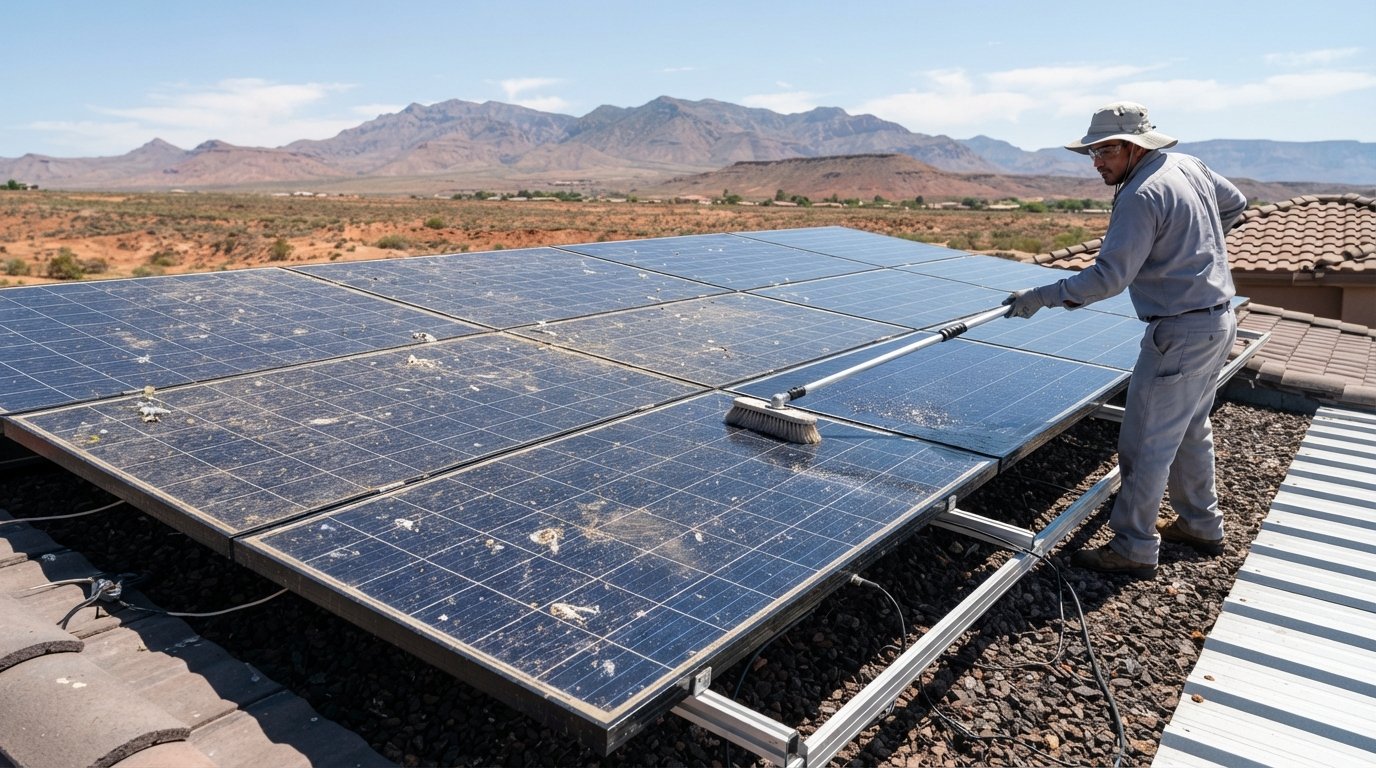
Solar Panel Soiling Losses and How Often to Clean
Solar panel soiling losses can quietly cut production by 5 to 15 percent. Learn how often to clean and protect your solar savings.

By Dylan Harris
Learn more about Solar Panel Cleaning for guides, costs, and what to expect.
Compare Solar Panel Cleaning Pros Near You

Enter your ZIP code to compare top-rated local professionals and request free quotes.
Dust, pollen, bird droppings, and wildfire ash do not just look bad on a rooftop array. They quietly erode the energy production you paid for, and in some US regions the annual penalty can reach double digits. Understanding solar panel soiling losses and how often to clean helps you protect your investment without wasting water, time, or money on unnecessary scrubbing. This guide breaks down what soiling actually costs, how to measure it on your own system, and a practical cleaning schedule you can adapt to your climate.
What Solar Panel Soiling Losses Really Cost You
Soiling is any material that blocks sunlight from reaching the photovoltaic cells. The most common culprits are dust, agricultural dust, pollen, bird droppings, tree sap, sea salt, and ash from wildfires. Each particle casts a tiny shadow, and because solar panels are wired in series, a small shaded area can drag down the output of an entire string. That is why a few scattered droppings often cause more loss than an even layer of dust.
The financial impact varies dramatically by location. In arid parts of the Southwest, soiling losses can range from 5 percent to more than 15 percent per year without regular rain. In humid regions with frequent rainfall, losses are typically under 4 percent because nature rinses the glass for you. Research from the National Renewable Energy Laboratory has shown that in some dusty US climates, unmanaged soiling can cut annual production by 10 percent or more, which on a 7 kilowatt system could mean hundreds of dollars in lost electricity value.
Soiling also interacts with other performance factors. Heat reduces panel efficiency, and dirty panels run slightly hotter because trapped dust absorbs radiation. Light dust can also mask early signs of microcracks or hot spots, delaying repairs. In extreme cases, thick layers of ash or clay can create permanent hot spots that damage cells beyond repair, turning a simple cleaning task into an insurance claim.
Businesses and homeowners in dusty or agricultural areas should treat soiling as a line item in their solar financial model, not an afterthought. If you are comparing quotes or estimating payback, factor in a realistic soiling loss percentage for your zip code. Tools like the Solar Savings Calculator can help you model production and savings with different assumptions, so you can see how much cleaning frequency matters to your bottom line.
How to Measure Soiling on Your Own Array
You do not need lab equipment to estimate soiling losses. Start by comparing your system's actual output to its expected output on a clear day. Most monitoring apps show daily and monthly production. Pick a sunny day with no clouds, note the kilowatt hours produced, and compare it to the same day in a previous month or to a nearby reference system. A consistent 5 to 10 percent shortfall that cannot be explained by weather usually points to soiling.
A more direct method is the spot test. Clean a small patch of one panel with a microfiber cloth and distilled water, then measure the short circuit current or use a handheld irradiance meter to compare that clean spot to a dirty area. If the difference is more than a few percent, cleaning is probably worthwhile. Many solar monitoring platforms now include soiling loss estimates based on weather and production data, which can save you the manual work.
For a quick visual check, look at the glass from a shallow angle in bright sunlight. You will see a hazy film, streaks, or discrete spots. Bird droppings are especially important to catch early because they can bake onto the glass and become difficult to remove. If you notice a white or gray haze that does not rinse off with a garden hose, it is likely a combination of dust and pollen that needs a proper cleaning.
Here are four practical ways to quantify soiling without special tools:
- Compare daily production on clear days before and after a rainstorm.
- Track the performance ratio from your inverter or monitoring app over several weeks.
- Use a clean white cloth to wipe a small area and compare the color of the cloth to a control.
- Check for visible hotspots or uneven shading with a thermal camera if you have access to one.
Once you know your baseline, you can set a cleaning trigger. For example, if production drops 5 percent below the expected value for three consecutive clear days, schedule a cleaning. That approach prevents both under cleaning and over cleaning, which wastes water and risks scratching the glass.
How Often Should You Clean Solar Panels?
There is no single answer that fits every roof, but a practical rule is to clean residential solar panels once or twice per year in most US climates, and more often in dusty or high-pollen regions. In the desert Southwest, some homeowners clean quarterly. In the Pacific Northwest, where rain is frequent, an annual cleaning may be enough. The key is to let local conditions drive the schedule rather than a fixed calendar.
Rainfall is the biggest natural cleaning factor. A steady rain of at least half an inch can wash away light dust and pollen, but it does little for bird droppings or sticky sap. Heavy rain can even make things worse if it splashes mud onto the lower edge of the panels. If you live near a dirt road, farm field, or construction site, expect to clean more often. Coastal areas with salt spray also need more frequent rinsing to prevent corrosive residue.
Seasonal patterns matter too. Spring pollen can coat panels in a yellow film within days. Summer dust storms in the Southwest can deposit a visible layer in a single event. Fall leaves and agricultural harvest dust add another round. Winter snow is a separate issue, but you should never use a shovel or ice scraper on solar glass. In wildfire-prone areas, ash falls can require immediate cleaning because ash is alkaline and can etch the glass if left for weeks.
A simple decision framework looks like this:
- Check your monitoring data monthly for unexplained production drops.
- Inspect the panels visually each season, especially after pollen season, dust storms, or wildfires.
- Clean when you see visible soiling or when production falls 5 percent or more below expected.
- Schedule at least one thorough cleaning per year, ideally in early morning or late evening.
- Increase frequency if you live in a dusty, agricultural, or high-pollen area.
For many homeowners, the most efficient approach is to combine an annual professional cleaning with occasional DIY rinsing. Professionals have the right tools, such as deionized water and soft brushes, and they can inspect for damage at the same time. If you prefer to handle it yourself, use a soft brush and plain water, and avoid harsh soaps or abrasive pads that can scratch the anti-reflective coating.
DIY Cleaning vs Professional Service: What Makes Sense
Cleaning solar panels sounds simple, and it often is, but safety and warranty concerns push many homeowners toward professional help. Rooftop work is hazardous, and walking on panels can void warranties or cause microcracks. Even ground-mounted arrays can be tricky if they are near power lines or on steep terrain. Professional cleaners also know how to avoid thermal shock by not spraying cold water on hot glass, and they can spot issues like loose wiring or cracked junction boxes.
That said, DIY cleaning can be a good option for ground-mounted systems or single-story roofs with safe access. The basic steps are straightforward: turn off the system if your manual recommends it, use a soft brush or microfiber mop, rinse with plain water, and work in small sections. Never use a pressure washer, which can force water into seals and damage the panels. Avoid cleaning during the hottest part of the day, because rapid temperature changes can stress the glass.
If you decide to hire a pro, look for a company that specializes in solar maintenance rather than general window cleaning. They should use deionized water, soft brushes, and extendable poles that keep them off the panels. Many solar installers offer cleaning as part of a maintenance package, which can also include inverter checks and performance analysis. If you are not sure who to call, you can compare local solar quotes and maintenance providers to find vetted professionals in your area.
Robotic cleaners are another option for large arrays or commercial rooftops. These devices can reduce labor and water use, and some models operate at night to avoid production losses. In our guide on robotic solar panel cleaners, we explain how automated cleaning can save time and keep performance steady in dusty environments. For most homes, however, a manual cleaning once or twice a year is still the most cost-effective choice.
Best Practices to Reduce Soiling Losses Long Term
Cleaning is only part of the solution. You can reduce soiling losses by designing and maintaining your system with dust in mind. Tilt angle matters: steeper panels shed dust and water more effectively, so if you are planning a new install, ask your installer about a tilt that balances production and self-cleaning. Some frameless or dual-glass panels also have smoother surfaces that resist dirt buildup.
Landscaping choices can make a big difference. Keep trees and shrubs trimmed back to reduce sap, pollen, and bird activity. If you live near a dirt road, consider planting a vegetative buffer or using gravel to reduce dust. Avoid placing compost piles, wood piles, or bird feeders near the array. For agricultural sites, talk to your installer about anti-soiling coatings, which can reduce dust adhesion but are not a substitute for cleaning.
Water quality is another factor. Hard water leaves mineral spots that can be difficult to remove, so use filtered or deionized water if possible. If you must use tap water, dry the panels with a soft squeegee to prevent spots. Never use abrasive cleaners, and avoid cleaning products that leave a residue. A small amount of mild dish soap can help with greasy spots, but rinse thoroughly.
Finally, keep records. Note when you clean, what the weather was like, and how production changed afterward. Over time, you will build a custom cleaning schedule that matches your microclimate. That data also helps if you ever need to file a warranty claim or explain production shortfalls to your installer. If you want help interpreting your data or setting up a maintenance plan, many installers offer energy audits that include soiling analysis.
Solar panel soiling losses are real, but they are manageable. With a little monitoring and a sensible cleaning schedule, you can keep your system producing close to its peak and protect your return on investment for decades.