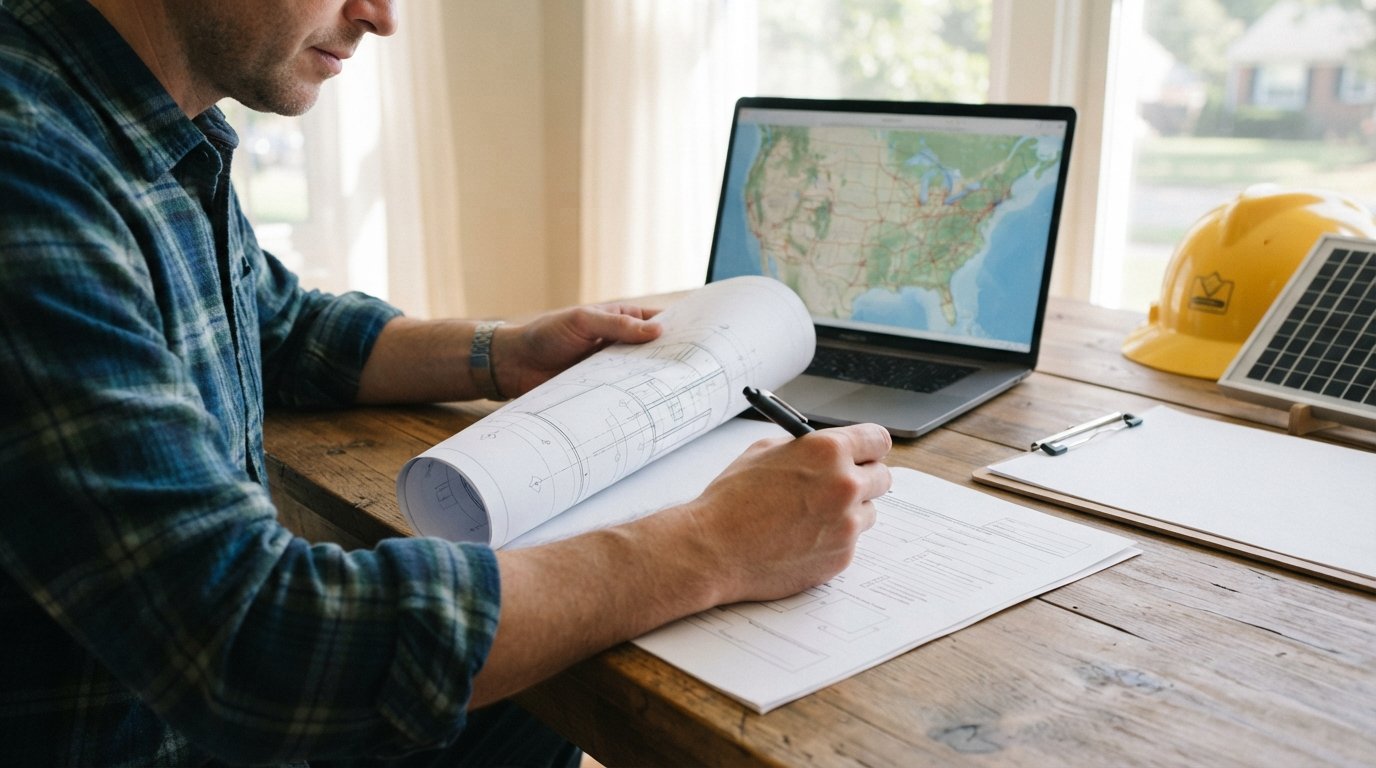
Solar Panel Permits by State: United States Guide
Navigate solar panel permits by state with this United States guide, covering fees, timelines, and common pitfalls to avoid installation delays.

By Dylan Harris
Learn more about Solar Panel Installation and Repair for guides, costs, and what to expect.
Compare Solar Panel Installation and Repair Pros Near You

Enter your ZIP code to compare top-rated local professionals and request free quotes.
Going solar is an exciting step toward energy independence and lower utility bills, but before the installation crew arrives, there is a critical hurdle to clear: the permit. Most homeowners do not realize that solar panel permits vary significantly from state to state, and even from city to city. A smooth permitting process can save you weeks of delay and hundreds of dollars in rework. This solar panel permits by state United States guide breaks down what you need to know, from application timelines to common fees, so you can plan your project with confidence.
Why Solar Permits Matter
Permits exist to ensure that your solar installation meets local building, electrical, and fire safety codes. They protect you, your home, and your neighborhood. When a licensed inspector signs off on your system, it confirms that the wiring is safe, the racking is secure, and the system can be disconnected quickly in an emergency. Without a permit, you risk fines, forced removal of the system, and serious problems when you try to sell your home or file an insurance claim.
Moreover, most utility companies require proof of a final inspection approval before they will grant permission to operate (PTO). That means your solar panels might sit idle for weeks if you skip the permit process. Understanding the requirements in your state is not just about following rules; it is about protecting your investment and ensuring your system performs as designed.
How to Research Your Local Permit Process
Because solar regulations are often set at the local level, your first step should always be to contact your city or county building department. However, a few general patterns exist across the United States. Many states have adopted the International Building Code and the National Electrical Code, which standardize technical requirements. Yet, the application process, fees, and review timelines can differ dramatically.
Here are three reliable ways to gather the information you need for your specific location:
- Check your local building department website for a solar permit checklist or expedited review program.
- Call the permitting office and ask about solar-specific requirements, average review times, and total fees.
- Consult a licensed local solar installer, as they handle permits regularly and know the common pitfalls.
Even if you are considering a DIY installation, a professional installer can be an invaluable resource. They can also help you avoid common mistakes that lead to permit rejections, such as improper panel spacing for firefighter access or incorrect inverter labeling.
State-by-State Overview: What to Expect
While a full solar panel permits by state United States guide would fill a book, we can highlight the general landscape across the country. Some states are known for streamlined, solar-friendly permitting, while others still rely on slower, case-by-case reviews. The following overview will help you anticipate the process in your region.
Solar-Friendly States with Streamlined Permits
States like California, Colorado, and Massachusetts have implemented policies to speed up solar permitting. California, for example, requires most cities and counties to use an online portal for solar permit applications and mandates a maximum review time of three business days for typical residential systems. This is part of the state's push to meet its renewable energy goals.
Colorado and Massachusetts have similar statewide standards that reduce the paperwork burden. In these states, you can often submit a simple form with a system diagram and receive a permit within one week. Homeowners in these areas frequently report that the entire process, from application to final inspection, takes less than a month.
States with Moderate Permit Complexity
Many states, including Texas, Florida, and New York, leave permitting decisions entirely to local jurisdictions. While major cities like Austin and Miami have developed efficient solar permitting systems, rural counties may still require detailed structural engineering reports and multiple in-person visits. The review time can range from a few days to several weeks, depending on the workload of the building department.
Florida has adopted a statewide solar permit standard for residential systems, which helps, but you still need to check with your local city or county for specific fees. Texas, on the other hand, has no uniform standard, so homeowners in Houston might experience a very different process than those in Amarillo. The key is to ask your local installer how many permits they have pulled in your specific zip code.
States with More Complex or Lengthy Processes
A handful of states, particularly in parts of the Midwest and Southeast, still have more cumbersome permitting processes. These areas may require a full set of architect-stamped structural plans, not just a simple diagram. They might also mandate an electrical load calculation review, which can take extra time for the plan reviewer to verify.
For example, some counties in Georgia and Tennessee require a site visit before issuing the permit, and then another inspection after installation. This adds days or even weeks to your timeline. However, even in these states, many jurisdictions are modernizing as solar adoption grows. The best approach is to start your permit application as early as possible, even before you finalize your equipment choices.
Key Permit Components: What Inspectors Look For
Regardless of your state, the building department will scrutinize several critical aspects of your solar installation during the plan review and inspection.
Structural Integrity and Roof Loads
Your roof must be able to support the added weight of the solar panels, the racking system, and potential snow load in colder climates. Inspectors will want to see that your roof is in good condition and that the mounting system is rated for your specific roof type. If you have an older roof, you might need to replace it before the solar installation, which adds to the project cost but prevents future problems.
Electrical Safety and Code Compliance
All electrical work must comply with the National Electrical Code (NEC), which includes rules for rapid shutdown, grounding, and proper wiring methods. Your permit application must include a single-line diagram showing how the solar panels connect to your main electrical panel. Inspectors will verify that the system is properly labeled and that all disconnects are accessible.
The rapid shutdown requirement is especially important. It ensures that solar panels can be de-energized quickly, protecting firefighters and first responders in an emergency. Modern inverters and microinverters have this capability built in, but your diagram must clearly show how it is implemented.
Fire Safety and Setbacks
Many jurisdictions follow fire codes that require a certain amount of clear space on your roof, commonly called setbacks. These setbacks allow firefighters to walk on the roof and access vents or skylights. The exact dimensions vary by state and are often based on the width of your roof and whether you have a ridge vent.
If your roof layout is complicated, you might need to adjust the panel arrangement to meet setback requirements. This can slightly reduce the number of panels you can install, but it is a non-negotiable safety rule in most areas.
Fees, Timelines, and the Cost of Delays
Permit fees are typically a small fraction of your total solar installation cost, but they can still surprise you. Fees may include an application fee, a plan review fee, and an inspection fee. In some cities, these are bundled into a single flat fee, while others charge based on the system size or the value of the installation. Expect to pay anywhere from $100 to $500 for a typical residential permit, though some jurisdictions charge more.
The timeline is often a bigger concern than the fee. While some online solar permit services can get your permit approved in 24 hours, traditional review processes can take two to six weeks. This delay extends your project timeline and can affect your return on investment, especially if you are trying to hit a specific utility deadline or tax credit window. Planning for a four to eight week timeline from permit submission to final inspection is realistic in most states.
Common Permit Pitfalls and How to Avoid Them
Even experienced solar installers encounter permit rejections. The most common reasons include incomplete application forms, missing structural calculations, and diagrams that do not match the installed equipment. Homeowners who file their own permits often make these mistakes, leading to costly resubmissions.
Another frequent issue is failure to coordinate with your homeowners association (HOA). Even if your city has issued a building permit, your HOA might have its own architectural guidelines for solar panels. It is wise to get HOA approval in writing before you start installation, as a retroactive denial can force you to remove the system.
To avoid these headaches, always double-check your application against the local checklist. If you are working with an installer, ask them to walk you through the permit package. A reputable company will handle this process as part of their service, but you should still understand what is being submitted on your behalf.
How to Streamline Your Solar Permit Process
There are several proactive steps you can take to ensure your solar permit application goes smoothly. First, use the online resources provided by your local building department. Many now offer electronic plan review, which is faster than paper submissions. Second, consider using a solar permit service that specializes in creating code-compliant plan sets for your state.
Third, and most importantly, work with a local installer who has a proven track record. They will know the specific requirements of your city or county, including any local amendments to the state code. They can also schedule the inspections at the right time, ensuring that the work is ready when the inspector arrives.
If you are comparing quotes from multiple installers, ask them about their permit strategy. Some companies have in-house permitting specialists, while others outsource this work. Both can be effective, but you want to ensure that your project is not delayed because the installer is waiting on a permit in another state.
Rely on Trusted Resources for Your Solar Journey
Navigating solar permits is just one part of a successful solar project. You also need to understand equipment options, financing, and the long-term performance of your system. For more detailed information on choosing the right components, you can explore our guide on how to maximize energy with a 200 watt solar panel, which offers practical insights for smaller setups. Additionally, independent educational platforms like NewSolarQuotes provide cost calculators and energy savings analysis that can help you refine your budget and expectations. These resources are excellent complements to the official permitting information you will gather from your local government.
Final Thoughts on Solar Permits
Securing a solar panel permit is a manageable step that protects your investment and ensures your system is safe and legal. The process varies across states, but the underlying principles remain the same: submit a complete application, comply with safety codes, and schedule the necessary inspections. By understanding the requirements in your area and working with experienced professionals, you can avoid unnecessary delays and enjoy the benefits of solar energy with peace of mind.
As you move forward, remember that this solar panel permits by state United States guide is a starting point, not the final word. Always verify current regulations with your local building department, as rules and fees can change. With careful planning, your path to solar power will be smooth, and your new system will deliver clean energy for decades.