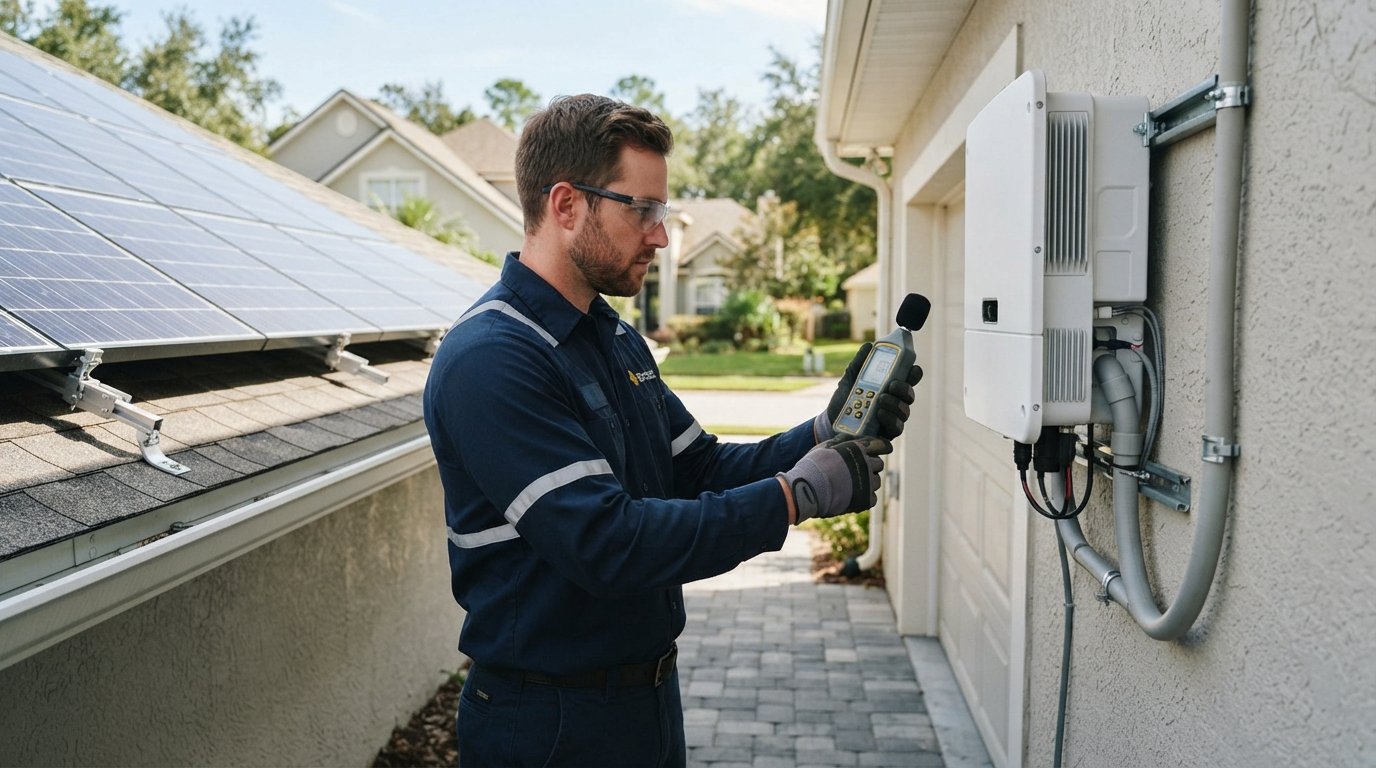
Solar Panel Noise and Vibration: Causes and Solutions
Identify solar panel noise and vibration causes and solutions to restore quiet. Call (833)-434-4023 for expert help.

By Dylan Harris
Learn more about Solar Panel Installation and Repair for guides, costs, and what to expect.
Compare Solar Panel Installation and Repair Pros Near You

Enter your ZIP code to compare top-rated local professionals and request free quotes.
That faint hum from the garage or the occasional rattle on a windy night probably is not your imagination. As solar systems become more common on American rooftops, so do questions about the sounds they make. While photovoltaic panels themselves have no moving parts and produce no sound, the equipment that turns sunlight into usable electricity can generate noticeable noise and vibration. Understanding what is normal, what signals a problem, and how to quiet things down will help you protect your investment and your peace of mind.
This guide breaks down the real sources of solar panel noise and vibration, explains how to tell a harmless hum from a failing component, and offers practical fixes you can apply or request from your installer. Whether you are planning a new installation or troubleshooting an existing one, these insights will help you separate routine operation from issues that deserve professional attention.
Where Solar Noise Comes From: Inverters, Optimizers, and Hardware
When homeowners report solar panel noise, the panel itself is almost never the culprit. The sound typically originates from balance-of-system components, primarily the inverter. A solar inverter converts direct current (DC) from the panels into alternating current (AC) for your home. This conversion involves high-frequency switching and magnetic components that can produce a low-level hum or buzz. String inverters, microinverters, and hybrid inverters all have the potential to generate some sound, though the character and volume vary by design and manufacturer.
Power optimizers, often mounted behind individual panels, contain electronics that can also emit a faint hum or click during operation. Rapid shutdown devices, required by code in many jurisdictions for fire safety, may produce subtle clicking sounds when they activate or deactivate. Mounting hardware, including rails, clamps, and standoffs, can create rattling or creaking noises if connections loosen over time or if thermal expansion causes metal components to shift. Even conduit and wiring can vibrate against structures in the wind, producing a buzzing or tapping sound that homeowners sometimes mistake for panel noise.
It helps to categorize the likely sources by location and type of sound. High-pitched electrical hum usually points to the inverter or optimizers. Rattling, clicking, or scraping noises often trace back to mounting hardware or loose conduit. A rhythmic mechanical sound could indicate a cooling fan issue. Knowing where to listen and what to expect narrows down the diagnosis quickly.
Normal Inverter Hum vs. Failing Fan or Loose Racking
Not all solar noise is a problem. Modern inverters are designed to operate within acceptable sound limits, and a steady, low-volume hum is generally normal. This hum may become slightly louder during peak production hours when the inverter works hardest, and it may quiet down at night when the system is idle. If the sound is consistent, unobtrusive, and does not interfere with daily life, it is likely just the sound of electronics doing their job.
However, certain noises warrant closer inspection. A failing cooling fan often produces a grinding, screeching, or intermittent whirring sound that changes pitch unpredictably. Loose racking or mounting hardware can create rattling or banging noises, especially during windy conditions or when the system heats up and metal components expand. Rapid shutdown devices that click repeatedly may indicate a communication issue or a fault. Any noise accompanied by a drop in system performance, error codes on the inverter display, or a burning smell should be treated as urgent and investigated by a qualified technician.
To distinguish normal from abnormal, listen for changes over time. A new sound that did not exist before, a sound that grows louder, or a sound that appears only under specific conditions (such as high wind or high temperature) are red flags. Keeping a simple log of when you hear the noise and what it sounds like can help your installer diagnose the issue faster.
Practical Fixes: Isolation Mounts, Inverter Placement, and More
If solar panel noise and vibration are disrupting your home, several solutions can reduce or eliminate the problem. The right approach depends on the source, but the following strategies cover the most common scenarios. Many of these fixes are straightforward for a professional installer to implement, and some can be incorporated into a new installation from the start.
- Isolation mounts and pads: Installing rubber or neoprene isolation pads under the inverter or between mounting hardware and the roof structure can dampen vibration and reduce transmitted noise. These inexpensive components are highly effective at stopping hum from traveling into living spaces.
- Relocate the inverter: If the inverter is mounted on a wall shared with a bedroom or living area, moving it to an exterior wall, garage, or utility closet can dramatically reduce indoor noise. This is often the single most effective fix for bothersome hum.
- Tighten and secure hardware: Loose racking, clamps, and conduit straps can rattle in the wind. A technician can torque connections to specification and add locking washers or vibration-dampening clips where needed.
- Upgrade to a quieter inverter: If your inverter is older or particularly noisy, replacing it with a modern, low-noise model may be worthwhile, especially if it is nearing the end of its warranty period.
- Add soundproofing or enclosures: In some cases, a ventilated acoustic enclosure around the inverter can reduce noise, though this must be designed carefully to avoid overheating.
Before implementing any fix, confirm the source of the noise. A professional inspection can identify whether the issue is electrical, mechanical, or structural. Attempting DIY adjustments to electrical components is unsafe and may void warranties. For homeowners planning a new solar project, discussing noise mitigation with your installer upfront is the best way to avoid future complaints.
When Noise Signals a Warranty or Service Issue
Recurring or worsening noise is more than an annoyance; it can be an early warning of component failure. Inverters and optimizers are covered by manufacturer warranties, typically ranging from 10 to 25 years, and abnormal noise may qualify for a warranty replacement if it stems from a defect. Loose racking or mounting hardware may be covered by the installer's workmanship warranty. Documenting the noise with video or audio recordings and noting when it occurs will strengthen your case.
If you hear any of the following, contact your installer or a qualified solar technician promptly:
- Grinding, screeching, or metallic scraping sounds from the inverter.
- Repeated clicking or buzzing that coincides with error lights or system shutdowns.
- Rattling or banging from the roof that persists even in mild weather.
- Any noise accompanied by a burning odor or visible damage.
Addressing these issues early can prevent more costly repairs and keep your system producing at full capacity. Many installers offer diagnostic visits as part of their service agreements, and some manufacturers provide advanced replacement options for defective units.
Preventing Future Noise: Smart Design and Maintenance
The best way to manage solar panel noise and vibration is to prevent them from becoming a problem in the first place. During the design phase, ask your installer about equipment noise ratings and placement options. Inverters with lower decibel ratings are available, and strategic placement away from bedrooms and living areas can make a significant difference. Ensuring that racking systems are properly engineered for your roof type and local wind loads reduces the likelihood of rattling and loosening over time.
Regular maintenance also plays a role. Periodic inspections can catch loose hardware before it becomes a noisy nuisance, and cleaning around the inverter ensures proper airflow to prevent fan strain. If your system includes AI-driven monitoring, as discussed in AI renewable energy solutions, you may receive alerts about performance anomalies that could correlate with mechanical issues, allowing you to address problems proactively.
For homeowners seeking professional guidance on installation or repairs, resources like ContractorHomeQuotes offer cost estimation tools and contractor selection advice, helping you make informed decisions and find qualified local experts. Combining smart design, quality components, and routine service will keep your solar system quiet, efficient, and reliable for decades.
By understanding the causes of solar panel noise and vibration and applying the right solutions, you can enjoy the benefits of clean energy without sacrificing comfort. Whether it is a simple isolation pad or a warranty claim, the steps above will help you resolve noise issues and protect your solar investment.
Learn more about Solar Panel Installation and Repair for guides, costs, and what to expect.
Compare Solar Panel Installation and Repair Pros Near You
Enter your ZIP code to compare top-rated local professionals and request free quotes.