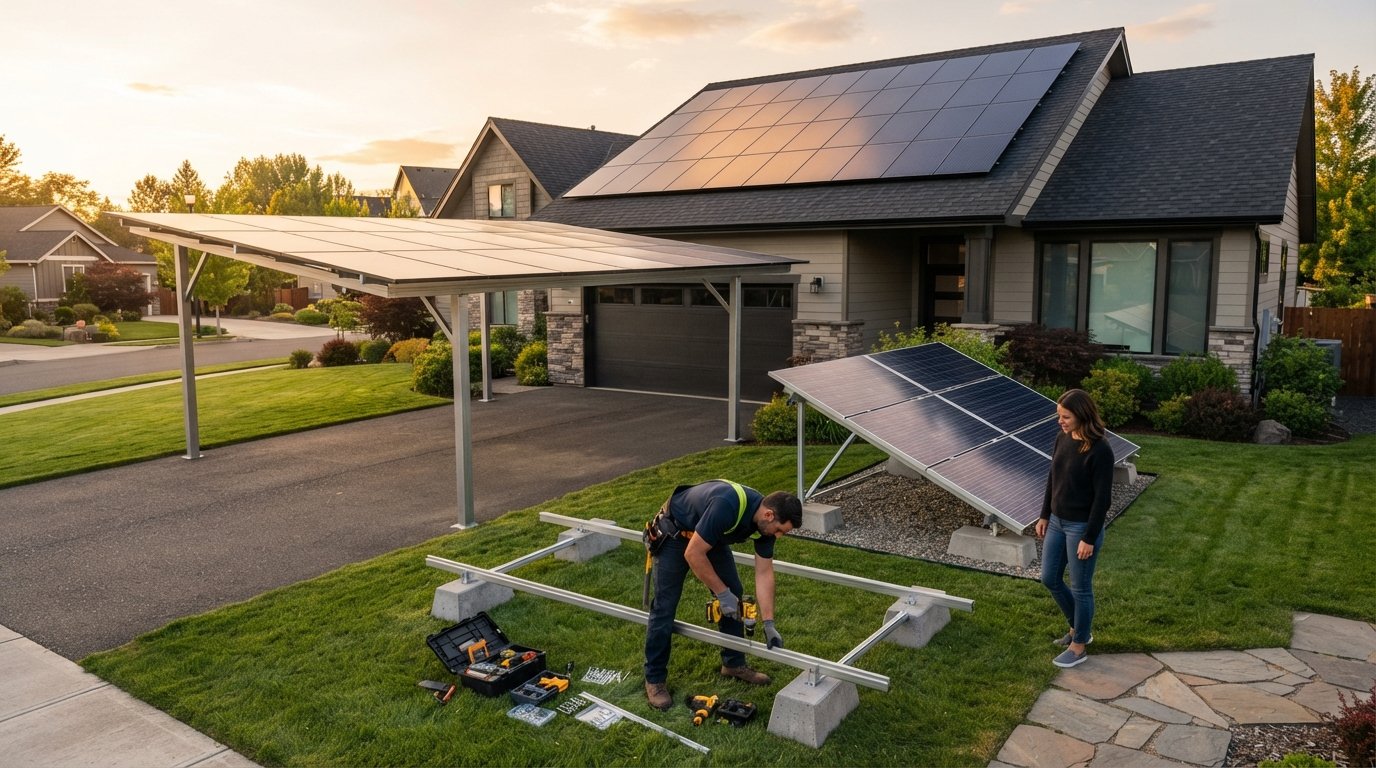
Solar Panel Mounting Systems: Roof, Ground, and Carport
Compare solar panel mounting systems for roof, ground, and carport to find the best fit for your property and maximize energy yield.

By Ryan Brooks
Learn more about Solar Panel Installation and Repair for guides, costs, and what to expect.
Compare Solar Panel Installation and Repair Pros Near You

Enter your ZIP code to compare top-rated local professionals and request free quotes.
When you decide to go solar, the conversation often centers on panel efficiency, inverter quality, and battery storage. Yet the unsung hero of any photovoltaic (PV) system is the mounting structure that holds everything in place. A robust solar panel mounting system is the foundation of your entire investment, determining not only the performance and lifespan of your panels but also the safety of your property. Whether you are exploring rooftop installations, ground-mounted arrays, or innovative carport structures, understanding the nuances of each mounting approach is essential. This guide offers a detailed comparison of solar panel mounting systems for roof, ground, and carport applications, helping you make an informed decision that maximizes energy yield, durability, and return on investment.
Choosing the right mounting system is not a one-size-fits-all decision. Factors such as your property's orientation, local climate, available space, and even your aesthetic preferences all play a critical role. With the solar industry evolving rapidly, 2026 brings new materials, simpler installation methods, and smarter tracking options. By the end of this article, you will have a clear understanding of the different types of mounting systems, their pros and cons, and the key considerations that will guide your solar journey. We will also touch on how to select a qualified installer who can ensure your system is engineered to withstand the elements for decades.
Why the Mounting System Matters More Than You Think
The mounting system does more than just hold panels in place; it dictates the angle and orientation of your array, which directly impacts energy production. A tilt that is too flat can accumulate dirt and snow, reducing efficiency, while an angle that is too steep might catch more wind and require stronger structural support. Moreover, the mounting system must be compatible with your roof type or ground conditions to prevent leaks, corrosion, or structural damage. A poorly designed or installed mounting system can void panel warranties, cause premature wear, and even pose a safety hazard during extreme weather events.
Beyond performance, the mounting system affects the overall cost and complexity of your installation. Some systems are designed for quick, tool-free assembly, which can reduce labor costs, while others require extensive engineering and site preparation. For homeowners, this translates directly into the final price of the system. Additionally, the choice between roof, ground, or carport mounting can influence your eligibility for certain incentives or your ability to expand the system later. Therefore, investing time in understanding mounting options is as crucial as selecting the solar panels themselves. For a deeper dive into how panel efficiency interacts with mounting orientation, you can refer to our piece on Solar Panel Efficiency 2026: What New Records Mean.
Roof Mounting Systems: The Popular Choice
Roof-mounted systems are the most common configuration for residential and commercial properties, primarily because they utilize otherwise unused space and keep the solar array out of the way. They work well on sloped roofs (asphalt shingle, tile, metal) and flat roofs, each requiring a different mounting approach. The core components of a roof mount include flashing, rails, clamps, and the mounting feet that attach to your roof structure. Modern systems are designed to be highly watertight, with integrated flashing boots that divert water away from the attachment points, minimizing any risk of leaks.
One of the primary advantages of roof mounting is the lower cost compared to ground systems, as it eliminates the need for separate land or trenching for wiring. It also reduces the risk of theft or vandalism, as the panels are not easily accessible from the ground. However, roof mounts are constrained by the existing roof orientation and pitch. If your roof does not face south (or west, depending on your utility's net metering policy), you may not achieve optimal energy production. Furthermore, if your roof is aging and may need replacement in the next few years, it is often wise to address that before installing solar, as removing and reinstalling panels is a significant additional expense.
For sloped roofs, the most common mounting method involves attaching a metal bracket to the rafters, then securing rails to these brackets. The panels are then clamped onto the rails. For tile roofs, special hooks that slide under the tiles are used to avoid cracking, and for metal roofs, clamps that attach to the standing seams are preferred. Flat roofs typically use a ballasted system, where the panels are held down by concrete blocks without penetrating the roof membrane, or a penetrating system with a low-profile mount. Each method has its own installation intricacies, which is why professional installation is highly recommended.
Key Considerations for Roof Mounts
Before committing to a roof mount, a structural engineer or experienced solar installer must assess your roof's age, material, and load-bearing capacity. Local building codes often specify wind and snow load requirements, and the mounting system must be engineered to meet those standards. Another consideration is the roof's pitch; a steeper pitch may require more complex fall-protection equipment during installation, potentially increasing labor costs. Additionally, you need to think about the spacing between the panels and the roof surface to allow for airflow, which helps keep panels cooler and more efficient. With proper planning, a roof-mounted system can last 25 years or more, matching the lifespan of most solar panels.
Ground Mounting Systems: Flexibility and Performance
Ground-mounted systems offer an attractive alternative when roof space is limited, shaded, or unsuitable for solar. These systems are installed on the ground, typically using driven piles, concrete footers, or helical anchors. They provide complete flexibility in optimizing the tilt angle and orientation, allowing you to achieve the maximum possible energy yield. Ground mounts can be fixed-tilt, where the panels are set at a fixed angle, or they can be equipped with solar trackers that follow the sun's path across the sky, boosting energy production by up to 25% compared to fixed arrays.
The primary advantage of ground mounts is their unobstructed access to sunlight. You can position the array perfectly south, at the ideal tilt for your latitude, and avoid any shade from trees or neighboring buildings. They are also easier to maintain, as you can walk around the panels to clean them or replace components without working on a roof. For homeowners with ample land, ground mounts can be scaled up easily, making them a good choice for those with high energy demands or plans for electric vehicle charging. However, ground mounts require a significant amount of space, and you must account for the cost of trenching to run wiring from the array to your home or the grid connection point.
One of the often-overlooked benefits of ground-mounted systems is their ability to accommodate future expansion. If you want to add more panels later, it is usually simpler to extend a ground array than to add to a roof system. Additionally, ground mounts can be installed at a distance from the house, which might be advantageous if you have a large yard. On the downside, ground systems may be subject to more stringent local zoning regulations, and they can be more expensive than roof mounts due to the need for a separate support structure and trenching. You should also consider the aesthetic impact, as a ground array is more visible than a roof installation.
Tracking Systems: Maximizing Yield
For ground mounts, you have the option of installing a tracking system. Single-axis trackers rotate the panels from east to west throughout the day, while dual-axis trackers also adjust the tilt based on the season. These systems can significantly increase your energy production, but they come with higher upfront costs and more moving parts that require maintenance. In 2026, tracker technology has become more reliable and affordable, but they are still best suited for projects with ample space and a clear budget for optimization. If you have a large, open area and want to maximize your return on investment, a ground-mounted tracking system might be the right choice.
Carport Mounting Systems: Dual-Purpose Innovation
Solar carports are a brilliant solution for those who want to generate solar power while also protecting their vehicles from the elements. These structures consist of a canopy made of solar panels, supported by a steel or aluminum frame, and are typically installed over parking spaces, driveways, or carports. They are an excellent option for commercial properties, such as office buildings and retail centers, as well as for homeowners who lack suitable roof space but have a large driveway or parking area. Carports provide the dual benefit of generating clean electricity and offering shade and weather protection, which can also reduce the heat island effect in urban areas.
Carport mounting systems are more complex than standard roof or ground mounts, as they involve structural engineering to ensure the canopy can handle wind, snow, and the weight of the panels. They can be designed as freestanding structures or attached to an existing building. The height of the carport is a key consideration, as it must accommodate the tallest vehicle that will park underneath, while also allowing for proper airflow under the panels to keep them cool. Carports also open up possibilities for integrated EV charging stations, making them a forward-thinking choice for homeowners and businesses alike. The cost of a solar carport is generally higher than a comparable ground mount due to the additional structural materials, but the combined value of electricity generation and vehicle protection can make it a worthwhile investment.
For businesses, solar carports can transform large parking lots into productive energy assets, generating significant power to offset operational costs. For homeowners, a carport can be a more aesthetically pleasing alternative to a ground-mounted array, as it serves a practical purpose beyond just holding panels. However, it is crucial to ensure that the carport is designed with proper drainage and corrosion protection, especially in areas with heavy rain or snow. With thoughtful design, a solar carport can be a stunning addition to your property that enhances both its functionality and its curb appeal.
Comparing Costs, Durability, and Aesthetics
When evaluating solar panel mounting systems for roof, ground, and carport, it is essential to weigh the trade-offs in terms of cost, durability, and aesthetics. Roof mounts are generally the most cost-effective option for existing buildings, with an average cost that is lower than ground or carport systems due to reduced material and labor. However, they are constrained by roof conditions and may not achieve optimal orientation. Ground mounts offer the highest performance potential, especially with trackers, but they require a significant land investment and can be more expensive due to site preparation and trenching. Carports are the premium option, combining energy generation with structural utility, but they come with the highest upfront price tag.
In terms of durability, all three types can be engineered to withstand 25 to 30 years of weather exposure, but the materials and installation quality are critical. Roof mounts must resist water infiltration, ground mounts must resist soil corrosion, and carports must handle dynamic wind loads. Aesthetics are also a personal decision. Roof mounts are often the least obtrusive, especially on a sloped roof, while ground mounts are more visible and can be positioned to blend with the landscape. Carports are a deliberate architectural statement, and they can be designed with various finishes and heights to match your property's style.
To help you compare, here are the key factors to consider when choosing between these mounting types:
- Space Utilization: Roof mounts use existing roof area; ground mounts need open land; carports create new usable space over parking.
- Orientation Flexibility: Ground mounts and carports allow perfect solar orientation; roof mounts are limited to the roof's facing.
- Maintenance Access: Ground and carport systems are easier to access for cleaning and repairs; roof mounts require working at height.
- Installation Complexity: Roof mounts are typically simpler; ground mounts require trenching; carports need structural engineering.
- Cost Structure: Roof mounts are usually the least expensive; carports are the most expensive; ground mounts fall in between.
Each of these factors should be evaluated against your specific energy goals, budget, and property characteristics. For instance, if your primary goal is to maximize energy output and you have a large, sunny yard, a ground mount with a tracker might be the best investment. If you want to preserve your yard and have a south-facing roof, a roof mount is a smart, cost-effective choice. If you need to cover a vehicle and want to generate power, a carport is an elegant solution that adds value to your property.
Choosing the Right Installer and Ensuring Quality
Regardless of which mounting system you choose, the quality of the installation is paramount. A poorly installed mounting system can lead to leaks, structural damage, or even system failure, which can be costly and dangerous. It is essential to work with a certified solar installer who has experience with your chosen mounting type. They should conduct a thorough site assessment, including a structural review, and provide a detailed engineering plan. When obtaining quotes, ask about the mounting hardware brand, warranty, and the installer's track record. A reputable installer will be happy to share references and discuss their installation process in detail.
For homeowners in the United States, the solar industry is well-regulated, but it is still crucial to do your due diligence. You can use online platforms like NewSolarQuotes to compare quotes from vetted solar installers in your area. This independent resource helps you understand the cost breakdown and ensures you are getting a fair price for your mounting system and installation. It also offers educational content that can help you ask the right questions. Remember, the cheapest quote is not always the best; look for a balance of experience, warranty coverage, and customer reviews.
Your mounting system is a long-term investment, and it is worth paying for quality. A well-designed and installed system will quietly perform for decades, providing you with clean, reliable energy. As you move forward, always consider the future: will you need to expand the system? Will you add a battery? Choose a mounting system that offers flexibility for these upgrades. With careful planning and the right professional guidance, your solar panel mounting system will be a solid foundation for your energy independence.
In conclusion, the choice between solar panel mounting systems for roof, ground, and carport is a strategic decision that requires careful analysis. Each option has its own set of advantages and trade-offs, and the best choice depends on your unique circumstances. By understanding the nuances of each system, you are now equipped to have an informed conversation with a solar professional. Whether you decide to utilize your roof, dedicate a portion of your land, or create a dual-purpose carport, you are taking a significant step towards a sustainable future. The right mounting system will not only protect your investment but also maximize your energy production, making your transition to solar as smooth and rewarding as possible.