Solar Panel Maintenance Cost Guide 2026: Save Big
Learn the real costs of solar panel cleaning, inspections, and repairs in 2026, and how a small maintenance budget can save you thousands over your system's lifetime.

By Mason Carter
Learn more about Solar Panel Cleaning for guides, costs, and what to expect.
Compare Solar Panel Cleaning Pros Near You

Enter your ZIP code to compare top-rated local professionals and request free quotes.
Your solar panels are a long-term investment, but they are not a set-and-forget appliance. To keep them producing at peak efficiency and protect your warranty, a little routine care goes a long way. The real question for most American homeowners is not whether to maintain their system, but what it will actually cost. This solar panel maintenance cost guide 2026 breaks down every expense you can expect, from a simple hose-down to professional inspections, so you can budget wisely and avoid surprise bills.
Many homeowners assume that solar maintenance is either outrageously expensive or completely unnecessary. The truth sits comfortably in the middle. With typical residential cleaning costs ranging from $150 to $400 per visit, and professional inspections adding another $150 to $300, a full annual service plan might set you back around $300 to $600. That is a small price to pay when you consider that a well-maintained system can produce up to 25% more energy than a neglected one, especially in dusty or pollen-heavy regions.
This guide goes beyond a simple price list. You will learn what drives those costs, how to spot a fair quote, and which maintenance tasks you can safely handle yourself. We also cover the hidden costs of skipping maintenance, such as voided warranties, micro-crack damage, and even pest infestations. By the end, you will have a clear picture of your annual solar maintenance budget, along with practical tips to keep those costs as low as possible.
Why Solar Panel Maintenance Matters in 2026
Solar panels are incredibly durable, with most manufacturers warrantying them for 25 to 30 years. However, performance degradation is inevitable. On average, panels lose about 0.5% to 1% of their efficiency each year due to normal wear and tear. That is expected. What is not expected is the accelerated loss caused by dirt, bird droppings, and debris, which can block sunlight and reduce output by 5% to 15% in the first year alone if left untouched.
Regular maintenance does more than just keep your energy production high. It helps you catch small issues before they become expensive problems. For example, a loose electrical connection or a failing inverter can be repaired for a few hundred dollars if detected early. If ignored, the same issue could damage your entire system and cost thousands to replace. Additionally, most solar panel warranties require proof of regular maintenance to honor a claim. Skipping that annual check-up could leave you paying for a new inverter out of pocket when it fails prematurely.
Another reason maintenance is more critical in 2026 is the increasing complexity of home energy systems. Many homeowners now pair their solar panels with battery storage, EV chargers, and smart home energy management systems. These integrated setups benefit from a holistic inspection that checks the panels, the inverter, the wiring, and the battery health together. A professional who understands modern solar-plus-storage configurations can ensure every component is working harmoniously, maximizing your return on investment.
Breaking Down the Average Maintenance Costs
To help you plan your budget, we have analyzed current market rates from solar service providers across the United States. The following figures represent typical costs for residential systems in 2026, but your actual price may vary based on your location, system size, and the complexity of the installation.
Professional Panel Cleaning
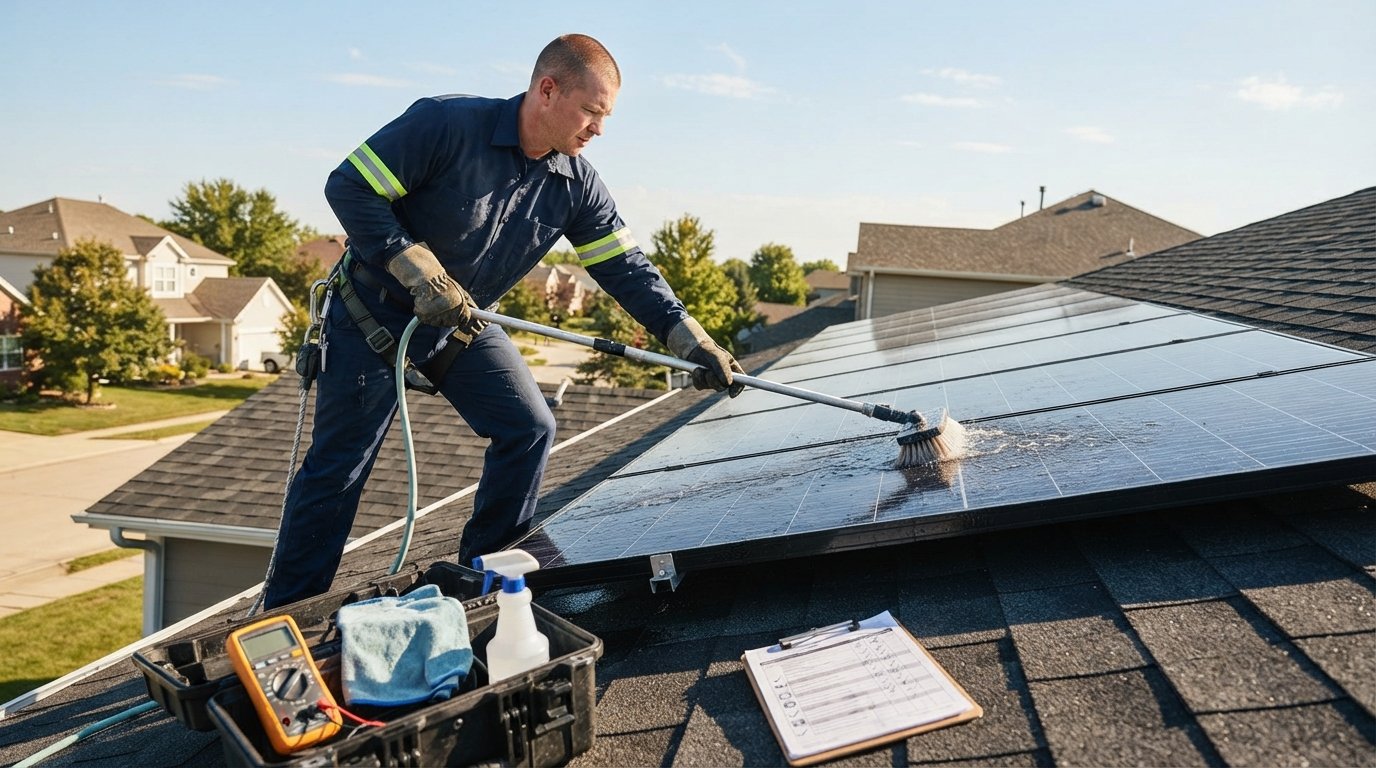
If you live in an area with little rainfall, high dust levels, or lots of trees, professional cleaning is often worth the expense. A standard cleaning service for a typical 5kW residential system (about 15 to 20 panels) usually costs between $150 and $400. This price includes deionized water washing, soft brush or squeegee cleaning, and a visual inspection for any obvious damage. Some companies charge per panel, typically $10 to $20 each, while others offer flat rates for standard roof layouts.
Annual Inspection and Maintenance
An annual professional inspection is a more thorough service that goes beyond cleaning. A certified technician will check all electrical connections, test the inverter performance, examine the mounting system for corrosion or loose bolts, and scan the panels with thermal imaging to detect hot spots or micro-cracks. This comprehensive check-up typically costs $150 to $300. Many companies offer a combined cleaning and inspection package for $300 to $500, which is a cost-effective way to ensure your system is in top shape.
Repairs and Component Replacements
Even with excellent maintenance, parts will eventually wear out. The most common repair is replacing an inverter, which typically lasts 10 to 15 years. A string inverter replacement costs between $1,000 and $2,500 including parts and labor. Microinverters, which are attached to each panel, cost around $150 to $250 each plus installation. Other potential repairs include fixing or replacing wiring, addressing corrosion on mounts, or replacing a damaged panel. A single panel replacement can cost $200 to $500, depending on the brand and wattage. Fortunately, most repairs are rare if your system is properly maintained.
DIY vs. Professional Maintenance: What You Can Handle
Not all maintenance requires a professional. Many routine tasks are safe and easy for a homeowner to perform, as long as you follow safety guidelines and know your system's limitations. Below is a breakdown of what you can reasonably do yourself and what is best left to the experts.
Before you start any DIY work, always consult your panel manufacturer's warranty. Some warranties become void if you use abrasive tools, harsh chemicals, or high-pressure washers. When in doubt, call a professional.
- Visual inspection: Walk around your property and look for obvious issues like cracked panels, loose wiring, or bird nests. This is a zero-cost task you can do monthly.
- Light cleaning: If your panels are ground-mounted or on a low-pitch roof, you can safely spray them with a garden hose and wipe them with a soft sponge. Use plain water or a mild, non-abrasive soap. Never use a pressure washer, as it can force water under the panels and damage the seals.
- Monitoring your energy output: Use your system's monitoring app to track daily production. A sudden drop in output is an early warning sign that something needs attention.
- Roof access cleaning: If your panels are on a steep or multi-story roof, do not attempt to clean them yourself. The risk of falling is not worth the savings. Professional crews have the right safety equipment and insurance.
- Electrical or inverter work: Always hire a licensed electrician or certified solar technician for any electrical repairs. Working with live DC current is extremely dangerous.
If you are comfortable on a ladder and your roof is not too steep, DIY cleaning can save you the $150 to $400 professional fee. However, if you have any doubt about your safety or if your system is under warranty, it is safer to pay for professional service. For more advanced troubleshooting, such as diagnosing a drop in output from a specific panel, check out our guide on AI in Solar Panel Efficiency: Boost Your Home Savings, which explains how modern monitoring tools can help you pinpoint issues without a technician on site.
Hidden Costs of Skipping Maintenance
Some homeowners view maintenance as an unnecessary luxury, but skipping it can lead to much larger expenses down the line. Here are the hidden costs you may face if you neglect your solar system.
Voided Warranty
Most solar panel warranties contain a clause requiring the system to be installed and maintained according to the manufacturer's specifications. If you do not have records of annual professional inspections, the manufacturer may refuse to cover a defective panel or inverter. Replacing a single panel out of pocket can cost up to $500, but replacing an inverter could be over $2,000. The cost of a routine inspection is a fraction of that and protects your warranty coverage.
Reduced Energy Production
Dirt, bird droppings, and leaf litter can block sunlight and reduce your panel's energy output by up to 25%. Over a year, that lost energy could cost you hundreds of dollars in higher utility bills or lower net metering credits. For example, if your system normally produces 8,000 kWh annually and you lose just 10% to soiling, that is 800 kWh of lost energy. At the average U.S. electricity rate of $0.17 per kWh, that is $136 wasted each year. Over the 25-year life of your panels, that adds up to over $3,400 in avoidable losses.
Pest Damage
Squirrels and birds are notorious for nesting under solar panels. They chew through wiring, which can cause system failures and create a fire hazard. Pest damage is not covered by most warranties and can cost $1,000 or more to repair. Regular inspections can catch nesting activity early before significant damage occurs.
Premature Component Failure
Without regular checks, a small electrical fault or a failing inverter can go unnoticed until it completely shuts down your system. Not only do you face a costly repair, but you also lose all the energy production during the downtime. A professional inspection can identify these issues while they are still minor, saving you from expensive replacements and prolonged energy loss.
Regional Cost Variations and How to Save
Location plays a big role in solar maintenance costs. In states like Arizona and Southern California, where dust and heat are intense, professional cleaning is more frequent and may cost 10% to 20% more than the national average. In contrast, homeowners in the Pacific Northwest, where rain naturally cleans panels, may only need an inspection every two years, significantly reducing their annual maintenance budget.
To save money without sacrificing performance, consider bundling services. Many solar companies offer annual maintenance plans that include two cleanings and one full inspection for a flat fee of $300 to $500. This is often cheaper than paying for each service separately. Additionally, some installers offer a discounted first-year maintenance package when you sign a service agreement. Compare quotes from at least three vetted providers on our NewSolarQuotes platform to find the best rates in your area.
Another way to save is to invest in preventive measures upfront. Installing bird mesh or critter guards around your panels can cost $200 to $400 but will prevent expensive pest damage. Splash guards or gutter cleaning can also reduce debris accumulation. Small upfront investments can extend the life of your system and reduce the frequency of professional cleanings.
Building Your Annual Maintenance Budget
Now that you understand the costs, you can create a realistic annual budget for your solar system. A good rule of thumb is to set aside 1% to 2% of your initial system cost each year for maintenance. For a typical residential system that costs $20,000 after incentives, that is $200 to $400 per year.
Here is a simple framework to help you allocate your budget:
- Start with a professional inspection every 12 months. Budget $150 to $300 for a thorough check-up.
- Schedule a professional cleaning if you live in a dusty area or have trees nearby. Budget $150 to $400 for one or two cleanings per year.
- Set aside a small emergency fund for unexpected repairs. A reserve of $500 to $1,000 is wise, since inverters or panels may need replacement after 10 to 15 years.
- Track your energy output monthly. This is free and helps you spot problems early, reducing the risk of major repairs.
- Review your warranty terms. Understand what is covered and what is not, so you know when to call a professional without voiding your coverage.
If your system is new, you may only need a basic cleaning in the first two years. However, do not skip the annual inspection. It is your best defense against hidden damage. Also, be sure to check your local utility or state incentives, as some offer rebates for solar maintenance services, which can further reduce your out-of-pocket costs.
Future-Proofing Your Solar Investment
As solar technology continues to advance, the maintenance landscape is shifting. In 2026, we see a growing trend toward smart monitoring systems that can detect performance issues in real time. Many of these systems use AI to analyze energy production patterns and alert you to anomalies before they become costly problems. While these smart systems are not a substitute for physical inspections, they can help you prioritize when a technician is needed, saving you money on unnecessary service calls.
Additionally, the lifespan of solar components is increasing. Newer inverters are rated for 20 to 25 years, and panels are increasingly resistant to degradation. This means that, for systems installed in the 2020s, your annual maintenance budget may be even lower than the figures cited above. However, it is still wise to have a professional check the mounting system and electrical connections every few years to ensure safety and compliance with local codes.
Finally, consider the value of a maintenance contract. Many solar companies offer annual service agreements that include priority scheduling, discounted rates on repairs, and free inspections. If you want total peace of mind and predictable costs, a contract for $200 to $400 per year is often the most cost-effective approach. It also ensures you have a documented maintenance history, which is invaluable if you ever sell your home and need to prove the system was well cared for.
In summary, the solar panel maintenance cost guide 2026 shows that a small annual investment of a few hundred dollars can protect a system worth tens of thousands of dollars. Whether you choose to clean panels yourself or hire a professional, the key is to be proactive, not reactive. By following the steps in this guide, you can keep your panels producing at peak efficiency, avoid costly surprises, and enjoy the full financial and environmental benefits of solar energy for decades to come.