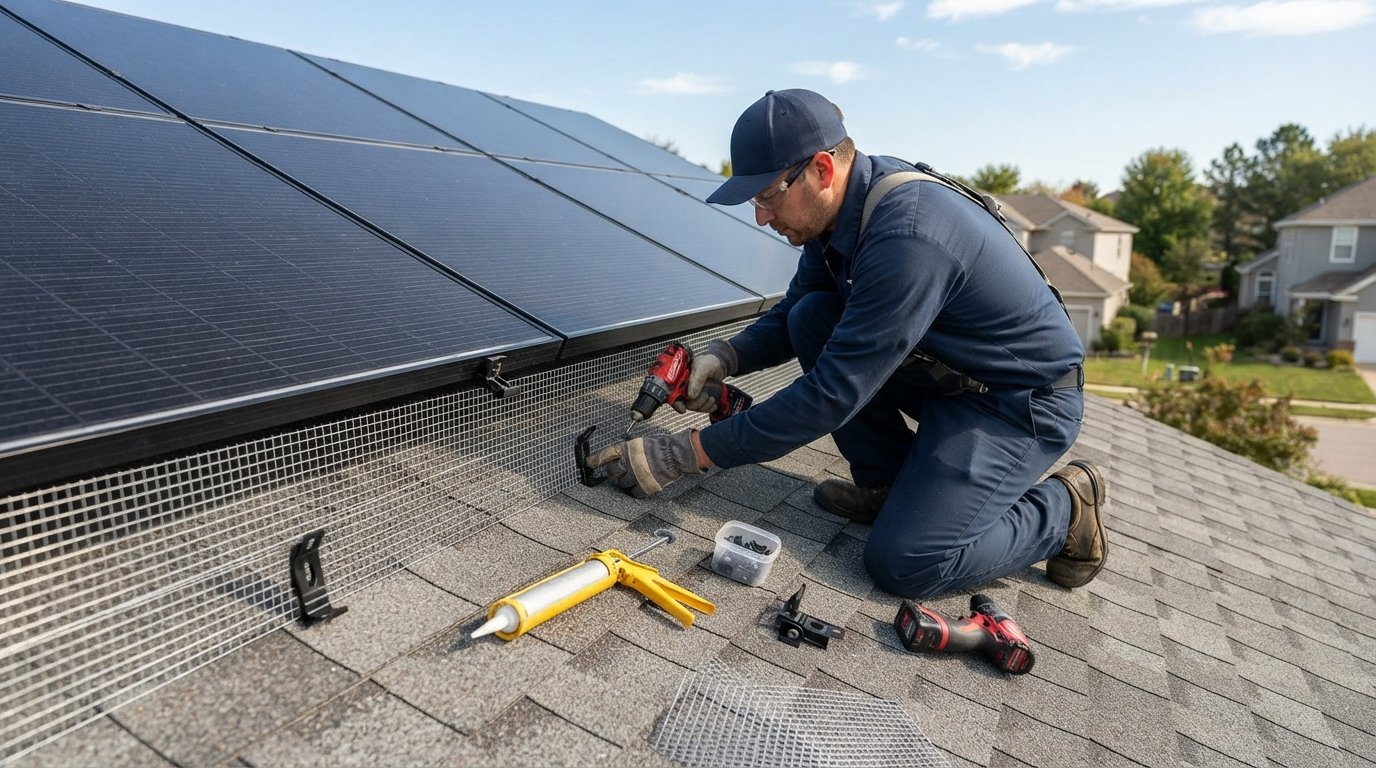
Solar Panel Bird Nesting and Critter Guard Installation
Protect your solar investment from nesting birds and rodents. Call (833)-434-4023 for expert critter guard installation and avoid costly wiring damage.

By Adam Adler
Learn more about Solar Panel Installation and Repair for guides, costs, and what to expect.
Compare Solar Panel Installation and Repair Pros Near You

Enter your ZIP code to compare top-rated local professionals and request free quotes.
Birds, squirrels, and rodents see the gap beneath your solar panels as prime real estate: shaded, elevated, and safe from predators. What starts as a few twigs and chirping chicks can quickly become chewed wiring, hotspots, and costly repairs. If you have noticed nesting activity or want to prevent it, this guide walks you through solar panel bird nesting and critter guard installation, from warning signs to DIY versus professional options and warranty considerations.
Why Critter Guards Matter for Your Solar Investment
Solar panels are designed to sit slightly above the roof surface to allow airflow and cooling. That gap, typically 4 to 6 inches, is exactly what birds and rodents look for. Once inside, they build nests that block ventilation, trap moisture, and create fire hazards. Squirrels and rats chew on wire insulation, exposing conductors to the elements and causing ground faults or arc faults. In many cases, the damage is not covered by the panel manufacturer's warranty, leaving homeowners with unexpected repair bills. A critter guard, also called a mesh skirt or bird guard, seals that gap while preserving airflow, so your system stays cool and pest-free.
How Critter Guards Block Nesting Without Trapping Heat
Critter guards are made from durable, UV-resistant wire mesh, usually galvanized steel or stainless steel, that is cut to fit the perimeter of your array. The mesh is fastened to the panel frame and the roof using clips or screws, creating a physical barrier that prevents birds and rodents from entering. The key is that the mesh is not solid: it allows air to move freely, so heat can escape. Proper installation ensures the guard does not block the panel's ventilation or create a new place for debris to accumulate. When installed correctly, critter guards are invisible from the ground and do not void panel warranties.
Warning Signs of Rodent Damage and When to Call a Pro
Regular inspections can catch problems early. Look for droppings, nesting materials, or chewed wires under the panels. Squirrels and birds often leave behind twigs, leaves, and feathers. If you see frayed wires or notice a burning smell, turn off the system and call a licensed solar professional immediately. Electrical faults from chewed wiring can be dangerous. Also, listen for scratching or chirping sounds, especially in the morning or evening. If you suspect an infestation, do not attempt to remove nests yourself: birds and rodents can carry diseases, and you risk damaging the wiring further.
DIY Critter Guard Kits vs Professional Installation
You can buy DIY critter guard kits online for around $100 to $300, depending on the size of your array. These kits include mesh, clips, and basic instructions. However, installing them requires working on a roof, often at heights, and improper installation can leave gaps or damage the panels. Professional installation typically costs $500 to $1,500, including labor and materials, and comes with a workmanship warranty. A pro will also inspect for existing damage and ensure the guard is secure. For most homeowners, professional installation is safer and more reliable, especially if your roof is steep or your panels are high.
Warranty and Workmanship Implications
Most solar panel manufacturers require that the panels be installed and maintained according to industry standards. Third-party pest exclusion devices are generally acceptable if they do not alter the panel's structure or void the warranty. However, some manufacturers may specify that only certain types of guards are approved. Always check your warranty terms before installation. Professional installers who are certified by organizations like the North American Board of Certified Energy Practitioners (NABCEP) can help ensure the work meets warranty requirements. If you install a guard yourself, use only non-corrosive materials and avoid drilling into the panel frame unless approved.
Maintenance Routine After Nesting Season
Even with a critter guard, it is wise to inspect your system after nesting season. Remove any debris that has accumulated on top of the guard or under the panels. Check that the mesh is still secure and free of tears. Look for signs of rodents trying to chew through the mesh. A yearly inspection, ideally in the spring or fall, will keep your system efficient and prevent problems. If you notice any issues, contact a solar professional for a thorough check.
For more information on keeping your solar system in top shape, see our guide on AI in solar panel efficiency. And if you are planning a move, Moving.Homes offers comprehensive relocation resources, including checklists and packing tips, to make your transition smoother.
Investing in solar panel bird nesting and critter guard installation protects your system from costly damage and keeps your energy production reliable. Whether you choose a DIY kit or hire a pro, taking action early is the best way to safeguard your solar investment.