Solar Panel Backsheet Degradation Signs and Replacement
Spot solar panel backsheet degradation signs early and avoid costly output loss. Call (833)-434-4023 for expert replacement guidance.

By Isaac Reed
Learn more about Solar Panel Installation and Repair for guides, costs, and what to expect.
Compare Solar Panel Installation and Repair Pros Near You

Enter your ZIP code to compare top-rated local professionals and request free quotes.
Your solar panels face a silent threat that rarely makes headlines but can quietly erode your investment: backsheet degradation. While most homeowners focus on panel efficiency or inverter performance, the backsheet, that thin polymer layer on the rear of each panel, is working behind the scenes to protect the entire system from environmental assault. When it fails, the consequences range from reduced output to safety hazards. Recognizing the warning signs early and understanding your replacement options can save you thousands of dollars and keep your solar investment performing as promised.
What a Solar Panel Backsheet Does and Why It Degrades
The backsheet is the outermost layer on the rear side of a photovoltaic module. It serves as a critical barrier, electrically insulating the panel, shielding the solar cells and wiring from moisture, and protecting internal components from ultraviolet (UV) radiation. Most backsheets are made from multilayer polymer films, often combining materials like polyvinyl fluoride (Tedlar), polyethylene terephthalate (PET), or newer polyolefin-based compounds. These materials are engineered to withstand decades of exposure, but they are not invincible.
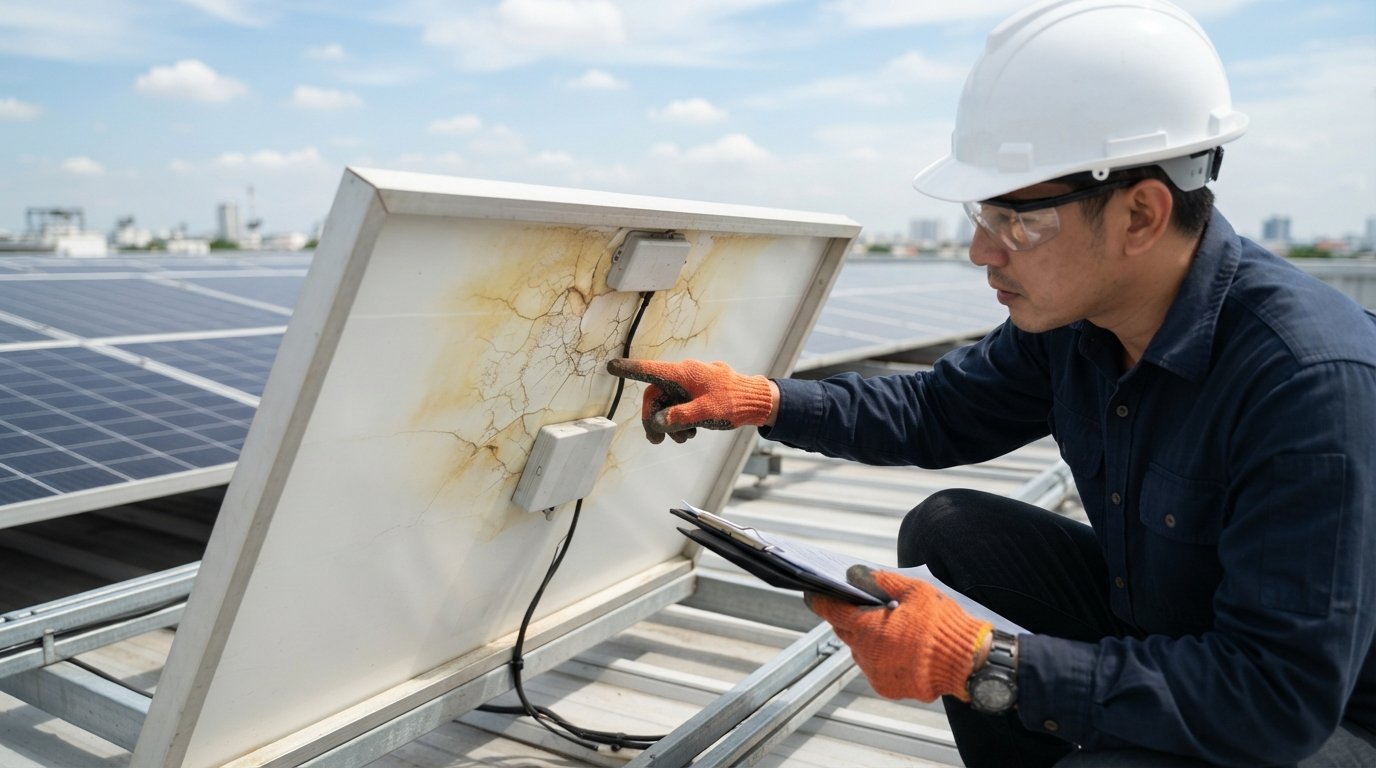
UV exposure is the primary culprit behind backsheet degradation. Over years of sunlight, high-energy UV photons break chemical bonds in the polymer chains, causing embrittlement, discoloration, and eventually cracking. Thermal cycling, the daily expansion and contraction from temperature swings, adds mechanical stress. Moisture ingress, especially in humid climates, can hydrolyze certain polymers and accelerate failure. Even airborne pollutants and cleaning chemicals can contribute. The result is a gradual loss of the backsheet's protective properties, often visible as browning, cracking, or delamination.
Understanding how your backsheet degrades helps you appreciate why regular inspection matters. Panels are typically warrantied for 25 to 30 years, but backsheet failures can appear in as little as 5 to 10 years in harsh conditions. Early detection is your best defense against costly system downtime.
Visual Warning Signs You Can Spot from the Ground
You do not need to climb onto your roof to check for backsheet problems. Many degradation signs are visible from a safe distance with a basic visual inspection. Here are the key indicators to look for:
- Browning or yellowing: A change from the original white or black color to a brownish or yellowish hue often signals UV-induced polymer breakdown.
- Cracking: Fine hairline cracks or larger fissures on the back surface indicate embrittlement and loss of mechanical integrity.
- Delamination: Peeling or separation of the backsheet layers, sometimes appearing as bubbles or blisters, means the protective barrier is compromised.
- Bubbles or blisters: Raised areas on the backsheet can indicate moisture intrusion or adhesive failure.
- Chalking or powdering: A powdery residue on the surface suggests the polymer is breaking down at a microscopic level.
These visual cues are your first line of defense. If you notice any of them, it is time to call a professional for a thorough inspection. Keep in mind that some degradation, like microcracks, may not be visible from the ground. A vetted solar pro can use specialized tools like infrared cameras or electroluminescence imaging to detect hidden issues.
How Backsheet Failure Affects Output, Safety, and Warranty
Backsheet degradation is not just a cosmetic issue. As the protective layer fails, moisture can reach the solar cells and electrical components, leading to corrosion and ground faults. This can reduce power output and, in severe cases, create safety hazards such as electrical shorts or fire risk. Even minor cracking can allow water ingress that degrades the encapsulant and solar cells over time.
From a financial perspective, a failing backsheet can void your panel warranty if the manufacturer determines that the damage resulted from improper installation or external factors not covered. However, many standard warranties do cover backsheet defects for a specified period, often 10 to 12 years. If you suspect degradation, review your warranty terms and contact the manufacturer or your installer promptly. Documenting the issue with photos and professional inspections strengthens your claim.
Moreover, backsheet failure can compromise your system's overall performance and your return on investment. If left unaddressed, degraded panels may produce significantly less energy, increasing your payback period and reducing savings. In some cases, the degradation can spread to adjacent panels if the root cause (like moisture intrusion) is not mitigated. This is why early intervention is critical.
Repair vs. Replacement Economics and When to Call a Pro
When backsheet degradation is detected, you face a decision: repair or replace? The right choice depends on the extent of the damage, the age of your system, and your warranty coverage. Small areas of cracking or minor delamination might be repairable with specialized sealants or patches, but these solutions are often temporary and may not restore full protection. In many cases, replacing the affected panels is the more reliable and cost-effective long-term solution.
Consider the following factors when making your decision:
- Age of the system: If your panels are near the end of their warranty period, replacement may be more sensible than repair.
- Extent of damage: Widespread cracking or delamination across multiple panels usually warrants replacement.
- Warranty coverage: Check if the manufacturer will cover replacement under warranty; if so, pursue that route first.
- Labor costs: Repairing individual panels can be labor-intensive; sometimes replacement is more economical.
- Future performance: New panels may offer higher efficiency and better reliability, improving your overall system output.
For any backsheet issue, it is wise to consult a vetted solar professional. They can assess the damage accurately, advise on warranty claims, and provide quotes for repair or replacement. Attempting DIY fixes can be dangerous and may void warranties. If you are also planning a move, resources like Moving.Homes offer guides on relocating with solar systems, but for the technical work, always rely on qualified solar technicians.
To maximize your solar investment, consider integrating smart monitoring and AI-driven optimization. As discussed in AI in Solar Panel Efficiency: Boost Your Home Savings, these technologies can help you detect performance dips early and schedule maintenance proactively. When you are ready to find a trusted installer or inspector, SolarEnergy.ai connects you with local solar pros who can handle everything from routine inspections to full panel replacement.
Steps to Take If You Suspect Backsheet Degradation
If you have spotted potential warning signs, do not panic. Follow these steps to address the issue methodically:
- Document the problem: Take clear photos of the affected areas from multiple angles.
- Review your warranty: Check the terms and conditions for backsheet coverage and the claims process.
- Contact a professional: Schedule an inspection with a vetted solar installer or technician.
- Get a written assessment: Ask for a detailed report on the extent of degradation and repair or replacement options.
- Compare quotes: If replacement is needed, obtain multiple quotes to ensure fair pricing.
By acting promptly, you can prevent further damage and protect your solar investment. Remember that regular maintenance and inspections are key to catching backsheet degradation early. Many solar companies offer annual check-up plans that include visual inspections and performance analysis.
Preventing Backsheet Degradation: Best Practices
While you cannot completely stop UV exposure, you can take steps to prolong your backsheet's life. Keep your panels clean and free of debris that can trap moisture. Avoid using harsh chemicals or abrasive cleaners that might damage the polymer surface. Ensure proper installation with adequate ventilation to reduce thermal stress. If you live in a particularly harsh climate, consider panels with enhanced UV-resistant backsheets. Finally, schedule regular professional inspections to catch early signs of wear before they escalate.
Solar panel backsheet degradation is a serious issue that demands attention, but with vigilance and the right support, you can manage it effectively. Whether you need a simple inspection or a full replacement, SolarEnergy.ai is here to help you find trusted local solar professionals. Protect your investment and keep your clean energy system running smoothly for years to come.
Learn more about Solar Panel Installation and Repair for guides, costs, and what to expect.
Compare Solar Panel Installation and Repair Pros Near You
Enter your ZIP code to compare top-rated local professionals and request free quotes.