Solar Generator vs Home Battery: Backup Comparison
Compare solar generators and home batteries for backup power. Call (833)-434-4023 to find the right fit for outages, medical needs, or independence.

By Victor Walsh
Learn more about Generator Installation for guides, costs, and what to expect.
Compare Generator Installation Pros Near You

Enter your ZIP code to compare top-rated local professionals and request free quotes.
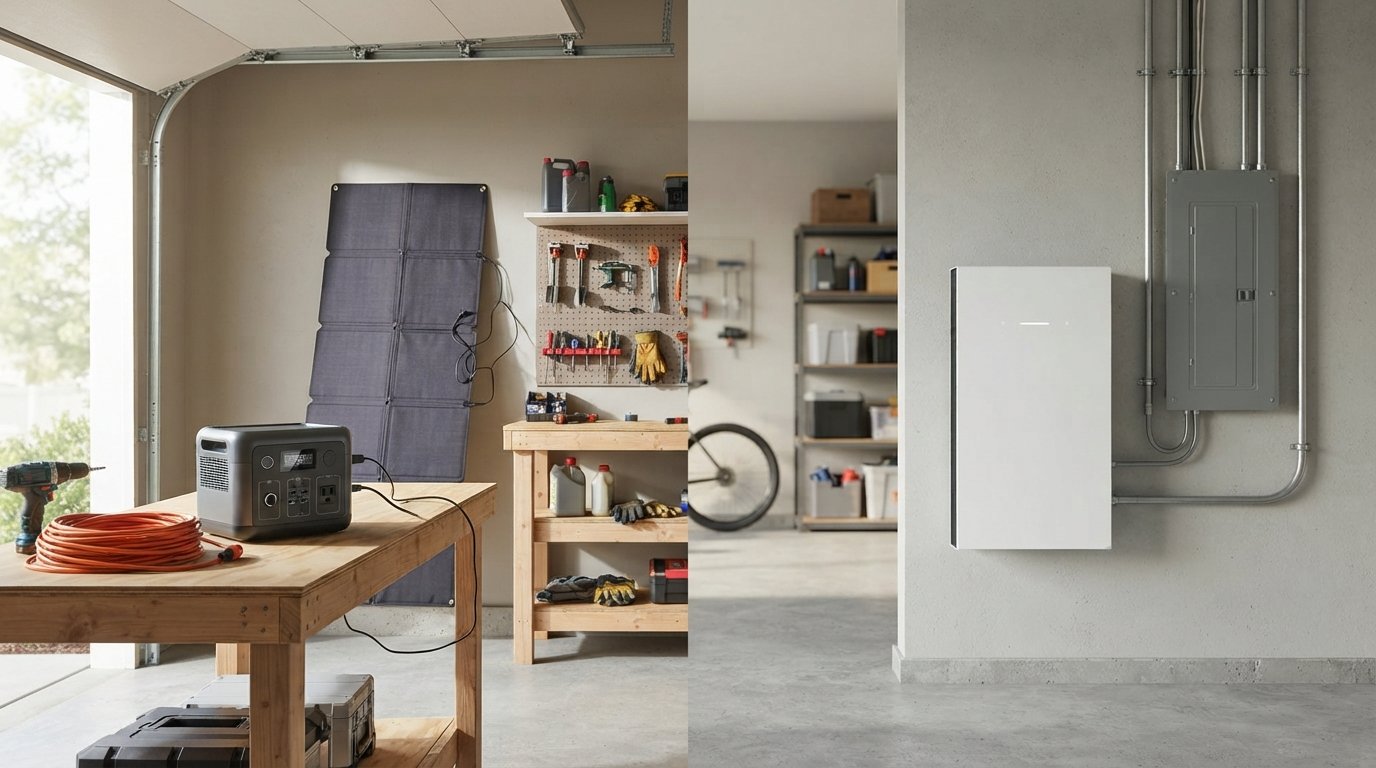
When the grid goes down, the difference between a quiet night with the lights on and a frantic search for flashlights comes down to one decision: how you store backup power. Two options dominate the conversation for homeowners in 2026, and they are not interchangeable. A portable solar generator is a plug-and-play box you can carry to a campsite or roll to the kitchen during an outage. A home battery backup is a permanently installed system wired into your electrical panel, often paired with rooftop solar. Choosing between them affects your budget, your installation timeline, and how much of your home stays powered when the utility company cannot help.
This solar generator versus home battery backup comparison breaks down the real differences in capacity, output, installation requirements, and long-term cost so you can match the technology to your actual needs. Whether you are protecting a medical device, riding out short storm-related outages, or aiming for whole-home independence, the right answer depends on how much power you need, for how long, and how much complexity you are willing to manage.
Capacity, Output, and Runtime in Plain Terms
The first thing to understand is that these two products are measured differently, which makes direct comparison confusing. Portable solar generators are rated in watt-hours (Wh) and continuous watts (W). A typical mid-size unit might offer 1,000 to 2,000 Wh of capacity and 1,500 to 2,000 W of continuous output. That is enough to run a refrigerator, a few lights, a laptop, and a phone charger for several hours, or to keep a CPAP machine running overnight. Larger portable units push toward 3,000 to 5,000 Wh, but they also become heavy and expensive.
Home battery backups are rated in kilowatt-hours (kWh) and kilowatts (kW). A single home battery module commonly stores 10 to 15 kWh and can discharge 5 to 10 kW continuously. Because they are wired into your panel, they can power multiple circuits at once, including a well pump, furnace blower, or central air conditioning, depending on the system design. The difference in scale is roughly tenfold: one home battery holds as much energy as several large portable generators combined.
Runtime depends on load. A 1,000 Wh solar generator running a 100 W load lasts about 10 hours in theory, less in practice due to inverter losses. A 10 kWh home battery running a 1,000 W average load lasts roughly 10 hours as well, but it can also handle a 5,000 W surge when your refrigerator compressor kicks on. Portable units struggle with high surge loads, which is why you cannot reliably run a central air conditioner from most of them. The table below summarizes the practical differences:
- Portable solar generator: 500 to 5,000 Wh capacity, 500 to 3,000 W output, hours to a day of runtime for essential devices, no installation.
- Home battery backup: 5 to 30+ kWh capacity, 5 to 15 kW output, one to three days of whole-home or essential-circuit runtime, professional installation required.
- Recharge speed: Portable units recharge from solar panels in 4 to 8 hours; home batteries recharge from solar or grid and can be sized to recharge daily.
The key takeaway is that capacity and output determine what you can run, not just for how long. A solar generator versus home battery backup comparison that ignores surge loads and simultaneous circuits will lead you to underestimate what a home battery actually provides.
Installation, Permitting, and Code Requirements
Installation is where the two options diverge most sharply. A portable solar generator requires no installation at all. You unbox it, charge it from a wall outlet or solar panel, and plug your devices into its outlets. There is no permit, no inspection, no electrician, and no utility interconnection agreement. For renters, apartment dwellers, or anyone who wants backup power without modifying their home, this simplicity is a major advantage.
A home battery backup is a permanent electrical installation. It requires a licensed electrician, a building permit in most jurisdictions, and an inspection before it can be energized. If you are pairing it with solar, you also need an interconnection agreement with your utility, which can take weeks or months to approve. The system includes a battery cabinet, an inverter or hybrid inverter, a transfer switch or critical-load panel, and often a dedicated monitoring gateway. Installation typically takes one to three days and adds $2,000 to $5,000 or more to the project cost, depending on electrical panel upgrades and labor rates.
Code requirements matter for safety and insurance. Home batteries must comply with NFPA 855 and local fire codes, which may dictate placement, clearance, and ventilation. Some jurisdictions require a stamped engineering plan. Portable generators avoid these requirements entirely because they are not permanently connected to the home wiring. If you plan to backfeed a portable generator through a transfer switch, that switch itself requires a permit and inspection, but the generator remains a portable appliance.
For homeowners who want a permanent solution without guesswork, working with vetted professionals is the safest path. Platforms like NewSolarQuotes connect you with local installers who understand permitting and can size a system to your panel and goals. The installation burden is real, but it buys you automation, safety, and code compliance that a portable unit cannot match.
Which Choice Fits Short Outages, Medical Needs, or Full Independence?
Short outages are the most common scenario in the United States. Most grid interruptions last a few hours to a day, often caused by storms, heat waves, or equipment failures. For these events, a portable solar generator is often enough. It keeps the refrigerator cold, charges phones, runs a fan or space heater, and powers a few lights. You can store it in a closet, deploy it in minutes, and recharge it from a folding solar panel if the outage stretches longer. The trade-off is manual effort: you must move it, plug in devices one by one, and manage loads yourself.
Medical needs raise the stakes. If someone in your home depends on a CPAP machine, oxygen concentrator, or refrigerated medication, reliability becomes non-negotiable. A portable solar generator can work, but you need to size it carefully and have a backup plan for cloudy days. A home battery backup is better suited here because it can be wired to dedicated circuits and switch over automatically, often within seconds. You do not have to be home to start it, and you do not have to worry about someone forgetting to plug in the right device.
Full home independence is a different goal entirely. If you want to run your central air conditioning, electric water heater, well pump, and all the usual conveniences through a multi-day outage, only a home battery backup with sufficient capacity can deliver. Pairing a home battery with solar panels also lets you recharge daily and reduce reliance on the grid over time. For homeowners pursuing energy independence, a solar generator versus home battery backup comparison usually points toward a professionally installed battery system, especially when net metering and time-of-use rates are part of the financial picture. Tools like an AI solar monitoring guide can help you understand how automated energy management squeezes more value from a home battery.
Long-Term Cost per Usable Kilowatt-Hour and Warranty Considerations
Upfront price is only part of the story. To compare fairly, calculate cost per usable kilowatt-hour over the life of the product. A $1,500 portable solar generator with 1,000 Wh of usable capacity and a 500-cycle lifespan delivers roughly 500 kWh over its life, or about $3.00 per kWh. A $12,000 home battery with 10 kWh usable capacity and a 4,000-cycle lifespan delivers about 40,000 kWh, or roughly $0.30 per kWh. The home battery costs more upfront but delivers far cheaper energy over time, especially when paired with solar to recharge daily.
Warranties reflect this difference. Portable solar generators typically carry one- to three-year warranties, with some premium brands offering five years. Home batteries commonly carry ten-year warranties with a guaranteed capacity retention, often 60 to 70 percent of original capacity at the end of the term. Installation labor and permitting are usually not covered, but the battery itself is a long-term asset tied to your home. If you sell your house, a home battery can increase resale appeal, while a portable generator goes with you.
Incentives also shift the math. The federal residential clean energy credit can cover a portion of home battery costs when the battery is charged by solar, and some states and utilities add rebates. Portable solar generators generally do not qualify for these incentives because they are not permanently installed. For a detailed look at what applies in your area, consult a solar incentives and rebates guide and verify current rules with official sources, since programs change.
Maintenance and replacement costs matter too. Portable units have limited cycle life and may need replacement every five to ten years. Home batteries are designed for longer service, but inverter replacement and monitoring subscription fees can appear over time. The solar generator versus home battery backup comparison ultimately favors the portable unit for low upfront cost and flexibility, and the home battery for long-term value and whole-home capability.
Matching the Technology to Your Actual Needs
Before you buy, list your critical loads and estimate how long you need to run them. A simple framework helps: write down each device, its running watts, its surge watts, and the hours per day you would use it during an outage. Add up the watt-hours to get a daily energy budget. If your total is under 2,000 Wh and you are comfortable managing devices manually, a portable solar generator fits. If your total exceeds 5,000 Wh or includes hardwired equipment like a furnace or well pump, a home battery backup is the realistic choice.
Also consider your living situation and timeline. Renters and frequent movers should lean toward portable units. Homeowners planning to stay for years, especially those adding solar, should explore home batteries and get multiple quotes from qualified installers. A professional energy audit can reveal how much backup capacity you actually need, which prevents overspending on either option.
Both technologies have a place in a resilient home energy plan. Some homeowners even combine them: a home battery for whole-home backup and a portable solar generator for camping, tailgating, or a secondary layer of protection. The right answer depends on your budget, your electrical loads, and how much automation you want. Use this comparison as a starting point, verify local codes and incentives, and size your system around the outages you realistically expect to face.
Learn more about Generator Installation for guides, costs, and what to expect.
Compare Generator Installation Pros Near You
Enter your ZIP code to compare top-rated local professionals and request free quotes.