Solar Easement and HOA Approval: A Homeowner's Guide
Navigate the solar easement and homeowner association approval process with confidence. Call (833)-434-4023 for expert guidance on your project.

By Dylan Harris
Learn more about Solar Panel Installation and Repair for guides, costs, and what to expect.
Compare Solar Panel Installation and Repair Pros Near You

Enter your ZIP code to compare top-rated local professionals and request free quotes.
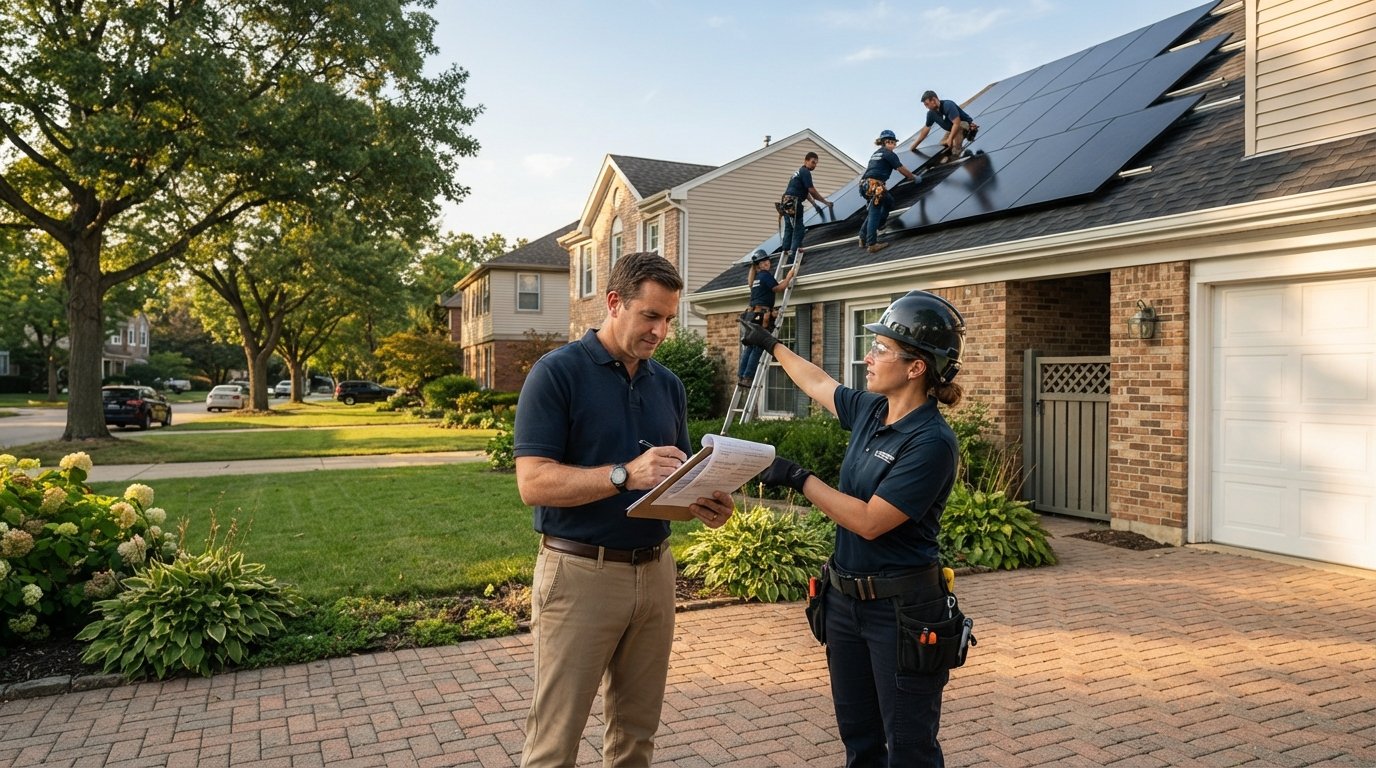
You have researched panels, crunched the numbers, and picked a contractor. Then the letter arrives from your homeowner association: your solar project is on hold pending review. For millions of Americans living in planned communities, that letter is the moment the dream of energy independence meets the fine print of deed restrictions. The good news is that the law is often on your side, and the approval path is more predictable than it looks. This guide walks you through the solar easement and homeowner association approval process step by step, from the state statutes that override unreasonable bans to the paperwork that gets your application approved the first time.
Know Your Rights: State Solar Access Laws That Override HOA Restrictions
More than half of U.S. states have enacted solar access laws, sometimes called solar rights statutes, that limit how far a homeowner association can go in restricting rooftop solar. The strength of these protections varies dramatically. Some states, such as California, Colorado, and Florida, broadly prohibit HOAs from adopting covenants that effectively ban solar installations. Others permit reasonable restrictions related to aesthetics, placement, or safety, but require the association to show that any restriction does not significantly increase the cost of the system or decrease its efficiency.
The practical implication is that an HOA cannot simply say no because a board member dislikes the look of panels. If you live in a state with a strong solar access law, the association generally must approve a compliant application, and its review must be reasonable and timely. A handful of states, including Indiana and Wisconsin, have narrower protections that apply mainly to detached single-family homes. Meanwhile, some states have no solar access statute at all, which means your rights depend entirely on the recorded covenants and your ability to negotiate with the board.
Before you draft a single email to your HOA, spend an hour confirming where your state stands. Your state energy office, attorney general, or a solar advocacy nonprofit can confirm the exact statute and what it covers. Knowing the law does two things: it tells you whether the board's objection is legally defensible, and it signals to the board that you understand your rights, which often changes the tone of the conversation. If your state offers a solar rights statute with a reasonable restriction standard, quote it directly in your application cover letter.
What the HOA Architectural Review Application Typically Requires
Most associations route solar requests through an architectural review committee, often called an ARC or ACC. The committee exists to keep modifications consistent with community standards, and solar is treated like any other exterior change. While requirements vary by community, a complete application usually includes several core documents. Submitting all of them at once, in a single packet, is the single best way to avoid a request for more information that resets the clock.
A typical solar ARC packet includes the following items. Note that some boards ask for more, but these are the common denominators:
- A completed architectural request form signed by the property owner, not just the installer
- A site plan or roof diagram showing panel placement, dimensions, and setbacks from property lines
- Manufacturer spec sheets and renderings of the panels and mounting hardware, including color and profile
- A copy of your signed installation contract and proof of the contractor's license and insurance
- An electrical one-line diagram or engineering summary, often supplied by the installer
Beyond the paperwork, pay attention to procedural details that trip up applicants. Many boards have submission deadlines tied to monthly meetings, so a packet filed the day after the deadline waits another month. Some covenants require certified mail or a specific online portal. Others impose a deemed approval provision, meaning the request is automatically granted if the board fails to respond within a set period, commonly 30 to 60 days. Read your governing documents for that clause and track the date. If the board misses its window, you may have legal approval by default, but you should confirm this with your state's rules before relying on it.
It also helps to frame the application around the board's own criteria. If the guidelines mention visibility from the street, include a rendering showing panels on the rear-facing slope. If they mention noise or glare, include manufacturer data on anti-reflective coatings. Committees respond well to applications that answer their aesthetic concerns before they are raised, and a well-prepared packet can move through review in a single meeting.
Solar Easements and Neighbor Shading Rights Explained
An HOA approval is only half of the legal picture. A solar easement is a separate, recorded legal instrument that protects your system's access to sunlight across a neighbor's property. If a mature tree or a future second-story addition could shade your array, an easement gives you a documented right to negotiate or seek remedies. Without one, you may have no recourse when a neighbor's landscaping grows into your solar window.
Solar easements are created voluntarily, usually through a written agreement between neighbors that is recorded with the county. State statutes in solar-friendly states often specify what the easement must include, such as the vertical and horizontal angles of the sun access that must be preserved, the hours of the day protected, and terms for compensation or dispute resolution. Some states allow easements to run with the land, binding future owners, while others require renewal. In planned communities, the HOA itself may hold or grant easements over common areas, which is why the board's cooperation matters even when your state law protects your right to install.
Shading disputes are the most common solar conflict between neighbors, and they rarely end well without documentation. If your proposed array sits near a property line, talk to the affected neighbor early and consider a written solar easement even if your state does not require one. For a deeper look at how monitoring technology can flag production losses from new shade, see our guide on how AI improves energy efficiency for home solar. The key takeaway is that easements and HOA approvals solve different problems: one protects your sunlight, the other protects your permission to build.
Shared Roofs, Condos, and Planned Community Covenants
Single-family homeowners in HOAs face a review process, but condo and townhome owners face a property rights question first. In a condominium, the roof is usually a common element owned by the association, not by the unit owner. That means installing solar typically requires approval from the board and sometimes a vote of the membership, and the system may legally belong to the association rather than to you. Some states have adopted condo-specific solar statutes that streamline this, but many have not, leaving the decision to the declaration and bylaws.
If you own a townhome with a shared roof structure, read your declaration to determine who controls the roof surface and who is responsible for maintenance. Associations often resist rooftop solar on shared roofs because of warranty, leak liability, and equitable use concerns: if one owner covers the shared roof with panels, other owners lose access to that space. Practical workarounds include community solar subscriptions, ground-mounted arrays on limited common elements, or a board-approved master plan that allocates roof sections fairly. None of these are quick, so budget extra time for a condo project.
Planned community covenants add another layer. Even where state law protects your right to install, the covenant may impose screening requirements, setback rules, or approved contractor lists. The strongest position comes from reading three documents before you apply: the declaration of covenants, conditions, and restrictions (CC&Rs), the architectural guidelines, and any solar-specific policy the board has adopted. If the board has no solar policy, propose one. Offering a short, reasonable draft policy demonstrates good faith and often accelerates approval for your own project.
Documentation to Gather Before Requesting Installer Quotes
Most homeowners shop for solar before they understand their HOA rules, then discover the approved system they wanted is not the one the board will allow. Flip the order. Gather your community documents first, then ask installers to quote systems that fit within the rules. This avoids the frustrating scenario where a signed contract must be renegotiated because the committee rejects the panel layout.
Before you request quotes, assemble a homeowner packet that includes your CC&Rs and architectural guidelines, any existing solar policy, your state's solar access statute (if one applies), a recent plat or survey showing property lines and roof orientation, and your electricity usage history. Share this packet with each installer and ask two questions: can you design within these constraints, and will you prepare the ARC submission materials? Reputable installers do this routinely and can supply renderings, spec sheets, and engineering diagrams formatted for committee review.
It also pays to think about the move itself if your solar plans are part of a larger transition. Homeowners preparing to relocate can find checklists and practical guidance through Moving.Homes relocation resources, which cover packing, storage, and the logistics of transferring utilities and service contracts. Solar systems can complicate a sale, so understanding transferability and disclosure requirements early protects both your investment and your closing timeline.
Finally, keep a complete paper trail. Save every email, submission receipt, meeting notice, and board decision letter. If a dispute arises, documentation is your strongest evidence, and many state solar access laws include enforcement provisions that reward homeowners who followed the process correctly. A clean record also makes future requests, such as adding battery storage or expanding the array, far easier to approve.
Building a Smooth Approval Timeline
Treat the approval process as a project with its own schedule. A realistic sequence looks like this: confirm your state law and read your covenants in week one; assemble the document packet and request installer quotes in weeks two and three; select a contractor and prepare the ARC submission in weeks four and five; submit before the board's deadline and attend the meeting; then schedule installation only after written approval is in hand. In communities with monthly meetings and multiple review rounds, plan for 60 to 90 days from first inquiry to approval.
Communication style matters as much as paperwork. Address the board in writing, keep the tone cooperative, and frame your request around community benefits such as reduced grid load and stable property values. If a board member raises an aesthetic concern, respond with a specific design adjustment rather than a legal threat, and reserve citations of state law for cases where the board imposes an unreasonable restriction. Boards respond to homeowners who make their job easy, and a complete, well-organized packet does exactly that.
If your project stalls, escalate deliberately. Ask for the denial in writing with the specific covenant or guideline cited, then compare that citation against your state's solar access law. Many disputes resolve at this stage because boards recognize that an outright ban is legally risky. When they do not, your state attorney general's office, a local solar advocate, or an attorney experienced in community association law can advise on next steps. The solar easement and homeowner association approval process rewards preparation, and homeowners who understand both their rights and their community's rules consistently get to installation faster.
Solar is a long-term investment, and the approvals you secure today protect it for decades. Confirm your state protections, read the covenants, assemble a complete packet, and keep every record. With that foundation, the path from application to activation becomes a manageable checklist rather than a legal maze.