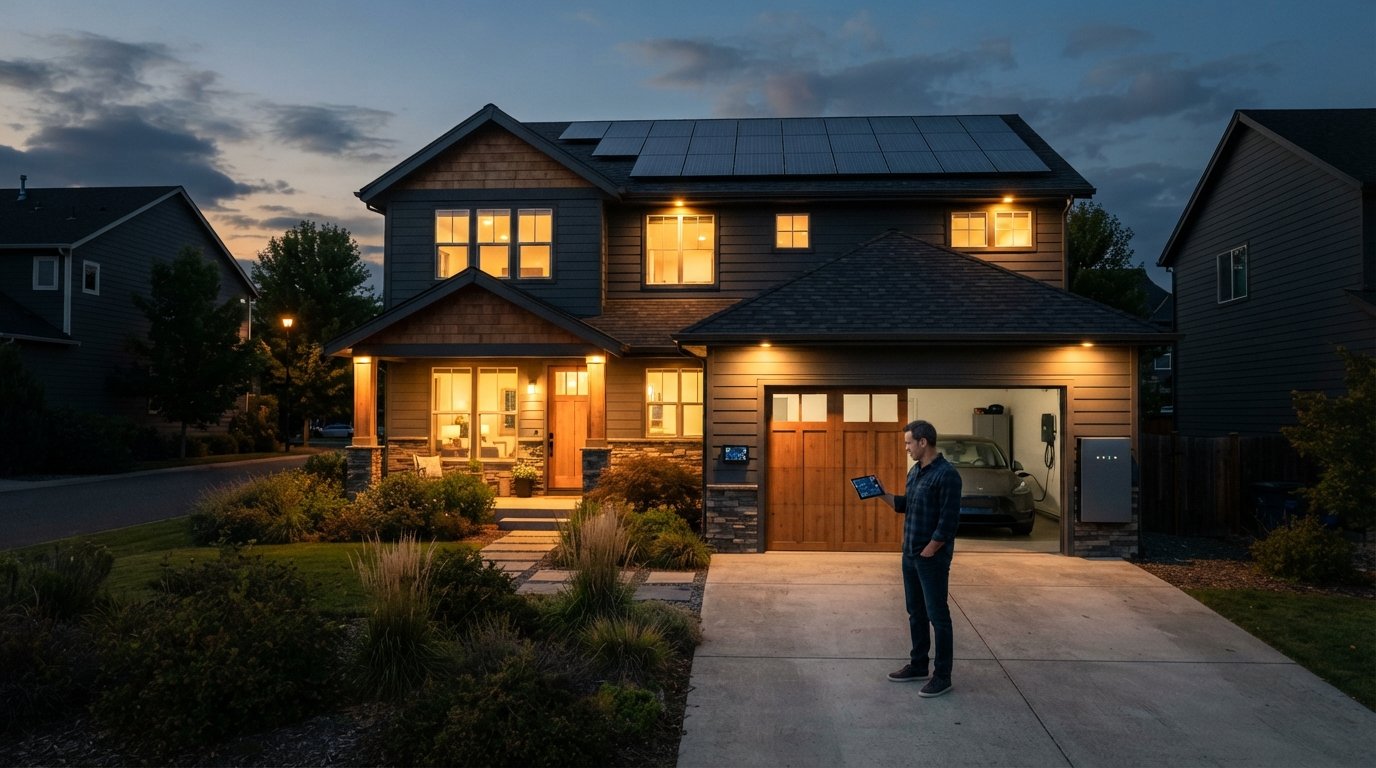
Residential Microgrid With Solar and Battery Storage
A residential microgrid with solar and battery storage cuts bills and keeps power on during outages. Call 8334344023 for expert help.

By Maya Hayes
Learn more about Solar Panel Installation and Repair for guides, costs, and what to expect.
Compare Solar Panel Installation and Repair Pros Near You

Enter your ZIP code to compare top-rated local professionals and request free quotes.
Imagine a home that keeps the lights on when the neighborhood goes dark, cuts its own power bills, and runs on clean energy day and night. That is not a fantasy for off grid cabins anymore. A residential microgrid with solar and battery storage is becoming a practical upgrade for ordinary homeowners in the United States, and the economics are improving every year. Instead of relying on a single utility line for everything, you create a small self contained energy system on your property that can generate, store, and manage electricity on its own terms.
The concept sounds technical, but the payoff is simple: greater control, lower bills, and real resilience. A microgrid combines solar panels, a battery bank, smart controls, and often a connection to the main grid as a backup. When the sun is shining, panels power the house and charge the battery. When the grid fails, the battery and solar keep critical loads running. When rates spike, the system can choose the cheapest source. This article explains how these systems work, what they cost, how to size them, and how to decide whether one makes sense for your home in 2026.
What a Residential Microgrid Actually Is
A microgrid is a localized energy system that can operate independently or alongside the larger utility grid. In a home setting, it usually consists of four core parts: solar panels, an inverter or hybrid inverter, a battery storage system, and a controller or energy management system. The controller is the brain. It decides in real time whether to use solar directly, charge the battery, pull from the grid, or discharge stored energy to run the house.
The key difference between a simple solar setup and a microgrid is islanding capability. Standard grid tied solar shuts down during a blackout to protect utility workers. A microgrid with battery storage can disconnect from the grid, form its own electrical island, and continue powering selected circuits. That means your refrigerator, internet router, medical devices, and a few lights can stay on when the rest of the street is dark.
Microgrids also differ in scale. A single home microgrid might serve one house and a detached garage. A community microgrid might link several homes or a small neighborhood. For most homeowners, the residential version is the right starting point because it is simpler to permit, install, and maintain. You can always expand later by adding batteries or a second inverter.
How Solar and Battery Storage Work Together
Solar panels produce direct current (DC) electricity when sunlight hits them. An inverter converts that DC power into alternating current (AC) for your home. In a microgrid, a hybrid inverter can also manage battery charging and grid interaction in one unit. During the day, excess solar energy that your home does not use immediately gets stored in the battery instead of being exported to the grid at a low rate.
At night or during a blackout, the battery discharges to power your home. If the battery runs low and the grid is available, the system can recharge from the grid during off peak hours. If the grid is down and the sun is shining, solar can recharge the battery while also running loads. This cycle repeats daily, and smart software optimizes every decision based on weather forecasts, utility rates, and your household habits.
Battery chemistry matters here. Lithium iron phosphate (LFP) batteries are now the most common choice for homes because they are safe, long lasting, and can handle deep discharges. They typically come with a 10 year warranty and can last 15 years or more with proper management. Lead acid batteries are cheaper upfront but heavier, shorter lived, and less efficient, so they are rarely recommended for new residential microgrids.
If you want a deeper dive into how storage technology is evolving, our guide on solar battery banks explains the next generation of energy storage in plain language.
Why Homeowners Are Choosing Microgrids in 2026
The case for a residential microgrid with solar and battery storage has never been stronger. Electricity rates in many states have climbed faster than inflation, and severe weather events are causing longer outages. At the same time, federal incentives and state rebates have made batteries more affordable. Homeowners are also more aware of how dependent they are on a single grid connection.
Here are the main benefits that drive adoption:
- Energy independence: You generate and store your own power, reducing reliance on utility rate hikes and outages.
- Bill savings: You use more of your own solar energy instead of buying it back at retail prices, and you can avoid peak demand charges.
- Resilience: Critical loads stay powered during storms, wildfires, or grid failures.
- Environmental impact: You lower your carbon footprint by using clean solar energy instead of fossil fuel based grid power.
- Property value: Homes with modern energy systems often appraise higher and sell faster in competitive markets.
These benefits compound over time. A well designed microgrid can cut a typical household electric bill by 50 to 90 percent, depending on local rates, solar production, and how much storage you install. It also protects you from the growing trend of time of use rates, where utilities charge much more during peak evening hours. With a battery, you can shift your consumption to cheaper times and avoid those high prices entirely.
Another factor is the rise of virtual power plants (VPPs). Some utilities now pay homeowners to discharge their batteries during grid stress events. That turns your microgrid into a small revenue stream, not just a cost center. Programs vary by state and utility, but they are expanding quickly, especially in California, Texas, and the Northeast.
Key Components of a Home Microgrid
Every residential microgrid is built from a few essential building blocks. Understanding them helps you compare quotes and avoid overspending on features you do not need.
Solar array: The size depends on your annual electricity use, roof orientation, and local sun hours. A typical home needs 6 to 12 kilowatts (kW) of solar to cover most of its usage. Panels come in monocrystalline, polycrystalline, and thin film types, with monocrystalline being the most efficient and popular for limited roof space.
Hybrid inverter: This device converts DC solar power to AC house power and manages battery charging. Some systems use separate solar inverters and battery inverters, but hybrid units are simpler and more efficient. Look for inverters with backup power capability and smart monitoring.
Battery storage: Capacity is measured in kilowatt hours (kWh). A single 10 kWh battery can run essential loads for a day or two, while 20 to 30 kWh gives you more comfort and longer backup. Modular batteries let you start small and add capacity later.
Energy management system (EMS): Software that monitors production, consumption, battery state, and grid conditions. A good EMS can automatically prioritize loads, schedule battery charging, and participate in demand response programs. Some systems integrate with smart home platforms like Google Home or Apple HomeKit.
Critical load panel: A sub panel that isolates the circuits you want powered during an outage. This usually includes the refrigerator, freezer, internet, medical equipment, and a few lights and outlets. Whole home backup requires a larger battery and a more complex transfer switch.
Sizing Your System: A Practical Framework
Sizing a microgrid is not guesswork. You can follow a simple process to match the system to your needs and budget.
- Review your electricity usage: Gather 12 months of utility bills and note your average daily kWh use. Also identify your peak demand and time of use periods.
- Decide what you want to back up: List the appliances and circuits that must stay on during an outage. Add up their wattage and estimate how many hours per day you need them.
- Calculate solar production: Use a solar calculator or consult a pro to estimate how many kWh your roof can generate each year based on location, shade, and panel orientation.
- Choose battery capacity: Match battery kWh to your backup needs plus daily cycling. A common starting point is 10 to 20 kWh for essential loads and 30 kWh or more for whole home resilience.
- Plan for growth: If you might add an electric vehicle or heat pump later, size the inverter and panel capacity with room to expand.
This framework keeps you from overbuilding. Many homeowners start with a modest battery and add more later as prices fall or incentives improve. It also helps you compare quotes apples to apples, because you can ask installers to specify solar kW, battery kWh, inverter capacity, and backup loads.
If you want a fast estimate, use our Solar Savings Calculator to see how much you could save with solar and storage in your area.
Costs, Incentives, and Payback
A residential microgrid with solar and battery storage is a significant investment, but the net cost after incentives is often lower than people expect. As of 2026, a typical 8 kW solar system with a 10 kWh battery might range from $25,000 to $35,000 before incentives, depending on your state and installer. Adding a second battery can push the price to $40,000 or more.
The federal Investment Tax Credit (ITC) currently covers 30 percent of the cost of solar and battery storage when the battery is charged by solar. That alone can reduce a $30,000 system to $21,000. Many states and utilities add rebates, performance based incentives, or low interest financing. Some homeowners also qualify for property tax exemptions or sales tax waivers on solar equipment.
Payback periods vary widely. In high rate states like California, Hawaii, and Massachusetts, a microgrid can pay for itself in 6 to 10 years through bill savings and outage protection. In lower rate states, payback may stretch to 12 or 15 years, but resilience and environmental benefits still add value that is not captured in a simple payback calculation.
Financing options include cash purchase, solar loans, leases, and power purchase agreements (PPAs). Cash purchase gives you the highest lifetime savings and full ownership of the ITC. Loans let you start with little or no money down and pay over time. Leases and PPAs have lower upfront costs but you do not own the system or claim the tax credit. For microgrids with batteries, ownership usually makes more sense because you want control over how the battery is used.
To get accurate local pricing and incentive information, it helps to compare quotes from vetted installers. You can start by exploring trusted resources like FreeSolarPowerQuotes, which connects homeowners with reputable solar providers for no obligation estimates.
Installation Process and Permitting
Installing a microgrid is more involved than a standard solar panel installation because of the battery and islanding equipment. The process typically follows these stages:
- Site assessment: An installer evaluates your roof, electrical panel, shading, and energy usage.
- System design: You receive a proposal with solar size, battery capacity, inverter type, and backup loads.
- Permitting: The installer files for building, electrical, and utility permits. This can take weeks to months depending on your jurisdiction.
- Installation: Crews mount panels, run wiring, install the inverter and battery, and set up the critical load panel.
- Inspection and interconnection: A local inspector and your utility must approve the system before it can operate.
- Commissioning: The installer tests backup mode, configures the EMS, and shows you how to monitor performance.
Timelines range from one to three months for simple projects and longer for complex ones. The most common delays come from permitting and utility interconnection, especially in areas with high solar adoption. A good installer will handle most of the paperwork and keep you informed.
One important consideration is your main electrical panel. Older homes may need a panel upgrade to handle the inverter and battery connections. That adds cost and time, but it also improves safety and may be required by code. Ask your installer to inspect the panel during the site assessment.
Maintenance and Long Term Performance
Microgrids are designed to be low maintenance, but they are not maintenance free. Solar panels need occasional cleaning and inspection for debris, snow, or damage. Inverters and batteries should be monitored through their apps for error codes and performance trends. Most manufacturers provide remote diagnostics and warranty support.
Battery performance degrades slowly over time. A typical LFP battery retains 70 to 80 percent of its capacity after 10 years. That still leaves plenty of usable storage for most homes, but you may want to add capacity eventually. Software updates can also improve efficiency and add new features, so keep your EMS connected to the internet.
It is wise to schedule a professional inspection every two to three years. Technicians can check wiring, torque connections, and battery health, and they can catch small issues before they become expensive. If you ever plan to sell your home, having maintenance records and monitoring data can help demonstrate the system's value to buyers.
Choosing the Right Installer
The quality of your installation matters as much as the equipment. A poorly designed microgrid can underperform, fail during outages, or create safety hazards. Look for installers who are certified by the North American Board of Certified Energy Practitioners (NABCEP), have experience with battery backup systems, and offer strong warranties on labor and equipment.
Ask for references from customers with similar systems, and request a detailed proposal that includes expected production, battery backup duration, and monitoring capabilities. Avoid installers who pressure you with limited time offers or who cannot explain how the system will behave during a blackout.
You can also use a trusted platform to compare local solar pros. Our Find Solar Installers tool connects you with vetted professionals who understand microgrid design and can provide competitive quotes.
Is a Residential Microgrid Right for You?
A residential microgrid with solar and battery storage is a strong fit if you live in an area with high electricity rates, frequent outages, or both. It is also a good choice if you want to reduce your carbon footprint, gain energy independence, or protect your home from rising utility costs. If you have a sunny roof, a reasonable budget, and a long term ownership plan, the numbers often work in your favor.
It may be less attractive if your roof is heavily shaded, your utility offers very low rates, or you plan to move within a few years. In those cases, a smaller solar system without batteries, or a community solar subscription, might be a better first step. The key is to run your own numbers and talk to a qualified installer before committing.
Energy is changing fast. Homes are becoming power plants, and microgrids are at the center of that shift. Whether you start with a modest battery or build a whole home system, you are taking control of how you produce, store, and use electricity. That control is worth more than ever in 2026, and it will only grow more valuable in the years ahead.
Learn more about Solar Panel Installation and Repair for guides, costs, and what to expect.
Compare Solar Panel Installation and Repair Pros Near You
Enter your ZIP code to compare top-rated local professionals and request free quotes.