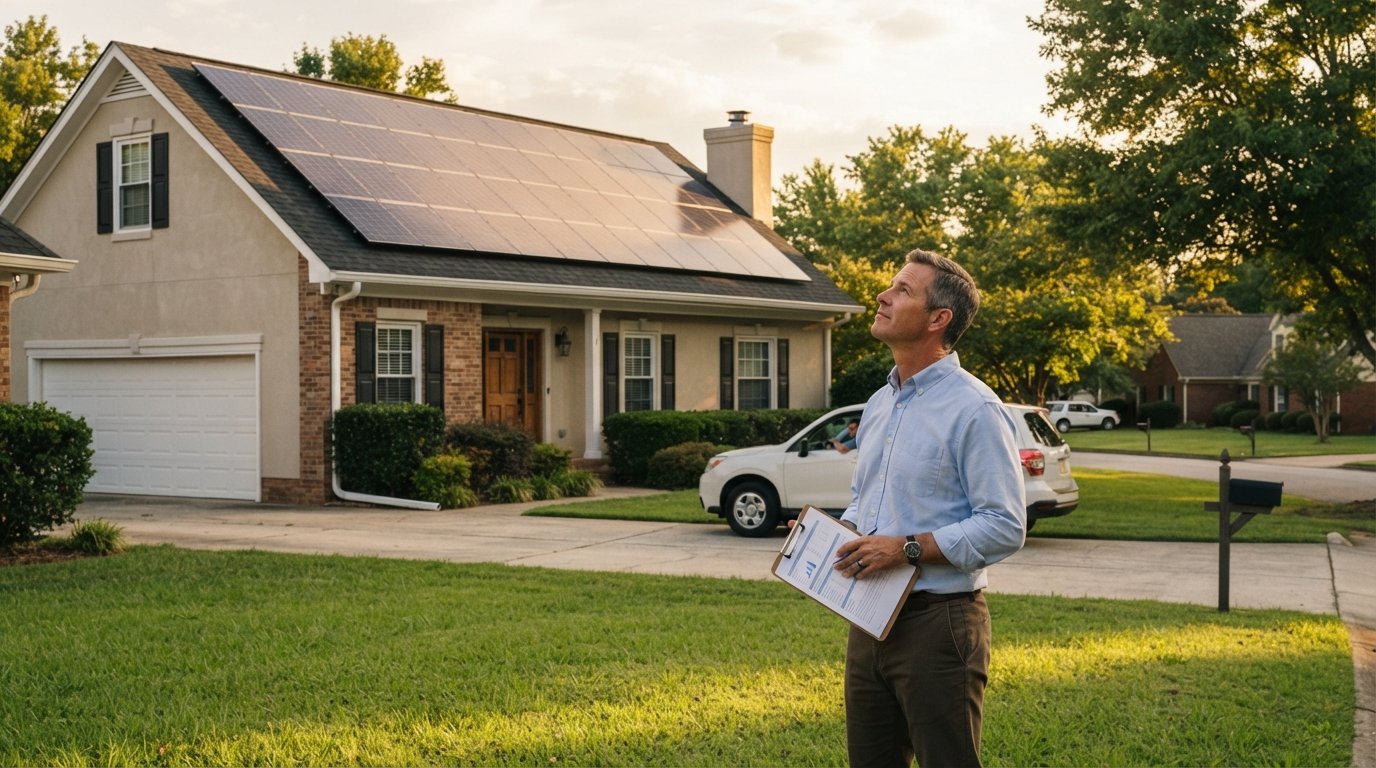
Property Tax Exemptions and Assessments After Solar Panels
Understand property tax exemptions and assessments after installing solar panels, including state rules, filing steps, and how to protect your ROI.

By Dylan Harris
Learn more about Solar Panel Installation and Repair for guides, costs, and what to expect.
Compare Solar Panel Installation and Repair Pros Near You

Enter your ZIP code to compare top-rated local professionals and request free quotes.
You have probably heard that solar panels can wipe out your electric bill, but what happens to your property taxes once those panels are bolted to your roof? For many homeowners, this is the quiet dealbreaker they never see coming. You invest $25,000 in a rooftop array, start generating clean power, and then your county assessor notices the upgrade and raises your assessed value. Suddenly, your annual tax bill climbs by several hundred dollars, eating into the very savings you worked so hard to capture. The good news is that most US states have passed laws specifically designed to prevent this outcome. The bad news is that the rules vary wildly by state, county, and even by how your system is financed. Understanding property tax exemptions and assessments after installing solar panels is not just a nice-to-know detail. It is a critical part of calculating your true return on investment, and it can mean the difference between a system that pays for itself in seven years and one that takes twelve.
Why Solar Panels Can Trigger a Property Tax Reassessment
Property taxes in the United States are generally based on the assessed value of your home, which local governments determine through periodic reappraisals. When you make a substantial improvement to your property, whether that is adding a deck, finishing a basement, or installing a rooftop solar array, the assessor may treat that improvement as an increase in value. In theory, a home with a $30,000 solar system that reduces annual energy costs by $1,500 is worth more than an identical home without solar. A buyer would pay a premium for those lower utility bills, and the assessor knows it. That logic is exactly why some homeowners see their property taxes rise after going solar.
However, the practical reality is more nuanced. Many assessors do not automatically inspect every home after a solar installation. Some rely on building permits, which solar installers typically pull before mounting panels. That permit can trigger a reassessment flag in the county system. In other jurisdictions, assessors only reassess during a full county-wide reappraisal, which might happen every three to five years. The timing and method of reassessment vary so widely that two neighbors in the same state can have completely different experiences. This inconsistency is precisely why state legislatures have stepped in with protective statutes.
The core issue is that solar panels are classified differently depending on local law. In some states, solar equipment is considered real property, meaning it is permanently attached to the home and therefore taxable. In others, it is classified as personal property or a renewable energy device that is explicitly exempt from assessment. Understanding which category your system falls into is the first step toward predicting your tax outcome. Without that knowledge, you are essentially guessing at your financial future.
How Property Tax Exemptions for Solar Work in Practice
More than thirty states, plus the District of Columbia and Puerto Rico, have enacted some form of property tax exemption for solar energy systems. These laws typically state that the added value of a solar installation shall not be included in the assessed value of the property for property tax purposes. In other words, your home's assessment is calculated as if the solar panels were not there. You still pay taxes on the underlying land and structure, but the solar premium is carved out. This is often called a solar property tax abatement or exemption.
The mechanics differ from state to state. In some states, the exemption is automatic. The assessor is legally required to exclude solar value from the assessment, and you do not need to file any paperwork. In other states, you must submit an application, often with a deadline tied to the tax year. Missing that deadline can cost you a full year of savings. Some states cap the exemption at a specific dollar amount, such as $10,000 or $20,000 of added value, while others offer an unlimited exemption. A few states limit the exemption to residential systems only, leaving commercial installations subject to assessment.
Here is a quick breakdown of common exemption structures you might encounter:
- Full automatic exemption: The assessor excludes all solar value without any homeowner action required (common in states like Arizona and California for certain systems).
- Application-based exemption: You must file a form with your county assessor, sometimes annually, to claim the exclusion (seen in parts of New York and Illinois).
- Capped exemption: Only a portion of the added value is exempt, such as the first $20,000 (used in some counties in Florida and Texas).
- Financing-dependent exemption: Leased or power purchase agreement (PPA) systems may be treated differently than owned systems, with some states exempting only owned equipment.
That last point about financing is critical. If you lease your solar panels or sign a power purchase agreement, you do not own the equipment. In many states, the exemption applies to the system owner, which is the third-party leasing company, not you. In those cases, the leasing company may pass through any tax savings to you in the form of lower lease payments, or it may not. Always read your lease agreement carefully to see who retains the tax benefits. If you own your system outright, the exemption almost always flows directly to you.
It is also worth noting that some states offer a property tax exemption but not a sales tax exemption, or vice versa. These are separate incentives. The federal Investment Tax Credit (ITC) is also separate and applies to your federal income tax liability, not your property tax. Do not confuse them. When you are evaluating property tax exemptions and assessments after installing solar panels, focus specifically on the state and county rules that govern your local assessor.
What Happens in States Without Solar Property Tax Exemptions
If you live in a state without a solar property tax exemption, you are not necessarily doomed to a higher tax bill. Several factors can work in your favor. First, many assessors simply do not add solar value to assessments because they lack the data or the mandate to do so. Second, even if they do, the added value is often less than you might fear. Assessors typically use depreciated cost or income-based approaches, not the full retail price of the system. A $30,000 solar array might add only $8,000 to $12,000 in assessed value after depreciation and functional obsolescence are considered.
Third, you can sometimes appeal the assessment if you believe the added value is excessive. The appeal process varies by county, but it generally involves filing a written protest with supporting documentation, such as your installation cost, the age of the system, and comparable sales data. Some homeowners have successfully argued that solar panels do not add market value in their area because buyers do not pay a premium for them. This is a factual question that depends on your local real estate market.
Finally, keep in mind that property tax rates are applied to assessed value, not market value. Even if your assessment rises by $10,000, the actual tax increase depends on your local millage rate. If your rate is 1.5 percent, that $10,000 bump translates to $150 per year. That is not nothing, but it is far less dramatic than the horror stories you might read online. Run the numbers for your specific county before assuming the worst.
If you are still in the planning phase and want to estimate your solar savings accurately, including tax implications, a tool like the Solar Savings Calculator from SolarEnergy.ai can help you model different scenarios. It factors in local incentives and gives you a clearer picture of your payback period.
How Assessments Affect Your Solar ROI and Financing Decisions
Your solar return on investment is a function of three main variables: upfront cost, ongoing energy savings, and any changes to your tax burden. If your property taxes rise by $200 per year after installation, that is $200 less in annual savings. Over a 25-year system life, that is $5,000 in lost value, assuming no tax increases. That is a meaningful number, especially for smaller systems where margins are thin. On the other hand, if you qualify for a full exemption, your ROI improves because you capture the full energy savings without a tax offset.
Financing choices also interact with property taxes in ways that are not always obvious. If you use a home equity loan or a cash-out refinance to pay for solar, the increased mortgage interest may be deductible, but the property tax increase is not. If you use a solar loan that is secured by the equipment rather than the home, the lender may require you to escrow for taxes, which means your monthly payment could rise if the assessment increases. If you lease, the leasing company may handle the tax assessment on the equipment, but you should confirm who pays if the county bills for the added value.
One often-overlooked strategy is to install solar before a major reappraisal cycle. If your county reassesses every five years and you install solar in year one, you may enjoy four years of no tax impact before the assessor catches up. By then, the system has depreciated, and the added value may be minimal. Conversely, if you install solar right before a reappraisal, you may see the full impact immediately. Timing matters, and it is worth a call to your county assessor's office to understand the reappraisal schedule.
For a deeper dive into how timing affects your overall solar investment, including seasonal and policy-related factors, see our guide on the best time to install solar panels. It covers how to align your installation with incentive cycles and assessment periods to maximize your financial outcome.
Steps to Protect Yourself from Unwanted Tax Increases
Whether you are considering solar or have already installed it, a proactive approach will help you avoid surprises. The following steps are designed to help you navigate property tax exemptions and assessments after installing solar panels with confidence.
- Research your state and county rules before you sign a contract. Visit your county assessor's website or call their office. Ask specifically whether solar adds to assessed value, whether an exemption exists, and what forms you need to file. Do not rely on your installer to know the tax code; they are experts in solar, not property tax.
- File for any available exemption as soon as your system is operational. Many exemptions have deadlines, and missing one can cost you a year of savings. Set a calendar reminder and keep copies of everything you submit.
- Review your financing agreement for tax-shifting clauses. If you lease or sign a PPA, check whether the company passes through property tax savings or charges you for any tax increases. If you own, confirm that the exemption flows to you.
- Monitor your annual property tax assessment notice. When you receive it, compare the assessed value to the prior year. If you see an unexplained increase that you believe is due to solar, contact the assessor and request an explanation. You have the right to appeal if the value is incorrect.
- Keep detailed records of your installation cost and system specifications. If you need to appeal an assessment, documentation is your best evidence. A professional appraisal or a cost breakdown from your installer can help you argue for a lower added value.
After you have taken these steps, revisit your solar ROI calculation with the actual tax numbers. If your exemption is approved, your savings will be higher than you initially projected. If you face a partial assessment, you can adjust your expectations and still feel confident that you made a sound investment. The key is to eliminate guesswork and replace it with verified local information.
For homeowners who want to connect with vetted solar professionals who understand local tax and incentive landscapes, FreeSolarPowerQuotes.com offers a free service that matches you with reputable installers in your area. They can help you navigate the paperwork and ensure you are claiming every available benefit.
Common Myths and Misunderstandings About Solar and Property Taxes
Myth number one: Solar panels always increase your property taxes. As we have seen, this is false in most states. Exemptions are widespread, and even where they do not exist, assessors often do not add full value. Myth number two: You have to pay taxes on the energy you generate. This is also false. Property taxes are based on the value of the real property, not on the electricity you produce. You do not receive a tax bill for kilowatt-hours. Myth number three: Leasing a solar system shields you from all property tax liability. In reality, the leasing company may pass through tax costs to you, and the exemption may not apply to leased systems in some states. Always read the fine print.
Another persistent myth is that the federal solar tax credit reduces your property tax assessment. It does not. The federal ITC is a credit against your federal income tax liability. It has no bearing on your local property tax assessment. Similarly, state rebates and performance-based incentives do not automatically reduce your assessed value. The assessment is based on the fair market value of the improvement, not on your net cost after incentives. That said, some assessors will consider the net cost as a proxy for value, so it is worth mentioning your incentives when discussing valuation.
Finally, do not assume that your homeowner's insurance premium will rise in lockstep with your property tax assessment. Insurance is a separate matter, and many insurers offer riders or endorsements for solar equipment. While a higher assessment might correlate with a higher replacement cost, the two are not directly linked. If you are concerned about insurance, talk to your agent about scheduling the solar system separately.
Looking Ahead: Policy Trends and What They Mean for You
The landscape of solar property tax policy is not static. As solar adoption grows, some states are revisiting their exemption laws. A few have considered imposing fees or taxes on solar homes to compensate for lost utility revenue, though these proposals have largely failed. Others have expanded exemptions to cover battery storage and other clean energy technologies. The trend over the past decade has been toward more protective exemptions, not fewer, but that could change if budget pressures intensify.
For homeowners, the safest approach is to stay informed. Check your state legislature's website for pending bills related to solar taxation. Follow updates from your county assessor. And when you are ready to install, work with professionals who understand the local rules. The more you know about property tax exemptions and assessments after installing solar panels, the better you can protect your investment and maximize your long-term savings.
Solar energy remains one of the most reliable ways to reduce your carbon footprint and your electric bill. With the right information and a bit of planning, you can ensure that your property tax situation works in your favor, not against it. Whether you are just starting your research or you already have panels on your roof, take the time to verify your exemption status. Your future self will thank you.