Professional Energy Audit: Cut Business Operating Costs
A professional energy audit reveals exactly where your business wastes money and which fixes deliver the fastest payback. Here is how the process works.

By Dylan Harris
Learn more about Weatherization for guides, costs, and what to expect.
Compare Weatherization Pros Near You

Enter your ZIP code to compare top-rated local professionals and request free quotes.
Your building is leaking money. It is not a metaphor. Every month, thousands of dollars vanish through unsealed ducts, obsolete lighting, and HVAC systems running at peak capacity when the space sits empty. For most businesses, utility bills represent the third-largest operating expense after payroll and rent, yet they receive a fraction of the scrutiny given to supply chain contracts or staffing budgets. A professional energy audit for businesses cut operating costs by identifying exactly where waste occurs and prescribing fixes with measurable returns. This is not about turning off lights or adjusting the thermostat by two degrees. It is a forensic examination of how your facility consumes power, where inefficiencies hide, and which upgrades pay for themselves fastest.
What a Professional Energy Audit Actually Delivers
A professional energy audit is a comprehensive engineering assessment of your building's energy systems. A certified auditor examines insulation, air sealing, HVAC equipment, lighting, motors, compressed air systems, and building controls. The process typically spans two to five days for a commercial facility, depending on square footage and complexity. The deliverable is a detailed report ranking every recommended improvement by implementation cost and projected savings.
The scope varies by audit level. ASHRAE defines three tiers: Level 1 (walk-through), Level 2 (energy survey and analysis), and Level 3 (detailed analysis with capital-intensive recommendations). Most small and mid-sized businesses benefit from a Level 2 audit, which balances cost with actionable depth. A Level 2 audit includes on-site measurement, utility bill analysis, and financial modeling for each recommendation.
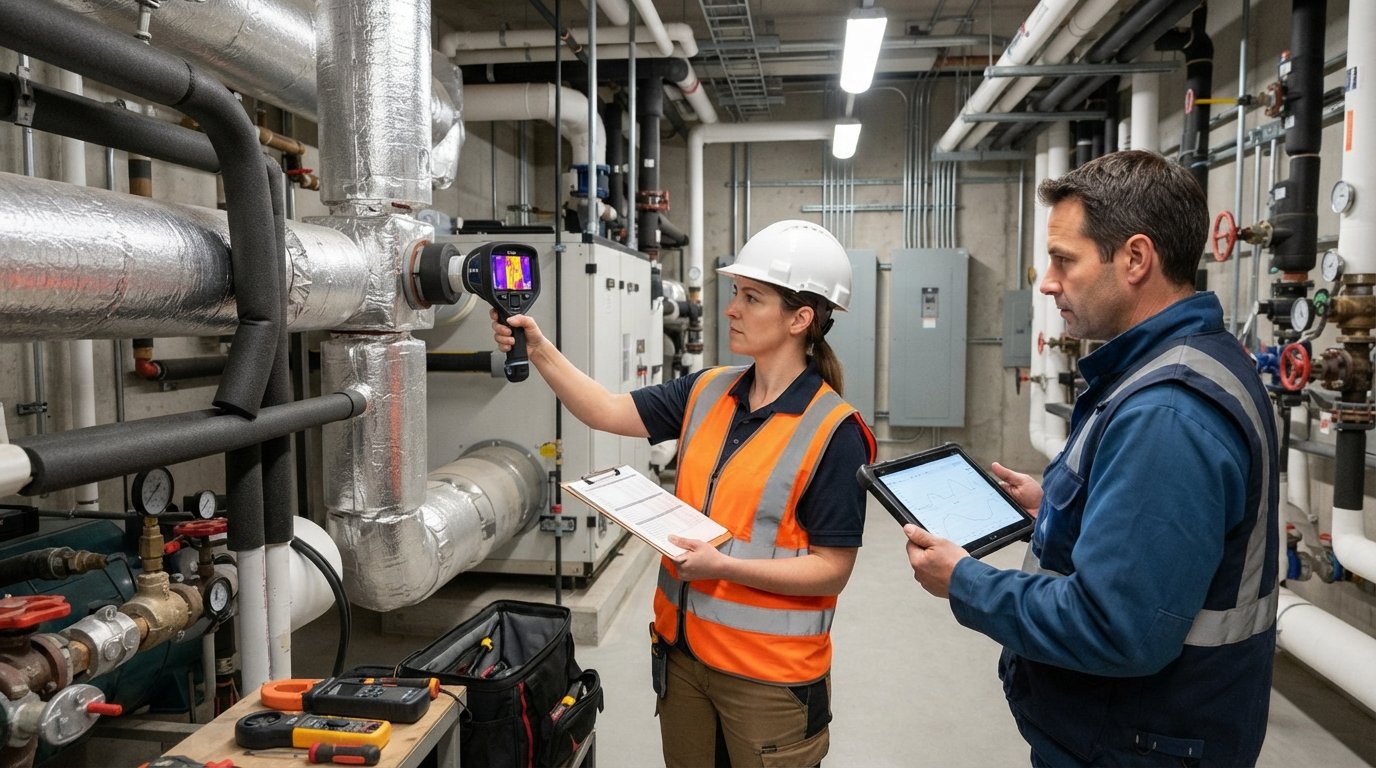
What separates a professional audit from a DIY checklist is instrumentation. Auditors use thermal imaging cameras to detect insulation gaps, blower door tests to measure air infiltration, combustion analyzers to assess boiler efficiency, and data loggers to track real consumption patterns over time. These tools reveal problems invisible to the naked eye, such as duct leakage behind walls or equipment cycling unnecessarily at 3 AM.
The Financial Case: Numbers That Demand Attention
Energy audits consistently uncover savings between 10 and 30 percent of total utility spending. For a business paying $10,000 monthly in electricity and gas, that translates to $12,000 to $36,000 in annual savings. The audit itself typically costs between $0.10 and $0.30 per square foot, meaning a 50,000-square-foot facility might pay $5,000 to $15,000 for a comprehensive assessment. Payback periods on audit costs alone often fall under six months.
Beyond direct savings, audits unlock financial incentives. Federal tax deductions under Section 179D allow up to $1.88 per square foot for qualifying energy-efficient commercial building improvements. Many utility companies offer rebates for lighting retrofits, HVAC upgrades, and variable frequency drive installations. These incentives can cover 20 to 50 percent of project costs, dramatically improving return on investment.
Consider the compounding effect. A lighting retrofit that saves $8,000 annually continues delivering returns for a decade or more. An HVAC optimization that reduces consumption by 15 percent lowers not only energy costs but also maintenance expenses, since equipment runs less frequently. These savings flow directly to the bottom line, improving net profit margins without requiring additional revenue.
What Gets Audited: Systems and Opportunities
A thorough audit examines every energy-consuming system in your facility. The auditor's goal is to build a complete picture of how energy enters, moves through, and exits your building. This holistic view prevents the common mistake of upgrading one system while leaving related inefficiencies untouched.
Key areas of investigation include:
- Building envelope: Insulation levels, air sealing, window performance, and thermal bridging that allows heat transfer through structural elements.
- HVAC systems: Equipment age and efficiency ratings, duct leakage, refrigerant charge, economizer function, and control sequences.
- Lighting: Fixture types, wattage, occupancy sensor coverage, daylight harvesting potential, and ballast condition.
- Plug loads and process equipment: Computers, servers, refrigeration, compressed air, and manufacturing equipment that may run during unoccupied hours.
- Building controls: Thermostat schedules, setback strategies, and whether systems communicate with each other or operate in isolation.
Each system interacts with others. A duct sealing project reduces HVAC runtime, which extends equipment life and lowers maintenance costs. An insulation upgrade reduces the load on heating and cooling equipment, potentially allowing a smaller replacement unit when the time comes. Auditors identify these cascading benefits and prioritize recommendations accordingly.
How the Audit Process Works
The audit process follows a structured sequence designed to produce reliable, actionable results. Understanding these steps helps business owners prepare and ensures they receive maximum value from the engagement.
- Pre-audit data collection: The auditor requests 12 to 24 months of utility bills, building plans, equipment inventories, and occupancy schedules. This establishes baseline consumption and identifies anomalies.
- On-site inspection: Auditors walk the facility, measure equipment performance, conduct diagnostic tests, and interview facility staff about operational patterns and known problem areas.
- Analysis and modeling: Data from the site visit is combined with utility records and weather data to create an energy model. This model simulates how proposed improvements would affect consumption.
- Recommendation development: The auditor ranks improvements by savings potential, implementation cost, and payback period. Quick wins with immediate returns are separated from capital-intensive projects requiring longer planning.
- Report delivery and review: The final report includes detailed findings, recommended measures, cost estimates, and projected savings. Many auditors offer a follow-up meeting to discuss implementation priorities.
Timeline varies by facility size. A small retail space might complete the process in two weeks. A large manufacturing plant could take six to eight weeks. The investment of time pays dividends through accurate, prioritized recommendations that prevent wasted capital on ineffective upgrades.
Choosing the Right Auditor
Not all energy auditors are equal. Credentials matter. Look for professionals certified by organizations such as the Association of Energy Engineers (AEE), the Building Performance Institute (BPI), or the American Society of Heating, Refrigerating and Air-Conditioning Engineers (ASHRAE). These certifications require demonstrated expertise and ongoing education.
Experience with your building type is equally important. An auditor who specializes in office buildings may miss opportunities in a restaurant or warehouse. Ask for references from similar facilities and request sample reports to assess quality and clarity. The best auditors provide transparent methodologies, clear assumptions, and conservative savings estimates rather than inflated projections designed to win business.
Independence also matters. Some auditors work for companies that also sell installation services. While this is not inherently problematic, it creates potential conflicts of interest. If the auditor recommends only products their employer installs, consider whether a more objective assessment might reveal additional options. For businesses seeking comprehensive solar and energy solutions, platforms like Solar Energy Providers Los Angeles CA connect property owners with vetted professionals who can conduct audits and implement recommendations under one coordinated plan.
Turning Audit Findings into Savings
An audit without implementation is just an expensive report. The real value comes from acting on recommendations, and the sequence matters. Quick wins build momentum and generate immediate cash flow that can fund larger projects.
Start with no-cost and low-cost measures. Adjusting control schedules, repairing damaged insulation, sealing obvious air leaks, and replacing failed sensors require minimal investment but can reduce consumption by 5 to 10 percent. These measures also demonstrate commitment to staff and stakeholders, building support for broader initiatives.
Next, tackle projects with payback periods under two years. Lighting retrofits, programmable thermostat installations, and HVAC tune-ups typically fall into this category. These investments generate returns quickly and often qualify for utility rebates that further improve economics.
Finally, plan for capital-intensive improvements. Boiler replacements, chiller upgrades, building automation systems, and renewable energy installations require significant investment but deliver substantial long-term savings. For businesses exploring solar as part of their energy strategy, resources like FreeSolarPowerQuotes provide educational guidance on financing options and incentive programs that can offset upfront costs.
Common Mistakes That Undermine Audit Value
Many businesses commission audits but fail to capture the full benefit. The most common error is treating the audit as a one-time event rather than the beginning of an ongoing energy management program. Energy systems degrade over time. Equipment loses efficiency. Occupancy patterns change. Without periodic re-assessment, savings erode.
Another mistake is focusing solely on the lowest-hanging fruit. While quick wins are valuable, they represent only a fraction of total savings potential. Businesses that implement only lighting retrofits and thermostat adjustments may capture 15 percent savings when 30 percent was achievable through a comprehensive approach.
Finally, failing to engage staff undermines even the best recommendations. Building occupants control thermostats, leave equipment running, and prop open doors. Without training and accountability, behavioral waste continues regardless of equipment upgrades. Successful energy management programs combine technical improvements with clear policies and regular communication about goals and results.
Building a Culture of Energy Efficiency
The most successful businesses treat energy management as a core operational discipline, not a one-time project. They designate an energy champion responsible for tracking consumption, reviewing utility bills, and coordinating improvement projects. They set measurable targets and report progress to leadership. They celebrate successes and continuously look for new opportunities.
This cultural shift amplifies the impact of professional audits. When employees understand that energy efficiency protects jobs and improves competitiveness, they become active participants rather than passive observers. Maintenance teams prioritize preventive care for HVAC systems. Purchasing decisions factor in lifecycle energy costs. Small behavioral changes accumulate into significant savings.
Technology supports this culture. Smart meters and building automation systems provide real-time visibility into consumption. Anomaly detection algorithms flag unusual patterns before they become expensive problems. Regular reporting keeps energy performance visible and accountable. These tools transform energy from an invisible overhead cost into a managed operating expense.
A professional energy audit for businesses cut operating costs by replacing guesswork with data. It reveals exactly where money leaks, which fixes deliver the fastest returns, and how to fund improvements through incentives and savings. For any business serious about reducing overhead and improving margins, the audit is not an expense. It is an investment with measurable, verifiable returns. The buildings are leaking. The question is whether you will find the leaks before they drain another year of profit.