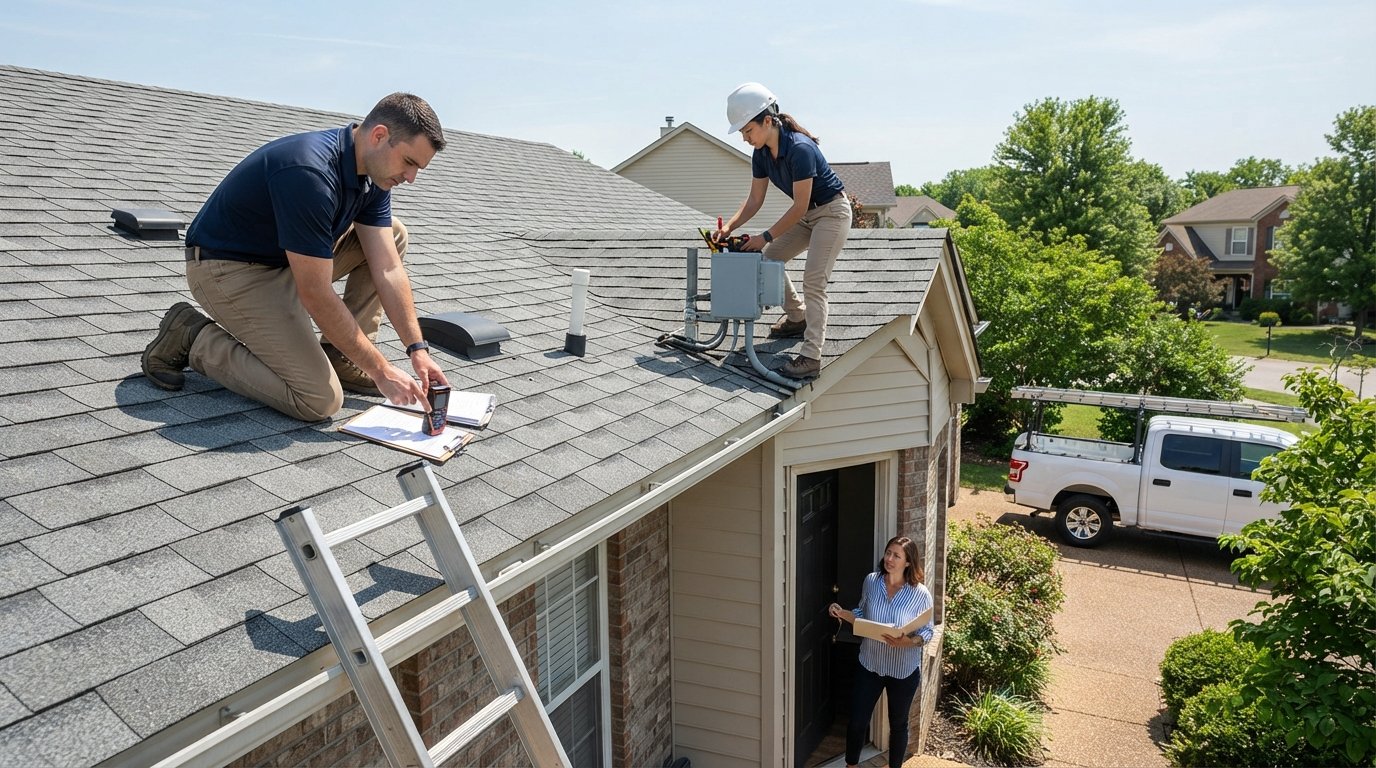
On-Site Energy Survey Checklist Before Solar Install
A prepared homeowner gets a tighter solar design and fewer surprises. Use this on-site energy survey checklist before solar install, then call (833)-434-4023 for expert help.

By Owen Phillips
Learn more about Solar Panel Installation and Repair for guides, costs, and what to expect.
Compare Solar Panel Installation and Repair Pros Near You

Enter your ZIP code to compare top-rated local professionals and request free quotes.
You have picked a solar installer, signed the preliminary paperwork, and now someone is coming to your home to perform an on-site energy survey. This visit is not a formality. It is the technical foundation of your entire solar project, and the data collected during those two to three hours will determine your system size, your savings projection, and whether your roof is even a good candidate for panels. Homeowners who treat the survey as a passive appointment often end up with oversized systems, surprise upgrade costs, or production estimates that never materialize. Those who prepare, by gathering utility history, listing appliances, and understanding what the auditor will measure, consistently walk away with tighter designs and better returns.
This guide walks through the on-site energy survey checklist before solar install, from the documents you should have ready to the specific measurements a qualified surveyor will take. It also explains how survey findings feed directly into system sizing and efficiency upgrades, and how this visit differs from a standalone home energy audit. By the end, you will know exactly how to prepare and how to act on the results so your solar investment performs as promised.
What an On-Site Energy Survey Actually Measures
An on-site energy survey is a structured assessment of how your home consumes electricity and how much sunlight your property can realistically capture. The surveyor is not just checking whether panels will fit. They are building a load profile, evaluating structural and electrical readiness, and identifying efficiency gaps that could shrink your required system size. The goal is a design that matches your actual consumption patterns rather than a generic estimate based on square footage.
The load profile is the heart of the survey. The auditor will review 12 months of utility bills to understand your baseline usage, seasonal peaks, and time-of-use patterns. If you run air conditioning heavily in summer or rely on electric resistance heating in winter, those spikes matter. They determine whether a battery makes sense, whether your inverter should be sized for surge loads, and how many panels you actually need. A home that uses 900 kWh per month looks very different from one that swings between 600 and 1,800 kWh depending on the season.
Beyond consumption, the surveyor examines the building envelope and major appliances. Insulation levels, window glazing, attic ventilation, and duct sealing all affect how much energy your home wastes before solar even enters the picture. The auditor will note the age and efficiency of your HVAC system, water heater, refrigerator, and any pool pumps or EV chargers. These details matter because a $4,000 efficiency upgrade can sometimes reduce the required solar array by several panels, improving payback and lowering upfront cost. For a deeper look at how smart energy management can compound these savings, see how AI reduces energy waste and cuts solar costs.
Shading analysis is the third pillar. Using a solar pathfinder or a drone-mounted irradiance sensor, the surveyor maps shade from trees, chimneys, and neighboring structures across the seasons. A roof that looks wide open in winter may be heavily shaded by a deciduous tree in July. The survey also captures roof orientation, pitch, and condition. If the shingles have five years left, the installer will recommend reroofing before panel installation to avoid costly removal and reinstallation later.
Documents and Utility History to Gather Before the Appointment
Preparation separates a smooth survey from a rushed one. The surveyor can work with whatever you provide, but incomplete records often lead to conservative estimates or follow-up visits. Gather the following items at least 48 hours before the appointment so the auditor can review them in advance.
- Twelve months of utility bills: Full statements, not just payment confirmations. The auditor needs kWh usage, demand charges if applicable, and the rate schedule. If you have switched providers mid-year, include bills from both.
- Roof age and condition records: Receipts, warranties, or inspection reports. If the roof is older than 15 years, have a roofer confirm remaining lifespan before the survey.
- Major appliance inventory: Model numbers and ages for HVAC, water heater, refrigerator, pool pump, hot tub, and EV charger. Photos of the nameplates work well.
- Any prior energy audit or weatherization report: If you have already insulated or air-sealed, the surveyor can skip redundant checks and focus on solar design.
- HOA or historic district guidelines: If your neighborhood has aesthetic restrictions, bring the documentation so the surveyor can flag placement constraints early.
Having these documents ready does more than save time. It gives the surveyor the data to model your system accurately on the first pass. A homeowner who provides a full year of interval data and an appliance list often receives a final design within days, while incomplete records can stretch the process by weeks. The utility bill history is especially critical because it establishes the baseline against which your solar production will be netted. Without it, the installer is guessing, and guesses tend to be conservative in the wrong direction.
How Survey Findings Shape System Size and Efficiency Upgrades
The survey is not just a data collection exercise. It directly determines what gets installed on your roof. After the visit, the designer combines the load profile, shading map, and roof measurements to produce a system size recommendation. A home with moderate consumption, good southern exposure, and minimal shade might need a 6 kW system. The same home with heavy afternoon shade and an aging HVAC unit might need an 8 kW array plus a heat pump upgrade to hit the same savings target.
Efficiency upgrades discovered during the survey often change the math in your favor. If the auditor finds leaky ducts or inadequate attic insulation, addressing those issues before solar installation can reduce your winter heating load by 15 to 25 percent. That reduction translates directly into fewer panels, a smaller inverter, and a lower total project cost. In many cases, the savings from efficiency work pay for themselves within a few years while also shrinking the solar investment. This is why a thorough on-site energy survey checklist before solar install should always include an envelope assessment, not just a roof measurement.
The survey also determines equipment placement and electrical upgrades. The auditor will check your main service panel capacity, the distance from the panel to the proposed inverter location, and whether your utility requires a line-side tap or a panel upgrade. Older homes with 100-amp service often need a 200-amp upgrade before solar can be added, and discovering this during the survey prevents costly surprises later. Battery placement, conduit runs, and monitoring equipment locations are also finalized during this visit. When you request quotes through a vetted professional network such as ContractorHomeQuotes, you can compare how different installers interpret the same survey data, which helps you spot outliers in system sizing or pricing.
Pre-Solar Survey vs. Standalone Home Energy Audit
Homeowners often confuse the pre-solar survey with a standalone home energy audit. The two overlap, but they serve different purposes and produce different deliverables. Understanding the distinction helps you ask the right questions and avoid paying for services you do not need.
A standalone home energy audit is a comprehensive efficiency assessment. It typically includes blower door testing, thermal imaging, duct leakage measurement, and a detailed report on air sealing, insulation, and HVAC performance. The deliverable is a prioritized list of efficiency improvements with estimated costs and savings. It does not usually include solar design, shading analysis, or roof structural evaluation. You commission an energy audit when your primary goal is reducing consumption, not generating power.
The pre-solar on-site energy survey is narrower but more targeted toward production. It includes a lighter version of the efficiency assessment, enough to flag major issues that would affect system sizing, but its core deliverable is a solar design proposal with production estimates, financial projections, and equipment specifications. The surveyor measures roof planes, checks structural integrity, maps shade, and verifies electrical capacity. If the survey reveals significant efficiency problems, the installer may recommend a full audit before finalizing the design, but the survey itself is not a substitute for one.
In practice, many homeowners benefit from both. If your home is older or you suspect comfort issues, commission a full energy audit first, complete the recommended upgrades, and then schedule the solar survey. This sequence often produces the smallest, cheapest solar system that still meets your needs. If your home is relatively efficient and you are confident in your consumption patterns, the pre-solar survey alone provides enough information to move forward.
How to Act on Survey Results to Maximize Solar Savings
The survey report is a roadmap, and how you act on it determines your return on investment. Start by reviewing the production estimate against your actual utility usage. If the proposed system covers 95 percent of your annual consumption, great. If it covers 120 percent, ask why. Oversizing is sometimes justified for future EV purchases or planned additions, but it can also signal a design that ignores efficiency opportunities.
Next, prioritize the efficiency recommendations by payback period. Air sealing and attic insulation usually pay back fastest, often within two to four years. Duct sealing and HVAC upgrades follow. If the survey flags a refrigerator or water heater that is past its useful life, replacing it before solar installation reduces your baseline load and may allow a smaller array. Each kilowatt-hour you avoid consuming is a kilowatt-hour you do not have to generate, and generation capacity is the most expensive part of the project.
Finally, use the survey to negotiate and compare. A detailed survey report gives you leverage because you can share it with multiple installers and compare their designs on equal footing. Ask each installer to explain how they arrived at their system size, how they accounted for shading, and what assumptions they made about your future consumption. Installers who cannot answer those questions clearly are guessing. Those who can are working from data, which is exactly what the on-site energy survey checklist before solar install is designed to produce.
If you want to accelerate the process, schedule your survey through a platform that connects you with local solar specialists who perform these assessments as part of their standard proposal process. The right surveyor will walk you through the findings, explain the tradeoffs, and leave you with a design you understand and trust. That is the difference between a solar project that delivers decades of savings and one that leaves you wondering why the numbers never matched the promise. For expert guidance and to schedule your on-site energy survey, call (833)-434-4023 today.