Net Zero Energy Home Solar Efficiency Upgrade Roadmap
Follow a proven net zero energy home solar efficiency upgrade roadmap to cut waste, size solar right, and hit annual net zero. Call (833)-434-4023 for expert help.

By Adam Adler
Learn more about Solar Panel Installation and Repair for guides, costs, and what to expect.
Compare Solar Panel Installation and Repair Pros Near You

Enter your ZIP code to compare top-rated local professionals and request free quotes.
Reaching net zero energy use is one of the most rewarding goals a homeowner can pursue, but it is rarely achieved by simply bolting panels onto a roof and hoping for the best. True net zero performance requires a deliberate sequence of efficiency improvements, smart electrification choices, and a right-sized solar plus storage system. Without a clear roadmap, homeowners often overspend on solar capacity that could have been avoided with basic air sealing, or they upgrade HVAC equipment before addressing the building envelope and end up with a system that never quite balances out. This guide lays out a practical, step by step roadmap for achieving net zero energy at home, with a focus on how efficiency upgrades should come first so that solar and battery investments deliver maximum return.
Start With the Building Envelope, Not the Solar Panels
The most common mistake in net zero planning is treating solar as the first step. In reality, every dollar spent reducing energy waste lowers the solar capacity you need to buy, and efficiency measures are almost always cheaper per unit of energy saved than new solar panels. The building envelope is the logical starting point because it determines how much heating and cooling energy your home loses before any equipment even runs. Air sealing, insulation upgrades, and window improvements reduce the load that your HVAC system must handle, which in turn shrinks the solar array required to offset that load.
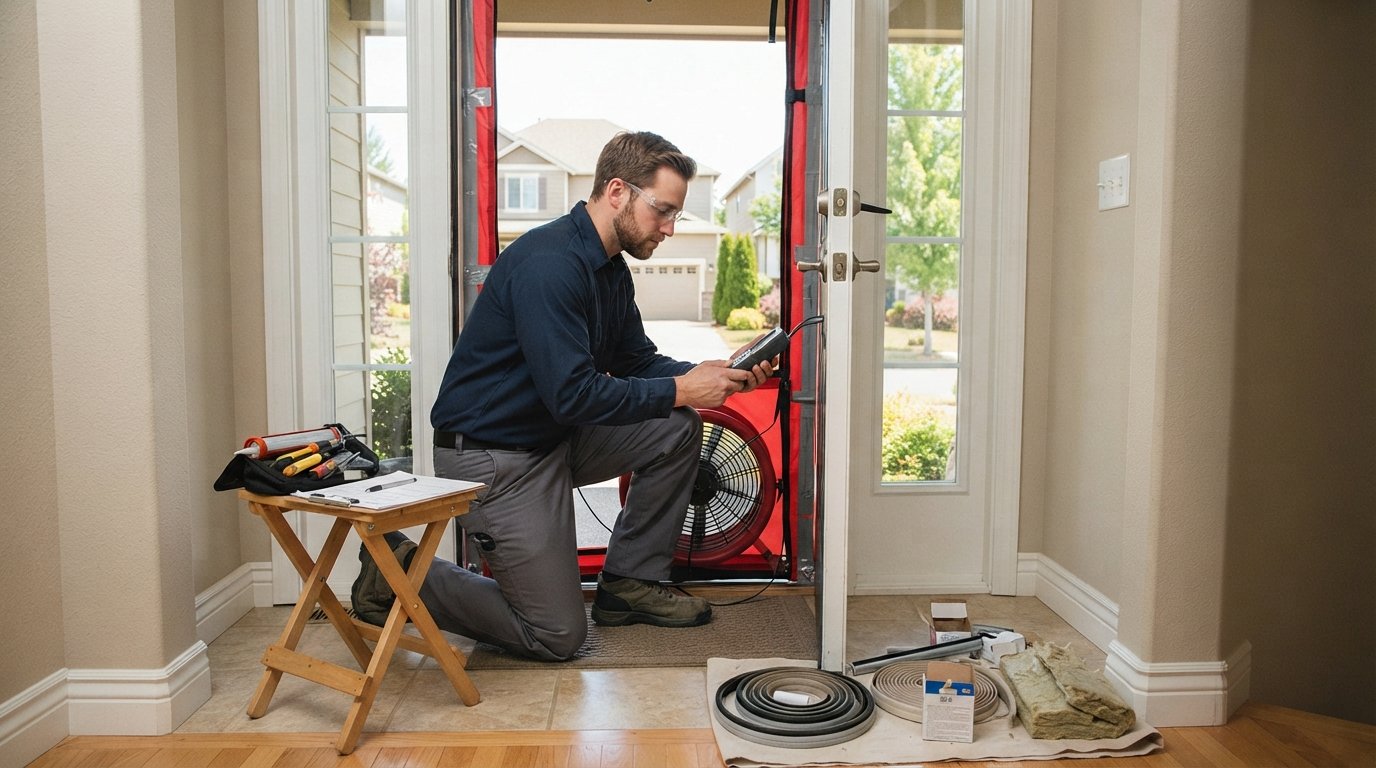
A blower door test is the best way to quantify envelope performance. This diagnostic measures how much air leaks through the building shell and identifies the biggest culprits, which are often attic penetrations, rim joists, and recessed lighting fixtures. Pair that with an infrared scan to find missing insulation in walls and ceilings. Many utility companies offer rebates for these audits, and the data you collect becomes the foundation for every subsequent decision in your roadmap.
- Air seal attics, rim joists, and penetrations before adding insulation
- Upgrade attic insulation to at least R-49 in most US climates
- Address duct leakage if ducts run through unconditioned space
- Consider storm windows or window replacements only after air sealing
Once the envelope is tight, you will have a much clearer picture of your home's true energy demand. This matters because solar sizing depends on actual consumption, and a leaky house can overstate that consumption by 20 to 30 percent. Correcting the envelope first prevents you from buying panels to power wasted energy.
Right-Size HVAC and Electrify End Uses
With the envelope under control, the next phase is HVAC optimization and electrification. Older gas furnaces and central air conditioners often run inefficiently and are oversized for the actual load. A Manual J load calculation performed after envelope upgrades will almost always reveal that a smaller, more efficient system can handle the home comfortably. Modern cold climate heat pumps can deliver both heating and cooling at high efficiency, and they pair naturally with solar because they run on electricity you can generate yourself.
Electrification should extend beyond HVAC. Swapping a gas water heater for a heat pump water heater, replacing a gas dryer with a ventless heat pump dryer, and switching to induction cooking are all steps that reduce fossil fuel use and shift load to your future solar system. Each of these upgrades lowers your carbon footprint and increases the share of your energy use that solar can offset. The order matters: size the heat pump and water heater based on the post envelope load, not the pre upgrade load, so you do not pay for capacity you no longer need.
If you are interested in how intelligent controls can squeeze even more performance out of your new equipment, the guide on AI solar efficiency for your home explains how monitoring and automation can reduce waste and improve self consumption. These tools become especially valuable once your major loads are electric and your solar system is in place.
Size the Solar System for Net Zero After Efficiency Reductions
Only after the envelope, HVAC, and electrification work is complete should you size the solar array. Net zero sizing means generating enough electricity over a full year to match your annual consumption, accounting for seasonal variation in production and usage. The calculation starts with your post upgrade consumption, which you can estimate from utility bills plus the expected savings from each efficiency measure. A professional solar designer will use production modeling tools to simulate hourly output for your location, roof orientation, and shading, then compare that to your load profile.
It is important to size for annual net zero rather than monthly net zero. A system that covers your usage in July may fall short in December, and net metering rules vary by state and utility. Some utilities credit exports at the full retail rate, while others pay a lower avoided cost rate, and some have moved to time of use rates that reward production during peak hours. Understanding your utility's net metering structure is essential because it affects how much of your annual consumption you can realistically offset with solar alone versus solar plus storage.
For homeowners who want a deeper dive into the technology behind efficient solar monitoring, the resource on AI driven solar efficiency provides useful context on how data can guide sizing decisions and reveal whether your system is performing as expected after installation. Oversizing is rarely cost effective under modern net metering rules, so aim for a system that covers 90 to 100 percent of annual consumption, with storage handling the remainder if your utility's export compensation is weak.
Plan Battery Storage and Export Strategy for True Net Zero
Battery storage is the piece that turns a solar system from a daytime generator into a true net zero asset. Without storage, excess solar production flows to the grid, and whether you get full value for those exports depends entirely on your utility's policies. With storage, you can store midday surplus and use it in the evening when loads peak, reducing your reliance on grid electricity and increasing self consumption. For homeowners facing low export rates or time of use pricing, a battery can be the difference between reaching net zero and merely approaching it.
The right battery size depends on your evening and overnight consumption, your critical load priorities, and whether you want backup power during outages. A typical approach is to size storage to cover your home's average evening load plus a reserve for critical circuits. If your utility offers a favorable net metering structure, you may need less storage because the grid effectively acts as your battery. If export compensation is low, storage becomes more important and can improve the payback period of the entire system.
- Review your utility's net metering and export compensation rules
- Estimate evening and overnight electricity consumption
- Decide which circuits need backup power during outages
- Size the battery to cover evening load plus reserve capacity
- Confirm inverter compatibility and future expansion options
Export strategy also includes timing. Under time of use rates, exporting during late afternoon and evening peak hours can be far more valuable than exporting at midday. Some batteries and inverters can be programmed to hold solar production until peak pricing begins, maximizing the value of every kilowatt hour. This is where monitoring and smart controls earn their keep, and it is a core part of any serious net zero roadmap.
Monitor Performance and Perform an Annual True Up
Net zero is not a one time installation milestone; it is an annual performance target that must be verified and adjusted. After your solar and storage system is commissioned, set up monitoring so you can track production, consumption, and self consumption in real time. Most inverter platforms provide this data, and third party monitoring tools can add deeper analytics. The goal is to catch underperformance early, whether from shading, soiling, equipment faults, or changes in household behavior.
At the end of each year, perform a true up. Compare your total solar production to your total consumption and to your utility's net metering statement. If you generated more than you consumed, you may have oversized the system or your efficiency upgrades performed better than expected. If you fell short, identify whether the gap comes from new loads, seasonal variation, or system underperformance. This annual review is also the time to revisit your battery dispatch settings and consider whether adding storage or making further efficiency improvements would close the gap.
For homeowners who want professional support at this stage, connecting with vetted solar professionals through a trusted directory can help you interpret monitoring data and plan adjustments. If you are also considering broader home improvement projects alongside your energy upgrades, resources such as PlanRemodel's contractor directory can help you find qualified local professionals for roofing, insulation, and related work that supports your net zero goals.
Common Pitfalls That Keep Homes Short of Net Zero
Even well intentioned net zero projects can fall short if homeowners skip critical steps or make decisions in the wrong order. The most frequent pitfall is installing solar before addressing efficiency, which leads to oversized arrays and higher costs. Another common mistake is failing to account for future electrification loads, such as an EV charger or a heat pump water heater, when sizing the system. A roadmap that ignores future loads will require expansion sooner than expected.
Poor commissioning and missing monitoring are also major culprits. Systems that are not properly commissioned may underperform for months before anyone notices, and without monitoring, homeowners have no way to verify that their net zero goal is being met. Finally, misunderstanding utility rules can undermine the entire plan. Net metering policies, interconnection requirements, and rate structures vary widely, and a system designed for one set of rules may not perform as expected under another.
- Buying solar before completing envelope and HVAC upgrades
- Ignoring future electric loads like EV charging and heat pump water heaters
- Skipping commissioning and ongoing monitoring
- Assuming net metering rules are uniform across utilities
- Failing to perform an annual true up and adjust settings
Avoiding these pitfalls is largely a matter of following the roadmap in order and treating net zero as an ongoing process rather than a single purchase. Homeowners who document each step, verify performance, and adjust over time consistently achieve better results and lower lifetime costs than those who rush to install solar first.
Reaching net zero energy at home is entirely achievable with a disciplined approach: tighten the envelope, right size and electrify HVAC and appliances, size solar for post efficiency consumption, add storage and an export strategy that fits your utility, and monitor performance with an annual true up. Each step builds on the last, and the result is a home that produces as much clean energy as it consumes, with lower bills and greater resilience along the way.